

Despite the pastoral tranquility, lack of security concerns and the economic, communal and social stability of life abroad, there are those for whom no reason was enough to stop them from moving to Israel. If this is true in ordinary times, it is doubly so during the longest and widest war the State of Israel has known since its inception.
Yet, despite the war and the unprecedented regional tensions, a major wave of aliyah continues to flow into Israel from across the globe. For the new immigrants arriving in the capital from New York, Moscow and Berlin, the "Exodus from Egypt" and the entry into the Land take on a new meaning as they celebrate their first Passover here in Israel.
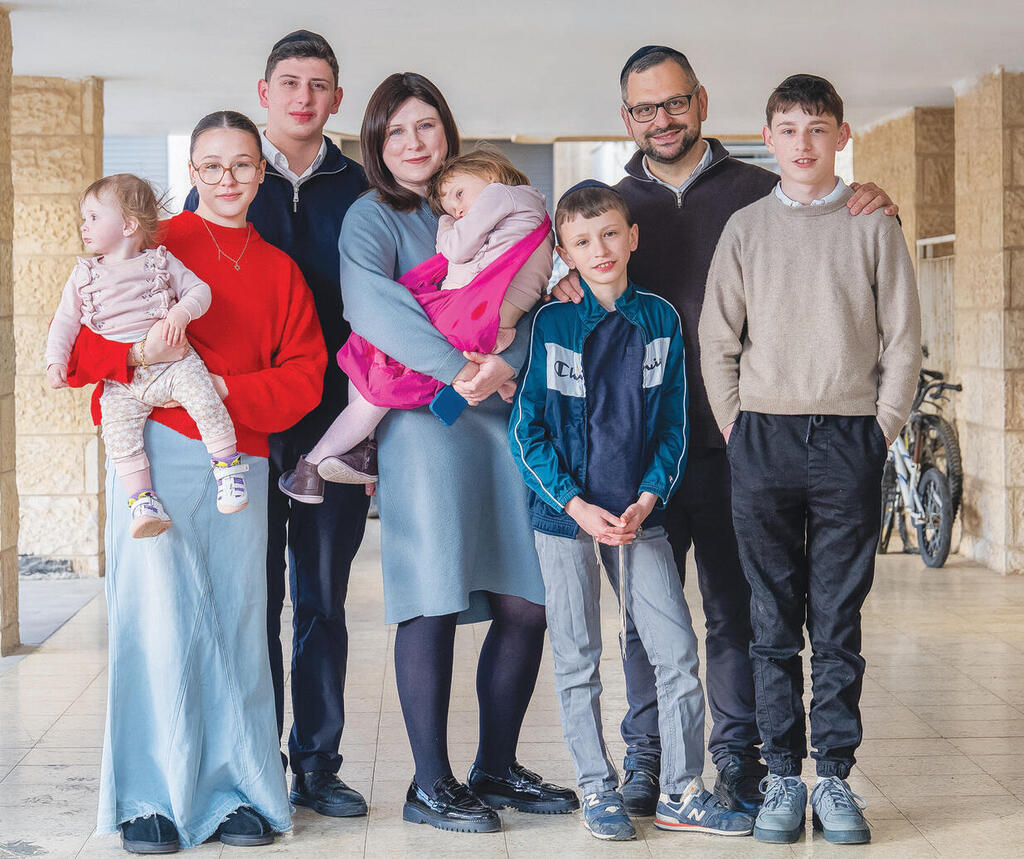
For the Forer family, who arrived last August, the move from Berlin to Jerusalem is the realization of a long-awaited dream. Moshe, 47, a social worker, and Aderet Hanna, 41, a teacher—both Russian speakers—did not let bureaucratic hurdles or the security situation stop them. Along with their six young children, the Forers made aliyah with a clear goal: for their children to grow up safely as Jews.
"Landing in Israel wasn't simple, especially for the children," Moshe recounts. "We were hit by the war right in the face, without any preparation or prior familiarity. It was a difficult period, especially in the first days after landing. But with time, we learned how to cope and manage alongside the war." Now, they describe a period of calm and a growing sense of security. "We feel we are in the right place at the right time," they say.
The choice of Jerusalem was clear to them two years ago after a visit to the country. "We want to give our children the best possible envelope, from diverse educational institutions to a cohesive community to be a part of," notes Aderet Hanna. According to her, one of the highlights of their absorption was the close guidance of Galina from the Jerusalem Municipality's Aliyah and Integration Authority, who made the arrival in the city pleasant, peaceful and efficient.
As Passover began, the excitement in the Forer home was at its peak. Unlike in Germany, the abundance of Kosher-for-Passover products and the atmosphere in the streets of Jerusalem created a completely different holiday experience. "The children couldn't wait to celebrate the holiday," the parents say with pride, as they look toward their next dream: "To build a permanent home in the city, to see the children grow up in it happily, and in the future, to host our grandchildren here."
Joining them are Michelle and Steven Lesnick, 58, from the United States, who also made aliyah last August following their daughter and son-in-law, who live in Sanhedria Murchevet. "We always felt connected to Israel, even during a visit 13 years ago, but we wanted to be more connected," Michelle explains why they chose this specific time. "I didn't fully appreciate how it would feel to step off the plane. I just cried. It was more than I expected. For me, this was an 'Exodus' and a 'homecoming' to the Land of Israel."
Upon their arrival, Michelle and Steven joined the OU community in Jerusalem. Steven, a retired pediatric oncologist, studies in a Kollel, while Michelle takes part in the organization's volunteer cooking initiative for soldiers. "I looked for a way to contribute and immediately found the OU cooking array. I was surprised to discover how much food this group prepares every Shabbat," she says.
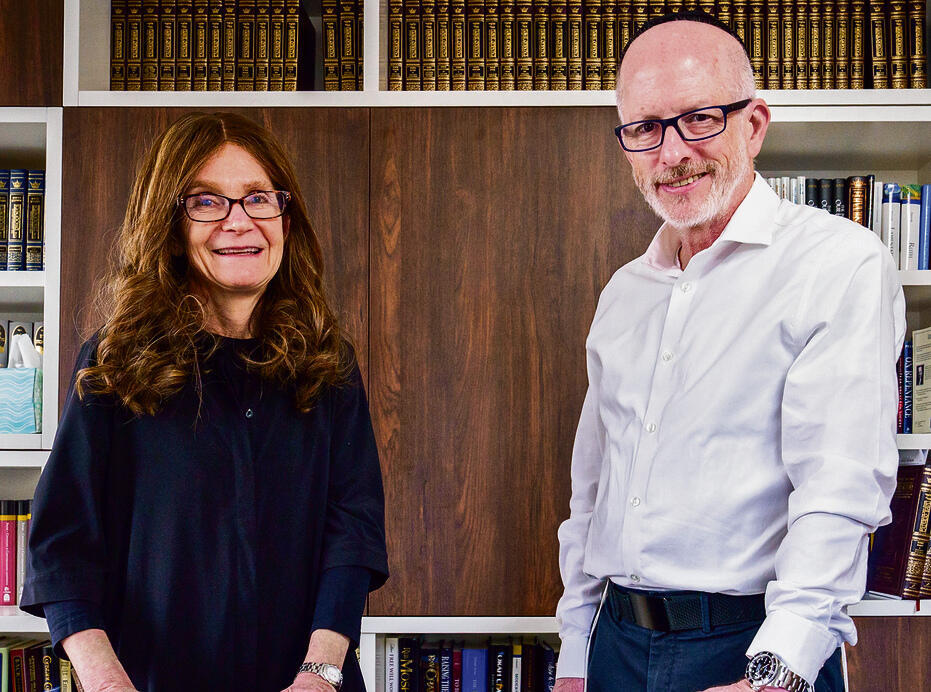
Michelle and Steven Lesnick
(Photo: Shalev Shalom)
Despite the war, Michelle emphasizes her excitement for the holiday. "It's moving to sit in the Mamad (fortified room) and think for the first time, 'Wow, we are all in this together.' I hear the Iron Dome and think: 'Finally, the State of Israel is protecting me from up close.' I am so excited to be here for Passover for the first time."
While the Forer and Lesnick families arrived before the war, some arrived just moments before the outbreak, amidst absolute uncertainty regarding when it would happen and how they would cope. Maria, 36, took the bold step and moved alone from Moscow in February, just a week before the outbreak of the war with Iran.
Maria worked for a German company manufacturing medical equipment but felt it was time to be part of the State of Israel. Though she arrived alone, she represents young, brave professionals who, despite established careers abroad, insist on a connection to tradition, Judaism and life in Israel. She studies in an ulpan and receives close guidance from Galina of the aliyah and Integration Authority. For her, Passover in Jerusalem symbolizes a new chapter, new hopes and a sense of both personal and national home.
The success of these immigrants in integrating into the city, despite the challenges, is no coincidence. The Jerusalem Municipality, through the Aliyah and Integration Authority, operates a personal support system that begins even before landing and continues through solving bureaucratic issues, language studies and social integration.
"The new immigrants are an inspiration to us all," said Jerusalem Mayor Moshe Lion. "To move to Jerusalem at the height of a war is Zionism at its best. The Jerusalem Municipality accompanies them step by step until they are settled in their new home in the capital. We are here to ensure them and all other newcomers a soft landing and a warm embrace, because in Jerusalem, no new immigrant walks alone."
The integration of immigrants into suitable communities is also the result of the work of OU Israel. "At the OU, there is a community that accepts, loves and understands the sacrifice of immigrants leaving their lives to come here," noted CEO Rabbi Avi Berman.
"Those who understand the challenges of aliyah from their own personal past are the ones ensuring that the aliyah and integration project continues to flourish. When immigrants have the certainty that they will have a sense of belonging and a community when they arrive, a response tailored to them and the culture they came from, the dramatic step of moving to Israel becomes easier and safer. We will continue to be at the forefront of absorption and community, together with the Aliyah Ministry and Integration, to provide them with soft and stable ground."