


A 22-year-old Jewish tourist from France who was wearing a kippah was attacked twice in central Rome on consecutive days. Italian police arrested a 31-year-old suspect, a homeless Algerian citizen with a criminal record, on suspicion of involvement in both incidents. Authorities said the allegations include violent offenses as well as incitement and encouragement of crimes motivated by racial, ethnic and religious discrimination.
According to the tourist’s complaint, the first incident occurred Aug. 7 at about 8 p.m. in Piazza Cairoli in central Rome. He said the suspect sprayed him in the face with pepper spray and then shouted, "Free Palestine."

The following day, Aug. 8, the tourist was attacked again, this time at Largo di Torre Argentina, about 300 meters from the site of the first attack. According to his account, he was surrounded by a group of four people who kicked him. He identified one of the attackers as the same man he said was involved in the first assault. He said "Free Palestine" was also shouted during the second incident.
Police are continuing to investigate and are trying to locate the three additional suspects. Authorities stressed that the allegations remain under investigation and that legal proceedings against the arrested suspect are ongoing.
The incident drew sharp reactions in Italy. Victor Fadlun, president of Rome’s Jewish community, said, "Sadly, the hunting season for Jews has reached the streets of Rome as well," and warned against public indifference to manifestations of antisemitism.
Italian Senate President Ignazio La Russa also condemned the attack, saying such incidents must not become something people grow accustomed to and that antisemitism cannot become a "normality" to be accepted or tolerated.
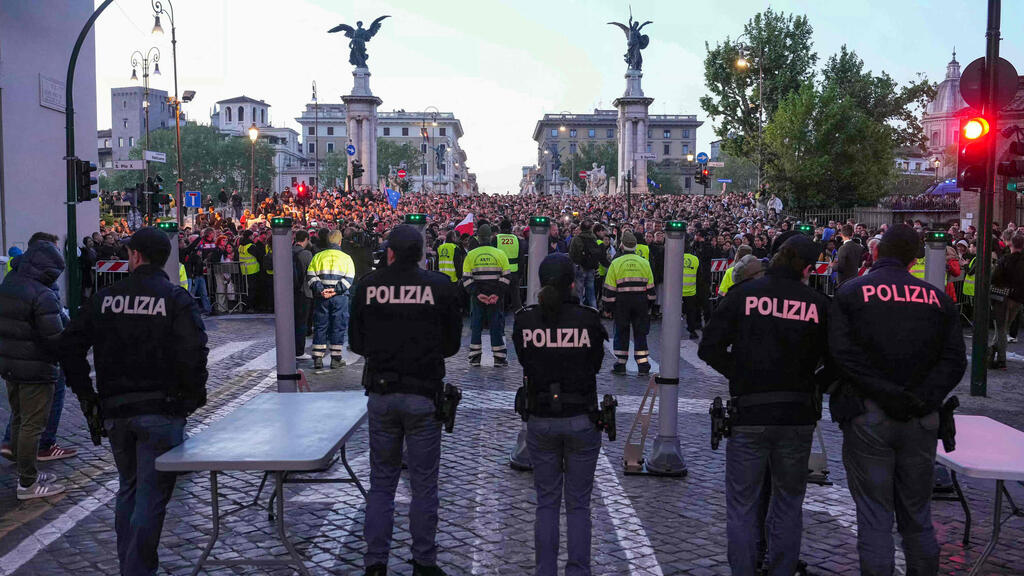
Rome police opened an investigation
(Photo: Dimitar Dilkoff/AFP)
Foreign Minister and Deputy Prime Minister Antonio Tajani joined the condemnations, saying Italy stands for freedom of religion and firmly opposes antisemitism and any violence directed at people because of their religious identity.
Israel’s ambassador to Italy, Jonathan Peled, said that when a Jewish person can no longer walk through a city’s streets without being attacked, it is not only a matter of minority security but of "everyone’s freedom."