


The Bible was written in antiquity, many years before the founding of modern psychology, yet it is filled with stories of figures who undergo mental crises. One can find shifting moods, fits of rage, deep sadness reminiscent of depression and even statements that sound suicidal. Through these biblical narratives, it is possible to understand the messages their authors sought to convey — and perhaps to learn something about ourselves as well.
Saul’s 'evil spirit'
One of the first biblical figures that comes to mind in the context of a troubled mental state is King Saul. Rabbi Avi Kannai, a community rabbi in Jerusalem and a clinical psychologist, notes that Saul’s mental state is described in the Bible as an “evil spirit.” “I don’t know if that’s judgmental, but that’s how it is termed. You could say that ‘evil’ here means that it is bad for him, that it’s unpleasant. After all, when we say someone has ‘a good spirit upon him,’ what does that mean? That he’s in good spirits,” he says. “How did Saul cope with the evil spirit? They would play music for him. I won’t call it ‘music therapy,’ but music can restore the spirit of a depressed person.”
Gallery

Saul and David in a 17th-century painting by Rembrandt. 'Music can cheer up the depressed person'
The Book of Samuel describes how Saul copes with what appear to be symptoms of depression and sharp mood swings, and later with what seem like outbursts of rage and paranoia. His relationship with David, who is destined to become king in his place, rises and falls. At first, when David plays for him, he calms down: “And whenever the spirit of God came upon Saul, David would take the lyre and play it, and Saul would find relief and feel better, and the evil spirit would depart from him.”
Later, when Saul grows jealous of David, he tries to kill him with a spear — precisely while David is playing for him in his home. After failed pursuits of David, Saul expresses remorse only when he is in a position of weakness and David threatens him in a cave. Ultimately, Saul’s life ends when he falls on his sword on the battlefield against the Philistines at Mount Gilboa.
“The Bible describes human beings; it is written in the language of human beings, and as such it portrays a very broad range of human experience, including psychological distress — from things that sound like depressive symptoms to suicidality, paranoia, anxiety and more,” says Rabbi Ilay Ofran, rabbi of Kvutzat Yavneh, a trained psychologist and author of "Torah of the Soul."
“In general, the Bible has a very clear religious agenda, so everything it presents is viewed through that prism — the question of how human beings ought to behave. The Bible is not afraid to present complex figures with conflicts, but one must be careful about taking two or three verses and drawing psychiatric diagnoses about our forefathers,” according to Ofran.
('David and Saul', song by Ehud Banai)

Saul tries to kill David – engraving by Gustave Doré
After this necessary caveat, Ofran adds: “In psychiatry, paranoia and megalomania go together. A person who is convinced that the CIA is encoding messages for him in a crossword puzzle is both megalomaniacal and paranoid. When you think you are the center of the world, you also think everyone is against you. The Torah plays on this a lot. In the curses in Leviticus it says, ‘You shall flee though none pursues you,’ and also, ‘The sound of a driven leaf shall chase them.’ In other words, the punishment for bad behavior is that you develop paranoia.”
“You don’t need to diagnose Saul to understand that a simple man who becomes king, suddenly falls in love with power, and sees everything through the prism of ‘how do I keep my rule,’ will produce very bad outcomes," he continues. "But if our conclusion is that Saul simply had some psychotic disorder, then the only message we can draw is that he needed a prescription. That’s why I think we should be careful about imposing the DSM (Diagnostic and Statistical Manual of Mental Disorders) on the Bible, because psychiatric language removes responsibility. The Bible is a judgmental text; it constantly judges its characters. Psychiatric language, by contrast, is nonjudgmental. In my view, reading the Bible in a nonjudgmental language strips it of its message. Still, insights from psychology can help us understand certain aspects of biblical stories.”
Three prophets who asked to die
Three different prophets in the Bible explicitly ask to die: Moses, Elijah and Jonah. In Jonah’s case, this happens twice. The first time Jonah declares, “It is better for me to die than to live,” is after the people of Nineveh repent and God cancels their punishment: “But it displeased Jonah exceedingly, and he was angry… And now, O Lord, take my life from me, for it is better for me to die than to live.” The second time occurs after a worm destroys the plant that shaded Jonah and the scorching sun causes him to faint: “The sun beat down on Jonah’s head, and he grew faint, and he asked that he might die, saying, ‘It is better for me to die than to live.’”

'Seascape with a Dove and a Whale' – a painting by Gaspard Dugas from the 17th century
The seeds of Jonah’s despair can already be seen at the beginning of the book, when he chooses avoidance and attempts to flee to Tarshish. Later, as the sea rages, he behaves with indifference and sleeps in the ship’s hold. Over the course of the story, Jonah appears overwhelmed by feelings of meaninglessness and injustice.
“Jonah son of Amittai is portrayed as someone with a strong sense of justice and a yearning for absolute truth. Compromise is difficult for him, forgiveness is difficult for him. He has a kind of rigidity,” says Rabbi Kannai. “He cannot tolerate injustice; it drives him to despair. If things are not conducted according to principles of justice, he loses their meaning. That is why he experienced psychological distress and says, ‘It is better for me to die than to live.’” Still, Kannai stresses that “Jonah’s condition is not the main subject of the book. The author seeks to convey a message — about divine governance and repentance — and therefore the final word in the Book of Jonah belongs to God.”
Jonah, as noted, is not the only prophet who asks to die in a moment of crisis. In the Book of Kings, Elijah asks for his life to be taken: “He went a day’s journey into the wilderness and came and sat down under a broom tree. And he asked that he might die, saying, ‘It is enough; now, O Lord, take away my life, for I am no better than my fathers.’” The verse appears after Elijah kills the prophets of Baal and is forced to flee from Queen Jezebel, who seeks to kill him. His words express not only despair but also low self-worth (“I am no better than my fathers”).
At this low point, an angel appears to him: “And behold, an angel touched him and said to him, ‘Arise and eat.’ And he looked, and behold, there was at his head a cake baked on hot stones and a jar of water; and he ate and drank and lay down again.” The angel’s actions — offering Elijah food and drink — may suggest how one should respond to someone in similar distress. The fact that the angel first attends to Elijah’s physical needs points to the close connection between body and mind.
Elijah’s crisis comes specifically after a great triumph over the prophets of Baal when, following his prayer, fire descends from heaven and consumes the sacrifice on Mount Carmel, leading the people to declare faith in the God of Israel. Like Jonah, Elijah’s zeal prevents him from showing compassion toward the people and blinds him to the possibility that human beings can truly change. This approach ultimately leads God to “dismiss” Elijah from his role and instruct him to appoint Elisha as prophet in his place.
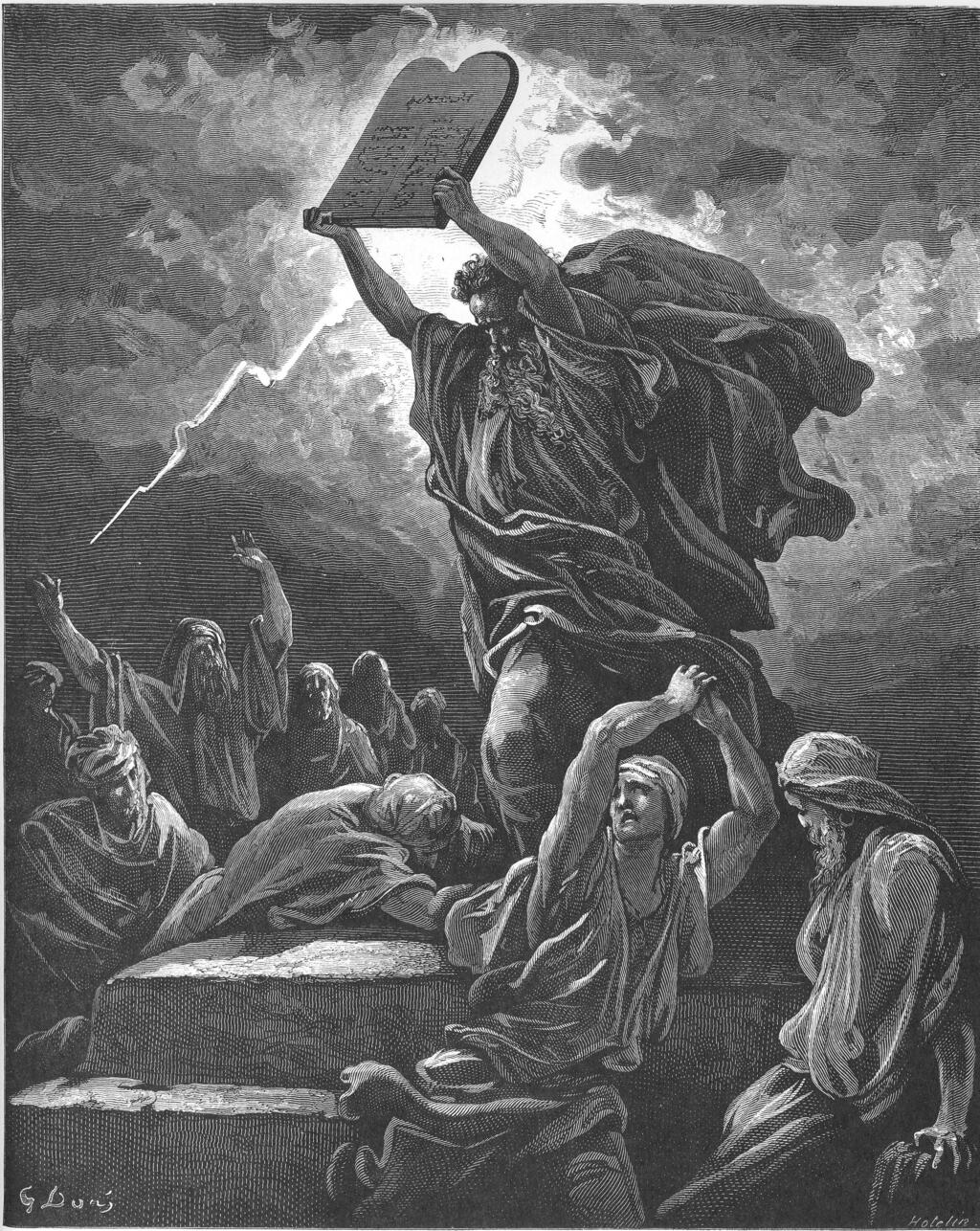
'Moses Breaking the Tablets of the Covenant' – Engraving by Gustave Doré
Even earlier, Moses expresses a wish to die. In the Book of Numbers, overwhelmed by the people’s complaints, he says: “I am not able to carry all this people alone, because it is too heavy for me. And if this is how You deal with me, please kill me at once… and let me not see my misery.”
“Why does Moses break just at this stage? Rabbi Joseph B. Soloveitchik offered an explanation in a discussion of the portion Beha’alotecha,” says Rabbi Kannai. “When the people complain bitterly and crave the food they had in Egypt, Moses realizes something: this is not how you build a nation. Everything is ready for entering the land, but the people are rotten from within. That breaks Moses. He already understands that this generation will not enter the land. It doesn’t matter that the formal decree appears later, with the sin of the spies. This is a prototype of a person collapsing because his life’s work falls apart. He brought them out of Egypt to bring this generation into the Land of Israel, he is focused on that — and in that moment he understands it will not happen.”
Alongside these explicit wishes for death, at least two other biblical figures express sorrow at being alive. Job, after the disasters that befall him, curses the day he was born: “Let the day perish on which I was born.” Jeremiah, frustrated in his role as a prophet of destruction whom no one listens to, likewise curses the day of his birth: “Cursed be the day on which I was born.”
Between Rachel and Hannah
There are striking parallels between Rachel, the beloved wife of Jacob, and Hannah, the mother of the prophet Samuel. Both are described as experiencing emotional distress due to infertility. Rachel says to Jacob: “Give me children, or I shall die.” Hannah suffers similarly; in the Book of Samuel it is written of her, “She wept and would not eat,” suggesting loss of appetite, a possible symptom of depression.

Women praying at Rachel's Tomb
(Photo: Eli Mandelbaum)
“Hannah weeps before Eli the high priest, and it says she is ‘bitter of soul,’” says Ofran. “Eli gives us a kind of roadmap of what to do — and not do — when facing someone in such distress. Interestingly, he does not ask her what happened. He says, ‘May the God of Israel grant your petition.’ Compare that with Elkanah, who tells his wife Hannah, ‘Am I not better to you than 10 sons?’ That connects closely with Jacob, who responds angrily when Rachel says, ‘Give me children, or I shall die,’ replying, ‘Am I in the place of God, who has withheld from you the fruit of the womb?’”
Rabbinic tradition criticizes Jacob for failing to respond to Rachel with sensitivity, and a midrash states that he was punished for it: “The Holy One said to him: ‘Is this how one answers those in distress? By your life, your children will one day stand before her son.’” This refers to the moment when Jacob’s sons plead with Joseph not to kill them in Egypt, at the end of Genesis. Joseph reassures them, “Do not be afraid,” and echoes his father’s phrase: “Am I in the place of God?” — meaning he is not a substitute for God.
Nebuchadnezzar’s nightmare
Among the central figures in the Bible portrayed with a complex mental state is also a foreign king notorious in Jewish history. The Book of Daniel describes how Nebuchadnezzar, king of Babylon, behaves like an animal for a period: he eats grass like an ox, his hair grows wildly and his nails lengthen. There is no historical evidence for this story outside the Bible, but those seeking an explanation might describe it as a form of psychosis.
Daniel — known by his Babylonian name Belteshazzar — is exiled from Judah. According to the Bible, he rises to a high position thanks to his ability to interpret dreams, reminiscent of the story of Joseph. In Chapter 4, Nebuchadnezzar recounts a mysterious dream: a tall, strong tree suddenly has its branches cut off, its leaves scattered and its fruit dispersed. Only its roots remain in the ground, its trunk bound with iron and bronze, living among the beasts in the grass. The angel in the dream declares that the king’s human heart will be changed to that of an animal, and seven periods will pass over him, to teach that the Most High rules over human kingdoms and gives them to whom He will.
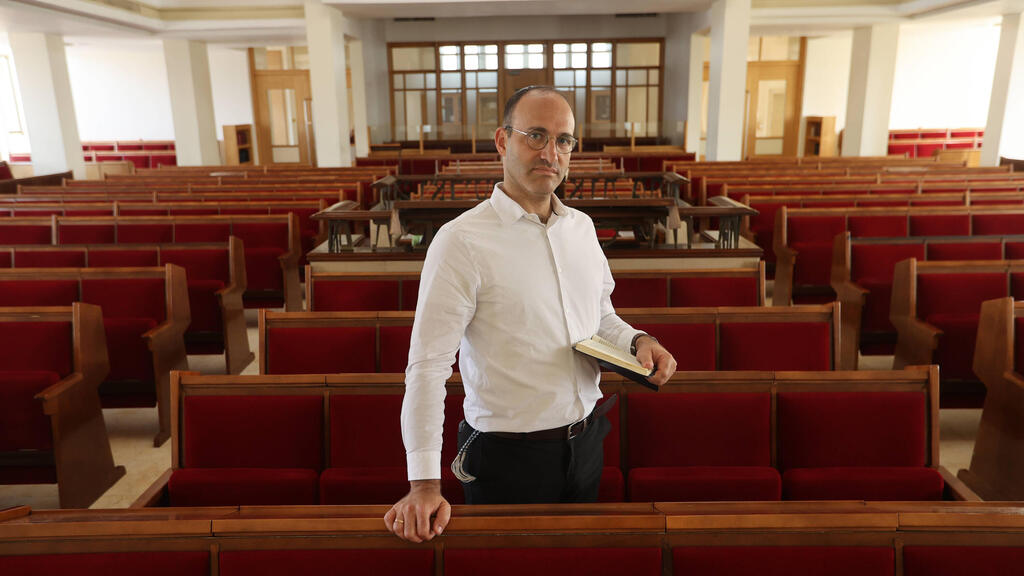
Rabbi Ilay Ofran. 'We must be careful not to try to impose psychiatric diagnoses on the Bible'
(Photo: Gadi Cabello)
Daniel explains that the tree represents the king himself, whose kingdom is vast and powerful. He interprets the angel’s words to mean that the king will be driven from human society, live with wild animals and eat grass like oxen for seven periods — until he acknowledges God’s sovereignty. According to the biblical account, this scenario indeed comes to pass.
From Ecclesiastes to Psalms
Feelings of futility and lack of meaning, which may reflect a depressive outlook, are prominent in the Book of Ecclesiastes: “Vanity of vanities, all is vanity”; “What is crooked cannot be made straight”; “In much wisdom is much vexation, and he who increases knowledge increases sorrow”; “The day of death is better than the day of birth.” One verse perhaps captures this most starkly: “So I hated life, because what is done under the sun was grievous to me, for all is vanity and a striving after wind.”
Many psalms, traditionally attributed to King David, move between despair and hope. Some address emotional distress. In Psalm 38, describing divine anger after sin, the text includes what sounds like a physical response to anxiety: “There is no soundness in my flesh because of Your indignation; there is no health in my bones because of my sin.”
The connection between mental anguish and the body is also expressed poetically in Psalm 22 (“My God, my God, why have You forsaken me?”): “I am poured out like water, and all my bones are out of joint; my heart is like wax; it melts within me.” According to Ofran, Psalm 27 (“The Lord is my light and my salvation”) can be read as offering guidance for coping with fear and anxiety.
Asked for another relevant insight from the Bible regarding mental struggles, Ofran replies: “In biblical Hebrew, ‘rage’ often means fear. In many cases where the root appears, it clearly refers to fear — for example, in the 'Song of the Sea': 'The peoples have heard, they tremble; pangs have seized the inhabitants of Philistia.' This can lead us to understand that anger is often simply fear. People are afraid, so they become angry. What they need in that moment is not someone shouting back at them, but someone to embrace them and help them get through their fear.”
If someone around you is in crisis and may be suicidal, do not hesitate: talk to them, encourage them to seek professional help and emphasize the importance of doing so. Try to help them reach professionals in the community or national support services. In Israel, you can contact ERAN’s hotline at 1201 or via WhatsApp at 052-8451201, the SAHAR website at http://www.sahar.org.il, or headspace.org.il.
First published: 23:27, 04.19.26