


Charlotte Knobloch, 93, leader of the Jewish community in Munich and Upper Bavaria, received threats against her life after calling for a boycott of the AfD, Germany’s far-right party. The threats against the Holocaust survivor came as the party scored significant gains in elections in the eastern German state of Saxony-Anhalt.
The Munich public prosecutor’s office announced that it had opened an investigation into the case, which is also intended to provide protection for Knobloch. According to Deutsche Welle, messages containing death threats were found Thursday in Munich’s English Garden park and later inside a trash can. The information was immediately passed on to police. Following the threats, Knobloch canceled her participation in a festive event.
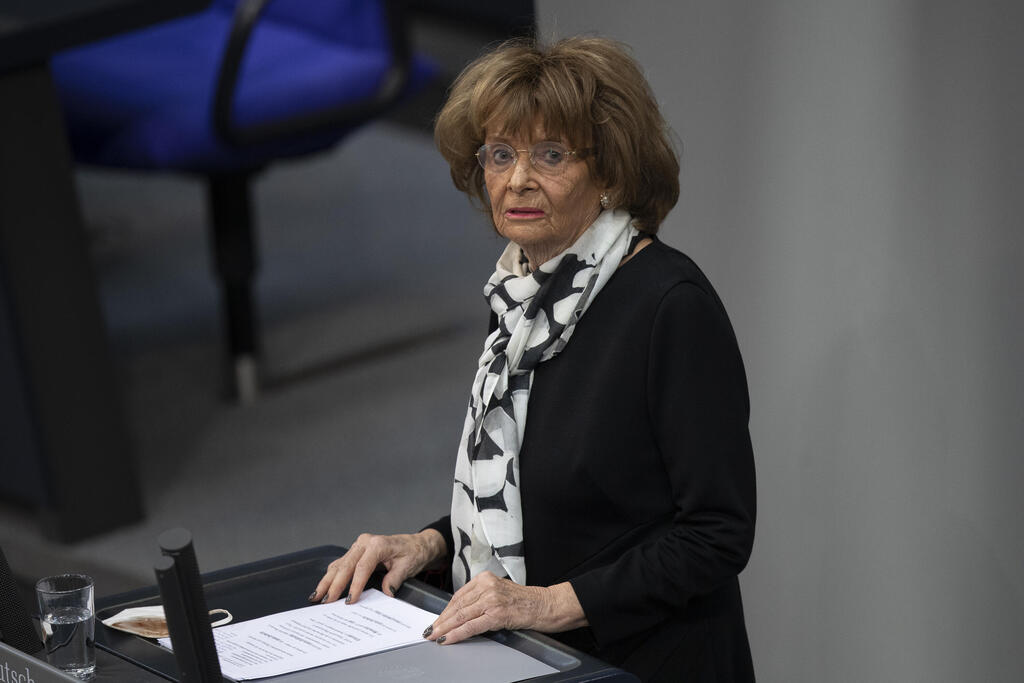
Knobloch, one of the most prominent figures in Jewish life in Germany in recent decades, heads the Jewish community in Munich and Upper Bavaria. She previously served as president of the Central Council of Jews in Germany.
The far-right party’s gains have raised concerns among Jews in Germany. Eva Umlauf, a survivor of the Auschwitz death camp, said last week: “What can I say? I expected it and yet I am shocked. I am shocked, I am sad. I don’t know what makes people vote for this party.”
Her comments reflect concerns voiced in recent months by representatives of numerous minority groups, amid opinion polls showing growing support for the far right in Saxony-Anhalt, as well as in Berlin and the eastern state of Mecklenburg-Western Pomerania, where elections will be held Sept. 20.
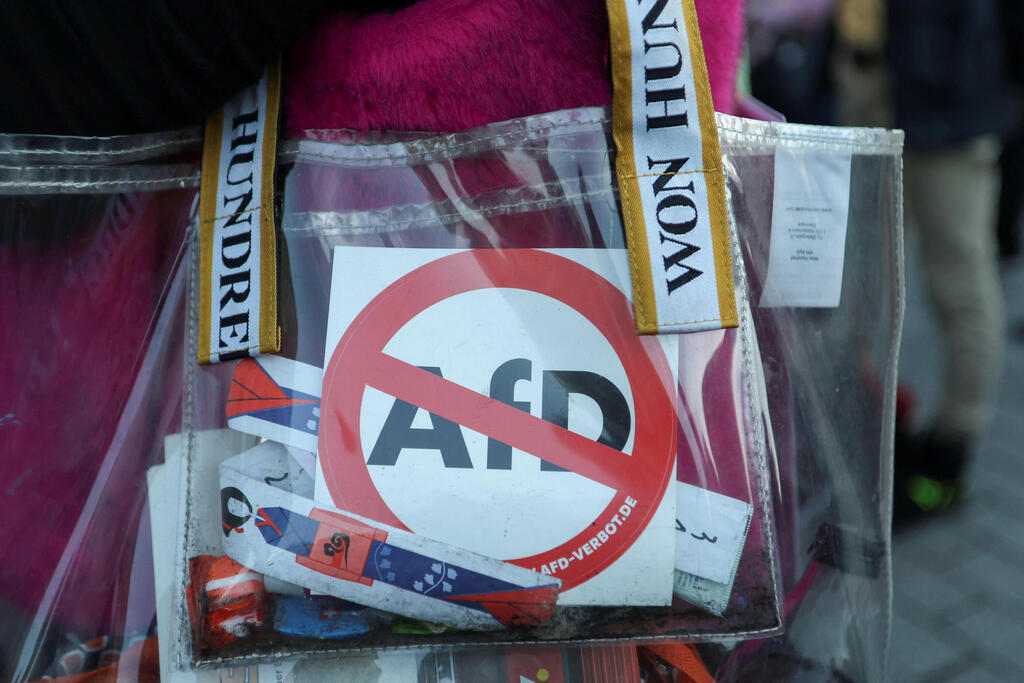
A protest against the far-right AfD party in Berlin last week
(Photo: REUTERS/Maryam Majd)
“We're afraid. We know what happens – what happens to minorities, what happens to foreigners,” Umlauf told Reuters.
The AfD, which was founded as a Euroskeptic party during the eurozone crisis in 2013, rejects comparisons with the Nazi Party, which was responsible for the Holocaust, in which about 6 million Jews were murdered, along with Roma, homosexuals and others.
The party seeks to restrict immigration, particularly from countries it describes as “culturally foreign” to Germany, withdraw from the eurozone and restore ties with Russia in an effort to lower energy prices. The party says its policies reflect common-sense ideas shared by millions of Germans and denies that it is antisemitic. Instead, it accuses Germany’s established parties of using such allegations as a means of silencing the opposition.