

At 9:30 a.m. on Muranowska Street in Warsaw, the air cold and the sun pale, a group stood before a drab gray apartment block in the Soviet style. Eighty-two years ago, this was the site of the headquarters of the Jewish Military Union, or ZZW. Here, commander Pawel Frenkel stood with a weapon in hand against German forces and their Ukrainian auxiliaries.
Almost nothing remains of prewar Jewish Warsaw after the German destruction in 1939, the Warsaw Ghetto uprising in 1943 and the general uprising in 1944. For those devoted to passing the ghetto’s story to future generations, every trace matters.
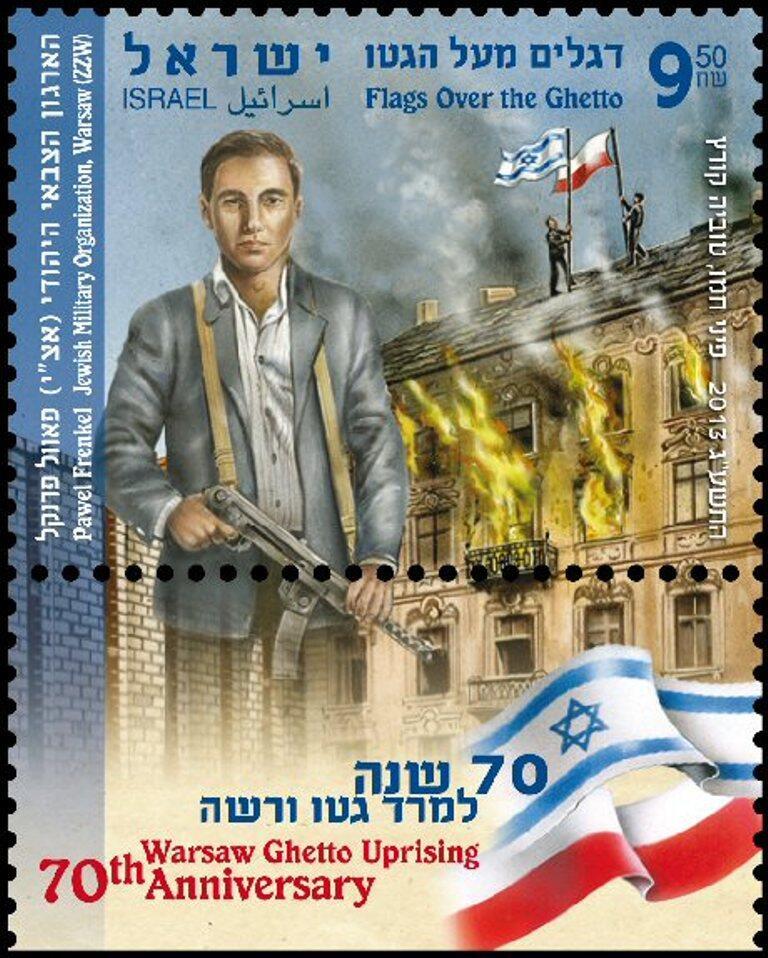
It was here that a blue-and-white Zionist flag was raised alongside Poland’s white-and-red flag, stunning the Germans. The flags flew for three or four days until SS chief Heinrich Himmler phoned in fury and ordered they be taken down “at any cost.”
On a few walls around the former ghetto, where the uprising took place, graffiti today shows Palestinian flags and the words “Free Palestine.”
The group is part of a Menachem Begin Heritage Center seminar that walks the paths of the fighters’ courage. About 100 tour guides, researchers and media professionals have already traced the ghetto’s streets — where houses stood, where people fought, where they died. They do not march a “path of heroism.” They live it. At every corner, a new finding. On every wall, a struggle over memory.
The enigma who became a hero
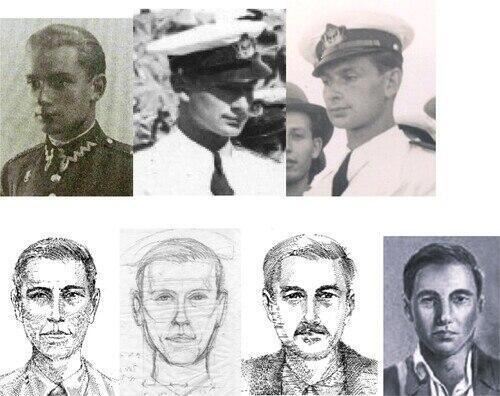
Until a few years ago, Frenkel was a mystery. His name was cited as the ZZW commander, but there was no photo. Guesses about his appearance relied on a 2009 composite sketch by police artist Gil Gibli based on three survivors’ testimonies.
“There was no doubt Pawel Frenkel was the commander — the most important figure in the ZZW — but almost nothing was known about his identity,” said Dr. Laurence Weinbaum, coauthor of an authoritative book on the ZZW. “Although we proved beyond any doubt that the man alleged to be his counterpart, Dawid Mieczyslaw Appelbaum, was entirely fictitious, in Frenkel’s case we hit a dead end.”
Yossi Swid, a Begin Heritage Center researcher writing a doctorate on the Betar underground in the Warsaw Ghetto, said it was clear “Pawel” was a code name. “No one knew where he was born, his education or where he came from. Unlike others in the uprising, he was a kind of enigma,” he said.
The breakthrough arrived in 2023. Researcher Dror Ben Yosef found a 1961 article, “The Exodus of Warsaw,” by Jeremiah (Yirmiyahu) Halpern, who oversaw Betar’s prewar military training and founded Betar’s Naval Academy in Italy to prepare young captains, divers and sailors — a basis for a future navy in the Land of Israel.
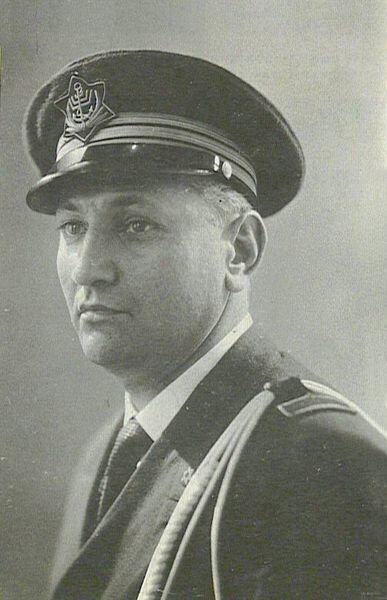
Pawel Frenkel
(Photo: Menachem Begin Heritage Center)
Halpern wrote after meeting ZZW leader Dawid Wdowiński, a psychiatrist who survived the Holocaust and later lived in New York. Wdowiński came to Israel in 1961 to testify at the Eichmann trial and told Betar veterans about the ZZW. In letters found later, he praised Frenkel as a natural leader — handsome, charismatic, “a true hero.”
When Wdowiński spoke, Halpern had an epiphany: he remembered a trainee at the naval school named Yaakov Frenkel, from Poland. He kept photographs published in a 1961 book, though no one realized they showed the same Frenkel.
Halpern said Frenkel sailed on the training ship Sarah A from Italy to Palestine in late 1937. After the article surfaced, Ben Yosef, Swid and Weinbaum mapped the ship’s roster. They concluded Frenkel was aboard under his real name, Yaakov, visited Palestine for several months and even appears for a few seconds in a Carmel newsreel.
“He really toured the country — Tel Aviv, Jerusalem and Haifa,” Swid said. The Sarah A later ran aground off Corsica and sank. A salvage ship rescued the crew. The school soon closed under Mussolini’s antisemitic laws.
From Bialystok via Strasbourg to Warsaw
The scholars, writing in the University of Haifa’s Holocaust Studies journal, found Frenkel was born in 1911 in Bialystok, Poland, to Beila and Shmerl, a well-off family. He had two sisters, Sophie and Rosie; Sophie studied science at the University of Strasbourg.
Because of restrictions on Jews in Polish universities, Frenkel studied medicine at Strasbourg but left after three semesters. In 1931, after his return, he enlisted in the Polish army as a second lieutenant and served in the infantry. He fought the Nazi invasion in 1939. The researchers found his Polish military file, including his photograph.
Blocked from advancement by antisemitism, he was appointed in 1934 by Halpern to command Brit HaHayal in the Bialystok district, a veterans’ group under the Revisionist movement. He trained young Betar members in military skills so they could immigrate and join a planned revolt against Britain. They prepared for the British but fought the Nazis. Betar’s ambitious plan aimed to train 40,000 Polish Jews.
(Photo: Menachem Begin Heritage Center)
An anecdote from future Israel Navy officer Zvi Keinan recalls boxing drills on the Sarah A as part of self-defense training, with Frenkel always the referee.
“What we know is that Frenkel was single,” Swid said. “All testimonies repeat that he was very handsome and impressive. It’s reasonable to assume that if he had survived the uprising and reached Israel he would have become a senior Israel Navy officer.”
Frenkel was 32 at his death. A month after the uprising began, at 11–13 Grzybowska Street, a German force raided a ZZW safe house after an apparent betrayal. Frenkel and several ZZW fighters were killed, as were some German soldiers.
Not all accept that account. Jabotinsky Institute archivist Miri Yahalom, a Tel Aviv University doctoral student supervised by Prof. Havi Dreifuss, is writing that Pawel Frenkel was someone else entirely — a Betar activist named Avraham Frenkel.
Eighty years of silence
A central goal of the Begin Center’s seminar is to correct what its organizers call a historical wrong — that the Warsaw Ghetto’s main fighters were the Jewish Fighting Organization, or ZOB.
“Who wrote the history of the uprising? The fighters,” Weinbaum said. “We knew about the uprising especially from those who survived, and they had no interest in writing there was another underground.”
The entrenched narrative held that the ZOB led the revolt and the Revisionists’ role was marginal. Betar activists fought that narrative for decades.
The turning point came when Prof. Moshe Arens, later defense minister, took interest. “It troubled him deeply — he believed the ZZW’s role had been unjustly minimized,” Weinbaum said. Arens published articles and in 2009 released “Flags Over the Warsaw Ghetto,” which pushed the ZZW into public awareness.
(Photo: Menachem Begin Heritage Center)
Swid and Weinbaum say the injustice stemmed largely from the fact that while several senior ZOB commanders survived, all senior ZZW commanders fell, leaving fewer testimonies. Their research also rejects a claim that the ZZW was created by non-Jewish Poles. “It was an internal Jewish Revisionist initiative,” Weinbaum said.
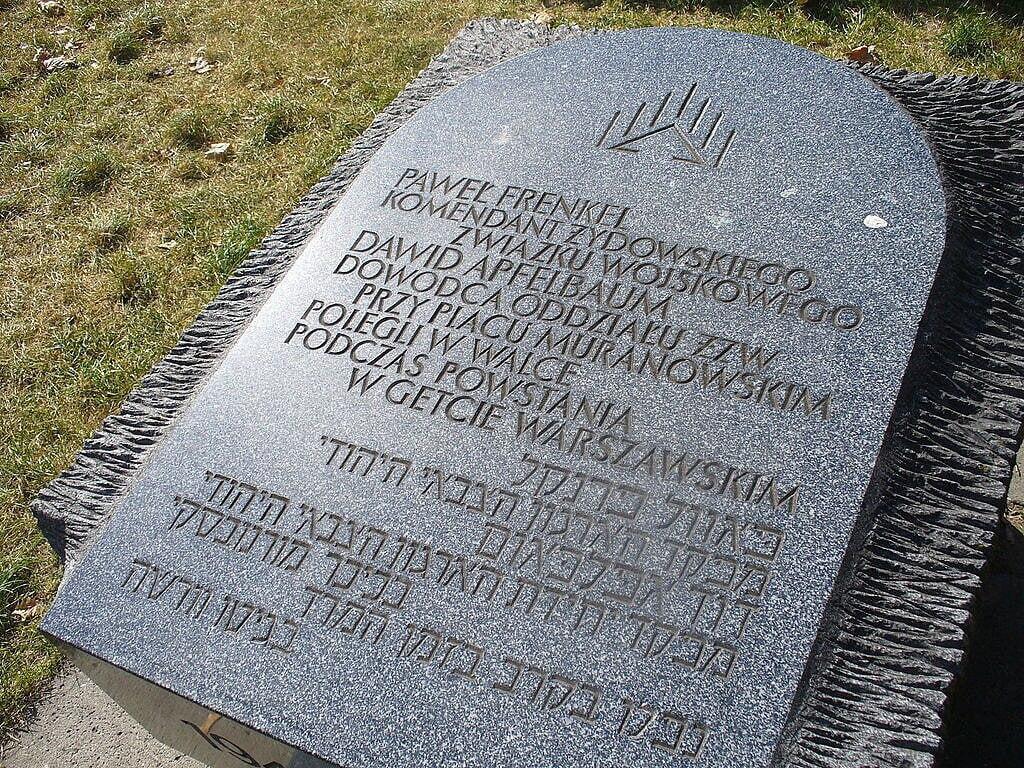
They say a fictitious figure — Dawid Appelbaum, alleged deputy ZZW commander — entered the historical canon via impostors. His name appeared on Warsaw paving stones and, at the initiative of former President Lech Kaczyński, a city square. After researchers showed no such person existed, the city removed the name and renamed the square for Rachel Auerbach, who worked with Emanuel Ringelblum to document the ghetto.
The battle for Muranowski Square
The uprising began April 19, 1943, and ended May 16 when German Gen. Jürgen Stroop declared victory after blowing up Warsaw’s Great Synagogue. The ZZW argues the fighting continued for about a month more.
About 50,000 people remained in the ghetto, down from roughly 450,000 at the start. About 300,000 were deported to their deaths and about 100,000 died of disease and starvation under Nazi policy.
About 300 ZOB fighters and about 260 ZZW fighters joined the revolt. Researchers attribute the small numbers to a lack of weapons. Only about 600 people were armed. The ZZW, they say, had more arms than the ZOB — especially rifles and machine guns — while ZOB fighters mostly had pistols. They credit Betar’s years of military training and arms procurement.
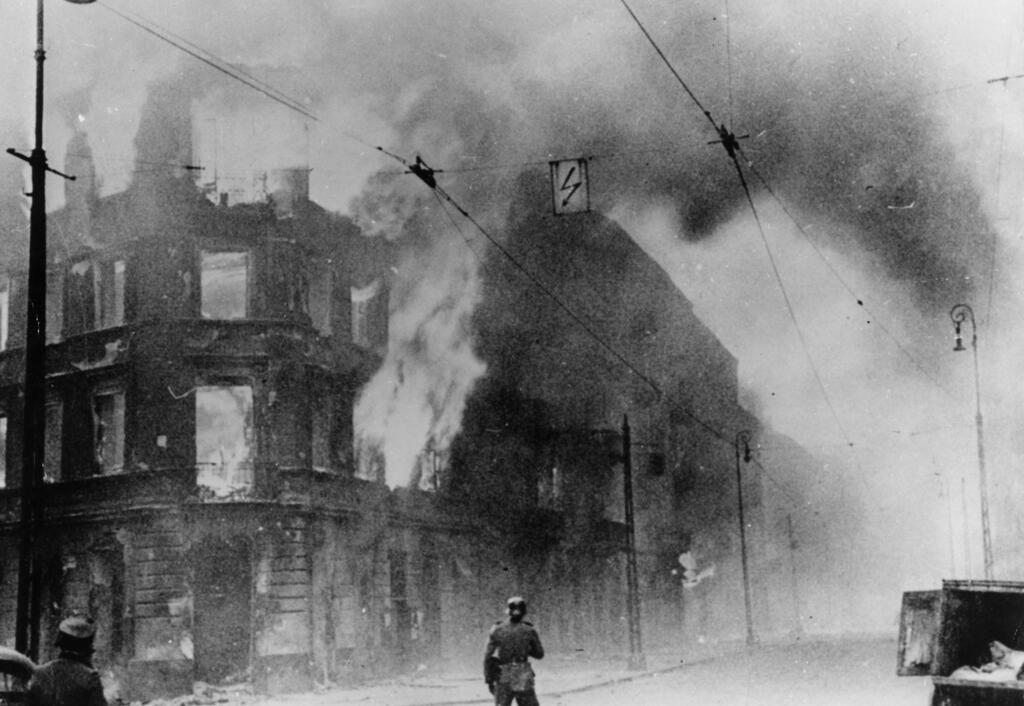
(Photo: Keystone/Getty Images)
Under Frenkel, ZZW units used commando tactics and often disguised themselves as SS officers to lure German forces into ambushes.
“Stroop notes that the central and most significant battle was at Muranowski Square,” Swid and Weinbaum said. A German officer, Otto Demke, was shot and killed as he tried to reach the roof to remove the flags. Word of the banners reached Himmler, who ordered they be taken down at any cost.
Cross-checked testimonies place the flags on the building at 7 Muranowska Street, above the ZZW headquarters on the first floor. The building was the tallest in the area. Fighters used the square as a killing zone. The Nazis, unable to dislodge them, set the ghetto ablaze. A photo of Stroop after the fighting notes plans to burn the ghetto.
One account describes Leon Aryeh Rodal, the ZZW’s deputy commander, donning an SS uniform and baiting Germans to remove the flags. He pointed to the banners, then climbed a rise, hurled grenades and opened fire. Stroop’s report says the episode enraged German commanders who feared it would embolden Poles.
The women fighters
The seminar highlights women’s roles. Swid said women comprised 34% of the ZOB and 20% of the ZZW. The ZOB had women commanders; the ZZW did not. Many women served as courier-fighters who also smuggled weapons. Stroop wrote that women carried pistols and grenades hidden in their underwear and opened fire. Survival rates for women were higher in part because some could pass as Aryan. A few captured women declared they were not Jewish and reached Auschwitz as Polish prisoners. Some survived and some were killed.
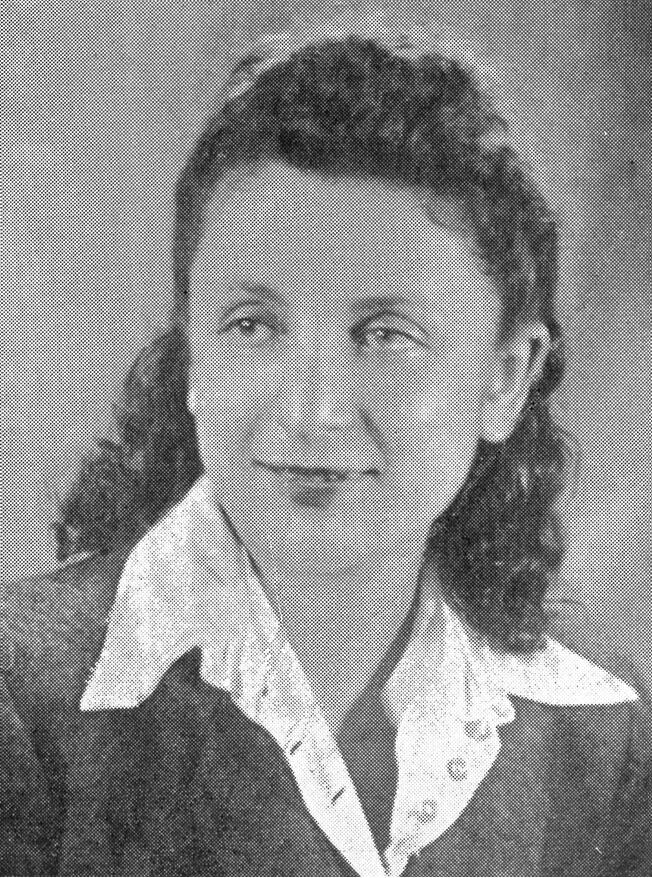
Zuta Hartman
Zuta Hartman, the last living ZZW fighter, was long mislisted by a museum as killed in the uprising. Recruited as a courier, she fought and treated the wounded in a bunker on Swietokrzyska Street. At the Warsaw seminar, her son, Chaim Hartman, recalled confronting Arens: “Why aren’t you commemorating Pawel Frenkel and the ZZW, even though you are in power?” Hartman died in 2015 at 92.
Life in the burning ghetto
Newly surfaced photographs shown in the seminar depict everyday ghetto life: a street gramophone drawing a crowd, an apple stall. Other images show non-Jewish Poles looking into the burning ghetto while nearby cafes and restaurants stayed open.
Now, Begin Heritage Center researchers seek to redress what they call an historic injustice to Frenkel and the ZZW. They point to the disparity with Mordechai Anielewicz, the ZOB commander. Anielewicz has a kibbutz named for him — Yad Mordechai — and 16 Israeli streets, as well as many squares in Poland, including in Warsaw. Frenkel’s commemorations arrived only after Arens’ book — a square near the stock exchange in Ramat Gan and a handful of Israeli streets.
“It’s time for the State of Israel to recognize the leading fighters of the Warsaw Ghetto and award them medals of valor — to the ZZW as well as to the ZOB,” the researchers said.