


Former Chief Rabbi Yitzhak Yosef ruled in a letter published Tuesday that the kapparot ritual should not be performed using chickens. “Where there is concern about causing suffering to animals, the kapparot custom should be observed with money, in the amount equivalent to the cost of a chicken — 35 shekels,” he wrote.
Ahead of Yom Kippur, which falls at the beginning of next week, Yosef said the kapparot custom cannot come at the expense of the prohibition against causing suffering to animals. When proper conditions for keeping the birds and supervised kosher slaughter cannot be guaranteed, he said, the ritual should not be performed with chickens because doing so could violate the prohibition against animal cruelty.
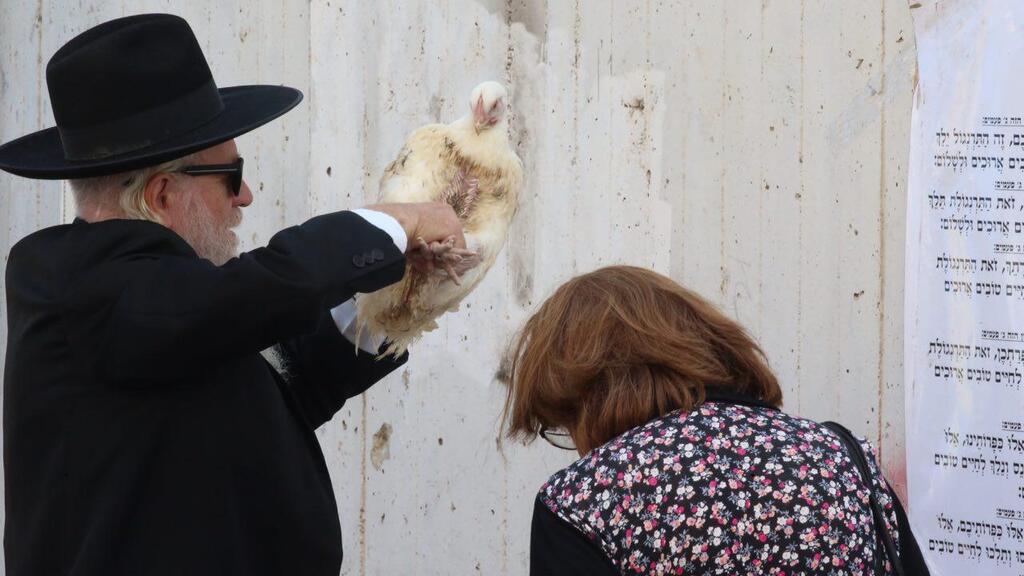
Yosef warned in particular about conditions at large-scale kapparot sites, where birds may be kept for extended periods in unsuitable conditions without sufficient shade, food or water, and where slaughter may take place without the required halachic and veterinary supervision.
“One who fulfills this mitzvah while violating the prohibition against causing suffering to animals, we fear, is not fulfilling the custom at all, but is instead violating a Torah prohibition against animal cruelty,” the rabbi wrote.
In ultra-Orthodox communities, many people perform kapparot with a chicken, with the bird often donated to the poor after slaughter or used for the pre-fast meal. Under the traditional custom, a rooster is swung over a man’s head and a hen over a woman’s, accompanied by a prayer that the bird serve as atonement for the person, who should go on to a good, long and peaceful life.
In ultra-Orthodox neighborhoods and cities, cages containing white chickens prepared for the ritual and slaughter can often be seen. Some Hasidic communities are particularly strict about maintaining the practice. According to an older custom, the ritual may also be performed by circling a fish in a bucket over a person’s head.
Some halachic authorities have insisted that the original custom calls for a chicken, while others preferred fish because the laws of kashrut governing them are less complex than those governing poultry. As a result, amid the pressure of preparations before the pre-fast meal, some authorities considered it preferable to use fish to avoid concerns that the bird might be rendered non-kosher.
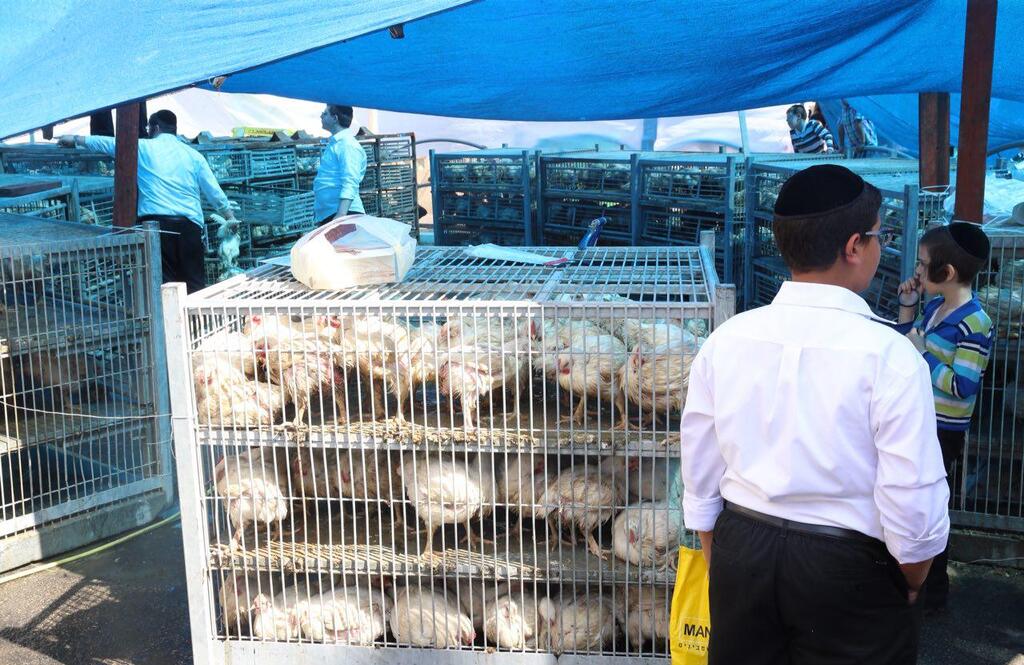
Yosef warned about conditions at large-scale kapparot sites, where birds may be kept for extended periods in unsuitable conditions
(Photo: Motti Kimchi)
Over time, the practice of substituting money for the animal became increasingly widespread, with the money donated to charity and the updated formula recited: “This money shall go to charity, and I shall go on to a good, long and peaceful life.”
The writings of Rabbi Jacob Emden, known as the Ya'avetz, also contain a source for performing the ritual with a potted plant, which would be circled over the head while reciting, “For man is a tree of the field.”
Separately, in a letter issued ahead of Yom Kippur, Israel’s chief rabbis — Sephardi Chief Rabbi David Yosef and Ashkenazi Chief Rabbi Kalman Ber, who also serves as president of the Chief Rabbinate Council — ruled that the monetary redemption for kapparot this year should be about 30 shekels per person, including VAT. The money is to be donated to Torah and charitable institutions.
The chief rabbis also called for the “El Malei Rachamim” memorial prayer to be recited during the day’s services in memory of those killed in Israel’s wars, along with a prayer for the recovery of the wounded and a prayer for the success of IDF soldiers and the other security forces.