

At the heart of Jewish thought lies a seemingly simple question: why is there even a commandment to pray? If a person needs something, let them ask. If not, then not. Why turn it into a daily act?
Rabbi Yitzhak Arama, author of Akeidat Yitzhak, or Isaac's Binding, offers an answer that challenges intuition, not only in the religious world, but in management as well. Prayer, he argues, is not merely about asking for needs. It is an act that builds the person.

To explain this, he uses a powerful image: the fire on the altar. The Torah commands that the fire burn continuously, “a perpetual fire shall burn on the altar; it shall not go out.” In his view, this is not just a technical instruction, but a metaphor. The altar is the heart, and the fire is the person’s inner movement. Prayer is not just words, but a process in which the heart itself is ignited and rises.
This is a point worth pausing on. We are used to thinking in terms of outcomes. What did I get from this?What did I receive? Did it work? In management, too, this is the language: targets, outputs, metrics. But Rabbi Yitzhak Arama offers a different lens. There are actions that are not measured by what they produce in the world, but by what they produce in the person.
In this, he gestures toward a broader philosophical tradition. Aristotle, whose influence shaped medieval thinkers, argued that a person is not the result of a single act, but of habits. “We are what we repeatedly do.” Excellence is not a one-time event, but a cumulative process. Avicenna added another layer: a person develops not only through results, but through the very process of learning and reflection. In other words, the true value of an action lies not only in what it achieves, but in what it develops.
Prayer, then, is not a tool for changing reality, but a system for shaping consciousness. When a person asks, they practice humility. When they persist, they build consistency. When they focus, they sharpen inner attention. And the surprising part is that all of this happens regardless of whether the request is granted. This idea is especially relevant in the organizational world.
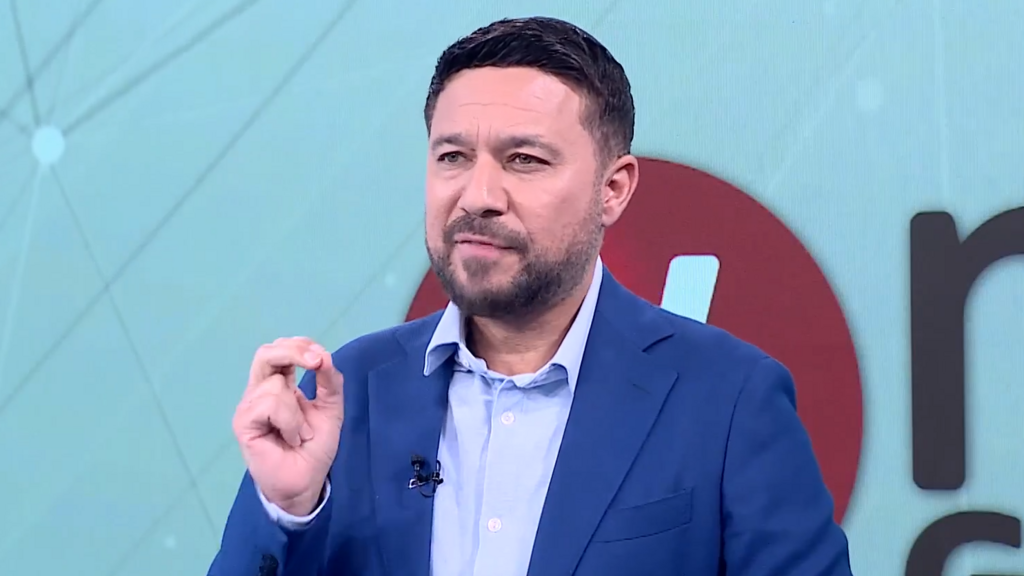
Ziv Elul: 'The world is not built only from successes'
(Photo: Screengrab)
Many organizations measure themselves almost entirely by results: profit, growth, output. But they miss a deeper layer. The processes they build do not just produce results. They produce people. A team meeting can be a tool for decision-making, but it can also teach listening, accountability and structured thinking. Procedures can streamline work, but they can also build discipline and reliability. Even daily tasks are not just things to get done, but an ongoing practice of professional character. Just like prayer.
This week it was reported that cloud giants are investing tens of millions of dollars in the Israeli cybersecurity company Upwind, reportedly valuing it at around $1.6 billion. But beyond the numbers, the real impact of such a move is not just in valuation. It is in how it shapes the organization: the pace of decision-making, the culture, the internal confidence and the ability to face competition. Not everything that matters can be measured immediately, and not everything that is measured is what matters most.
In an era where everything is measured quickly, where there is constant pressure for immediate results, this message becomes critical. There is a temptation to view every action through the bottom line, to ask at every step what it yields. But sometimes the more important question is what that action builds over time. Does the process we are creating develop people who are more precise, more responsible, more committed? Does it build capability, not just achievement?
Rabbi Yitzhak Arama reminds us that the world is not built only from successes, but from the processes that generate them. Aristotle captured this with sharp simplicity, and Avicenna deepened it. Rabbi Yitzhak Arama takes it one step further: not just what you do, but what you become through what you do.
Ultimately, that is the difference between an organization that chases results and one that builds people capable of producing them again and again. Because in a world of uncertainty, the real advantage is not what you achieved, but who you became along the way.
First published: 11:33, 03.26.26