

“Uman, Rosh Hashanah” – the phrase is sung at every Breslov Hasidic gathering, each word echoing the yearning for one of the holiest days of the year.
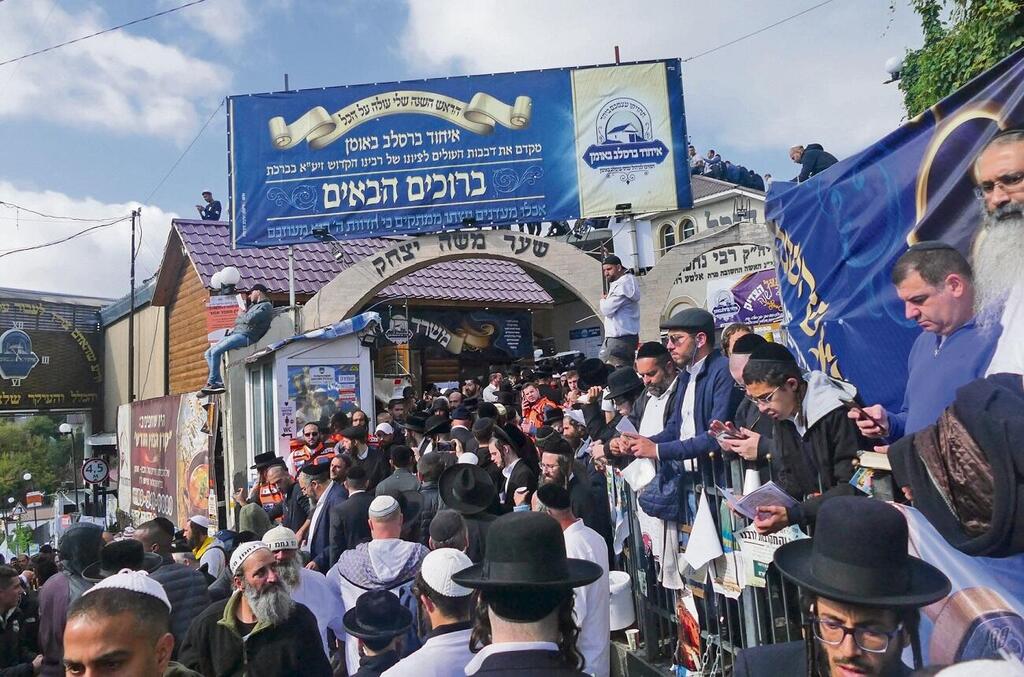
As they do every Rosh Hashanah, tens of thousands of Jews flock to the grave of Rabbi Nachman of Breslov in the Ukrainian city of Uman.
Rabbi Nachman was one of the most influential Hasidic leaders in Jewish history. This year, the pilgrimage drew attention both because of the unusual allocation of 10 million shekels ($2.7 million) during wartime and because of efforts to allow draft dodgers to travel there without being arrested by the IDF for failing to report to the recruitment bureau.
A site of prayer and mass pilgrimage
Throughout the year, Rabbi Nachman’s grave in Uman functions as a synagogue and place of prayer. However, on Rosh Hashanah, it becomes the center of a mass gathering, drawing tens of thousands of Jews, many from Israel.
Rabbi Nachman of Breslov (1772–1810) called for simple faith in G-d, out of joy, confidence and without despair.
He founded the Hasidic movement with teachings that sparked fierce opposition but also attracted devoted followers.
After his death, he became a role model; his writings are studied with passion to this day. Many of his sayings have become slogans printed on bumper stickers and billboards: “There is no despair in the world,” and “Know that a person has to cross a very narrow bridge in this world, and the main thing is that he shouldn’t fear," and many more.
The great promise of the pilgrimage
According to tradition, Rabbi Nachman promised that anyone who came to him on Rosh Hashanah would merit great spiritual Tikun (repair, improvement), without fasting or asceticism, as the journey itself would suffice to make a Tikun.
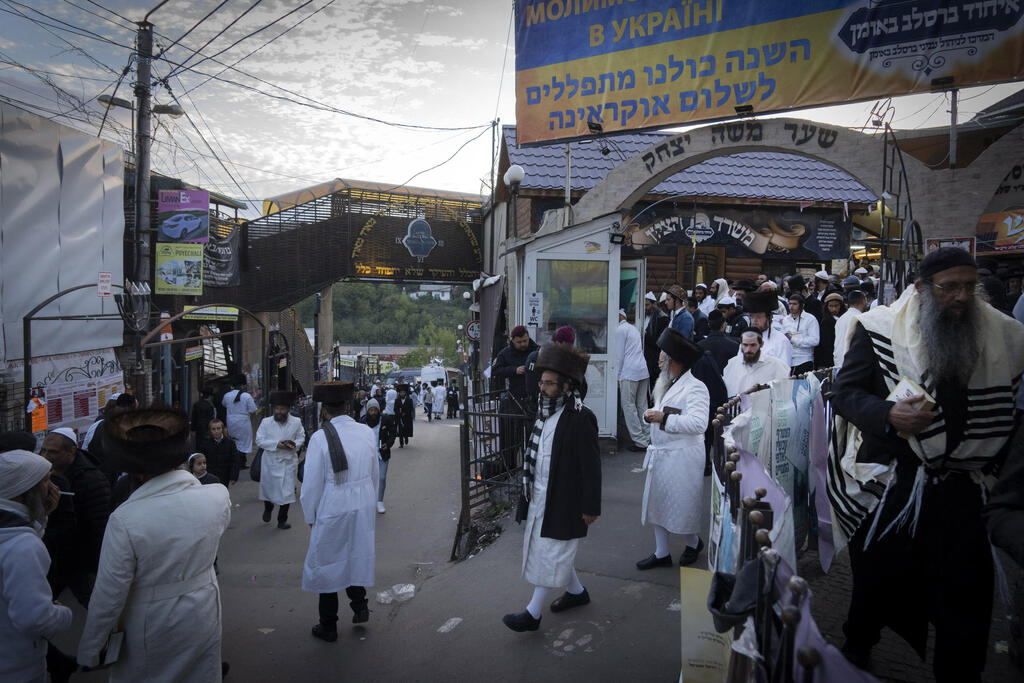
Breslov Hasidim in Uman
(Photo: AP Photo / Efrem Lukatsky)
His followers see the obstacles on the way as part of the spiritual challenge. One Hasid recalled: “During the COVID pandemic, we slept in sleeping bags at border crossings, or walked for days through forests when borders were shut. Compared to that, the military draft notices are 'chips'."
In Hasidic literature, stories abound of disciples delayed by mud, bandits or other obstacles on their way to their rabbi. These “hindrances,” they say, are meant to deepen the sense of 'Great Chesed' when one finally arrives. That belief fuels the willingness of Hasidim to endure hardships, financial and physical, to reach the grave.
The cemetery and its sanctity
According to tradition, Rabbi Nachman chose to be buried in Uman’s Jewish cemetery, where tens of thousands of Jews massacred in a pogrom were laid to rest.
He is said to have arrived there sometime before his death. He stood between two mass graves containing the bones of Jews who refused to give in to the demand to pass through the gate above which hung a cross.
There he declared: “How good it is to be buried between these two mountains, in a place where there is the scent of Eden, the place destined for me from the beginning of creation.” His followers say this explains the sanctity of the site, which some even consider equal in holiness to the Land of Israel.
In the early 1990s, only a few dozen Hasidim traveled to Uman. Over the years, the custom grew into a massive phenomenon, especially on Rosh Hashanah.
Today, the pilgrimage draws tens of thousands, including many secular Israelis who come for the unique spiritual experience. Breslov Hasidim, with their singing vans and festive gatherings, have imprinted “Uman, Rosh Hashanah” on the Israeli cultural landscape.
Modern dimensions and political challenges
In recent decades, Uman has become not only a religious site but also a political issue. During the COVID pandemic, when global skies closed, Hasidim could not reach the grave. The following year, Israel arranged a special framework with medical and police oversight.
In the past three years, since the war in Ukraine began, the country’s borders have been largely closed, forcing Hasidic pilgrims to seek alternative routes. Many see these hurdles as part of the spiritual trial.
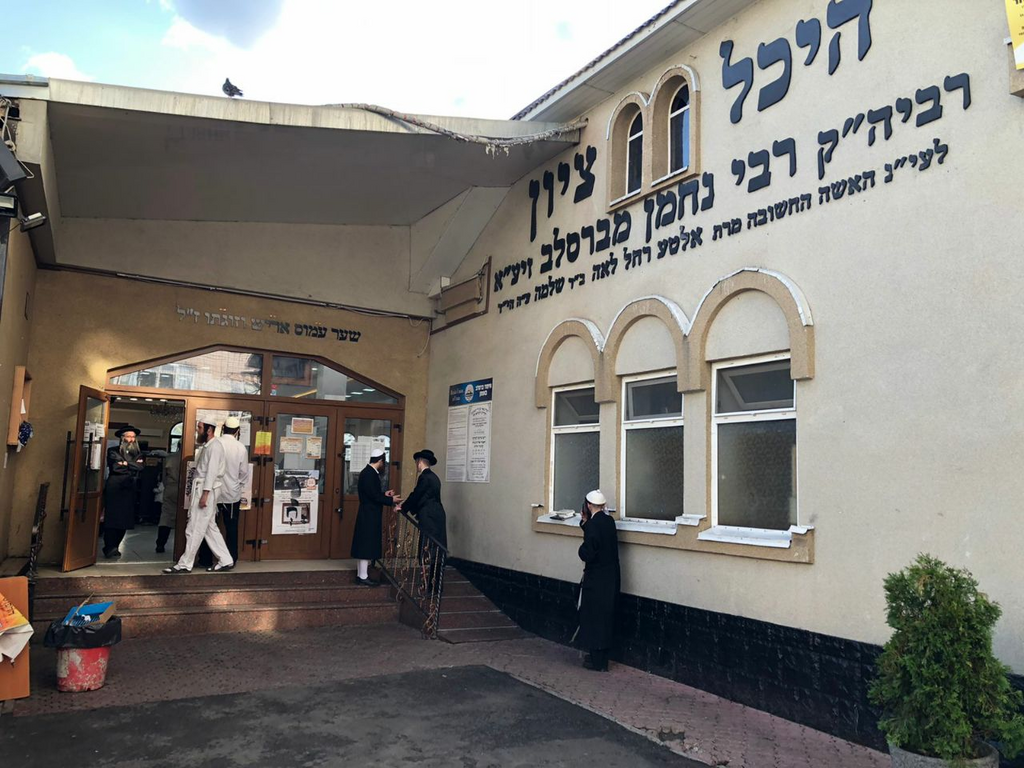
At the site of Rabbi Nachman's grave
(Photo: Edward Doks)
Israel has made attempts to relocate Rabbi Nachman’s remains to Israel. Among those who raised the idea were former President Chaim Herzog in 1992 and former Deputy Foreign Minister Tzipi Hotovely. Ukraine rejected the requests, calling the grave a “cultural asset.”
Within the Breslov community itself, there is also division: some push for the transfer, while many insist he must remain in Uman, the place he designated for himself.
A diverse movement and prayer in Israel
Breslov Hasidism is not a single, unified group but a collection of rabbis and communities that study Rabbi Nachman’s teachings.
Not all Hasidim travel to Ukraine. Each year on Rosh Hashanah, a special Breslov prayer service is held at the Western Wall in Jerusalem for those who choose to stay in Israel, maintaining their distinct Hasidic character without joining the mass gathering in Uman.