

There comes a point in the life of almost every organization when the things built to help it grow begin to weigh it down. Another employee hired to solve a specific need. Another system purchased because the previous one was no longer enough. Another product, supplier, meeting and layer of management.
Almost every such decision makes sense at the time. But a few years later, the organization discovers that simply to keep moving, it must carry an entire structure of assets, processes and commitments on its back.


Gallery

Real strength comes from knowing what is essential and letting go of what no longer creates value
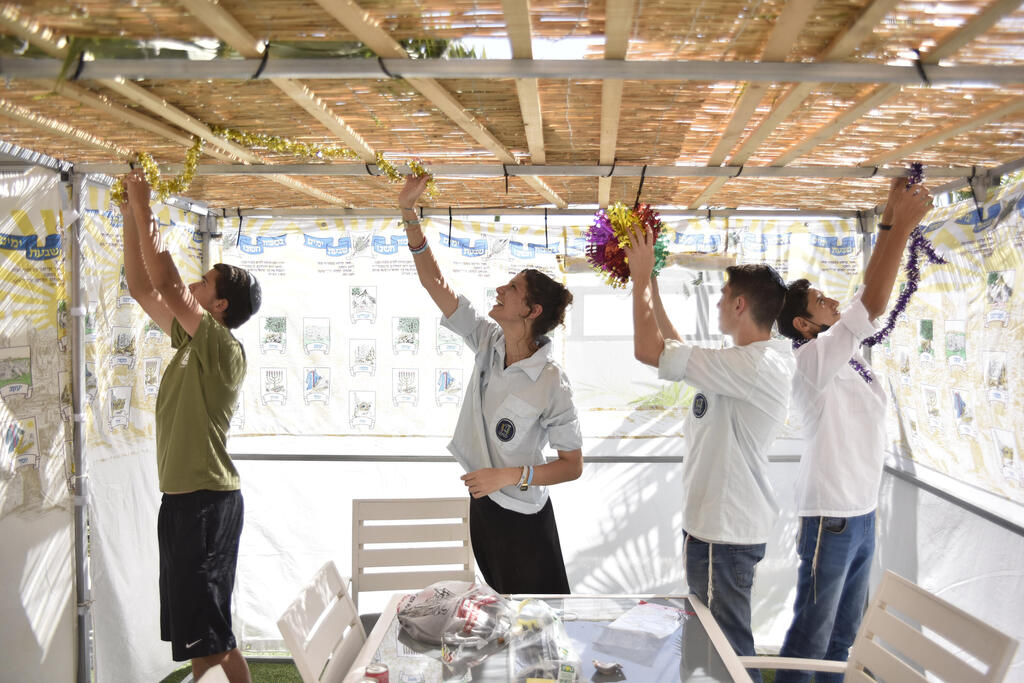
Then comes the Jewish festival of Sukkot and offers an exercise almost opposite to everything the business world teaches us: step outside for a moment.
Rabbi Isaac Arama, author of Akedat Yitzhak, describes the sukkah as a place where a person temporarily leaves behind the world of accumulation, “silver and gold, merchandise and an abundance of produce and everything called property,” and moves into a space containing only what is required for life itself: “a bed and a table and a chair and a lamp.”
This is not a call to idealize deprivation. After seven days, we go home. The idea is different: every so often, we need to distance ourselves from what we have accumulated and ask whether we still possess our assets, or whether they have begun to possess us.
The business world rightly values assets. A customer base is an asset. A brand is an asset. Technology is an asset. Excellent employees are an asset. Cash in the bank provides freedom of action.
The problem begins when accumulation itself becomes a measure of success. A company hires more employees and therefore feels that it is growing. A manager receives another department and feels that he has advanced. A business adds products and systems, and almost every addition is automatically entered on the positive side of the ledger.
But not everything that grows becomes better. Sometimes 50 employees do less efficiently what 30 once did. Sometimes three excellent products create more value than 10 mediocre ones. And sometimes a system purchased to save time creates maintenance, training and integrations that end up occupying an entire organization. Every asset has a hidden cost: it demands attention. Everything we hold also, to some extent, holds us.
This idea recalls Seneca, who proposed occasionally practicing voluntary simplicity, not because poverty is an ideal, but to test how little we truly need and how much of our fear of loss comes from becoming accustomed to abundance. For him, the ability to make do with less was a form of freedom.
King David, too, offers in Psalms a formulation almost opposite to the culture of accumulation: “The Lord is my shepherd; I shall not lack.” The interesting words here are not “I have,” but “I shall not lack.”
David, whose life moved between shepherding, wandering, danger and kingship, does not define security by the number of assets he accumulated, but by the knowledge that he has enough to continue on his path.
That distinction is important for managers as well. A strong organization is not necessarily one that has the most. It is one that knows how to distinguish between what is essential to its ability to operate and what merely creates a feeling of security.
This is also the precision in Rabbi Arama’s phrase: “Enough of what is essential.” Not too little. Enough.
There is a management instinct that says almost every problem requires another resource: more budget, another employee, another system, more time. Sometimes that is true.
But experienced managers also know the opposite side: an additional resource does not always solve the problem. Sometimes it merely allows the problem to continue existing.
A team that does not know how to prioritize will not necessarily improve if more people are added. A product that does not solve a real need will not necessarily become successful if its marketing budget is increased. An organization that struggles to make decisions will not necessarily make better ones if another 20 slides are added to the presentation.
That is why the sukkah can become a kind of management test: If we had to run the organization for a month with half the systems, processes, meetings and products, what would we keep?
Which product is truly at the core of the business? Which meeting genuinely changes decisions? Which system actually saves work? And which activity exists mainly because we have become accustomed to doing it?
These are difficult questions to ask from inside the “permanent home.” Once a department exists, it gets a manager. The manager has targets. The targets generate reports. The reports generate meetings. Before long, it becomes difficult to distinguish between activity that serves the organization’s purpose and activity designed to maintain other activity.
The sukkah briefly breaks that cycle. It does not say that there is no need for a house. It asks whether we still remember what truly needs to be inside it.
I experienced this as a CEO as well. There were periods when we had to do more than reduce headcount. We had to shut down an entire activity even though it was still generating revenue. These are difficult decisions because closing an operation can initially look like retreat.
But sometimes the cost of continuing to maintain an activity that no longer serves the company’s direction is greater than the revenue it still produces. When your back is against the wall, it is easier to make decisions like these. The real test is knowing how to make them before reality forces you to.
An interesting example is IBC, which over the years went from a struggling company to a significant infrastructure player valued at more than 2 billion shekels, with only about 60 employees.
Beyond the specifics of the case, there is an important reminder here: the size of a company and the number of people it employs are not necessarily measures of its strength.
Sometimes a lean, focused and clearly structured organization can create greater value. The more an organization accumulates, the less freedom it may have to change.
High fixed costs require a certain level of revenue even when the market shifts. A large workforce makes changes in direction more difficult. Heavy investment in a particular product makes abandoning it harder, even when the future lies elsewhere.
(Photo: Sharon Zur)
The very assets that are supposed to provide security can instead create dependence. For me, this idea also connects to my new song, “Roots With Wings,” which will be released soon. There is a line in the chorus that I especially like: “Remember where you came from as you go.”
To me, it connects directly to the idea of Sukkot. On one side are roots: identity, values and the things that hold us steady. On the other are wings: the ability to move, change and avoid clinging to everything we have already built simply because it exists.
A healthy organization needs both forces. It must know what its core is, what it cannot afford to lose, while also remaining capable of letting go of assets, habits and processes that no longer serve that core.
Sukkot, then, is not a holiday about giving up the house. It is about temporarily leaving it so that we can return to it differently.
Once a year, it is worth standing outside for a moment and asking: If we were building the organization again today, would we build it the way it looks now? If this system did not already exist, would we buy it? If this product were not already part of the portfolio, would we launch it? And if this recurring meeting were not already in the calendar, would anyone invent it again? Those are sukkah questions.
A tool for managers: The sukkah test
Before the next work plan or budget, choose four central areas and ask:
- What is truly essential? Which product, process, system or person creates value that would be difficult to do without?
- What has gone from habit to an imagined necessity? What remains mainly because it is already there?
- What is the hidden cost of every asset? How much time, money, management attention and complexity does it take to maintain?
- What would we build again today? If we were starting from scratch, what would we keep, and what would we no longer create?
The goal is not to build a smaller organization, but one that knows what truly holds it together. And perhaps that is the lesson shared by King David and the sukkah: resilience is not knowing that you have everything, but knowing what you truly need so that you do not lack what matters most.