

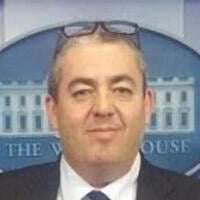
An Argentine lawyer and former Buenos Aires city council member recently visited Damascus and prayed inside a synagogue that had been closed for more than three decades, an unusual event in a city where only a handful of Jews remain and amid significant political change in Syria.
Carlos Gustavo Maslaton, 67, whose family traces its roots to Syria, Spain and Turkey, entered the French Synagogue in Damascus’ former Jewish quarter. The synagogue ceased regular activity in 1992, as Syria’s Jewish community nearly disappeared after decades of emigration.
Argentine Jew prays in Damascus synagogue closed for 30 years amid Syria’s political shift
(Photo: Carlos Gustavo Maslaton)


Maslaton said the visit was made possible after receiving official permission and was conducted in the presence of a representative of Syria’s current authorities, who holds the keys to the synagogue.
In posts on X, Maslaton described praying inside the building alongside Bakour Simantov, one of the six Jews believed to still be living in Damascus. He wrote that the two sang verses of the Yom Kippur supplication “Anenu” and later recited the Jewish declaration of faith, the Shema, inside the synagogue.
“Here in Damascus, Syria, I returned after years of exile,” Maslaton wrote. “This is a sacred moment, made possible by a political shift that until recently would have been unimaginable.”
He said the synagogue is one of 22 that once operated in Damascus, a city that was home to an estimated 100,000 Jews at the height of its Jewish presence.
Maslaton attributed the visit to what he described as a new political reality following the rise to power of President Ahmad al-Sharaa. He said such an event would not have been possible under the rule of former Syrian presidents Hafez al-Assad and Bashar al-Assad.
“The official of the Sunni Islamic government opened the doors for me,” Maslaton wrote. “Something like this would have been impossible in the past.”
The visit underscored both the near disappearance of Syrian Jewry and the emergence of a new and uncertain political landscape in the country. While brief and symbolic, the prayer marked a rare moment in which Jewish worship was once again openly conducted in Damascus, even if only temporarily and under official supervision.