


Two hundred years after it was built, one of Europe’s most iconic synagogues, which went through nine years of detailed and delicate restoration, was set on fire last week in an arson attack. According to the initial investigation at the scene, the motive behind the attack was antisemitic. Still, police are continuing to explore other avenues as the arsonist threw his phone into the flames to eliminate evidence.
The initial investigation revealed that a mentally disturbed person entered the synagogue, located in Sadigura, a suburb of the city of Chernivtsi, while the guard was away from the gates. The suspect was arrested and is being held in custody until trial. Locals say he was a former boxer who has served as an officer in the army. About a month ago he reportedly attempted to set fire to a local church.
Gallery
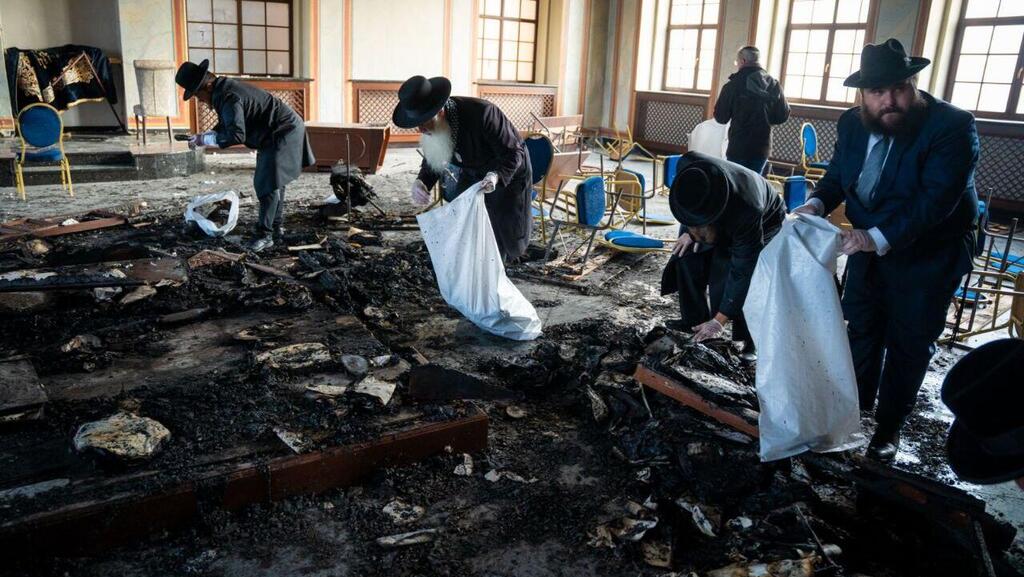
Gathering the holy books burned in the arson attack
(Photo: Yehoshua Fruchter and Meir Zelznik)
Moshe Kreiz, who lives near the synagogue, said that the motives for the arson were undoubtedly antisemitic.
“The antisemitic arsonist tried to burn down our ancient and magnificent synagogue," he said. "He didn’t steal anything, he could easily have taken the tzedaka box that was full of money but just threw it down. He wasn’t interested in stealing, he only wanted to hurt us - the Jews in this place - and destroy our legacy. He came to carry out a pogrom bringing out memories of Kristallnacht."
"Everything within the synagogue is fire damaged," he continued. "We will have to rebuild the synagogue internally from the ground up. He smashed windows, damaged the upper floors, caused electric cabling to melt leaving the building in a state of total disrepair like a broken heart. The murals on the walls and ceilings, which were professionally restored by specialists, are ruined along with the delicate moldings which where specifically cast for this synagogue, to emulate what it was like in its time of splendor and glory. The second floor, the guest house, which housed over 2,500 refugees during the war, also needs to be rebuilt from scratch."
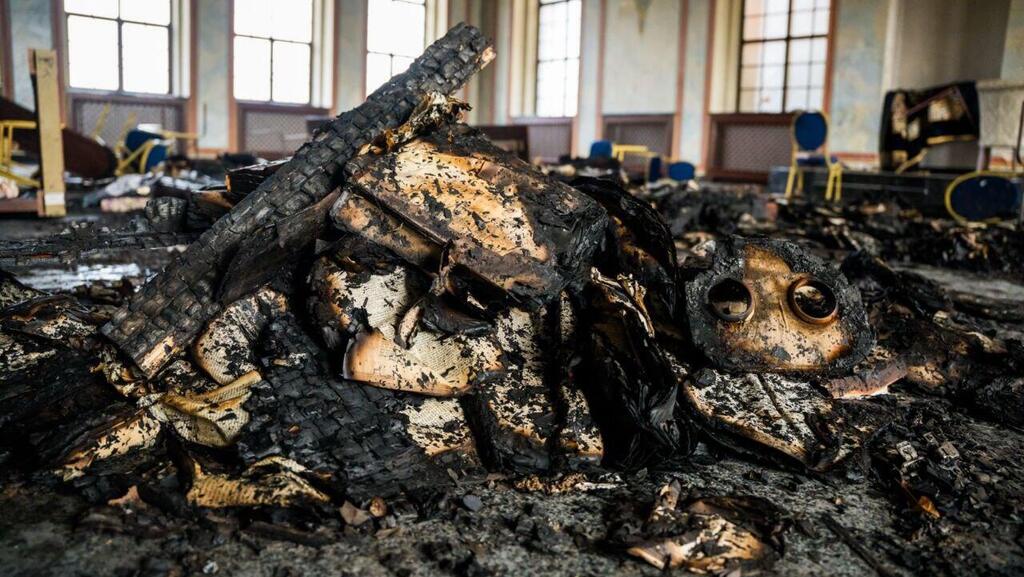
Remains of holy books damaged in arson attack
(Photo: Yehoshua Fruchter and Meir Zelznik)

Burying the remains of the holy books
(Photo: Yehoshua Fruchter and Meir Zelznik)
An emergency delegation of Hasidim led by the Sadigura Rebbe, Rabbi Mordechai Shalom Yosef Friedman, under whose leadership the synagogue has operated and who had also overseen its renovation, arrived in Sadigura to witness the atrocities first hand.
They collected the burned holy books and ashes, calling the destruction a "scene reminiscent of the Holocaust, of Kristallnacht." They spent hours gathering the burnt remnants of the books and, after a special prayer, walked in a funeral procession with members of the Sadigura Jewish community and the surrounding Jewish neighborhoods in Chernivtsi province to bury the books in the famous old cemetery in Sadigura.
The synagogue, known as the Kloiz Kadisha and belonging to the Sadigura Hasidic dynasty, has been active since the 18th century. Many members of the community throughout the generations prayed and studied there, and it became one of the most significant spiritual centers of Eastern European Jewry. Generations of Rebbes from the dynasty served there, and the building was designed by the founder of the dynasty, Rabbi Yisrael of Ruzhin.
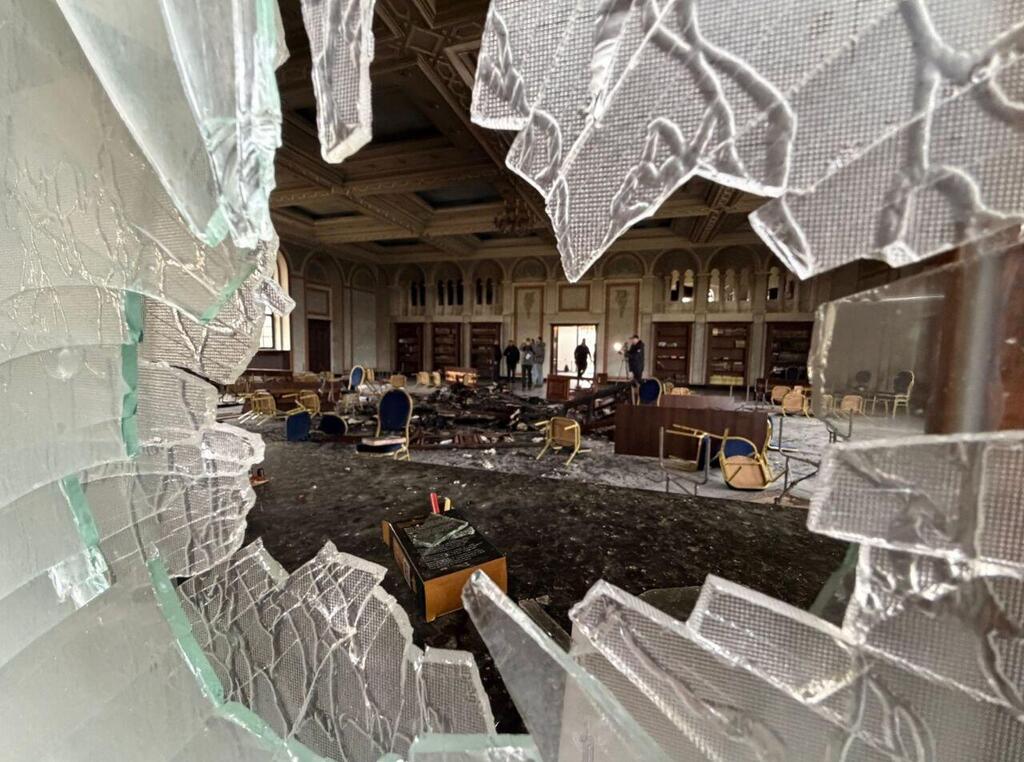
Damage inside the Kloiz Kadisha synagogue, which belongs to the Sadigura Hasidic dynasty
(Photo: Yehoshua Fruchter and Meir Zelznik)
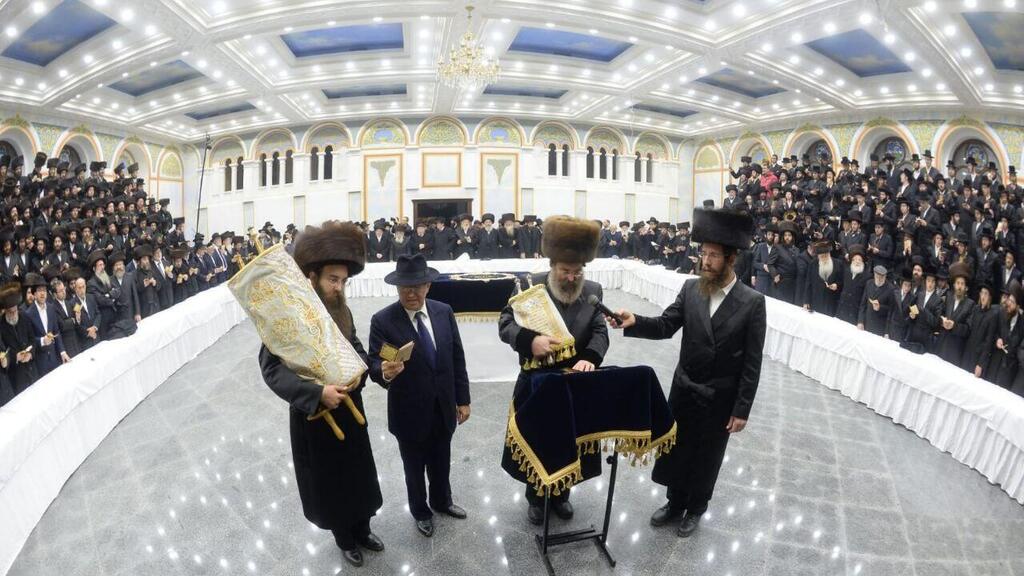
This is what the synagogue looked like before the arson attack
(Photo: Yehoshua Fruchter and Meir Zelznik)
The synagogue was built with great effort and underwent several renovations over the years. In recent years, millions of dollars were spent on its restoration by the generosity of the Rohr family of New York. The synagogue survived World War I, and during World War II the building housed a camp of the Austrian army when Red Cross flags were placed on its roof preventing it from being bombed by enemy aircraft.
It is considered to be one of the most magnificent in Europe to remain standing after the Holocaust. The Jewish community has publicly stated its resilience and determination to restore the historic building. Community members and leaders expressed hope that the synagogue "will be repaired and will continue to stand as a beacon of Torah, prayer and Hasidic heritage."