


The New South Wales government may appeal a controversial ruling by a state Supreme Court judge who rejected its request for a terrorism order against a Sydney man convicted of spray-painting “F... Israel” on cars and setting another vehicle on fire in late 2024, according to reports by the British and Australian editions of The Guardian.
Last week, New South Wales Supreme Court Justice Desmond Fagan sparked controversy after sharply criticizing the International Holocaust Remembrance Alliance, or IHRA, definition of antisemitism, which has been adopted by the Australian government and is used by official bodies in the country.
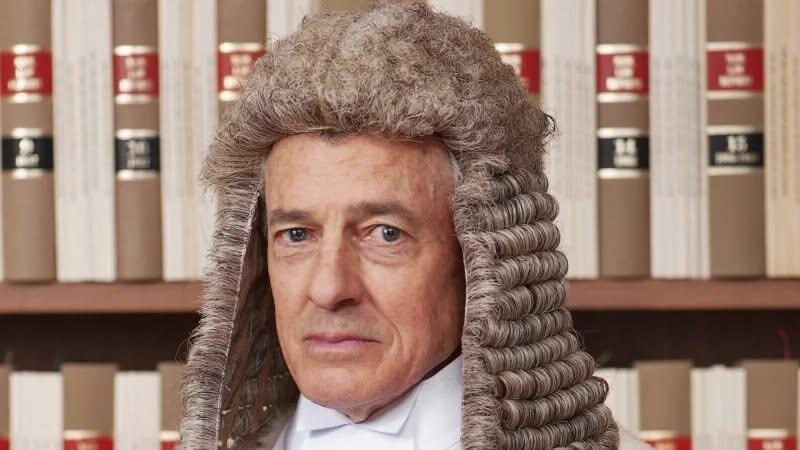
Fagan called the definition “overly detailed and imprecise” and said it was “detached from the reality” of how the term antisemitism is commonly used and understood in Australia.
The comments were included in a ruling in which Fagan rejected the New South Wales government’s request to impose an extended supervision order on Mohammad Farhat following his release from prison. Farhat, 22, is expected to be released in October after being sentenced to one year and eight months in prison over a 41-minute spree involving graffiti and arson in eastern Sydney in late 2024.
During the incident, Farhat caused more than 100,000 Australian dollars in property damage. Among other things, slogans including “F**k Israel” and “PKK coming” were sprayed on 10 cars, the latter referring to the Kurdistan Workers’ Party, which is designated as a terrorist organization in Australia.
A spokesperson for the New South Wales government said Attorney General Michael Daley is “urgently seeking advice on the prospects of an appeal” against Fagan’s decision to reject the state’s request for an extended supervision order.
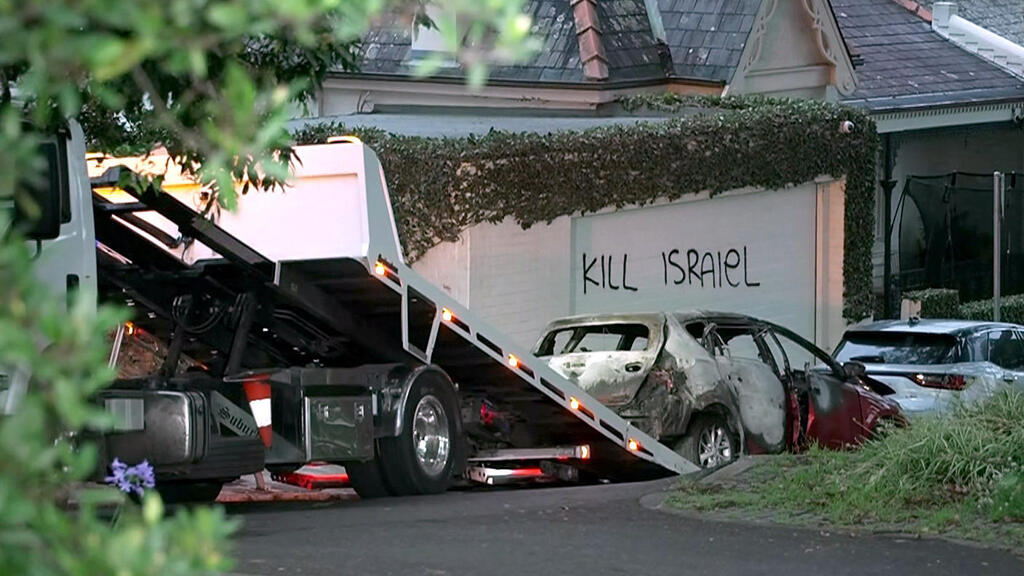
A car was set on fire and antisemitic graffiti was sprayed on buildings in the Sydney suburb of Wallara.
(Photo :AFP / Australian Broadcasting Corporation (ABC))
Guardian Australia contacted Daley, Police Minister Yasmin Catley and Corrections Minister Anoulack Chanthivong regarding Fagan’s findings about how police and other bodies handled the case.
A government spokesperson said “the justice system operates independently of government, and that independence is essential to safeguarding the administration of justice in New South Wales.”
“Our government has taken decisive action against antisemitism and hate,” the spokesperson said.
The judge’s decision also drew anger from Australia’s Jewish community. Alex Ryvchin, co-chief executive of the Executive Council of Australian Jewry, described Fagan’s approach as “judicial activism.”
“It’s quite extraordinary [given] where we are as a society, as a country, globally with antisemitism, that we’re still being dragged back into these foundational discussions about what is and what isn’t antisemitism,” he told Sky News.
Ryvchin said the IHRA definition has been accepted “certainly within the Jewish world,” as well as by Australia’s two major political parties, universities and sporting bodies.
“But whenever someone wants to muddy the waters and prevent us from actually looking at curing antisemitism, they drag us back to this discussion about the IHRA definition,” he said.
Ryvchin said Fagan’s focus on the definition “seems like the work of activism rather than a judicial member.”
“It’s deeply troubling, and I think that influenced the overall decision the judge made and his whole thinking on the case,” he said.
Ryvchin said Farhat’s vandalism in a “Jewish neighborhood” was antisemitic and not merely political protest. He said Fagan’s ruling “completely ignores the facts of the case, but also the impact on the community.”
“We knew without equivocation that it was an attack on us,” Ryvchin said, adding that he believes the decision should be appealed. “There’s a great danger in this judgment standing … I think it should be reviewed.”