

The first day of Sukkot, which traditionally falls on the 15th of Tishrei on the Hebrew calendar, will begin this year on Monday, Oct. 6, 2025, and end Tuesday evening, Oct. 7.
The first day of Sukkot is a Yom Tov, during which Jewish law prohibits work. In Israel, it will be followed by Chol HaMoed Sukkot, the intermediate days of the festival, lasting until Hoshana Rabbah on Oct. 13.
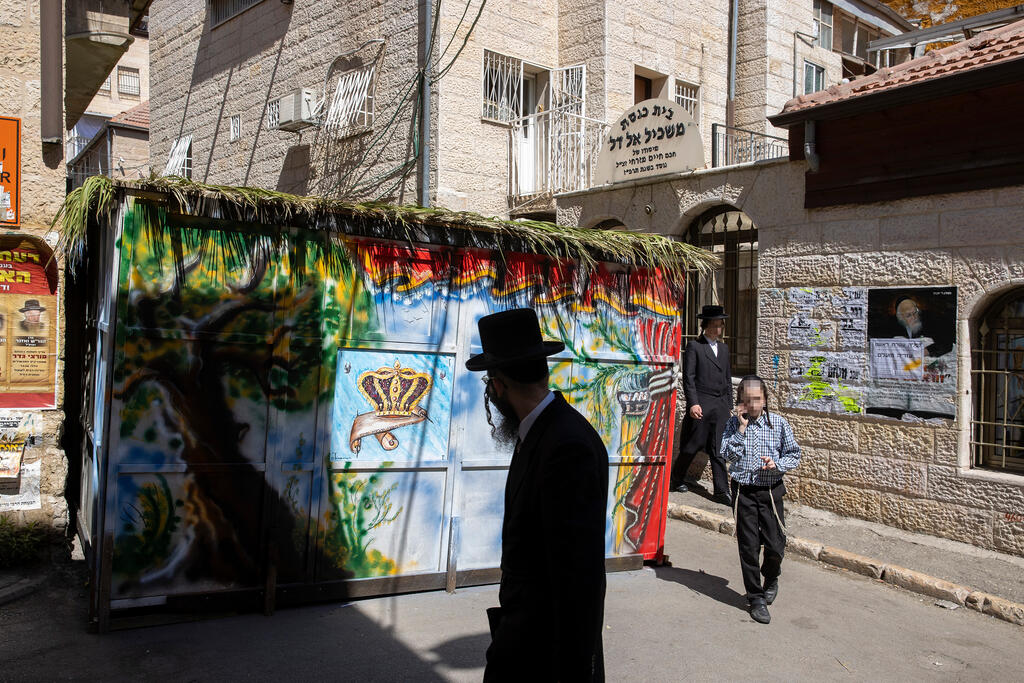
After Hoshana Rabbah, the holiday transitions into Shemini Atzeret and Simchat Torah, which are celebrated in Israel on the same day, the 22nd of Tishrei — from the evening of Oct. 13 through Oct. 14.
Here are some of the rules for observing the holiday:
Where not to install a sukkah
A sukkah under a tree
The Mishnah (Sukkah 9) teaches: “One who builds a sukkah beneath a tree, it is as though he built it inside a house.” Therefore, one should not make a sukkah under a tree, and the s'chach (cover of the sukkah) under a tree is considered invalid (Shulchan Aruch, 626:1).
If the tree branches cover an area of four-by-four tefachim (32 cm or 12.59 inches), that place is invalid and one should not sit under it. If the branches are four tefachim wide and extend over the entire sukkah, then the sukkah as a whole may be invalid for use.
A sukkah under a roof
If an entire sukkah is built beneath a roof, it is unquestionably invalid. If only part of the sukkah is under a roof, but three walls enclose the uncovered section and meet the minimum halachic size for a sukkah (seven by seven tefachim - ideally about 70 cm, or 27 inches), then that section is valid. However, one should not sit in the portion located under the roof.
How to make the walls of the sukkah?
The walls can be made of any material, provided they can withstand a normal wind (Shulchan Aruch, 630:1).
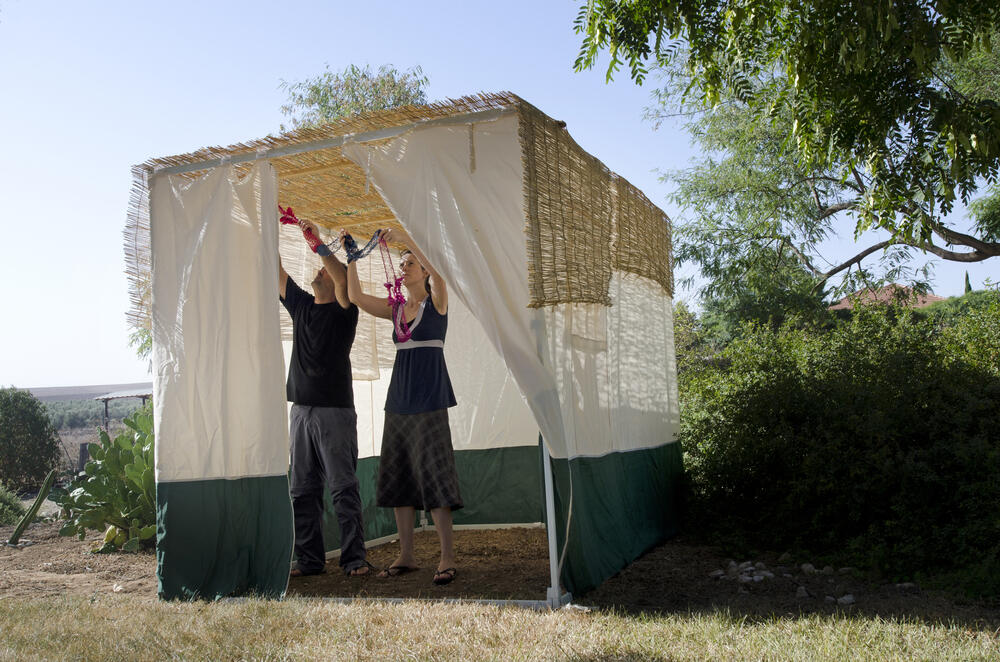
Ideally, it's good to have four walls (except for the entrance), but the sukkah is also kosher with only three walls. The third wall doesn't need to be complete, just slightly more than half is sufficient. The minimum length of a wall is seven tefachim (70 cm according to the Chazon Ish), so a wall of four tefachim is sufficient (and extend the form of the doorway (tzurat ha-petach) for another three or four tefachim (Shulchan Aruch 630:2 and Mishnah Berurah ad loc., note 9).

(Photo: Tomertu / Shutterstock)
The walls do not need to reach the s'chach. It's enough if they are 10 tefachim high (1 meter according to the Chazon Ish; 80 cm according to Rabbi Chaim Na'eh), and we consider them as if they continue up to the sky. This is a halacha given to Moses at Mount Sinai called "gud asik mechitzata" (Shulchan Aruch, 630:9).
Supports (Ma’amid) for the sukkah
The ma’amid is the structure that directly supports the s’chach (the plant material used for the roof of a sukkah). Without it, the s’chach would collapse.
Ideally, the s’chach should not rest on something that can contract tumah (ritual impurity) or on any material invalid for s’chach (such as something not grown from the ground). However, if no alternative exists, one may rely on such a support, and the sukkah would be considered valid (Mishnah Berurah 629:22; Sha’ar HaTziyun 630:60).
Secondary sukkah supports (ma’amid de-ma’amid)
The Shulchan Aruch (629:8) rules that it is permissible to fasten the beams supporting the s’chach with nails, even though nails themselves cannot be used as s’chach.
According to the Magen Avraham (629:9) and most later authorities, even someone strict about using invalid supports may be lenient here, because the nails are only a "ma’amid de-ma’amid," a secondary support. The nails hold the beams, and the beams in turn hold the s’chach.
The Chazon Ish (143:2), however, disagreed, arguing that since the beams form part of the s’chach structure, nails fastening them are effectively supporting the s’chach directly.
In practice, the lenient view is accepted, as ruled by the Mishnah Berurah (629:26), Rabbi Shlomo Zalman Auerbach (Minchat Shlomo, vol. 2, no. 55), Rabbi Yosef Shalom Elyashiv (in his notes to Sukkah 21b), and many others. Thus, one should not fasten the s’chach itself with nails, but it is permitted to fasten the beams beneath it with nails. This is considered "ma’amid de-ma’amid": the nails support the beams, and the beams support the s’chach.
Eating in the sukkah
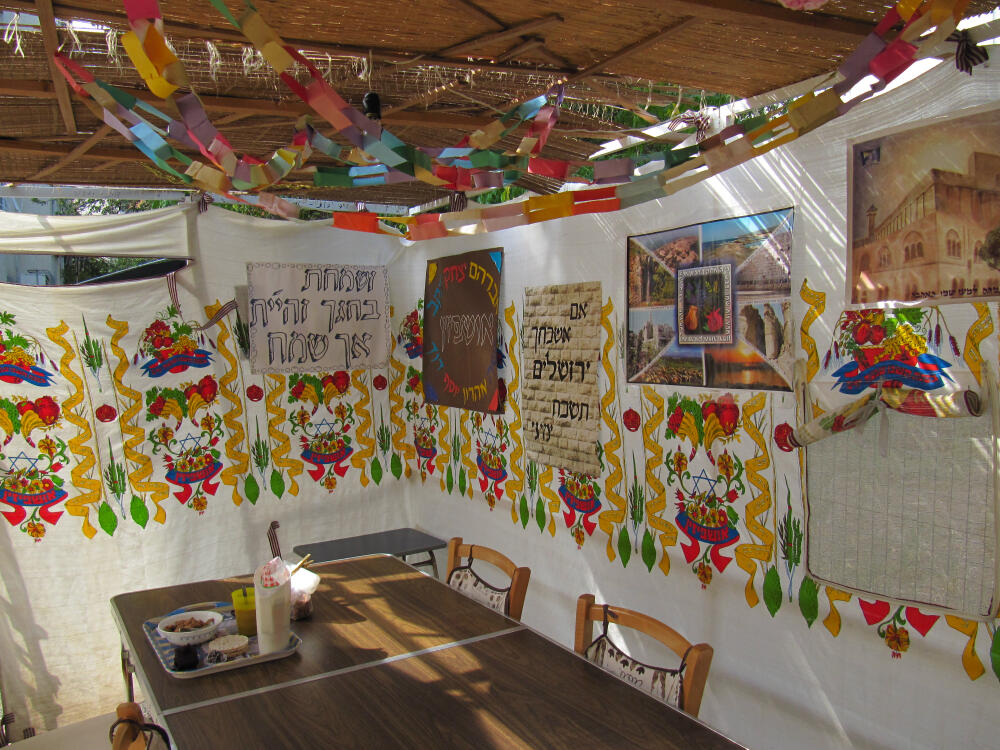
The Mishnah (Sukkah 25) states: "One may eat and drink casually outside the sukkah." Let's detail briefly:
(Photo: Shutterstock)
1. Bread or mezonot (made with grain, including dishes like pasta and couscous) in an amount more than that of an egg - "k'beitzah" (56 cc, about the volume of two matchboxes) – must be eaten in the sukkah.
2. Meat and fish may be eaten casually, but it's proper to be stringent and not eat them as part of a meal (like lunch) outside the sukkah.
3. Fruits and vegetables may be eaten even in large quantities outside the sukkah.
4. Drinking is permitted in any quantity, but one should be strict and not drink wine in a fixed manner outside the sukkah.
These laws relate to the core law and define the boundary between a fixed meal and a casual meal, but one who wishes to be stringent and careful to eat even a casual meal in the sukkah is praiseworthy.
This stringency also applies to drinking water. However, according to the view of the Maharil, it is sufficient to observe this stricter practice in all matters except for water.
Blessing of 'Leishev BaSukkah'
The Talmud (Sukkah 46) says: "When one enters to sit in it (the sukkah), he says: '...asher kid'shanu b'mitzvotav v'tzivanu leisheiv basukkah.'" The Rishonim disagreed on when to make the blessing. In practice, the Shulchan Aruch (639:8), the Rema (ibid.) and the Mishnah Berurah (ibid., 46) ruled that one blesses only when eating in the sukkah.
In light of this, one should say the blessing before eating.
Who should one say the blessing? One who eats bread the size of an egg or mezonot in the amount of a fixed meal certainly blesses, as these things require a sukkah by the strict meaning of the law.
(Photo: Shutterstock)
The Mishnah Berurah (639:16) writes that the common custom is to bless even on eating a "k'beitzah of mezonot" (56 cc), but added that in order to avoid a concern of saying a blessing in vain, one should stay in the sukkah a bit after eating and intend in the blessing both for the eating and for the stay.
The common custom among Sephardic Jews is not to recite the blessing "leishev ba-sukkah" when eating the volume of an egg (k'beitza) of grain-based foods (mezonot). The blessing is recited only when eating bread or when eating mezonot in a quantity that constitutes a full meal. At kiddush, however, some have the custom to recite the blessing even when eating only a k'beitza.
One who said the blessing "leishev basukkah" and ate, and then remained in the sukkah until the next meal, or went out for a short time with the intention of returning immediately and did so – does not bless again (Mishnah Berurah, 639:47). However, if one went out for business or to the synagogue or other errands, when he returns and eats in the sukkah, he blesses "leishev basukkah" again (ibid.).
Trips during Sukkot
The Gemara (Sukkah 26) says that "travelers" are exempt from the sukkah. That is, an individual who is traveling (during the day or night or both) is exempt from the sukkah.
Responsa Yechaveh Da'at (Vol. 3, 47) and Igrot Moshe (Orach Chaim, Vol. 3, 93) ruled in accordance with Rashi's words, that one who goes on a trip for pleasure is not allowed to eat outside the sukkah, while our teacher Rabbi Aharon Lichtenstein zt"l (Alon Shvut 90) ruled that from a halachic perspective one can be lenient in this matter, since the law of travelers is based on "teshvu k'ein taduru" (dwell as if you live), and a person usually travels all year round, as per the Rashba's reasoning.
However, although he was lenient from a halachic perspective, Rabbi Lichtenstein strongly opposed this from a value and educational perspective, because "a person from Israel should be full of aspiration and longing for mitzvot, and not, G-d forbid, see them as a burden... from which he frees himself at the first opportunity," especially in a mitzvah that is available to him only one week a year.
Indeed, often there is importance in going on trips during Chol HaMoed, as children are on vacation, and many parents also take time off (and it's good that they do!), and the joint trip is important for family bonding.
(Photo: Shutterstock)
It seems that in this situation, there is room to travel, but it is proper not to rely on the exemption of "travelers" but to conduct oneself in a way that does not require this exemption. In this way, we will both fulfill the mitzvah properly and allow for a family trip.
Thus, one may eat breakfast and dinner in the sukkah (before and after the trip), while during the trip itself, to eat only casual meals (as explained above, 1. bread the size of an egg, 2. fruits or vegetables and snacks whose blessing is "borei nefashot," 3. meat and fish not as a meal, and 4. free drinking).
Soldiers in Gaza or other operations
Soldiers stationed in Gaza, Lebanon or in combat operations in the West Bank and similar areas are exempt from the mitzvah of dwelling in a sukkah. They are not only considered “travelers on the road” but are also engaged in a mitzvah.
On this, the Talmud (Sukkah 25a) teaches that “one who is occupied with a commandment is exempt from another commandment,” all the more so when involved in a defensive war (milchemet mitzvah).
Soldiers stationed on a base and not in active combat should make an effort to have a sukkah, except for those under high alert or operational pressure. In all such cases, it is advisable to consult the army rabbi.
Arba'at Ha'minim - The Four Species
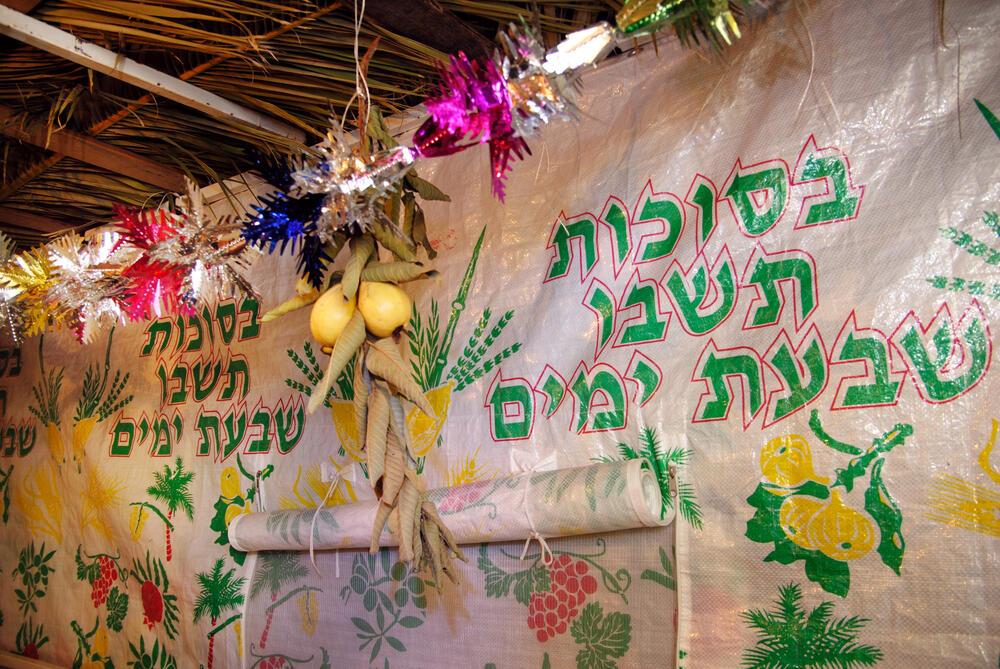
"And ye shall take you on the first day the fruit of goodly trees, branches of palm-trees, and boughs of thick trees, and willows of the brook, and ye shall rejoice before the Lord your G-d seven days," (Leviticus 23:40).
The sages explained that these are the Four Species: the etrog (citron, “fruit of goodly trees”), the lulav (palm branch), the hadas (myrtle, “thick trees”) and the aravah (willow of the brook).
The Mishnah (Sukkah 34b) records a debate over how many of each species must be taken. In practice, the Shulchan Aruch (651:1) rules that one takes a single etrog, one lulav, three hadasim (myrtles) and two aravot (willows).
In a case of necessity, when only one valid myrtle or one willow is available, a person may rely on the opinion of earlier authorities who follow Rabbi Akiva and use only one (Rama ad loc. regarding the myrtle; Aruch HaShulchan 651:1 and others regarding the willow).
In such a case, however, halachic authorities disagree whether a blessing may be recited (Mishnah Berurah 651:6). In practice, the blessing should not be recited.
What if there is only one set of the Four Species?
On the first day of Sukkot, the Four Species must belong personally to the one performing the commandment, as it says: “You shall take for yourselves on the first day the fruit of a goodly tree...” (Leviticus 23:40). The sages explained this to mean “for yourselves” as they must be your own.
However, the sages also taught that the Four Species may be acquired through a legal mechanism called "matana al menat le'hachzir" that is, a “gift on condition of return.”
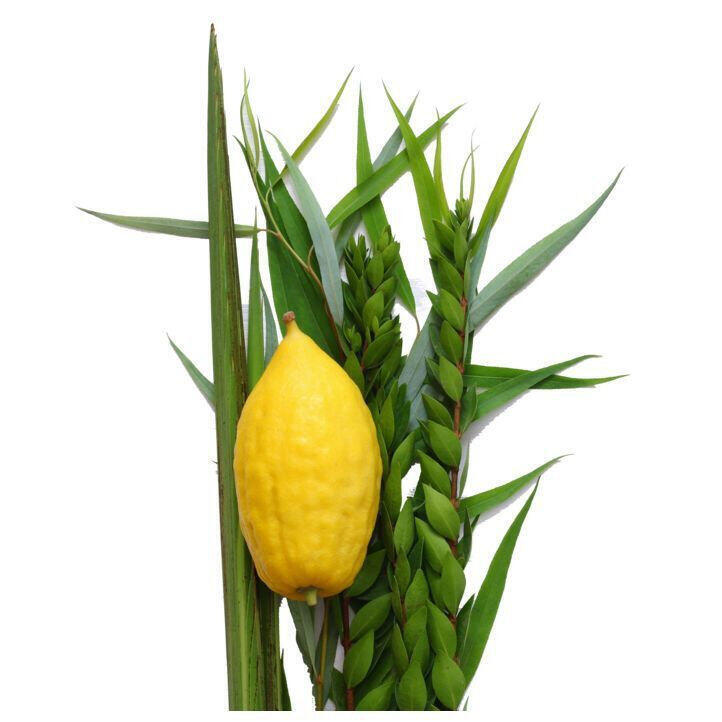
The Four Species
(Photo: Wolt)
In this arrangement, each person who takes the Four Species intends to acquire them as a temporary gift, with the understanding that they will later be returned to the owner. In this way, many people can fulfill the mitzvah using a single set.
What is the minimum size of a sukkah?
A sukkah must be at least ten tefachim high (about 80 cm or 31 inches) according to Rabbi Chaim Naeh, or 96 cm / 38 inches according to the Chazon Ish), and seven by seven tefachim wide (about 56 cm / 22 inches or 70 cm / 27 inches respectively). A sukkah smaller than this does not qualify even as a temporary dwelling (Sukkah 2a) and is therefore invalid.
Based on this, it is sometimes possible to make a sukkah using the doors of a car, when both doors are opened (used as two walls), and a s’chach is placed on top.
Care must be taken, however, that the gap below the doors does not exceed 24 cm (9 inches). This can be fixed by placing stones or another sturdy barrier beneath the doors, or by parking the car in a way that the doors are placed on a sidewalk, so the gap is reduced.
The third wall may be created by placing a partition nearby, or by positioning the car close to a wall or another car. In some cases, the inner side of the car itself may serve as a wall, even if distant from the s’chach, provided the distance is less than 1.93 meters (76 inches). In that case, the halachic principle of dofen akumah (“bent wall”) applies, treating the wall as though it extends upward toward the roof.
A reserve soldier returning from combat after weeks of service: should he sleep in the Sukkah or with his wife?
The Talmud (Sukkah 26a) rules that one should not sleep outside the sukkah.
The Rama (Orach Chaim 639:2; also in Darkei Moshe) offered justification for those who are lenient. He explained that the mitzvah of sukkah requires a person to live in it as they would at home. Since a wife generally does not sleep in the sukkah, the husband is likewise exempt from doing so.
These arguments were considered "limud zechut," justifications for those lenient in practice.
In the diaspora, many refrained from sleeping in the sukkah, but in Israel, there is a greater emphasis on building an appropriate and comfortable sukkah and striving to sleep in it whenever possible.
However, all of this applies under normal circumstances. When refraining from sleeping together causes significant distress, such discomfort is itself grounds for exemption from the sukkah (Rama ad loc.; Shulchan Aruch HaRav).
Therefore, in the case of reserve soldiers returning home after weeks of service, it is clearly proper and appropriate that they sleep with their wives, whether in the sukkah or in the home.
Shemini Atzeret
The final day of the Sukkot is called in the Torah Shemini Atzeret (the eighth day of the assembly). Unlike other holidays, it carries no specific ritual act (aside from offerings in the Temple). Every other festival has a distinctive commandment: the shofar on Rosh Hashanah, fasting on Yom Kippur, the sukkah and Four Species on Sukkot, and matzah on Passover.
Shemini Atzeret, by contrast, has no external symbols. It is understood as an intimate encounter with G-d. (The sages explained that this is why the day features a single bull offering, representing one nation, unlike the 70 bulls during Sukkot).
It is a day of reflection and culmination. On this day, we rejoice in the spiritual strength gained over the previous month and consider how to carry it into daily life after the holiday. The essence is not symbolic action, but the encounter itself and the thought it inspires.
Simchat Torah
The celebration of Simchat Torah takes place within Shemini Atzeret, a custom that began in the period of the Geonim (early medieval Jewish authorities).
Shemini Atzeret is marked by the absence of outward ritual. The Geonim introduced the joyous celebration of Simchat Torah, incorporating it within Shmini Atzeret, which gradually came to define the day, causing Shmini Atzeret to almost disappear (in Israel).
This innovation of the Geonim revealed the essence of this day. Having reached the spiritual peak of the High Holy Days, the time has come to dance and rejoice directly. On this day, we complete the annual Torah reading cycle, and Simchat Torah is the time to be specifically joyous.
First published: 09:10, 09.17.25