


From family-run businesses along the Gaza border to shops in northern Israel and companies whose owners were called up for military reserve duty, thousands of Israeli small businesses have struggled to survive the economic fallout of war. Falling revenues, prolonged closures and staff shortages left many fighting not only to remain profitable, but simply to keep their doors open and pay their employees.
Now, an initiative spearheaded by the Jewish Federations of North America (JFNA) has provided more than $240 million in loans to 4,132 Israeli businesses, helping sustain an estimated 28,000 jobs and creating a financial lifeline for companies whose operations were disrupted by the fighting.
Gallery
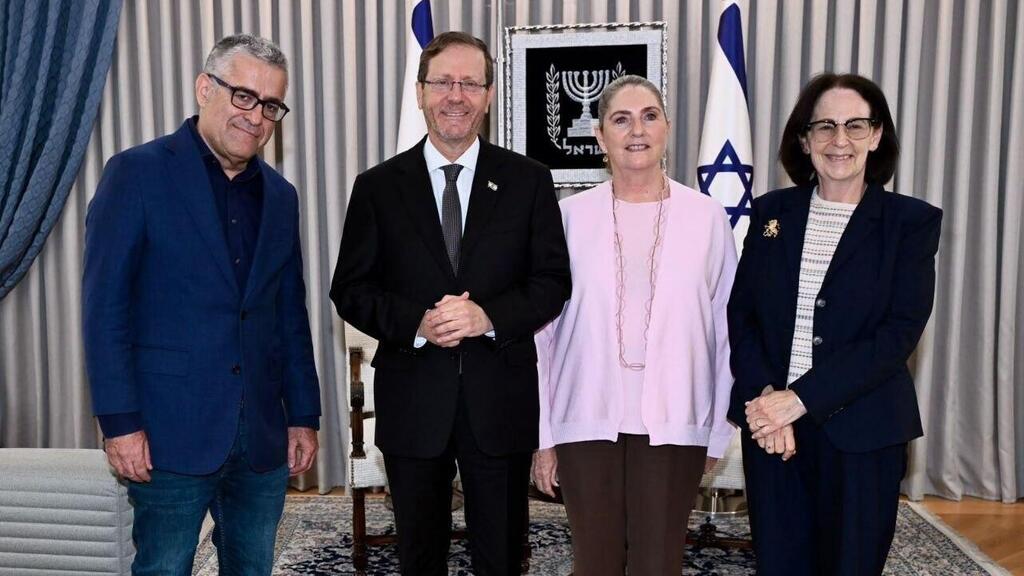
Rebecca Caspi, senior vice president of the Jewish Federations of North America; President Isaac Herzog and his wife, Michal; and Eyal Ben-Haim, deputy CEO of Isracard
(Photo: Avshalom Sassoni)
Over the past two and a half years, the federations have raised approximately $92 million in philanthropic capital. By partnering with financial institutions and leveraging bank financing, the fund has significantly expanded the reach of those donations, making more than $240 million in loans available to businesses across Israel.
Nearly half of the loans, approximately 48%, have gone to businesses in northern Israel, communities bordering Gaza and the northern Negev, regions particularly hard hit by the war. The initiative has also supported businesses whose owners or employees were called up for prolonged reserve military service, as well as companies in severely affected industries, including tourism and hospitality.
The fund's work was recognized Thursday at a ceremony hosted by President Isaac Herzog at the President's Residence in Jerusalem, honoring the Jewish Federations of North America's Israel Small Business Loan Fund and its contribution to the country's economic recovery.
Rebecca (Becky) Caspi, senior vice president of the Jewish Federations of North America, said the initiative was built around the immediate financial needs of business owners struggling to maintain their livelihoods.
When the war broke out, she explained, North American Jewish communities sought practical answers from shopkeepers in Kiryat Shmona, business owners serving in the military reserves and families operating businesses near Gaza. What they needed most was affordable credit that would allow them to continue operating.
More than 4,000 businesses have since received assistance, she said, and most borrowers are repaying their loans, allowing their repayments to support additional businesses.
"The borrowers themselves have become part of the circle of giving," Caspi said.
An $80 million cycle of reinvestment
One of the fund's central features is its revolving lending model. Rather than distributing donations as one-time grants, the initiative provides loans that can be repaid and then extended to other businesses.
According to the fund's figures, approximately 257 million shekels, equivalent to around $80 million, has already been lent out again using repayments from previous borrowers, without requiring additional donations.
Despite the economic pressures facing Israeli businesses, less than 0.5% of the total capital lent is more than a year overdue, according to the fund.
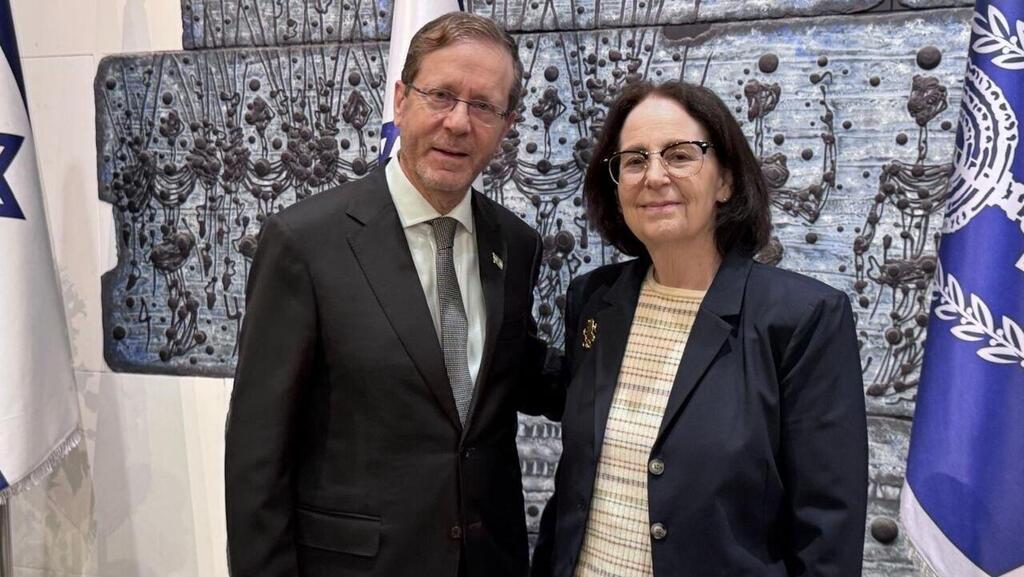
Rebecca Caspi and President Isaac Herzog at the ceremony honoring the Israel Small Business Loan Fund
(Photo: Avshalom Sassoni)
The model is designed to extend the impact of philanthropic contributions beyond their initial recipients, allowing the same pool of funds to continue supporting businesses through successive lending cycles.
President Herzog praised the initiative, saying small and medium-sized businesses had faced enormous challenges since October 7, 2023, not because of poor business decisions or a lack of demand, but because of the extraordinary circumstances created by war.
He said the fund had helped preserve economic activity, protect livelihoods and strengthen communities, while demonstrating the shared responsibility of Jewish communities around the world toward Israel's recovery.
Herzog described small businesses as the backbone of Israeli society and thanked the federations for standing alongside business owners during one of the country's most difficult periods.
Five lending platforms serving different communities
To reach businesses with different financial needs, the fund operates through five professionally managed lending platforms, each serving a specific segment of the Israeli economy.
Bizi, working in partnership with Isracard and The Phoenix, provides rapid digital, short-term working-capital loans to small businesses near Israel's northern and southern borders, businesses owned by military reservists and companies whose revenues have been affected by the war.
Daroma-Tzafona, operating in cooperation with the Jewish Agency for Israel, supports businesses employing between five and 29 workers in communities near the northern and southern borders.
Koret Israel Economic Development Funds focuses on improving access to credit for underserved populations, including Arab Israeli and Ethiopian Israeli business owners.
Ogen provides low-interest loans combined with business mentoring for small businesses and reservist entrepreneurs who struggle to obtain sufficient financing from conventional financial institutions.
SparkIL connects lenders around the world with small businesses in Israel's geographic and social periphery, providing interest-free loans that enable individuals abroad to participate directly in supporting Israeli entrepreneurs.
Together, the five platforms are intended to provide accessible financing to business owners who might otherwise struggle to secure loans during wartime.
71% of borrowers report higher revenues
Beyond the scale of the lending, the fund has reported encouraging signs of recovery among businesses receiving assistance.
In borrower surveys conducted for the first time this year across all five lending platforms, participants reported improvements in their business performance. Among Bizi borrowers, 71% said their revenues were higher than in the year preceding their loan, while 96% reported maintaining or increasing their workforce.
The results are based on borrower reports and reflect the experiences of businesses participating in the program.
The importance of small business recovery extends well beyond individual companies. Small businesses account for more than 90% of registered companies in Israel, generate approximately 35% of the country's gross domestic product and employ roughly one-third of its workforce.
Sara Gottlieb, chair of the Jewish Federations' Israel and Overseas Committee, said the initiative demonstrated how philanthropic donations could be multiplied through financial partnerships and continue generating assistance through loan repayments.
She noted that the combination of bank financing and philanthropic capital had made more than $240 million available to business owners, while approximately $80 million in repayments had already been recycled into new loans.
"Small businesses were a sound bet, and they are paying it back," Gottlieb said.