

A painting by a 17th-century Dutch artist, looted by the Nazis from a Jewish family in France in 1942, was formally restituted to the family's heirs over the weekend during a ceremony at the French Ministry of Culture.
The painting, titled "Portrait of a Woman in Blue," was created by Cornelis Janssens van Ceulen (1593–1661), a London-born painter of Flemish descent. The Nazis stole the work from the Paris home of Gabrielle Philippson just weeks after her death.
Gallery
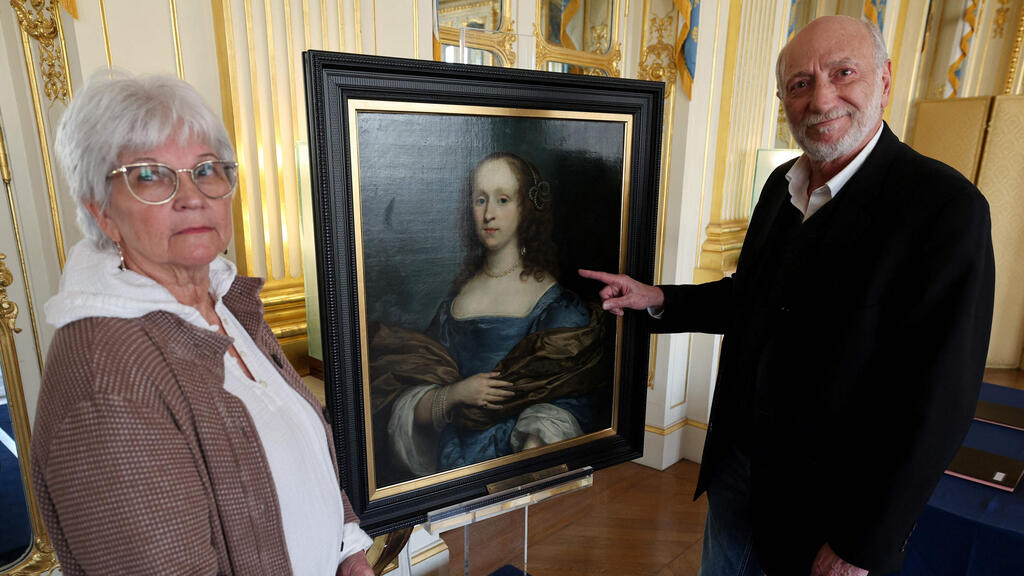
Relatives of the late Gabrielle Philippson with her stolen painting "Portrait of a Woman in Blue"
(Photo: Ehdi Fedouach / AFP)
Hermann Goering , one of the most powerful figures in the Nazi regime, selected the painting for his private art collection. Shortly after the end of World War II, the painting was discovered in Berchtesgaden, Germany, alongside other works from Göring's collection.
Gabrielle Philippson's children managed to recover several items looted from their family immediately after the war, including another painting that had formed a pair with "Portrait of a Woman in Blue." This particular work, however, remained missing for decades.
The painting was eventually located in 2023 at the Musée Massey in Tarbes, southwestern France, which had acquired it in 1985. The municipality of Tarbes and the Philippson family reached an agreement under which the painting would remain in the museum. In exchange, the municipality agreed to purchase a new artwork for the family with a value equivalent to the painting's current worth.
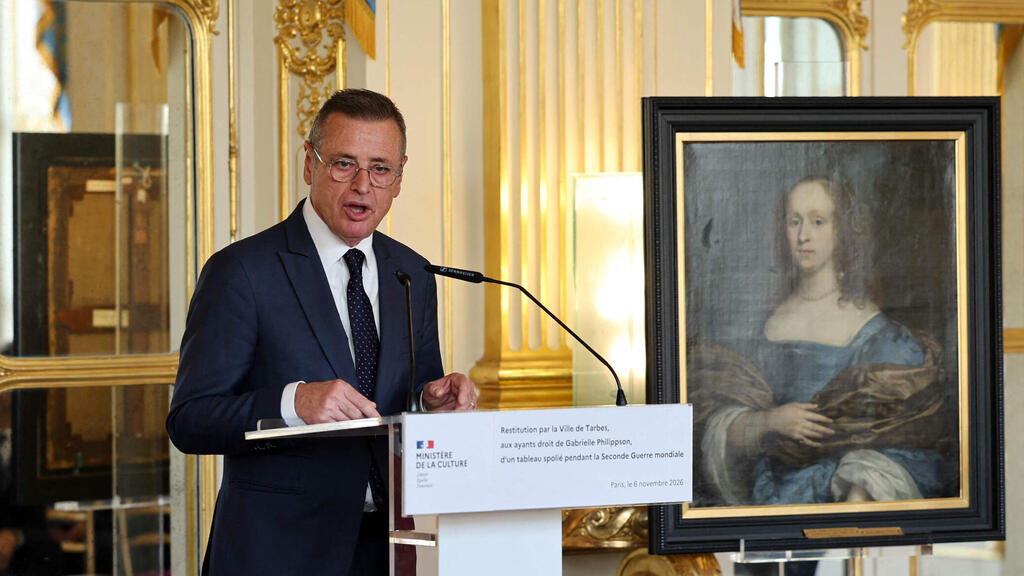
Mayor of Tarbes at a ceremony at the museum
(Photo: Ehdi Fedouach/AFP)
"The restitution of this painting reminds us that looted works of art can still be found in public collections today, works that were acquired without their historical background or previous ownership being known or understood," French Culture Minister Catherine Pégard said, according to a statement released on the matter.
A French framework law enacted on July 22, 2023, has made it easier to return looted artworks that entered public collections. Previously, restitution was not automatic because of the legal principle that artworks belonging to museums could not be transferred or removed from their collections.
During World War II, the Nazis systematically looted artworks owned by Jews. The stolen items were subsequently resold, acquired by senior Nazi officials or earmarked for the Führermuseum, an ambitious project envisioned by Adolf Hitler to establish a vast art museum.
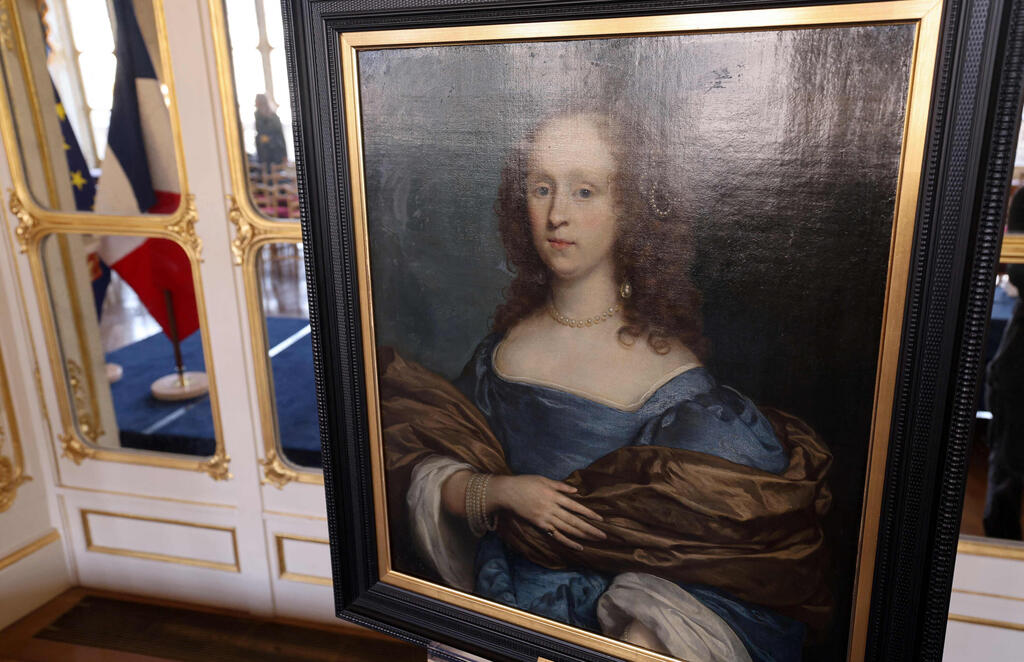
"Portrait of a Woman in Blue" by Cornelis Janssens van Ceulen
(Photo: Ehdi Fedouach/AFP)
Pégard noted that German forces looted approximately 38,000 Jewish apartments in France whose occupants had fled or had been arrested and murdered.
At the height of his power, Hermann Goering served as president of the Reichstag, founded the Gestapo, commanded the Luftwaffe and helped establish the first concentration camps. He cultivated an outwardly genial persona, concealing a complex character that could appear both charming and repellent.
In May 1945, Goering was captured by American forces. At the Nuremberg trials, he was found guilty of war crimes and crimes against humanity and sentenced to death. Two hours before his scheduled execution, he swallowed a poison capsule and died by suicide.
During his trial, evidence established his direct involvement in the extermination of European Jews and showed that in 1941 he had instructed Heinrich Himmler and Reinhard Heydrich to pursue a final solution to what the Nazis called the "Jewish question."