

For many Jewish students in the United States, life on campus changed overnight after October 7. Confronted with rising antisemitism—often overlooked by university administrators—students have sought solace and strength in Jewish campus organizations such as Chabad and Hillel.
At UCLA, Rabbi David Gurevich has witnessed that transformation firsthand. In his 19 years leading the campus Chabad, he says attendance at weekly Shabbat dinners has nearly doubled. “In the past, we would have around 100 to 110 students coming for Shabbat,” he said. “Now we have about 190 every Friday night.”
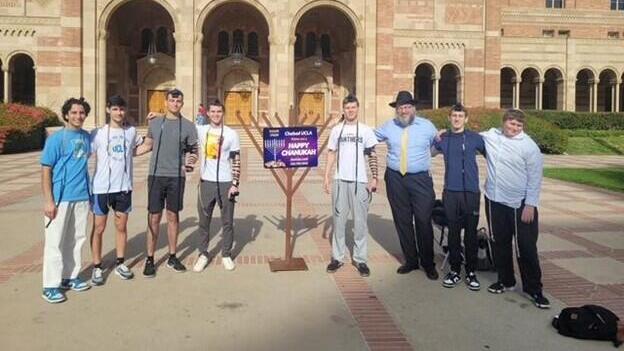
Chabad centers, which operate on college campuses nationwide, offer students free Shabbat dinners, holiday events, and a sense of community. Since the war began, they have become more than just gathering places—they have become emotional lifelines.
“In terms of the environment on campus, it's calmer but not 100% where it should be,” he said. “There is definitely some fear of expressing Jewish identity among some Jewish students. Some are still struggling wearing a star of David or having a mezuzah on their door, but it got a lot better in terms of outward in your face kind of hatred they’ve experienced a year of two ago.”
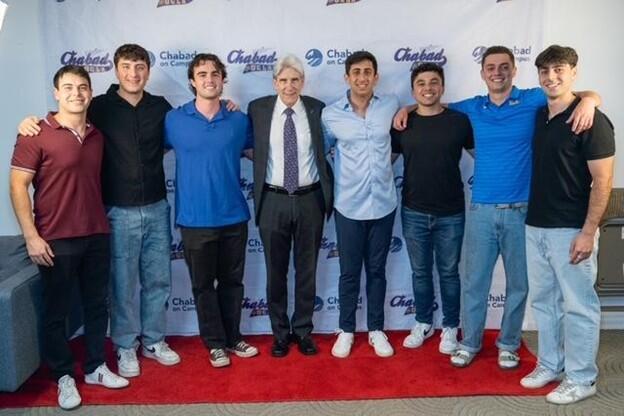
(Photo: Linda Kasian)
At UCLA, 20-year-old film student Eli Tsives knows that fear well. Days after the October 7 attack, pro-Palestinian students blocked his path to class. He filmed the incident, and the video quickly went viral. Tsives soon became a vocal advocate, giving interviews to the media and exposing the hostility Jewish students faced on campus. In one clip, he even confronted a professor who accused Israel of committing genocide.
“Things have significantly calmed down,” said Tsives. “They still hold protests from time to time, but it’s no longer a hot topic.”
Like many of his peers, he began attending Shabbat dinners and says it gave him a sense of family. He agrees that the experience has strengthened many students’ Jewish identity. “For me, it’s more cultural,” he said. “I don’t think my religious level has changed, but for some people it has.”
That same transformation is evident 40 miles south, at UC Irvine, where Rabbi Daniel Levine, who leads Hillel and teaches Jewish history, says October 7 marked a turning point. “It shocked a lot of our students, and they felt much more isolated,” said Levine. “Just being Jewish meant they weren’t fully accepted—whether it was on the soccer team, in the LGBTQ community, or any other group. The flip side was that many began spending more time at Hillel, using this as an opportunity to deepen their knowledge and connection.”

(Photo: Linda Kasian)
Instead of retreating, many students turned inward—to study, to faith, to community. “We can’t let Jewish life be reactive,” said Levine. “I don’t want our identity to be defined by fighting hate. It should be about the beauty of Judaism—ritual, learning, and belonging.”
Levine believes that Jewish campus life must go beyond simply responding to hate. “I’m a big believer that the Jewish community can’t just be reactive—we need to be proactive,” he said. “I don’t want Jewish students to feel that their Jewish or Zionist identity is defined solely by fighting back. I want them to see their Jewishness as something deeply positive—through ritual practice, visiting Israel, going on Birthright, and embracing the richness of Jewish learning and community.”
Since October, attendance at Hillel’s Shabbat dinners has more than doubled—from 20 or 30 students before the war to as many as 100 today. “We used to host students in our apartment,” said Levine. “But as attendance kept growing, we moved to a house.”
His Jewish history lectures have also filled up.
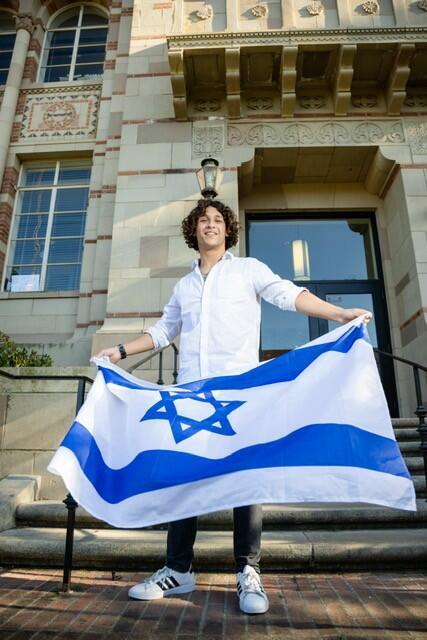
(Photo: Linda Kasian)
Even as protests have quieted, the surge in participation has endured. For Levine, that resilience is the lasting story. “This is one of the silver linings of the tragedy we’ve lived through,” he said.
First published: 20:46, 10.31.25