

A temporary exhibition at the Catavento Museum in São Paulo tells the story of seven Jewish babies who survived the Holocaust after being born in a Nazi concentration camp during the final months of World War II.
"They Gave Us Hope Again – Pregnancy and Birth in the Kaufering Camp, Dachau" will remain on display through Aug. 31. Developed by the Dachau Concentration Camp Memorial in Germany, the exhibition explores the births of seven babies between September 1944 and April 1945 in the Kaufering camp complex, a subcamp of the Dachau concentration camp.
Gallery
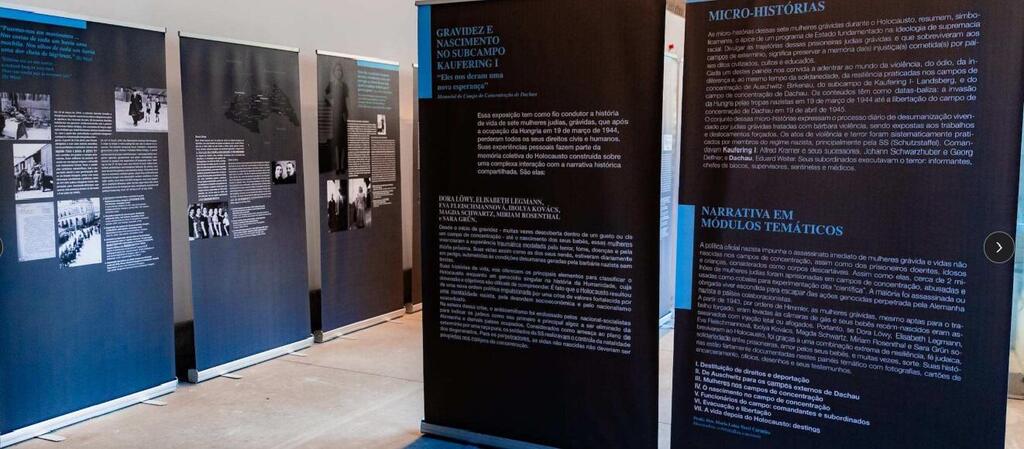
They Gave Us Hope Again – Pregnancy and Birth in the Kaufering Camp, Dachau
(Photo: Catavento Museum)
The exhibition examines what organizers describe as one of the most extraordinary episodes of the Holocaust, documenting how the infants survived despite the conditions imposed by the Nazi regime.
Through historical documents, photographs, survivor testimony and original wartime records, the exhibition recounts the experiences of the mothers and their children, highlighting the networks of solidarity among female prisoners that helped keep the babies alive.
The exhibition also honors George Legmann, one of the seven babies born at Kaufering, who survived the Holocaust and immigrated to Brazil with his family after the war. Organizers say his story has become a symbol of resilience, remembrance and hope.
The exhibition is supported by the German Consulate General in São Paulo, StandWithUs Brasil and other institutions.
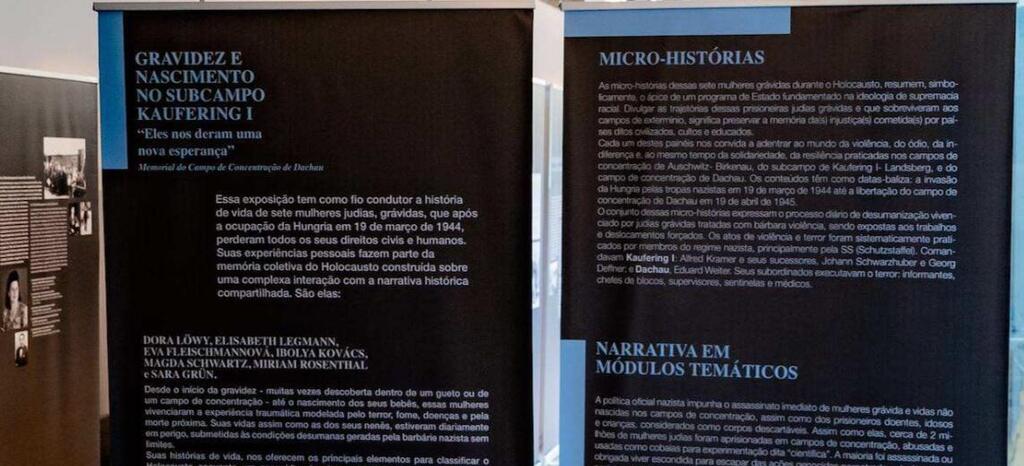
They Gave Us Hope Again – Pregnancy and Birth in the Kaufering Camp, Dachau
(Photo: Catavento Museum)
The Catavento Museum, which opened in 2009 in the historic Palácio das Indústrias, is São Paulo's most-visited science museum. Operated by the São Paulo State Secretariat of Culture, Economy and Creative Industries and managed by Catavento Cultural e Educacional, the museum features more than 200 interactive exhibits across four permanent sections — Universe, Life, Engineering and Society — occupying more than 12,000 square meters (129,000 square feet).
The museum has welcomed more than 8 million visitors since opening. It received about 820,000 visitors in 2025, continuing its mission of promoting science, culture and technology while encouraging curiosity and learning among visitors of all ages.