

An especially emotional morning unfolded this week at the Interior Ministry in Tel Aviv, where 96-year-old Holocaust survivor Charlotte Roth received her Israeli identity card for the first time. Surrounded by five generations of her family, Roth officially became an Israeli citizen decades after first dreaming of moving to the Jewish state.
“Happiness,” she said when asked what the moment meant to her personally. “I’m in a land that is ours, and I’m with a family that I love.”
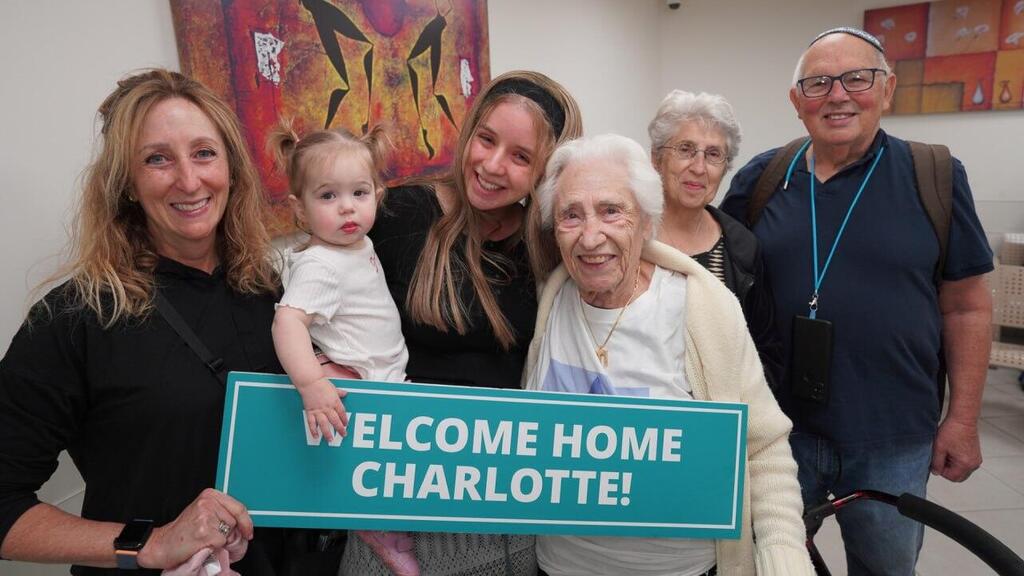
Nefesh B’Nefesh: Charlotte Ruth, 96, makes Aliyah to Israel
(Video: Gil Shalev)


Roth arrived in Israel with the assistance of Nefesh B’Nefesh, in cooperation with the Population and Immigration Authority, the Aliyah and Integration Ministry, the Jewish Agency, Keren Kayemeth LeIsrael and JNF-USA. She has relocated from Cleveland to Netanya, where much of her family now lives. Now in her 10th decade, Roth decided to leave the United States and join her children, grandchildren, great-grandchildren and great-great-grandchildren in Israel.
The decision solidified during a recent visit, when she realized that traveling back and forth between the United States and Israel had become increasingly difficult. “I want to be with the little ones as long as I live,” she said. “The trip gets harder as you grow older.” One of her granddaughters began guiding her through the aliyah process, culminating in the moment she received her Israeli ID card with her extended family at her side. “It was amazing and very emotional,” she said.
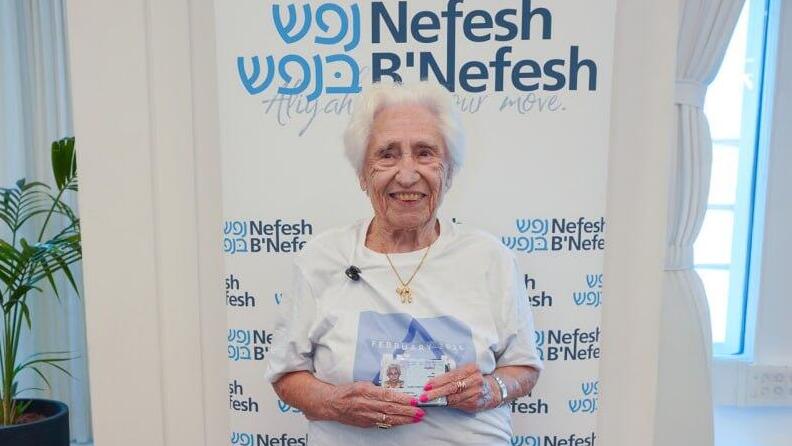
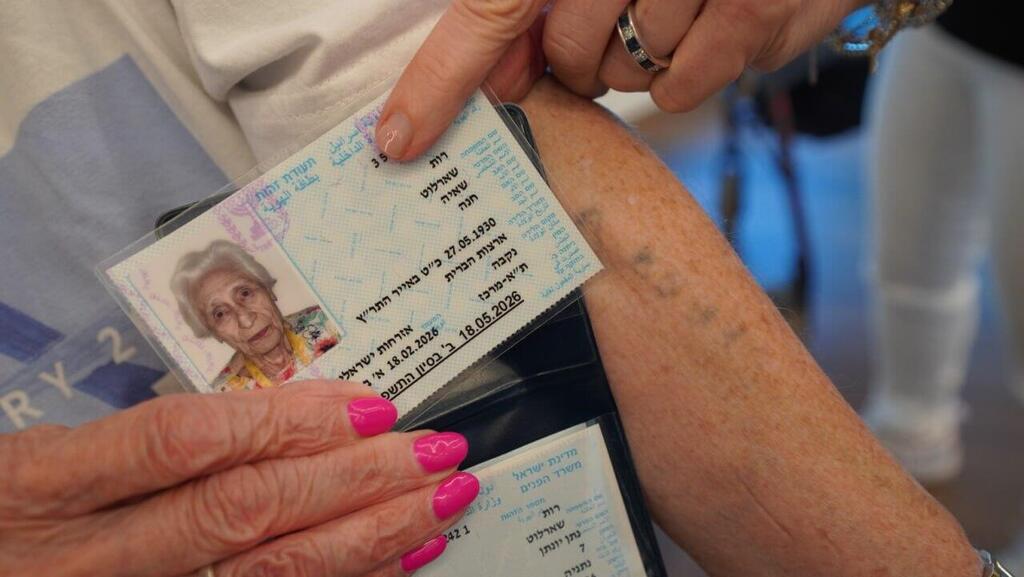
Her daughter Helen Weiser, 76, who made aliyah in the 1990s, said the family understood immediately that this was no ordinary citizenship appointment. “All the grandchildren and great-grandchildren kept saying how beautiful it is that after so many conversations about moving to Israel, she finally did it,” Weiser said.
Roth and her late husband, Chaim Roth, who died in 1999, raised four children and built a large family that now includes nine grandchildren, 26 great-grandchildren and 11 great-great-grandchildren. Most live in Israel. Her path to this moment began in Czechoslovakia, where she was born Ilanka Lea Schwartz. As a teenager, she was forced into a ghetto and later deported to Auschwitz-Birkenau. She was separated from her mother, siblings and young brother upon arrival. She never saw them again. Her sewing skills spared her from immediate death, assigning her to forced labor. She survived the camp and a death march in freezing conditions. After the war, she returned to her hometown and discovered that nearly her entire family had been murdered. Her father, who had also survived, believed no relatives remained and took his own life. At 17, she arrived at a displaced persons camp in Germany, where she met her future husband, a former partisan who had fought the Nazis in the forests of Poland. The couple eventually emigrated to the United States and settled in Cleveland.
Over the years, she visited Israel frequently, beginning in 1988. As more of her descendants moved to Israel, the center of family life shifted. “If I want to see my family, I need to be here,” she said. Several of her descendants now serve in the Israel Defense Forces. “She lost everything that can be taken from a person, all because she was Jewish,” said her great-granddaughter Galli, who moved to Israel 16 years ago and served as a combat fitness instructor in the IDF. “She rebuilt her life, raised a family, and now stands as the great-grandmother of soldiers defending the Jewish people in the Jewish state of Israel.”
5 View gallery
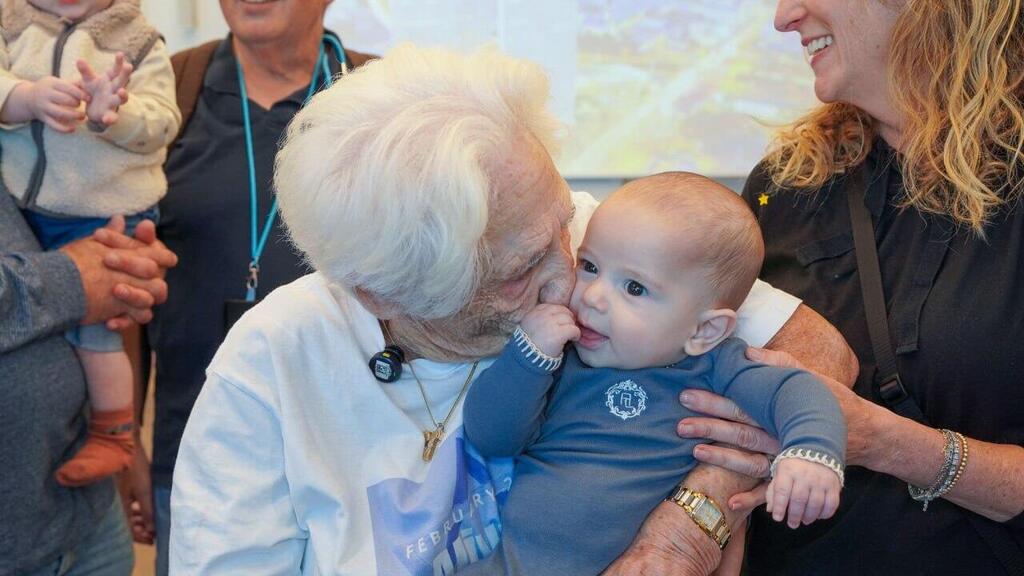
About a 95-year age gap: Charlotte Roth with one of her descendants
(Photo: Rebecca Zwiren)
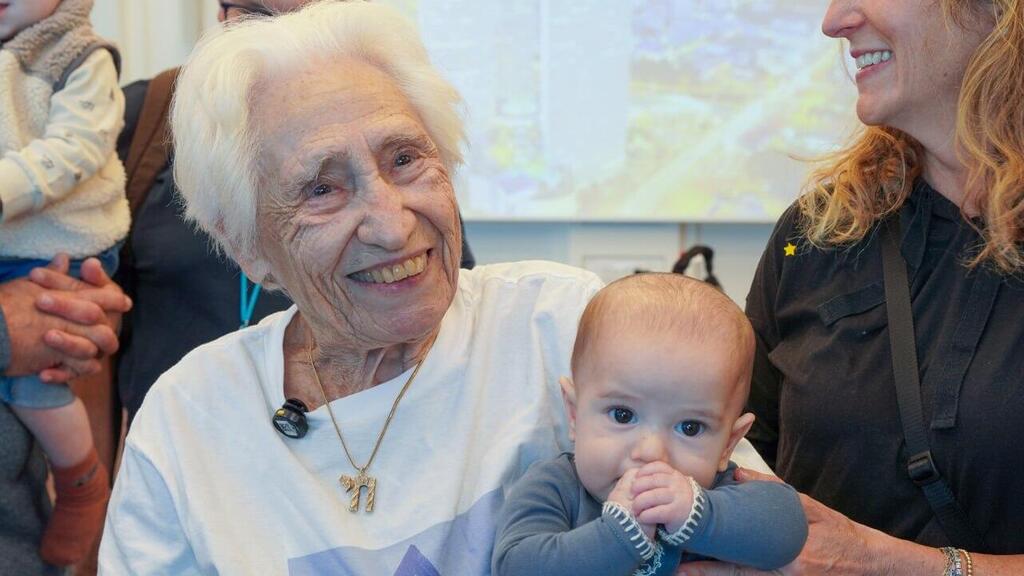
When asked why she would move to a country facing ongoing security threats, Roth responded with characteristic resolve. “If the Nazis didn’t kill me, these terrorists won’t kill me,” she said with a smile. “I’m not afraid to live here. I went through one war in my life, so what is another one?”
Rabbi Yehoshua Fass, Co-Founder and Executive Director of Nefesh B’Nefesh, said her aliyah carries national significance. “Over the past 24 years of working in aliyah, you encounter remarkable historic moments,” Rabbi Fass said. “For a 96-year-old Holocaust survivor to make aliyah and join five generations living in Israel is breathtaking. It reflects the enduring strength and resilience of the Jewish people and the living reality of ‘kibbutz galuyot’, the ingathering of the exiles.”
Later, Roth rolled up her sleeve to show the fading tattoo on her arm. The number, 25941, remains visible. An “A” precedes it, for the German word “Arbeit.” “You did not have a name,” she said quietly. “You had a number.” Now, nearly eight decades after liberation, she holds an Israeli identity card bearing her name.
In a few words that captured a lifetime of survival and renewal, she summed it up simply: “I won.”
First published: 14:36, 02.19.26