

When most Israelis think of Jewish soldiers, their minds turn naturally to the Israel Defense Forces. Yet far from Israel’s borders, thousands of Jews serve in another uniform — that of the United States military.
According to Rabbi Eli Estrin of The Aleph Institute, more than 15,000 Jewish men and women are currently serving across all branches of the U.S. armed forces, continuing a long and deeply rooted tradition of Jewish military service in America.
Gallery
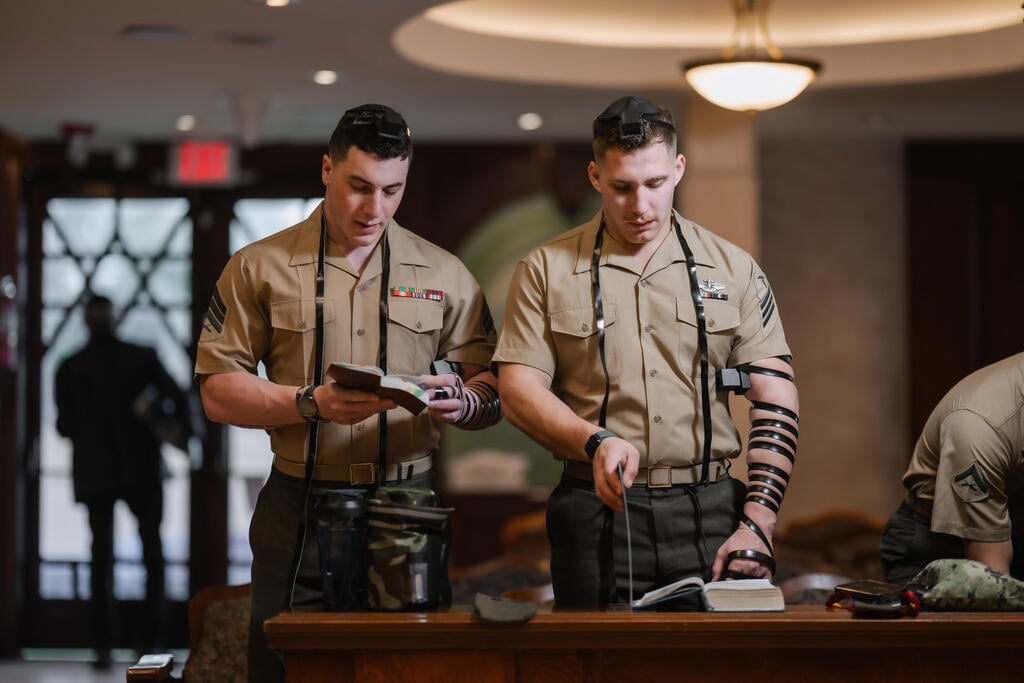
Jewish service members pray while wearing tefillin at The Aleph Institute's annual symposium
(Photo: Yisroel Teitelbaum/Aleph Institute)
“Jewish service in the United States is not new,” says Estrin, Executive Assistant to the Endorser and Military Personnel Liaison at The Aleph Institute, and Chief Editor of The Jewish-American Warrior.
He traces Jewish military participation back centuries, noting that one of the first instances of Jews receiving full civic rights in America dates to Asser Levy, who was permitted to stand watch in New Amsterdam. Since then, Jewish participation in the U.S. military has been significant, with approximately 250,000 Jews serving in World War I and more than half a million in World War II.
Jewish influence within the American military, Estrin explains, has been substantial. From the development of the nuclear Navy and the Navy Seabees to the founding of the Green Berets, Jewish service members have helped shape key elements of the modern U.S. armed forces. Even today, several Jewish officers hold the military’s highest ranks. “Ultimately, Jews are patriotic, and want to serve their country,” Estrin says. “There is deep appreciation for the freedoms America has provided, and a strong desire to give back.”
But the experience of Jewish soldiers has shifted in the wake of the October 7 attacks. While the U.S. military remains institutionally merit-based, Estrin notes that it reflects broader societal trends. In recent months, some Jewish service members — particularly in lower ranks — have encountered growing exposure to antisemitic rhetoric and conspiracy theories, including accusations of dual loyalty. “This causes real frustration and pain for those who simply want to serve and do their job well,” he says.
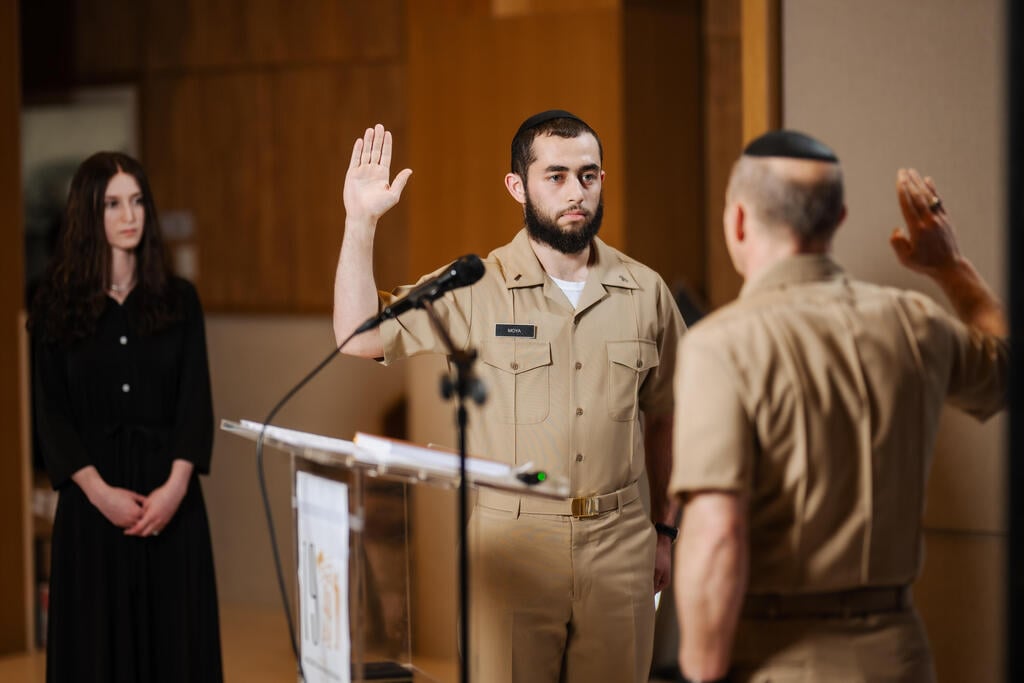
Chaplain Dovid Moya, LTJG, USNR
(Photo: Yisroel Teitelbaum/Aleph Institute)
Against this backdrop, hundreds of Jewish military personnel gathered in Miami from February 11 to 15 for what organizers describe as the largest assembly of Jews in uniform outside Israel. The annual symposium, organized by The Aleph Institute, serves as a central pillar of Jewish life in the U.S. military. Jewish chaplains and lay leaders exchange knowledge, strengthen networks and return to their units with renewed inspiration — what Estrin calls a true “force multiplier” for Jewish continuity within military life.
The conference also underscores the close relationship between Jewish soldiers in the United States and Israel. A delegation from the IDF Chief Rabbinate participated in the gathering, sharing best practices with American chaplains while strengthening professional and spiritual ties between the two militaries. Jewish chaplains from Canada, the Netherlands, Germany and the United Kingdom also joined, reflecting the global dimension of Jewish military service.
Maintaining visible Jewish identity while in uniform, Estrin acknowledges, depends largely on the culture of each unit and its leadership. Yet the current climate has introduced pressures not widely felt just a few years ago. Despite this, Jewish soldiers are encouraged to remain proud of their identity. “The U.S. military exists to protect freedoms,” he says, “not to force anyone to hide who they are.”
Jewish service members contribute to Jewish security and solidarity in ways both visible and unseen. They serve in every role — from frontline operations to intelligence and strategic defense — acting as ambassadors of Jewish identity while strengthening global Jewish resilience. Their motivation, Estrin emphasizes, is rooted in patriotism and a deep sense of gratitude toward a country that has provided unprecedented religious freedom and opportunity.
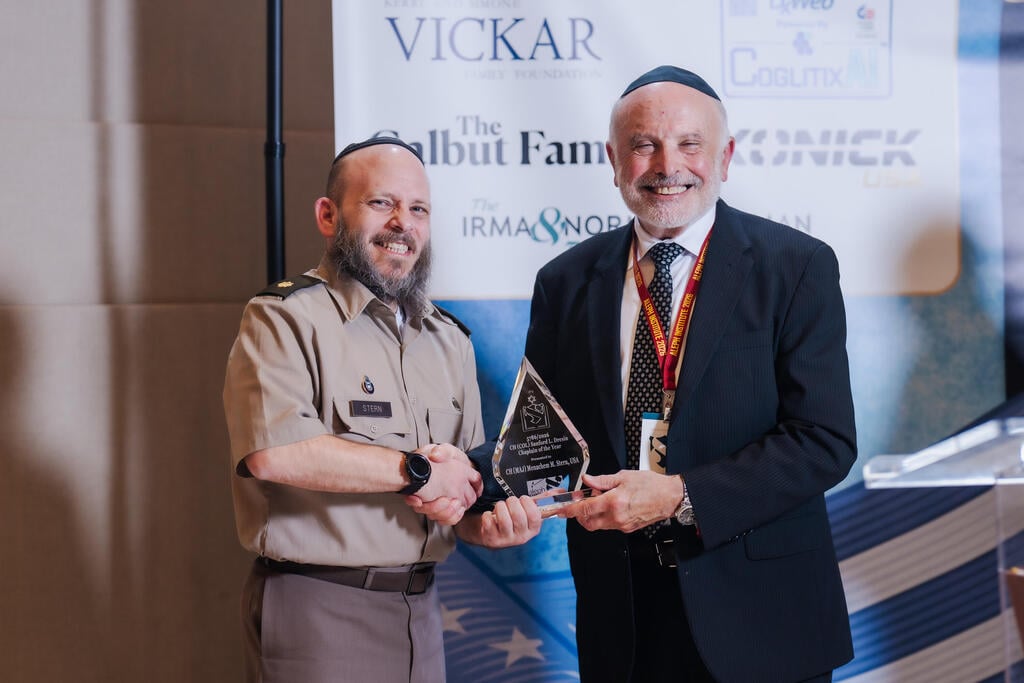
CH (MAJ) Mendy Stern receives the Chaplain of the Year award from Rabbi Sanford Dresin, CH (COL) USA Ret., Aleph's Endorser
(Photo: Yisroel Teitelbaum/Aleph Institute)
Looking ahead, the next generation of Jewish soldiers faces both logistical and communal challenges, from celebrating Jewish holidays on remote bases to finding Jewish community in isolated postings. Organizations such as The Aleph Institute continue working to support them, ensuring that wherever Jewish service members are stationed, they remain connected to faith, peoplehood and tradition.
For Estrin, the message is clear: Jewish soldiers serving outside Israel are not only protecting their country — they are strengthening the bonds of the Jewish people worldwide, proving that Jewish identity and military service can stand side by side, with pride and purpose.
Founded in 1981, the Aleph Institute is the primary organization providing spiritual, emotional and practical support for the approximately 15,000 Jews serving in the U.S. armed forces and their families worldwide. Aleph Institute is associated with the Chabad movement, and draws inspiration from the Rebbe, Rabbi Menachem M. Schneerson who taught that Jews separated from traditional Jewish communities should have access to religious resources.