

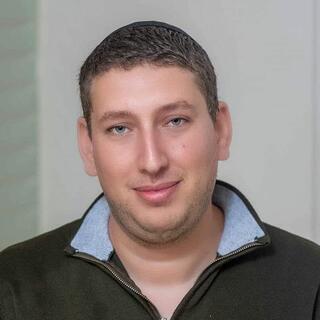
Rabbi David Shalom Batzri, one of Israel’s most prominent contemporary scholars of Kabbalah, the Jewish mystical tradition, died Friday at age 85. He headed Yeshivat HaShalom, a Jerusalem religious academy devoted to the study of Kabbalah.
Batzri collapsed Friday morning at his home in Bnei Brak, near Tel Aviv. Emergency crews found him unconscious and without a pulse, performed prolonged resuscitation efforts and evacuated him in critical condition to Sheba Medical Center, where he was pronounced dead. He had experienced health problems and hospitalizations in recent years.
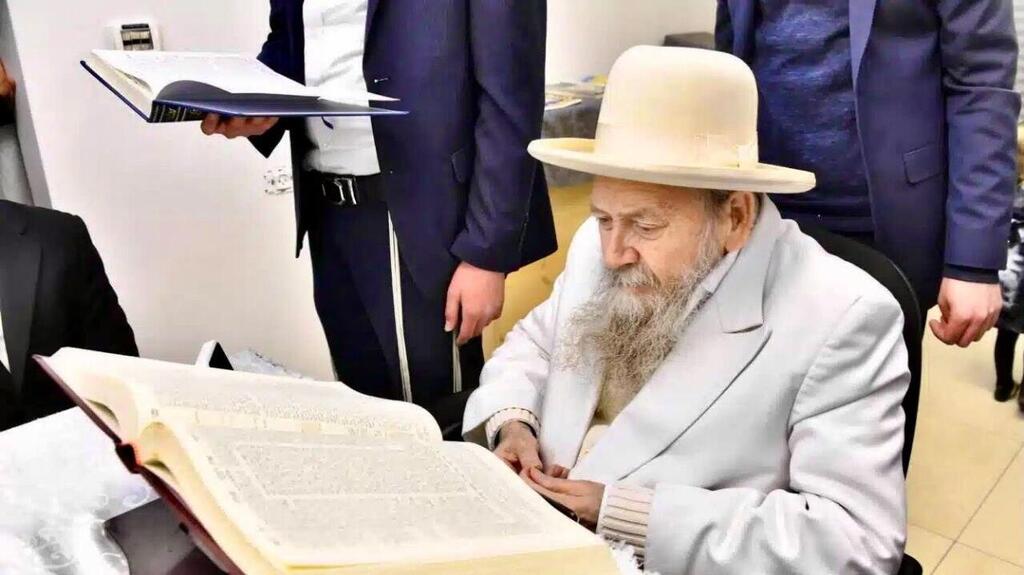
Batzri was widely regarded in Orthodox religious circles as a leading authority on Kabbalah, an esoteric body of Jewish teachings concerned with the nature of God, creation and the spiritual meaning underlying Jewish scripture and religious practice. He was also known as an address for people seeking religious counsel, blessings and segulot — traditional prayers, practices or rituals believed by adherents to bring spiritual protection or assistance.
Born into a family with deep roots in the Sephardic Jewish religious tradition, Batzri was descended through his mother, Victoria, from two influential Iraqi Jewish scholars: Rabbi Yosef Haim of Baghdad, commonly known by the title of his major work, the Ben Ish Hai, and Kabbalist Rabbi Yehuda Fatiyah, author of Minhat Yehuda.
As a young man, Batzri studied at the prestigious Porat Yosef Yeshiva in Jerusalem’s Old City, a major institution of Sephardic Torah scholarship. His teachers and religious influences included some of the leading Sephardic rabbis of the 20th century. He studied under Rabbi Ezra Attiya and was associated with Rabbi Ovadia Yosef and Rabbi Mordechai Eliyahu, both of whom later served as Sephardic chief rabbis.
Batzri later founded Yeshivat HaShalom on Tahkemoni Street in Jerusalem’s Mekor Baruch neighborhood. The Kabbalistic academy was named for Rabbi Shalom Sharabi, an 18th-century Yemenite-born Kabbalist known by the Hebrew acronym Rashash, whose teachings became particularly influential in Sephardic Kabbalistic circles.
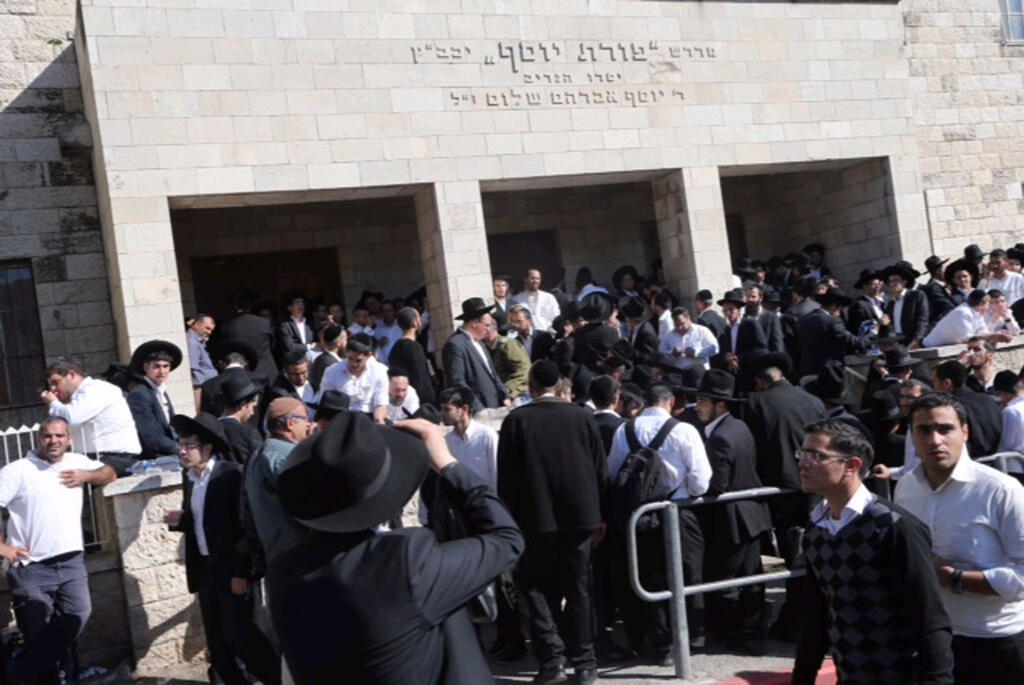
Porat Yosef Yeshiva in Jerusalem
(Photo: Moti Kimchi)
At HaShalom, Batzri taught Kabbalah and trained generations of students in mystical interpretations of Jewish texts and prayer. He also became known beyond the yeshiva through public lectures, prayers and religious rituals, drawing people who sought his advice and blessings on personal and communal matters.
The Shas party, the political movement that draws much of its traditional support from Sephardic and Mizrahi ultra-Orthodox Jews, issued a lengthy statement mourning Batzri and describing him as the “elder of the Kabbalists.” The party praised his decades of religious teaching and prayer and noted his longstanding support for Shas.
Shas said Batzri had “taught Torah and raised many students” and described him as a man of exceptional humility and prayer who had worked on behalf of the wider Jewish community.
“The loss is great for the Torah world and for all of Israel,” the party said, extending condolences to Batzri’s family, including his son Rabbi Yitzhak Batzri, a Kabbalist who is regarded by the family and followers as continuing his father’s religious path.
Sephardic Chief Rabbi David Yosef, who also serves as president of the Supreme Rabbinical Court, mourned Batzri as one of his generation’s leading teachers of Torah and Kabbalah and recalled his close relationship with Yosef’s father, the late Rabbi Ovadia Yosef, a former Sephardic chief rabbi and one of the most influential religious authorities in modern Israeli history.
“There was a special and deep bond between him and my father and teacher, Rabbi Ovadia Yosef,” David Yosef said. “My father greatly respected him and knew the extent of his stature in both the revealed Torah and the hidden Torah.”
The terms “revealed Torah” and “hidden Torah” are commonly used in traditional Jewish scholarship to distinguish conventional study of Jewish law and scripture from the mystical teachings associated with Kabbalah.
David Yosef recalled that his father had once instructed him to study Kabbalah with Batzri.
“I remember how, in those days, my father told me to go study the teachings of Kabbalah with the deceased,” Yosef said. “That statement by my father has remained etched in my memory to this day, and it testifies more than anything to the great esteem in which he held him and his confidence in his greatness and profound knowledge of the secrets of the Torah.”
Yosef described Batzri as an exceptional Torah scholar whose learning was accompanied by humility and religious devotion.
“Many had the privilege of hearing his Torah teachings, receiving his advice and being inspired by his prayers and his unique service of God,” Yosef said. “We have lost one of the remnants of a generation of Torah scholars whose entire lives were devoted to Torah, holiness and the service of God.”
He concluded by extending condolences to Batzri’s family and students, invoking the traditional Aramaic expression, “Alas for those who are lost and cannot be replaced.”