


After a years-long legal battle, a museum in Germany has announced it will return a valuable sculpture looted during the Nazi era to the heirs of Jewish businessman Heinrich Stahl. The sculpture, “Dancing Girls Fountain,” is valued at about 1.1 million pounds, or roughly $1.4 million, the British Daily Mirror reported Monday.
The work, one of the prominent pieces by renowned German sculptor Georg Kolbe, stood for nearly 50 years in the sculpture garden of the Georg Kolbe Museum in Berlin and became one of its main attractions. It will now be removed and transferred to Stahl’s family.
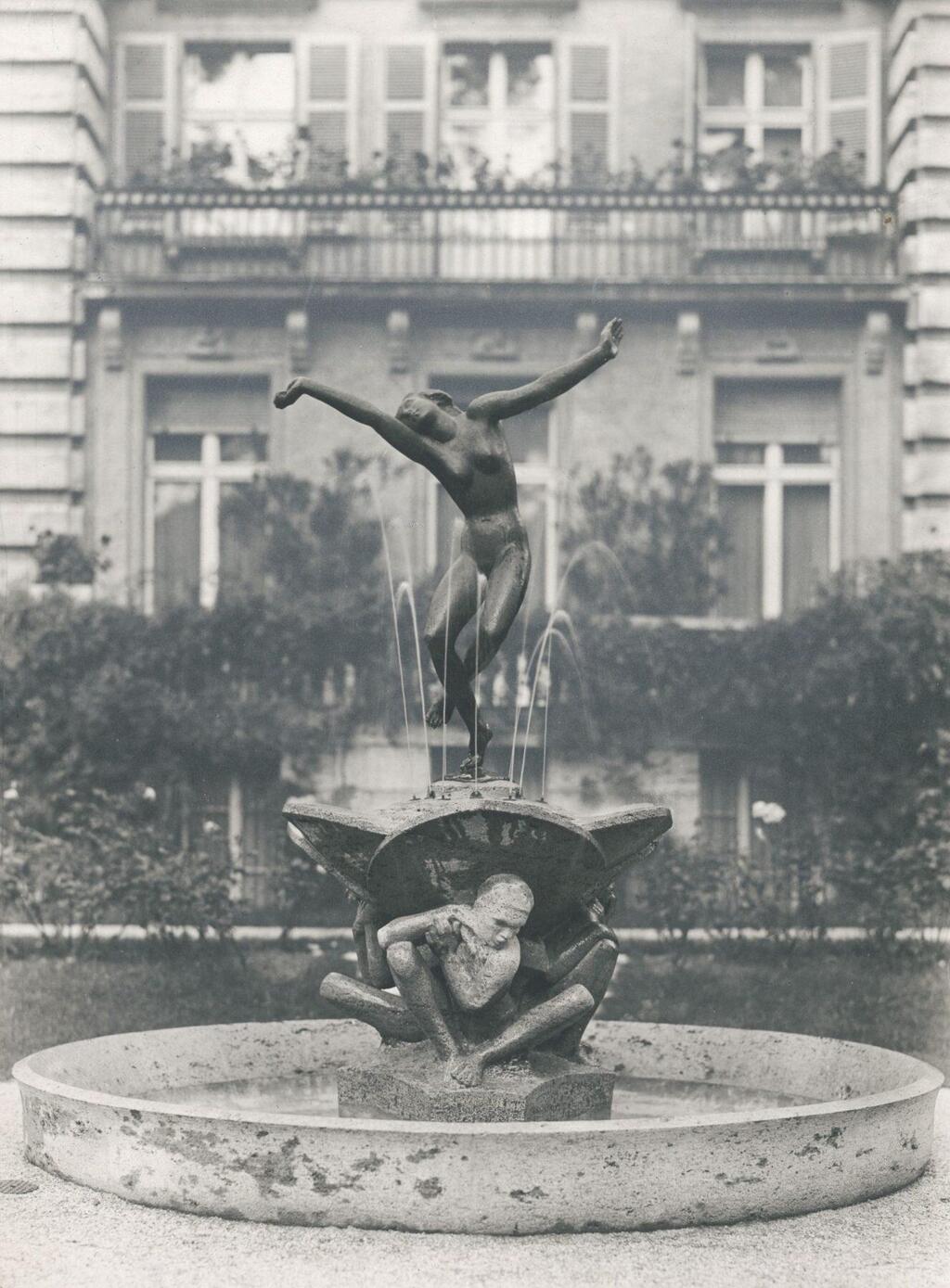
The sculpture in the courtyard of the Georg Kolbe Museum in Berlin
(Photo: Georg Kolbe Museum)
Stahl, a wealthy insurance executive and art collector who later served as head of Berlin’s Jewish community, commissioned the fountain in 1922, and it adorned the garden of his villa in the Dahlem district. In 1941, under Nazi racial laws, he was forced to sell his home and the sculpture at a price far below their true value. Shortly afterward, he and his wife were deported to the Theresienstadt concentration camp, where he was murdered. His widow survived and emigrated to the United States in 1950.
Museum director Kathrin Reinhardt said the institution now regards the sculpture as “cultural property looted as a result of Nazi persecution.” She said the sale of the house and fountain was not voluntary and that the price paid was well below their actual worth. “What was done to Stahl — not only the expropriation itself — is an unforgivable and immeasurable injustice,” she said, adding that finding a just and moral solution for the heirs had been a top priority.
The Daily Mirror reported that the sculpture disappeared after World War II and resurfaced only in the late 1970s, when it was installed in the museum’s garden and became a focal point for visitors and photographers. In 2001, one of Stahl’s grandsons signed a waiver allowing the museum to retain the work for more than two additional decades.
However, new research found the waiver lacked legal validity because it was not signed on behalf of all heirs. Claims were subsequently renewed, and negotiations over a long-term loan arrangement failed. The museum ultimately acknowledged that the sculpture was cultural property confiscated due to Nazi persecution and agreed to a full and unconditional restitution.