


Nearly 90% of Jews in Israel say they would observe shiva after the death of an immediate family member, according to a comprehensive survey conducted as part of the Tzohar Judaism and Tradition Index by the Mashav channel in cooperation with ynet Judaism. The findings suggest that shiva, the traditional seven-day Jewish mourning period, remains one of the most widely observed Jewish customs in Israel, with participation approaching the proportion of Israeli Jews who celebrate Passover or Hanukkah.
Among respondents who had not experienced the death of an immediate family member, 85% said they intended to observe the full seven days of shiva if such a loss occurred, while another 5% said they would observe part of the mourning period. Among those who had already lost an immediate family member, 82% said they had observed a full shiva and 9% said they had observed some of the days. Only 9% said they had not observed shiva at all.
Gallery
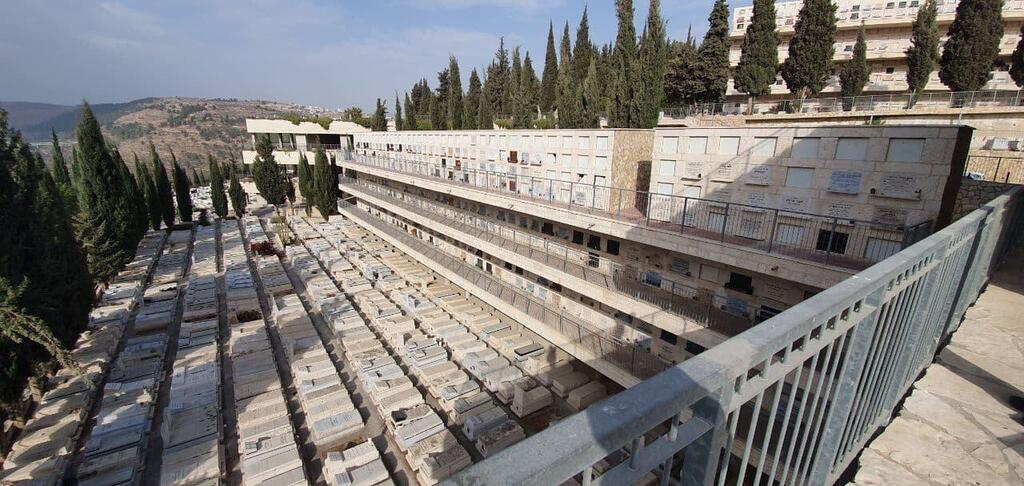
High-density burial at Har HaMenuchot cemetery in Jerusalem remains unpopular
(Photo: Assaf Kamer)
Nearly three out of four secular respondents, 74%, said they would observe a full shiva following the death of an immediate family member. Among secular respondents who had already experienced such a loss, 75% said they had in fact observed all seven days.
The survey was conducted in late August 2026 among a representative sample of 1,330 Jewish Israeli adults aged 18 and over who use the internet. Its maximum sampling error was ±2.7% at a 95% confidence level.
During shiva, the immediate relatives of the deceased traditionally remain at the mourning home and receive visitors. Over the seven days, friends and extended family members come to offer condolences and provide comfort. Similar mourning practices exist in other religions and cultures. In Muslim communities, for example, it is customary in many places to hold three days of mourning during which visitors come to console the family.
How important is a traditional Jewish funeral?
Beyond shiva, the survey examined how widespread other Jewish mourning customs are among Israeli Jews. Some 86% of respondents said they visit the grave at the end of shiva, at the end of shloshim, the 30-day mourning period, or on both occasions. The figure was 81% among secular respondents.
Seventy percent said they light a memorial candle on annual remembrance dates, including 58% of secular respondents.
Other customs were considerably less common. Some 49% said they sit on low chairs or on the floor during shiva, while 47% recite Kaddish, the traditional Jewish mourner’s prayer.
Forty-six percent refrain from shaving or getting a haircut during the first seven days of mourning, and 43% continue to do so during the first month. Only 38% said they refrain from bathing or showering during shiva.
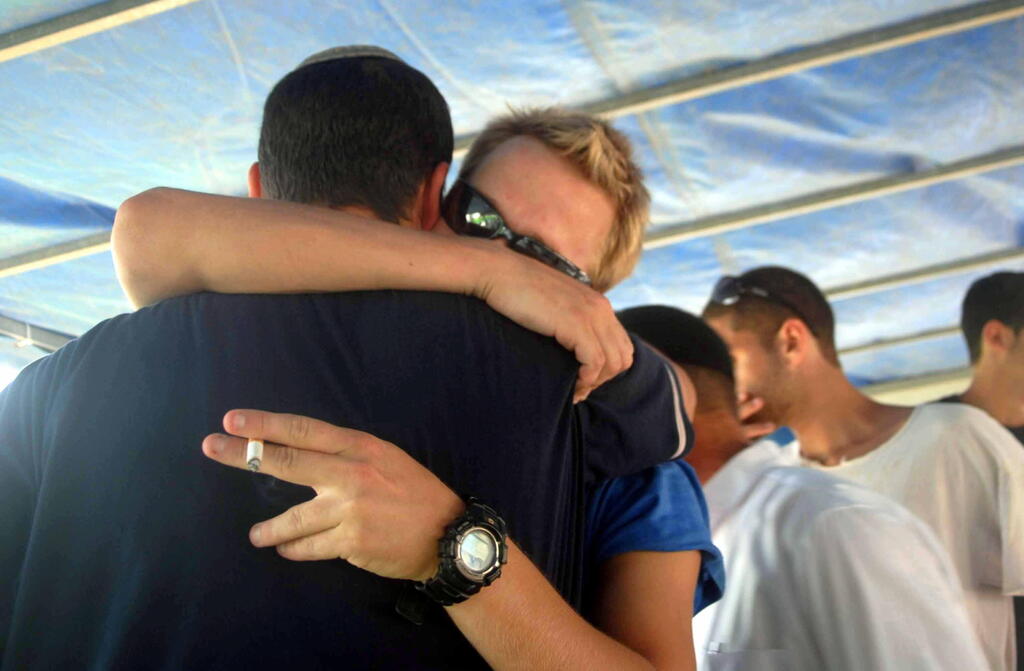
Visitors offering condolences following the death of Lt. Col. Emmanuel Moreno, 2006
(Photo: Avi Rokach)
Seventy-one percent of Jewish respondents said it was important to them that the funeral and burial of members of their family be conducted according to Jewish tradition, including 55% who described this as “very important.” By contrast, 12% said it was not very important and 17% said it was not important at all.
Among secular respondents, only 24% said a traditional Jewish funeral was “very important” to them, while 31% said it was not important at all.
The survey also examined head coverings at funerals. Seventy-five percent said they cover their heads in some form: 25% wear a kippah or other head covering throughout the year, 36% put one on at a funeral out of respect without being asked, and 14% do so if requested.
Five percent said they would prefer not to cover their heads even if asked, while 19% said they never wear a head covering. About one-third of all respondents, 34%, said they know the words of the Kaddish by heart. Another 23% said they can read and understand the entire prayer, 27% understand its main points, 8% can read it without understanding it, and 9% said they are unfamiliar with the text altogether.
Respondents were also asked whether they regarded five different mourning practices primarily as religious customs, primarily as Israeli family traditions, or equally as both. Kaddish was overwhelmingly seen as religious, with 77% placing it primarily in that category.
Offering condolences, however, was viewed by most respondents as at least as much an Israeli family custom as a religious one. Thirty percent described it mainly as an Israeli family tradition, 20% as mainly religious, while 50% said it was equally both.
Shiva produced a more even split: 46% viewed it equally as a religious and Israeli family custom, 44% said it was primarily religious and 10% regarded it mainly as an Israeli family tradition.
The survey also found a gap between respondents’ preferences for the burial of relatives and their preferences for their own burial. Forty-six percent said it was important to them that their relatives be buried directly in the ground, compared with 38% who said the same about their own burial.
Another 22% said they preferred in-ground burial for relatives but did not consider it essential, compared with 19% who expressed the same preference for themselves. Seven percent said they would prefer no burial at all for their relatives, while 13% said they would prefer no burial for themselves.
Only 2% of respondents preferred high-density burial in niches or a multilevel structure, a method designed to conserve cemetery space, whether for relatives or themselves. At the same time, 24% said the type of burial chosen for their relatives did not matter to them, while 29% said they had no preference regarding how they themselves would be buried.