


A new directive issued by leading rabbis in the predominantly ultra-Orthodox city of Bnei Brak has sparked debate after calling on men and women to use separate sidewalks outside wedding and event halls during large gatherings.
The directive applies to areas around event venues, including along King Solomon Street, where signs designate one sidewalk for men and the other for women, according to media reports.
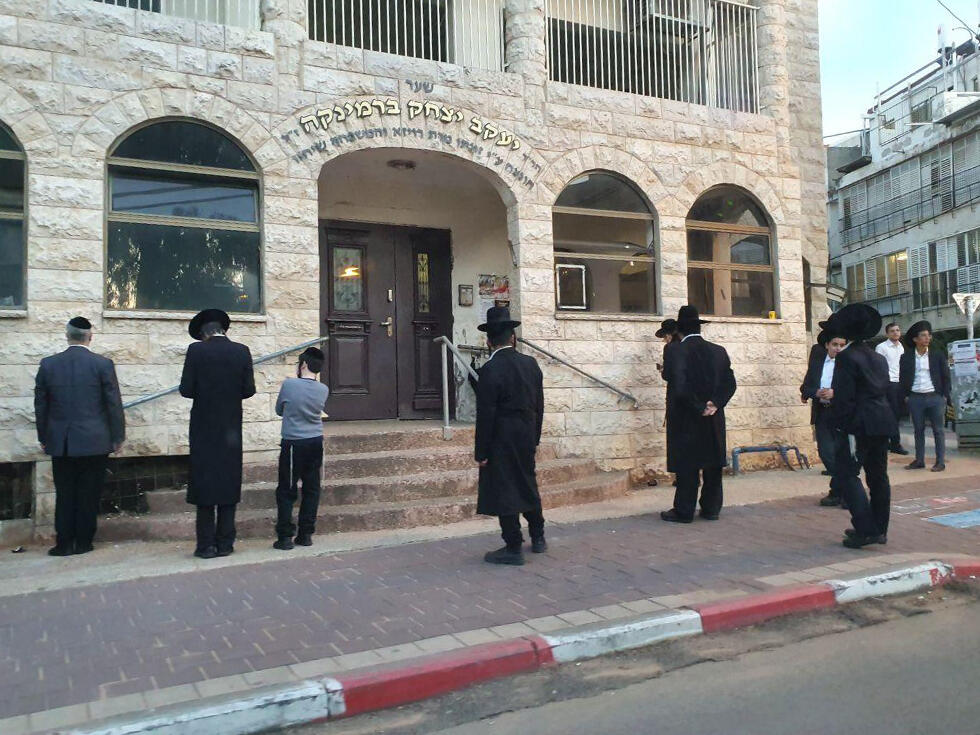
The arrangement is intended to manage heavy pedestrian traffic during weddings and other large celebrations by reducing crowding and preventing mingling between men and women, in keeping with the customs observed by many in the city's ultra-Orthodox, or Haredi, community. The measure applies only during hours when large events are taking place.
Supporters say the arrangement reflects the values and lifestyle of local residents while helping maintain public order.
Critics argue that gender segregation in public spaces exceeds the authority of local governments and violates the principle of equality under Israeli law.
Similar signs were previously installed in Bnei Brak's Kiryat Vizhnitz neighborhood, another predominantly ultra-Orthodox area, directing men and women to opposite sides of the sidewalk. That initiative also drew criticism but remained limited to a small section of the city.
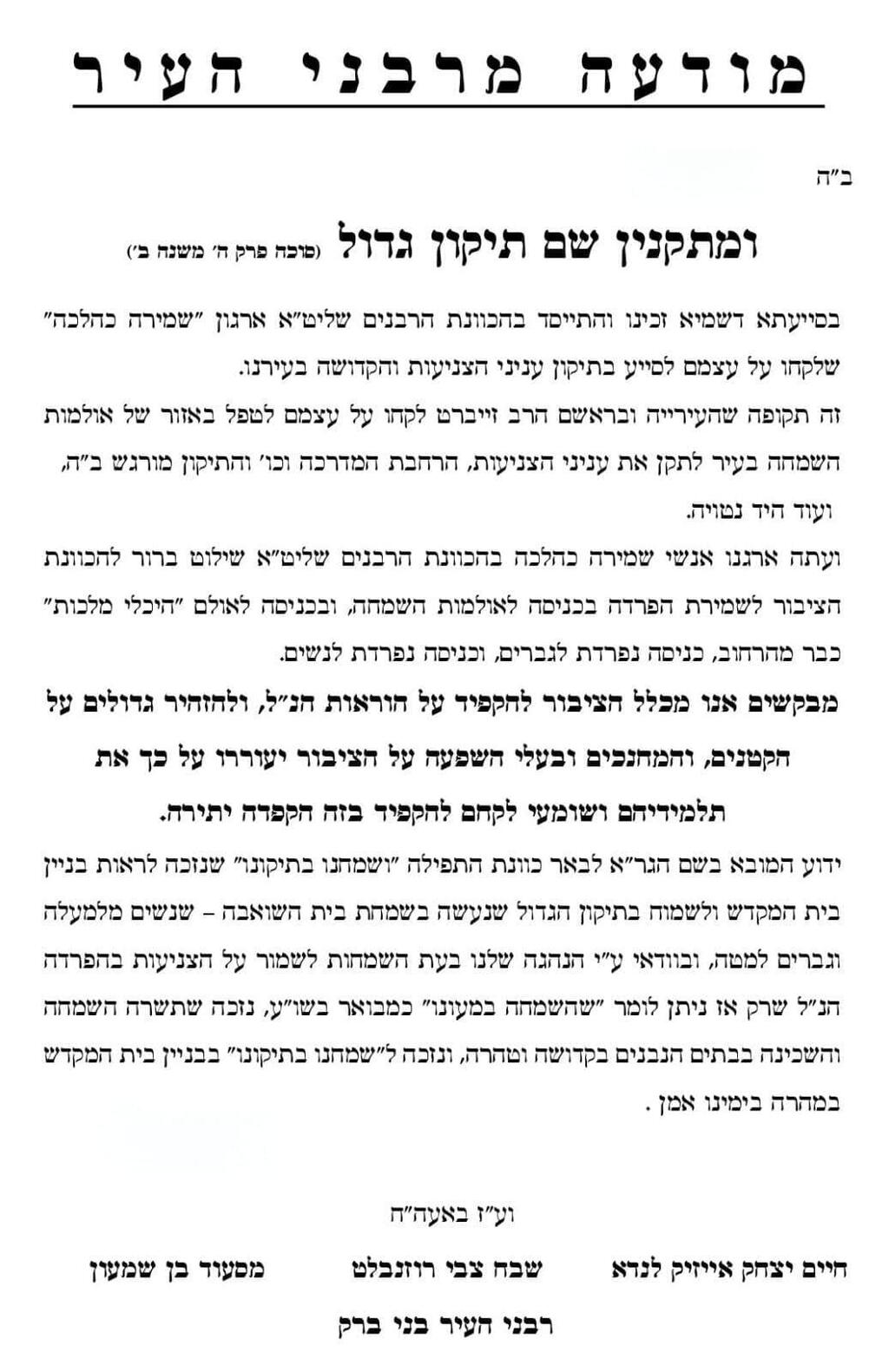
A notice signed by leading rabbis in Bnei Brak calls on residents to observe gender-segregated sidewalks outside event halls during crowded celebrations
The new signs have renewed public and legal debate over the extent to which gender separation can be introduced in public spaces and the authority of local governments to facilitate or endorse such arrangements.
Bnei Brak municipality initially defended the move, saying in a statement that "the letter from the city's rabbis is very clear and speaks for itself. The city's residents, who follow the guidance of Israel's leading rabbis, will comply with their request."
The municipality later clarified that the separation initiative originated with the city's rabbis rather than the municipal government.
"The call for separation in the area surrounding the event halls is an initiative of the city's rabbis directed directly to the public," the municipality said in an updated statement. "The municipality assisted only in developing and expanding the physical infrastructure in the area because of congestion. This is not a municipal directive or municipal policy."