

Mel Brooks’ life has always sounded almost too American, too Jewish and too improbable to be true. He was born Melvin Kaminsky on a kitchen table in a Brooklyn tenement in 1926, the son of European Jewish immigrants, in the same month Marilyn Monroe was born on the other side of the country.
His father died when he was just two, leaving Brooks to be raised by his mother as the youngest of four brothers, a small and often sickly child who quickly discovered that attention could be its own form of oxygen.
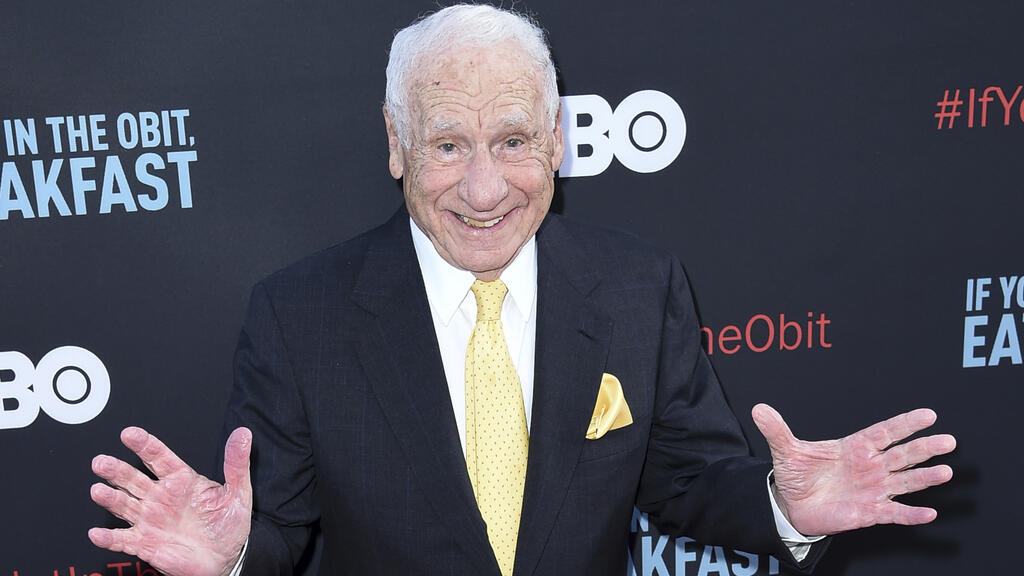
His lifelong need to perform became part of the mythology around him. His colleague Larry Gelbart once said, “Mel thought when he got slapped in the ass by the doctor who delivered him that was applause, and he has not stopped performing since.”
Now, as Brooks turns 100, that appetite for laughter looks less like a show-business tic and more like a worldview. Few entertainers have embodied Jewish American comedy as fully as Brooks: immigrant grit, Borscht Belt timing, wartime memory, religious irreverence, linguistic chaos and the conviction that ridicule can be a weapon against terror.
Brooks himself once put it more simply: “comedy is the opposite of death.”
That line has followed him for decades because it explains so much of his work. Brooks did not merely joke about danger. He seemed determined to strip danger of grandeur, especially when it came to Nazis.
As a teenager, he joined the U.S. Army and served in Europe during World War II, taking part in the Battle of the Bulge. The experience would help shape one of the defining impulses of his career: to mock Hitler not from a safe distance, but as someone who had lived through the world Hitler helped create.
For Brooks, making Nazis ridiculous was not cheap provocation. It was revenge by humiliation.
Before Hollywood, Broadway and the awards, there were drums. As a young man, Brooks played the instrument and was taught by Buddy Rich, who would become one of the great figures in jazz. Brooks then found his way into the Catskills, performing at Borscht Belt resorts before mostly Jewish audiences. When a regular comic fell ill, he stepped in and discovered the thrill that would define his life: the sound of a room laughing.
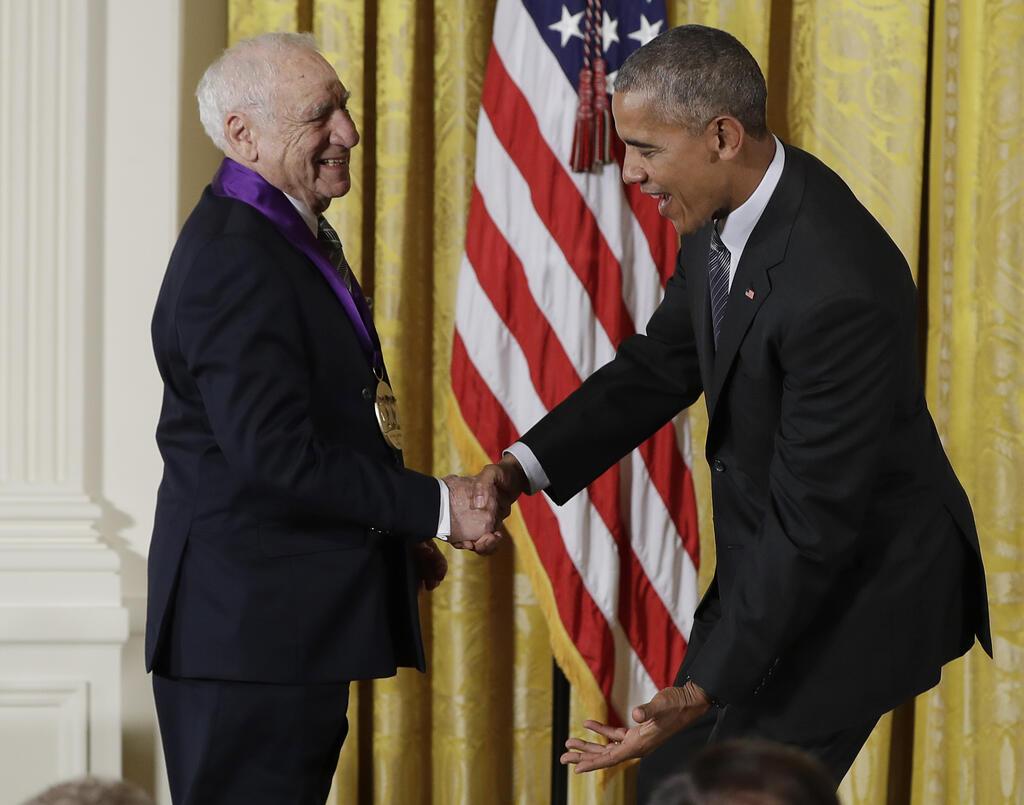
Mel Brooks and Barack Obama
(Photo: AP)
That Jewish resort circuit was more than a training ground. It was a comic laboratory for an entire generation, a place where timing, self-mockery, complaint, exaggeration and survival all became performance. Brooks absorbed it fully.
His next step took him into television history. He joined the writing staff of Your Show of Shows, Sid Caesar’s legendary sketch series, widely remembered as one of the greatest comedy writers’ rooms ever assembled. There, Brooks met Carl Reiner, beginning a friendship and creative partnership that lasted until Reiner’s death in 2020 at age 98.
Together, they created the 2,000 Year Old Man, one of the great Jewish comic inventions of the 20th century. The premise began when Reiner asked Brooks what it had been like to be present at the crucifixion of Jesus. Brooks answered as an impossibly ancient Jewish man who had seen everything, survived everyone and complained his way through history.
The routines were recorded on albums between 1960 and 1997, but the character began taking shape in the 1950s, only a few years after the Holocaust. Brooks’ accent, rhythm and comic sensibility were unmistakably Jewish at a time when many performers still tried to soften or hide such markers for mainstream America.
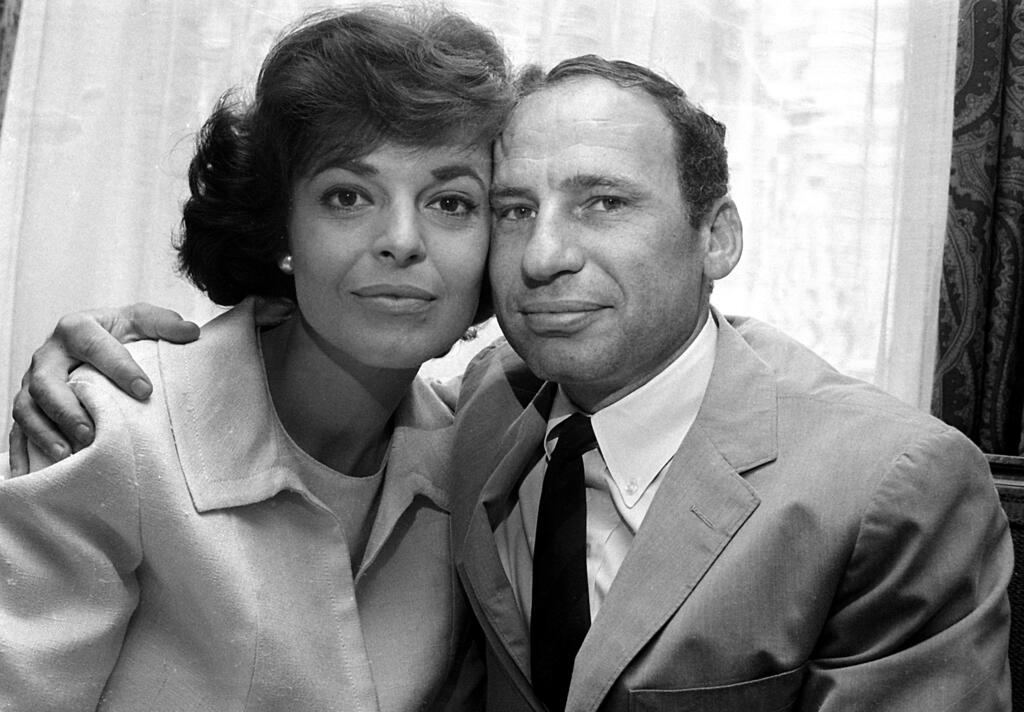
Anne Bancroft and Mel Brooks, 1964
(Photo: AP)
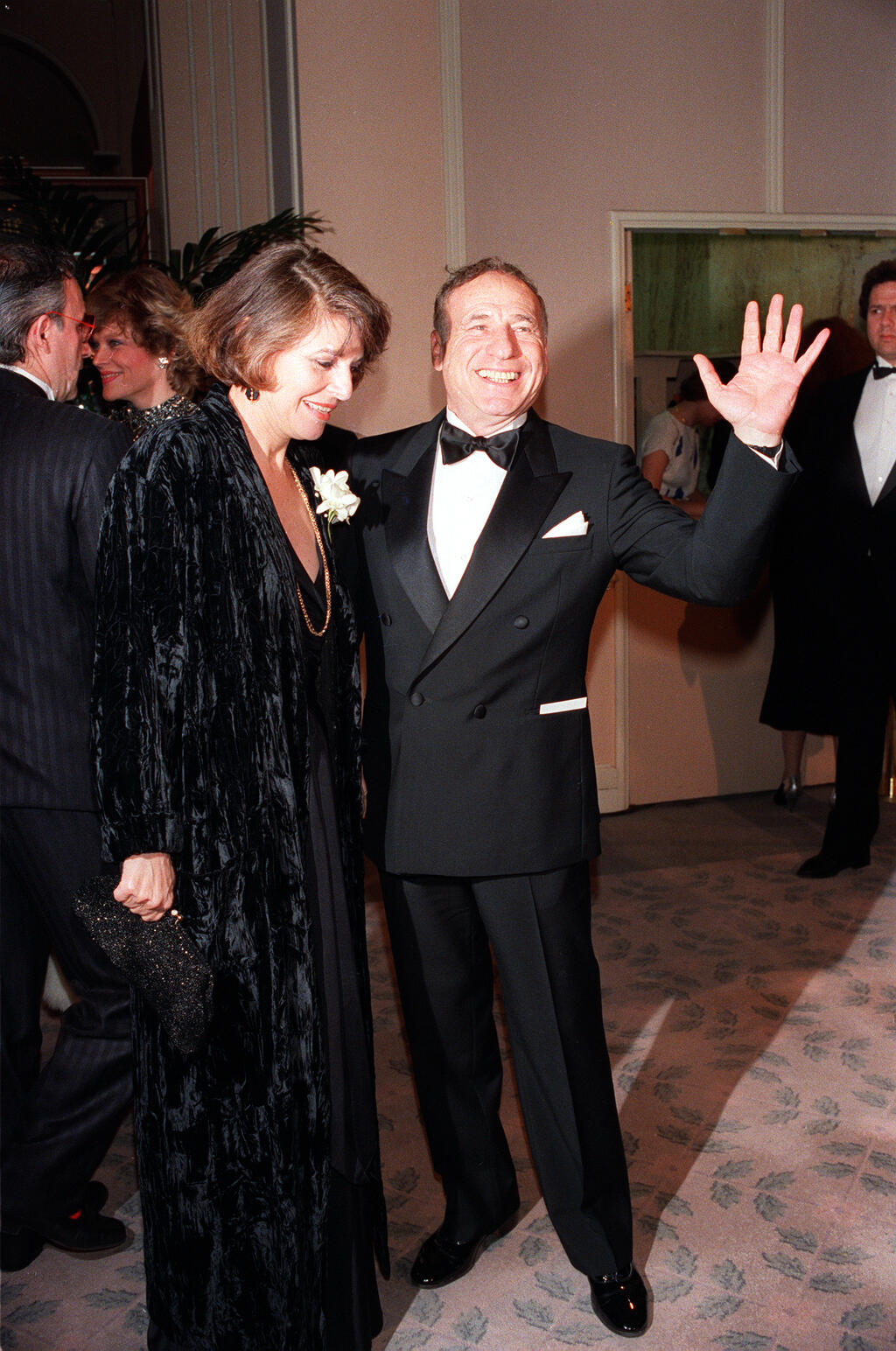
Anne Bancroft and Mel Brooks, 1987
(Photo: AP)
Brooks and Reiner worried non-Jewish audiences might not understand the act. That concern faded after Cary Grant reportedly told Brooks he had played the record at Buckingham Palace and that the Queen Mother loved it. Brooks later recalled: “If the biggest shiksa in the world loves it, we’re home free.”
If the 2,000-Year-Old Man was daring, The Producers was explosive.
Brooks’ first feature film, released in 1967, followed two Broadway producers who discover they can make more money from a flop than from a hit. Their chosen disaster is a musical called Springtime for Hitler: A Gay Romp with Adolf and Eva at Berchtesgaden.
The concept remains one of the boldest in American comedy. Larry David has called it “possibly the greatest comedic premise that anybody has ever dreamed up.” But at the time, barely two decades after World War II, many thought Brooks had gone too far.
One angry viewer told him, “I was in World War II.” Brooks replied: “So was I, I didn’t see you there.”
That exchange captures Brooks at his sharpest: wounded, defiant, Jewish, American and unwilling to surrender moral ground to anyone who thought comedy had to treat evil with solemn respect. Brooks’ answer to Hitler was not reverence. It was mockery.
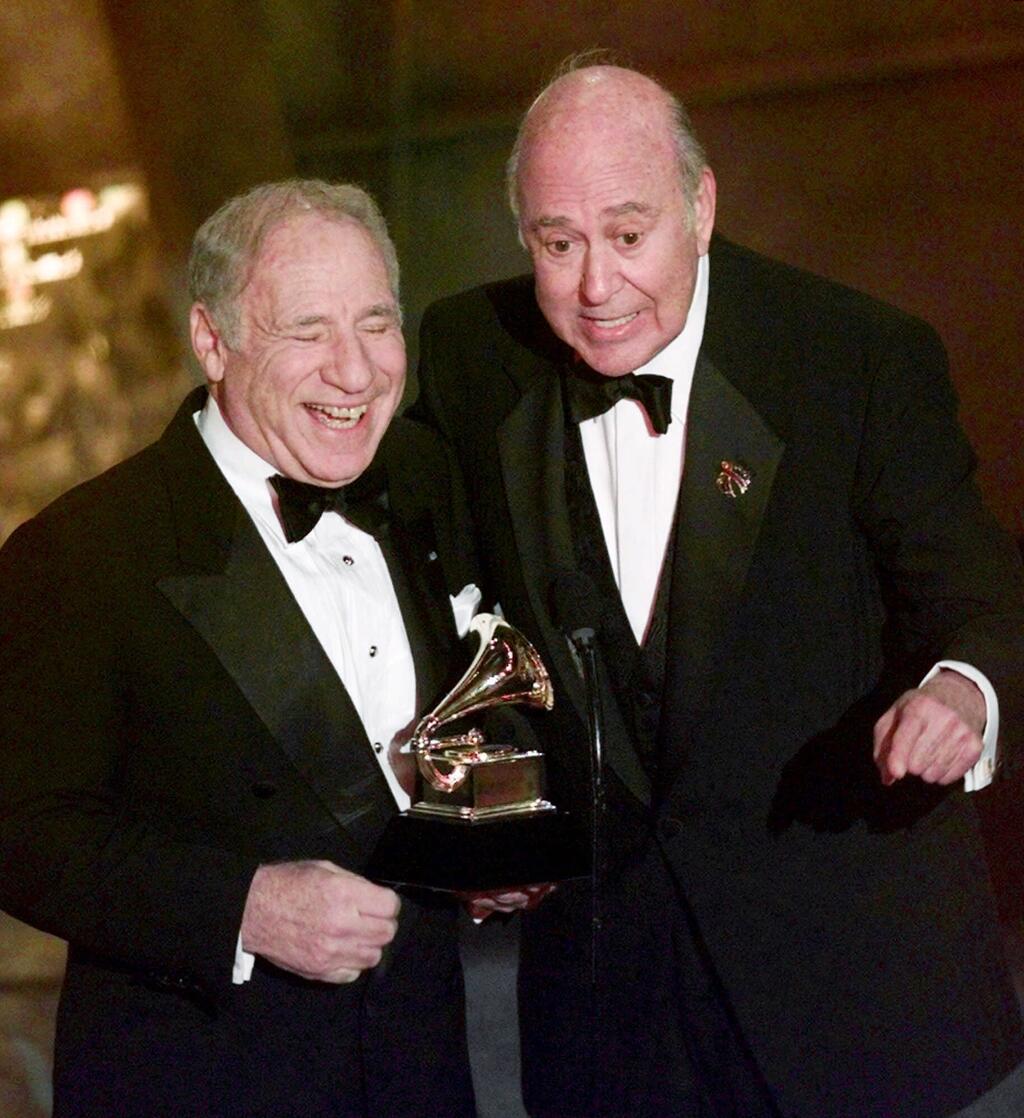
Mel Brooks and Carl Reiner
(Photo: AP)
The Producers eventually became a classic, then a Broadway musical, then a cultural monument. It also established the template for much of Brooks’ work: take a powerful genre, expose its absurdity and fill the cracks with Jewish comic anarchy.
His second film, The Twelve Chairs, showed another side of him, drawing on a love of Russian literature that began when fellow writer Mel Tolkin lent him Nikolai Gogol’s Dead Souls during the Your Show of Shows years. But it was 1974 that made Brooks a dominant force in American film comedy.
That year, he released both Blazing Saddles and Young Frankenstein. Together, they helped launch the golden age of parody movies. Blazing Saddles took apart the mythology of the American western, while Young Frankenstein lovingly mocked the horror films of old Hollywood. Both films became more famous than many of the works they spoofed.
Blazing Saddles was, for a time, the highest-grossing western in history, until Dances With Wolves surpassed it in 1990.
Brooks continued making parodies through the 1980s and 1990s, though later films were met with more uneven reactions. Yet by then, his greatest role may already have become simply being Mel Brooks: the chaotic uncle of American entertainment, a man who never fully accepted the boundary between performance and life.
He pretended to pull down his trousers while being honored by Barack Obama. He wore a prosthetic 11th finger when adding his handprint to the Hollywood Walk of Fame. In his 90s, appearing on the BBC’s The One Show, he openly mocked the program’s abrupt shift from light entertainment to a segment about a woman trying to find her long-lost father.
“What a crazy show this is,” he said.
That instinct for comic disruption has often obscured the seriousness of Brooks’ judgment. He produced The Elephant Man, chose David Lynch to direct it and removed his own name from the credits because he feared audiences would assume it was a comedy. When executives requested changes, Brooks responded: “We are involved in a business venture. We screened the film for you, to bring you up to date as to the status of that venture. Do not misconstrue this as our soliciting the input of raging primitives.”
His instincts were usually sound. Brooks is one of the few entertainers to have won all four major American entertainment awards: an Oscar, Emmy, Grammy and Tony. For a performer forever associated with fart jokes, that is no small contradiction. It is also very Mel Brooks.
The vulgarity was never separate from the intelligence. The silliness was never separate from the grief. His comedy came from a recognizably Jewish place: laugh before the world crushes you, laugh at power before it demands worship, laugh at death because the alternative is letting it win.
That may be why Brooks’ humor has always carried a communal warmth even at its most outrageous. A story once told of him describes a London taxi driver who realized Brooks, his hero, was in the back of his cab on the way to a speaking engagement. When Brooks discovered the driver was a fan, he performed the entire speech for him alone.
It is hard to imagine a clearer expression of his mission. For Brooks, comedy was never just a career. It was a duty, a reflex and, perhaps, a form of Jewish survival.
He was the son of immigrants, a soldier who fought the Nazis, a Catskills drummer, a television writer, a Hollywood director, a Broadway titan and a performer who turned Jewish anxiety into American joy. He made Hitler absurd. He made fear ridiculous. He made old age into another setup.
Brooks may not reach the age of the 2,000 Year Old Man, but 100 once seemed unlikely enough for a Jewish soldier in the 78th Infantry Division who had seen Europe at war.
Asked years ago after a screening of Blazing Saddles for the secret to a long life, Brooks offered the kind of advice only he could make sound profound.
“Don’t die.”