

The Portuguese government has officially recognized the educational project of the Jewish Community of Porto as being of “Manifest Cultural Interest,” a designation that allows private donors to support the initiative in exchange for tax benefits.
The recognition was granted on April 11, 2025, by then-Culture Minister Dalila Rodrigues, but was made public only recently.
The government cited the project’s contribution to Portugal’s obligations as a member of the International Holocaust Remembrance Alliance, as well as its alignment with the European Commission’s plan to promote Jewish life and culture by 2030.
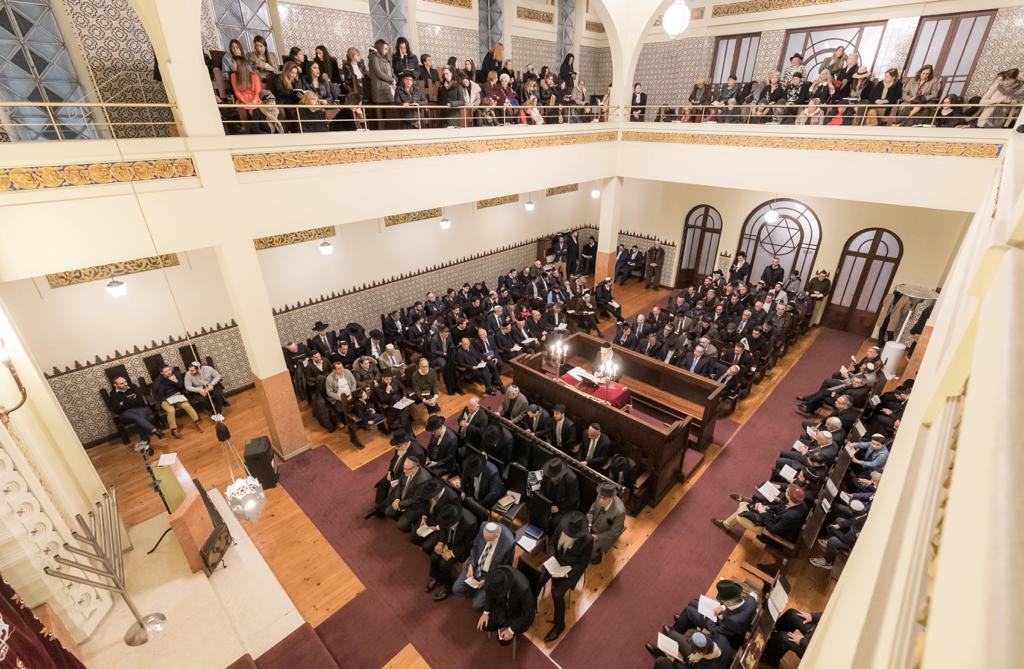
A synagogue in Porto
The Jewish Community of Porto operates two synagogues, the Jewish Museum of Porto, the Holocaust Museum of Porto, a library, an art gallery, kosher facilities and a new cemetery. It also produces films, promotes a male choir and runs educational and cultural programming. The community says about 1,500 Jews of 30 nationalities currently live in Porto.
The Holocaust Museum of Porto has drawn more than 300,000 visitors, while the community’s YouTube channel has received more than 3 million views. The community has also produced films including “1506, the Lisbon Genocide” and “1618,” which it describes as the most internationally awarded Portuguese film.
The recognition also highlights Porto’s role in the European Day of Jewish Culture, held annually on the first Sunday of September across major European cities. In Porto, visitors can tour the largest synagogue in the Iberian Peninsula, visit two museums, view locally produced films and access Jewish cultural programming, music, cuisine and exhibitions.
Gabriel Senderowicz, president of the Jewish Community of Porto, said the designation’s financial implications were secondary to its educational mission.
“What really matters is that today’s young Portuguese people become responsible men and women tomorrow, aware that the Jewish people were very important in the history of Portugal and that Jerusalem is — and always has been — the spiritual homeland of the Portuguese population which is Catholic in origin,” he said.