


Like many Jews in Israel and around the world, I am troubled, even alarmed, by the pro-Palestinian and anti-Israel wave that has recently become a fashionable tsunami in public opinion across Western Europe and North America. More than Israel and its citizens being reduced to pariah status among democratic nations, as a result of what I see as a well-funded and carefully organized pro-Palestinian, anti-Zionist campaign, it is the practical consequences of this phenomenon that concern me most.
The gravest consequence is the delegitimization of Israel's very existence and the demand to establish a Palestinian state in its place. This is reflected, for example, in a policy resolution adopted just days ago by Britain's Green Party, described in the original article as the country's fourth-largest party, calling for a single Palestinian state across the territory of present-day Israel and the Palestinian territories. Another consequence is the denial of our right to defend ourselves, which has become an accepted norm in some circles, reflected in the slogan "Death to the IDF," frequently displayed in blood-red lettering on placards at pro-Palestinian and anti-Israel demonstrations in Europe and North America.
This delegitimization has long since moved beyond political opinion and into practical action. It is no longer just inflammatory statements and votes against Israel in international forums by government representatives and influential politicians in countries such as Britain, Canada and France, or incidents involving boycotts of Israeli tourists in countries considered friendly to us, such as Greece. It now includes legislation intended to prevent Israel from purchasing essential military equipment.
Making matters worse is the fact that this wave shows no sign of receding. It is also gaining ground in American public opinion, threatening the support of our most important ally. We can already imagine the fight we may have to wage over every GBU-84 bomb once Donald Trump's presidency ends, perhaps even before then.
Those who ignited the hostility toward Israel and continue to fuel it include Islamist movements that have become significant electoral forces in Western countries following waves of immigration, as well as far-left organizations and Western academics who have received generous funding from Qatar and Saudi Arabia. I do not intend to elaborate on this here, since scholars and journalists more knowledgeable than I am have already extensively analyzed the phenomenon's causes and motivations.
I will only point out that two additional factors are now feeding the anti-Israel spirit of the times. The first is the devastation in the Gaza Strip and the severe humanitarian conditions facing its Palestinian population. The second is the abuse inflicted on Palestinians in the West Bank by violent Jewish extremists and terrorists, coupled with what I regard as the deliberate failure of the IDF and Israel Police to confront them effectively.
The images of systematic destruction in Gaza can be explained by Hamas' decision to fight from within, among and beneath the civilian population. But the inflammatory statements made by ministers in Israel's current government and the acts of vandalism recorded in selfies by uniformed soldiers cannot be erased. They have significantly strengthened hostile propaganda against Israel.
At present, however, I believe the greatest damage is being caused by the pogroms that Jewish terrorists carry out in the West Bank, day after day and night after night, with the aim of driving Palestinians from their homes and ultimately forcing them to emigrate. Politicians, and particularly the media in liberal democracies, have no hesitation in describing these actions as ethnic cleansing.
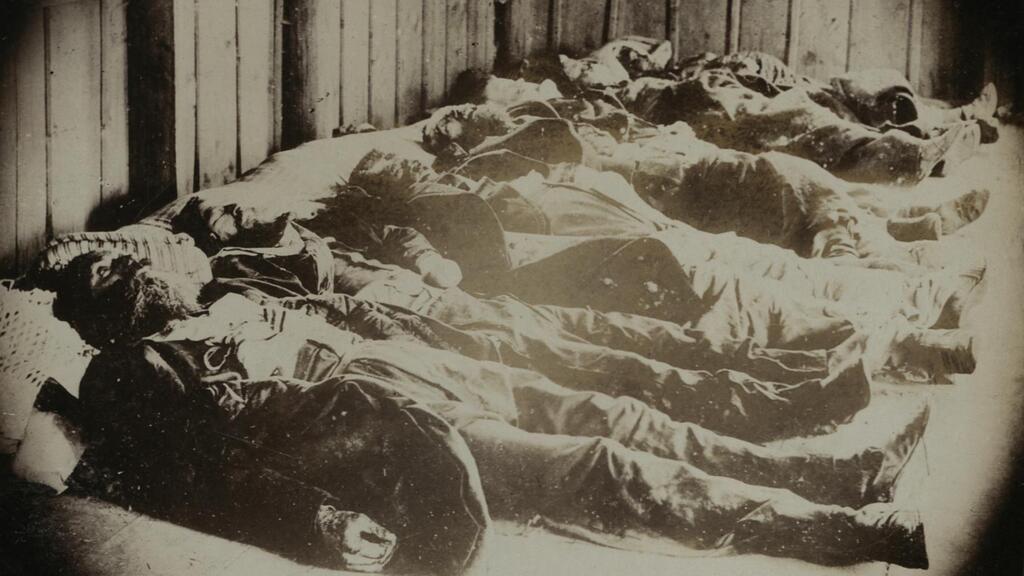
Some of the victims of the 1903 Kishinev pogrom, fueled by a blood libel
(Photo: Photographs and Press Clippings on the Pogroms in Russia collection, National Library of Israel)
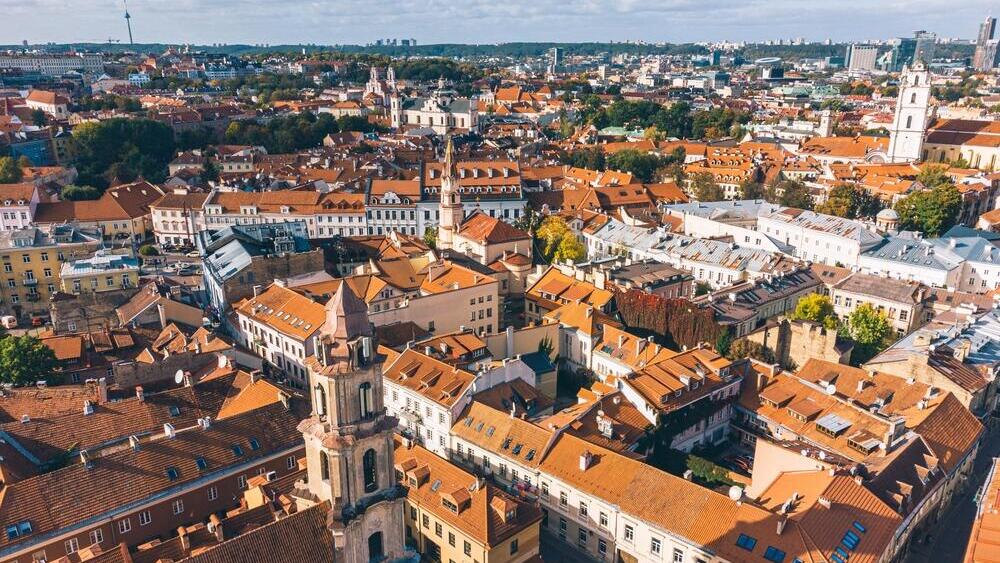
I encountered the consequences of this atmosphere about a week ago when I visited Vilnius, the capital of Lithuania. I attended a conference of journalists and media professionals from the Baltic states, other European countries that once belonged to the Soviet bloc, and Scandinavia.
One of the central topics was how journalists and media organizations should prepare for a possible Russian invasion and how they should operate if one occurred. Another was how to function if Russian President Vladimir Putin decided to intensify the hybrid warfare he is already waging against NATO countries alongside the war in Ukraine, including sabotage, drone incursions, arson and cyberattacks on critical infrastructure.
Lithuania has a long and rich Jewish history. Its capital, Vilnius, was once a major center of Jewish spiritual and intellectual life, earning the name "Jerusalem of Lithuania." Yet the country also has a history of antisemitism and persecution of Jews, which reached its murderous peak during the Holocaust.
Today, Lithuania's Jewish community numbers only a few thousand people. The government and local authorities invest considerable resources in preserving its cultural heritage.
I had been invited to share lessons from Israel's experience, as well as what I witnessed during visits to Ukraine, about preparing for and functioning during a surprise attack. I was struck by how tangible and genuine the fear of Russian occupation has become in Western and Northern Europe, particularly among people in the Baltic states who were once citizens of the Soviet Union.
Lithuania's parliament has been debating a constitutional amendment that would allow the United States to establish a military base on Lithuanian soil as part of NATO and potentially deploy nuclear weapons there. Trump said he was considering the possibility, while Kremlin spokesman Dmitry Peskov warned that such a move would constitute an escalation to which Russia would respond. Two days before I arrived in Vilnius, the local airport had been closed following reports of a possible drone incursion into Lithuanian airspace.
Naturally, Israel and the war in the Middle East were not at the top of the conference agenda. But during conversations over coffee, I faced difficult questions, mainly about Gaza.
Most of the people I spoke with were neither hostile nor particularly pro-Palestinian. They understood Israel's predicament as a country surrounded by enemies and were extremely polite. Nevertheless, the terms "genocide" and "ethnic cleansing" came up repeatedly. I denied what could be denied, sidestepped what could not, and tried to put things into perspective.
During those conversations, or more accurately, arguments, I discovered that anti-Israel sentiment had reached places I never imagined possible.
It happened when a female media professional told me that a major, respected private broadcaster in Lithuania had assigned its fact-checking team to investigate an allegation that Jews mix the blood of Christian children into the matzo they bake for Passover.
This was not some new conspiracy theory. It was the medieval antisemitic blood libel, a thoroughly discredited accusation that has been used for centuries to incite hatred and violence against Jews.
A senior media professional who had held an important position at the broadcaster confirmed to me that such an investigation had indeed taken place. Its findings, unsurprisingly, showed the allegation to be complete nonsense. In other words, medieval-style fake news.
He explained that the investigation had been commissioned because rumors of this kind had been circulating in rural parts of Lithuania and apparently in some local media outlets. Editors at the mainstream broadcaster believed they had a responsibility to debunk the claims before they gained wider traction.
I admit that I was stunned.
The mere fact that a major, modern media organization in a European country felt compelled to investigate and debunk an antisemitic blood libel dating back to the 12th century demonstrates that classical antisemitism has never truly disappeared.
And this is not confined to Lithuania.
Across Europe, and to a lesser extent in North America, we can observe something resembling a chain reaction. It began with the pro-Palestinian and anti-Zionist movements, which gained momentum in public opinion and created what could be described as "modern antisemitism," manifested in the delegitimization of Israel and hostility toward Jews who support it.
Now the older, more primitive form of antisemitism is also enjoying a revival, the kind that views Jews as enemies of humanity itself.
It may be tempting to ridicule this phenomenon and dismiss it as an expression of the prevailing mood in the liberal West, a fashionable trend driven primarily by ignorance that will fade once the war in Gaza ends.
I see things differently.
When the old antisemitism begins resurfacing even on the fringes of the liberal democratic world, it is no longer something we can afford to dismiss. It is a threat that we, as Jews, and particularly those of us living in Israel, must recognize and find a way to confront.