


An inconceivable work written by the late Shlomo Knobel in the Lodz Ghetto, on and off over the course of about three years, moved an entire generation. Recently, his extended family came together to see the marvel at the Yad Vashem World Holocaust Center museum.
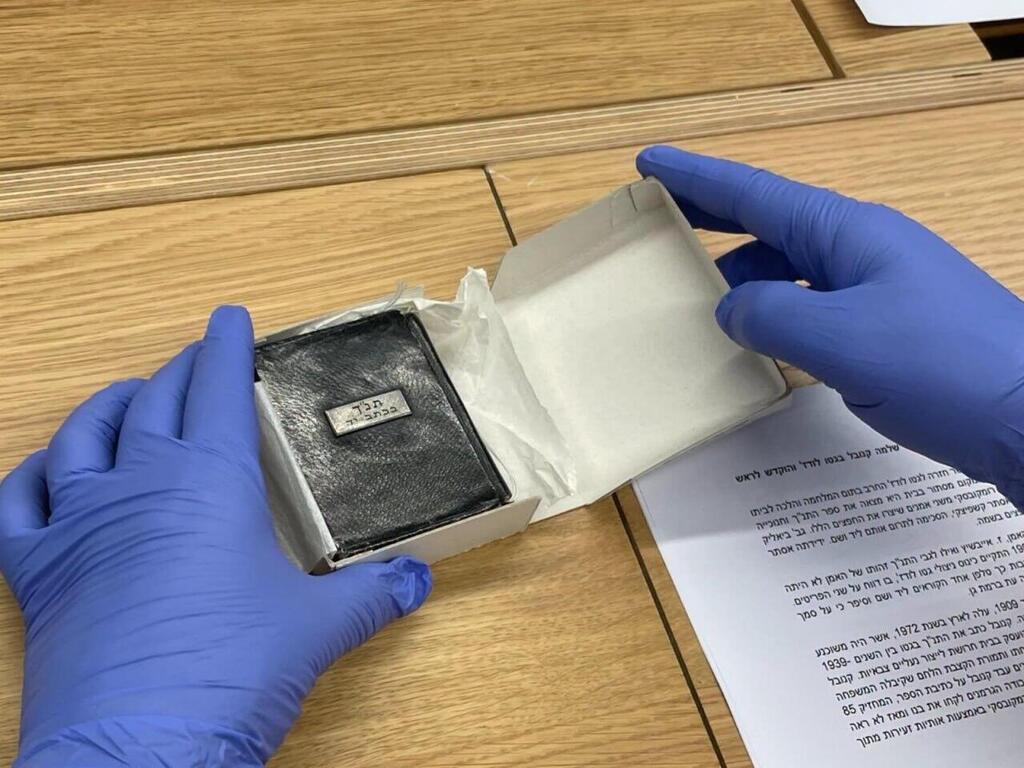
Shlomo Knobel’s son, grandson and great-grandson came to Yad Vashem for an extraordinary encounter with a masterpiece that survived the inferno: a miniature Bible, the size of a matchbox, written in micrographic script.
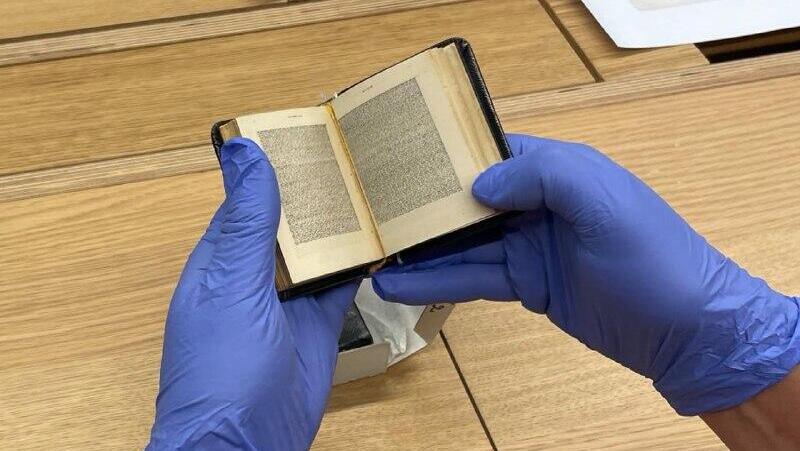
Knobel wrote this unimaginable work in the Lodz Ghetto intermittently over about three years. He lived there with his wife, Shifra, and their 3-year-old son, Chaim Alter, and worked in a factory producing military shoes. In a small, dedicated corner of the room where they lived, he labored over the book. He bought the special ink, which did not easily fade, using the family’s bread ration. His toddler son would proudly say: “My father is writing a Bible.”
Shlomo bound the Bible and in 1943 gave it as a gift to the head of the Judenrat, Chaim Rumkowski. The book is made up of 85 tiny pages, the first of which feature micrographic illustrations, including a portrait of Rumkowski made entirely from tiny biblical verses.
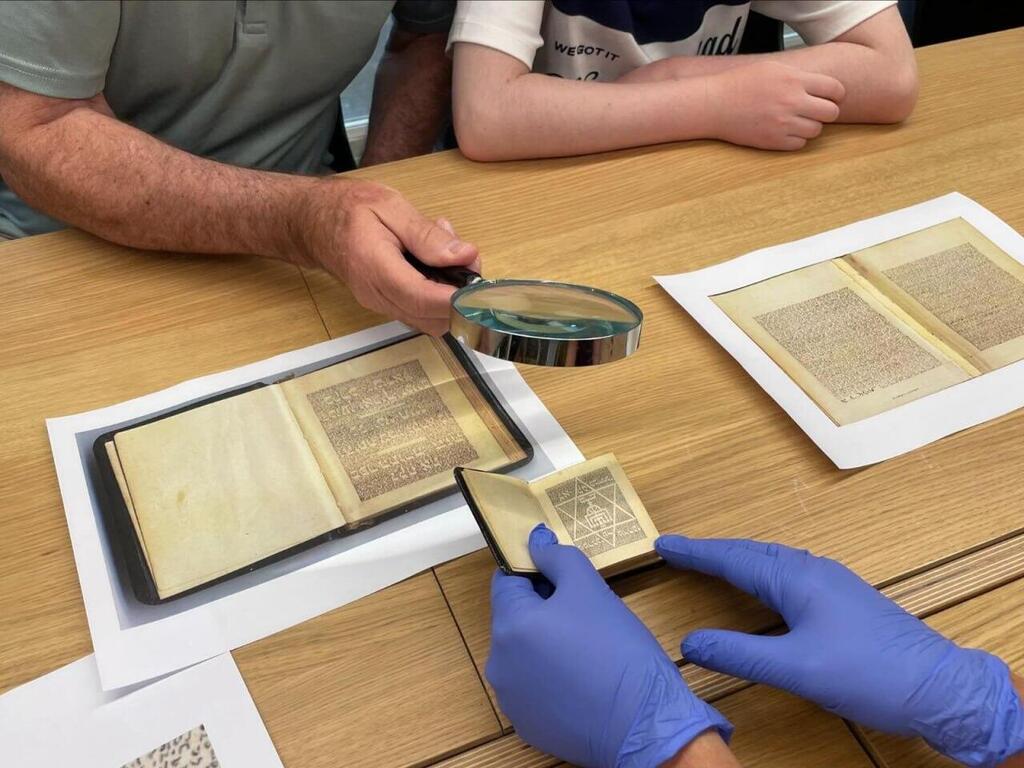
Shlomo’s son was murdered in the Holocaust. He and his wife survived, and later had another son. They immigrated to Israel in 1972. Shlomo was certain the Bible he had written had disappeared.
At the end of the war, Holocaust survivor Bella Bialik returned to the ruins of the Lodz Ghetto and found the tiny Bible alongside a small folding Hanukkiah, the work of the artist Z. Eybeschuts. In 1983, she donated the items to Yad Vashem. The identity of the creator of the miniature Bible was unknown. A year later, during a conference of Lodz Ghetto survivors, the existence of the items was publicized in the press. Following the report, a reader called Yad Vashem’s offices and said he knew the creator.
Thus, 41 years after he had given the tiny Bible to Judenrat head Rumkowski in the Lodz Ghetto, Shlomo Knobel was able to hold again the special item he had created. The moving event was broadcast on television during the news.
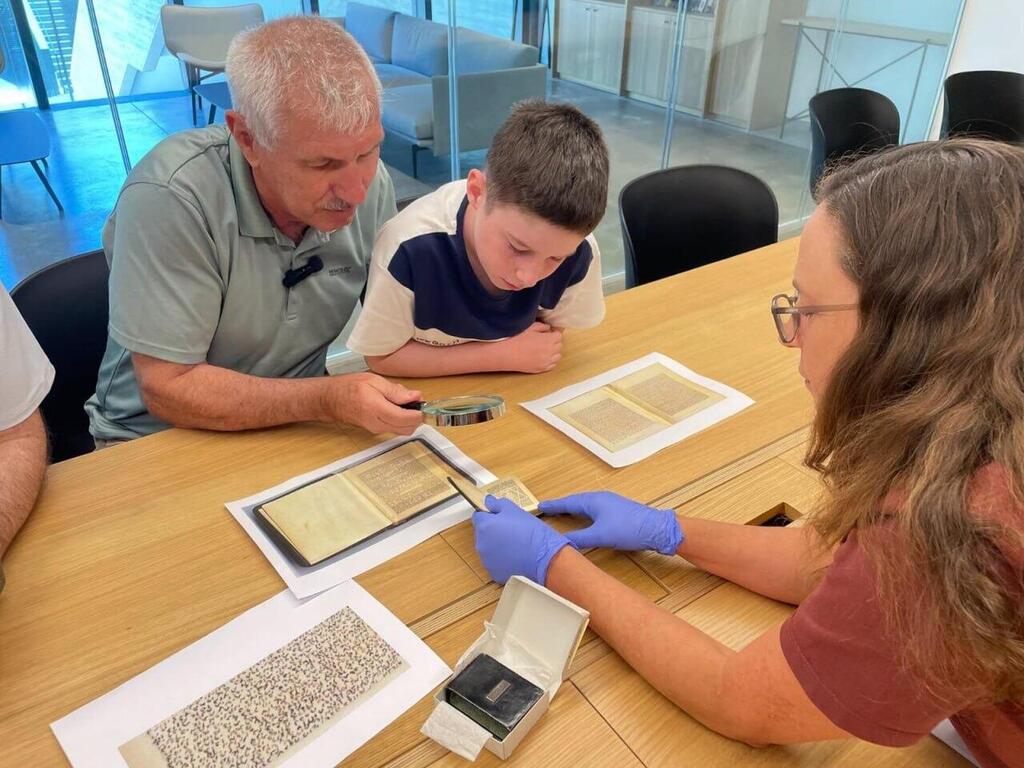
The Knobel family meeting with the miniature Bible
About two weeks ago, three generations of the Knobel family came to Yad Vashem to come face to face with the family history that remained from the ghetto.
“We came to Yad Vashem ahead of the great-grandson’s bar mitzvah, with the encounter with the Bible, and really with the family story, serving as a kind of closing of a circle,” said Avi Knobel, Shlomo’s son. “The younger generation knew the story only in very general terms, but the encounter with the item itself moved everyone deeply, and as young people living in the U.S., they summed it up with, ‘That’s so cool,’ which says it all.”