

In May 1964, a young Israeli journalist and emerging historian named Shlomo Aharonson knocked on the door of a small guesthouse on the Baltic island of Fehmarn. The sign outside read: "Stay at the Heydrich Inn - vacation, fresh air, sea." Inside, a grandmother bounced a blond toddler on her knee.
The grandmother was Lina Heydrich. The toddler was Reinhard Heydrich's grandson. And the man Lina was about to spend hours describing - tenderly, proudly, without apology - was the chief architect of the Holocaust.
That visit, and the questions it raised, are more relevant than ever. The city of Halle, Germany - Heydrich's birthplace - is now reckoning seriously with its Nazi past, not as an act of ritual commemoration, but as a genuine attempt to understand the mechanisms that turned ordinary people into architects of mass murder. Because if Halle's history teaches us anything, it is that the distance between a cultured musician and a genocidal killer is not as vast as we would like to believe.
From naval officer to mass murderer
Reinhard Heydrich was born in Halle in 1904 into a cultured, musical, middle-class family. His father directed the local conservatory. Reinhard grew up playing the violin. He joined the German Navy, was talented and fiercely ambitious, and dreamed of becoming an admiral.
His naval career ended in disgrace in 1931, when a court of honor dismissed him for behaving dishonorably toward a woman he had been engaged to. He went home to Halle, cried like a child, and briefly considered taking over the management of his father's conservatory. For a few weeks, the future architect of the Holocaust was contemplating a life as a music administrator.
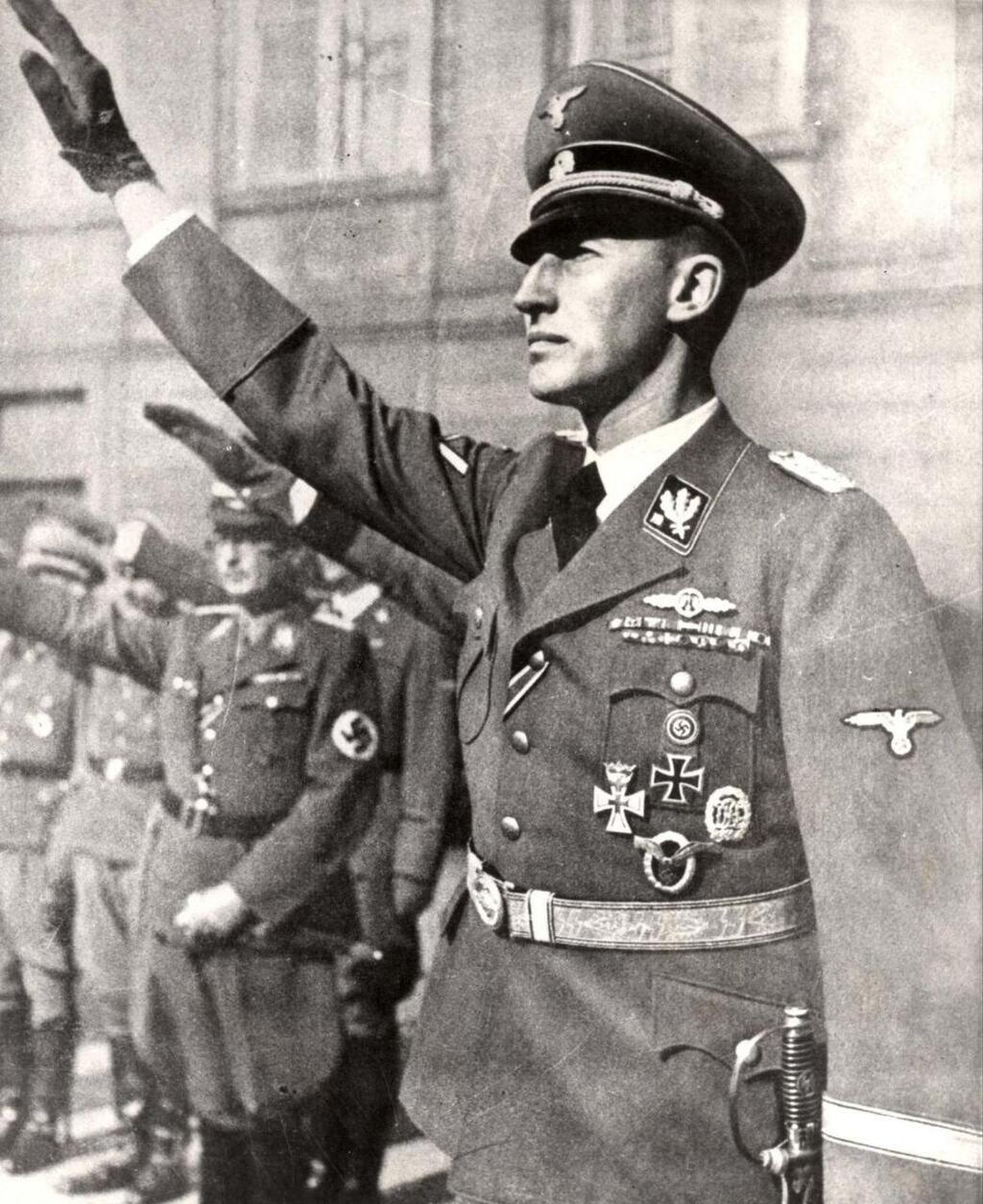
Reinhard Heydrich
(Photo Archive, Yad Vashem)
What happened next is the heart of the story. His wife Lina had connections to the Nazi movement and pushed him toward the SS. His mother wrote to a family friend who was an SS commander. That connection led to Heinrich Himmler. Heydrich - unemployed, humiliated, desperate to restore his professional identity - performed brilliantly. Within years, he had built the Gestapo, the SD intelligence service, and the vast machinery of Nazi terror. In January 1942, he chaired the Wannsee Conference, where the systematic murder of eleven million Jews was coordinated. He was thirty-seven years old.
He was assassinated by Czech paratroopers in May 1942. The mass extermination of Polish Jewry was named "Operation Reinhard" in his honor.
The grandmother's version
Sitting across from Lina Heydrich in 1964, Aharonson - who would go on to become one of Israel's most distinguished historians of the Nazi period - heard a version of this story that was simultaneously chilling and illuminating.
Lina did not describe a monster. She described a careerist. "My husband, unlike Himmler, was not a theorist," she told him. "He did not dream racial dreams. He simply wanted a great, strong Germany. He wanted to succeed in his new job at any cost."
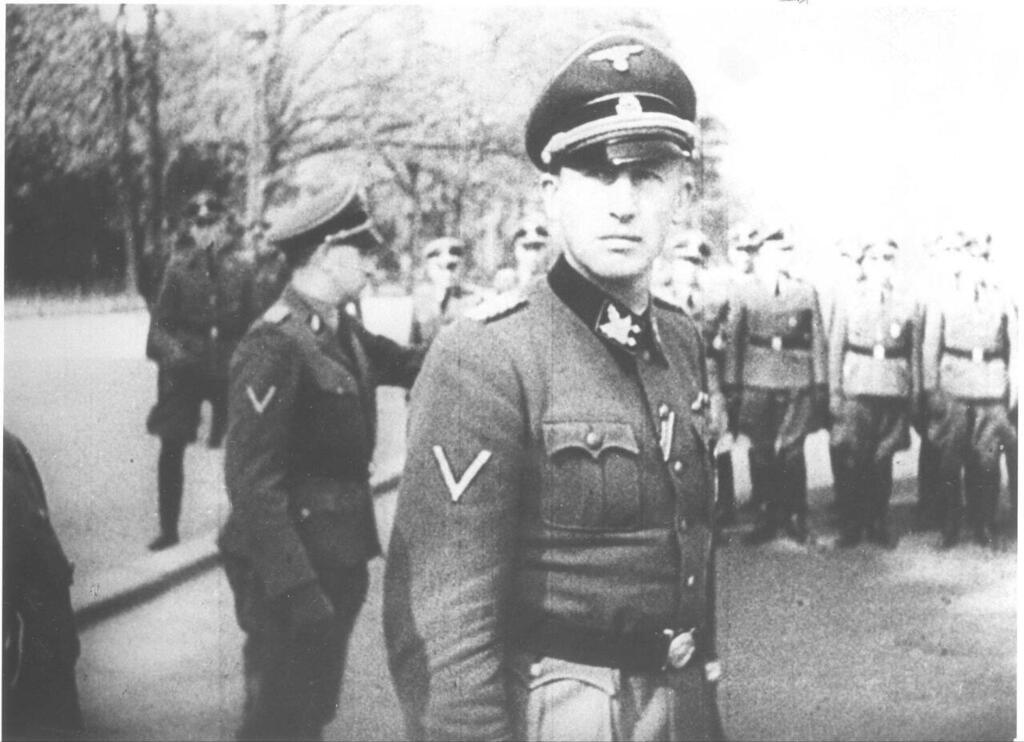
Reinhard Heydrich
(Photo Archive, Yad Vashem)
She described him playing Bach string quartets with friends and weeping in moments of musical transcendence. She described how the Navy's humiliation had shattered him. And when Aharonson pressed her - pointing out that her husband was responsible for the murder of millions - she replied with stunning matter-of-factness: "Those were orders. He didn't initiate them."
Aharonson's scholarly conclusion, developed over years of archival research, was controversial but important: Heydrich was not primarily a demonic ideological force. He was a careerist absorbed and radicalized by an institution. He did not arrive as a genocidal murderer. He became one - through choices, through daily practice, through the gradual hardening that comes from participating in systems of surveillance and repression. Lina's testimony, for all its self-serving quality, actually confirms this. It implicates not a monster, but a man. And that is far more disturbing.
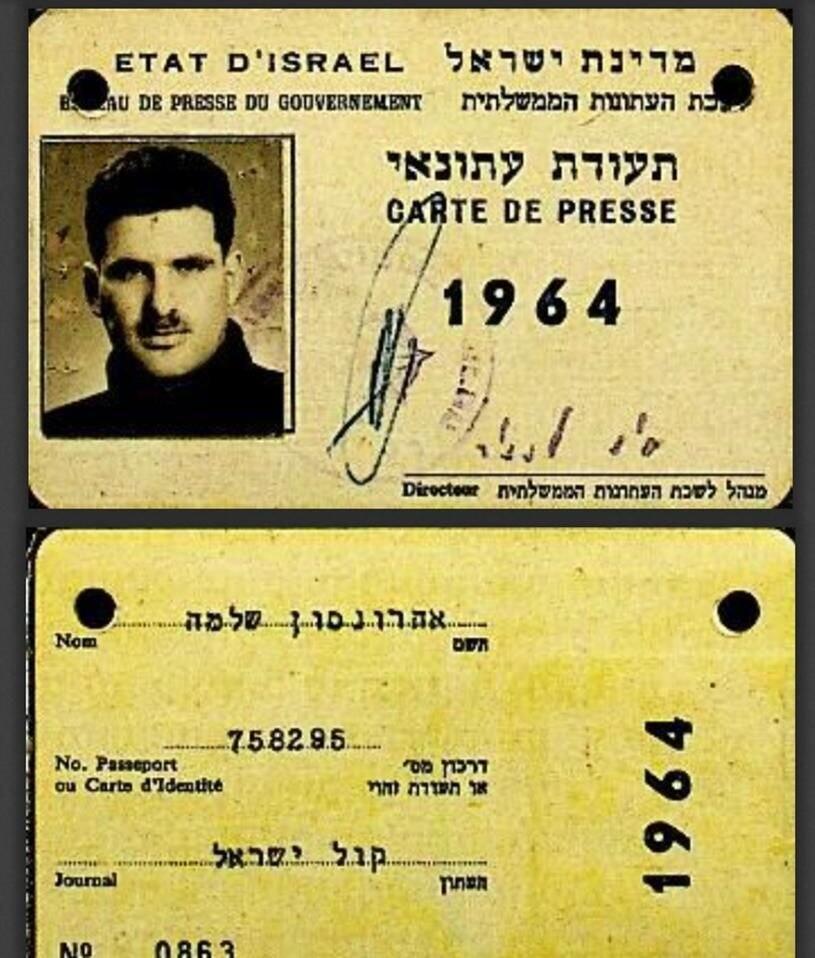
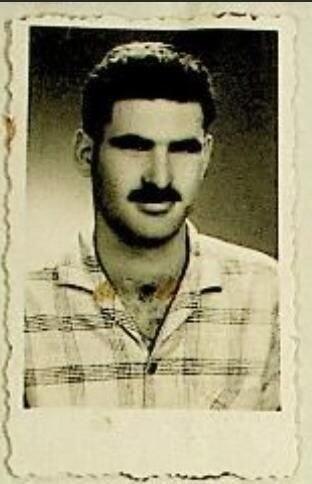
Shlomo Aharonson as a young journalist
(Photo: courtesy of Irit Yatziv and Massuah Archive)
Halle, 2019
On October 9, 2019 - Yom Kippur, the holiest day in the Jewish calendar - a twenty-seven-year-old German man drove to a synagogue in Halle, armed with homemade weapons and a helmet-mounted camera, and livestreamed his attempt to massacre the congregation inside. When he failed to breach the synagogue's reinforced doors, he killed two people outside. His manifesto blamed Jews for the world's problems. He expressed no remorse at trial. His only regret, he said, was that he had killed "white people" rather than Jews.
Halle. Heydrich's birthplace. The site of an antisemitic massacre attempt on Yom Kippur, eighty years after the Holocaust.
The ideologies did not die in 1945. They mutated, found new platforms, new recruits. The profile of the 2019 attacker - a young man with wounded pride, a need for belonging, and a worldview that blamed an imagined enemy for his failures - is not entirely unlike the profile of the disgraced naval officer who showed up at Himmler's door in 1931. The hatred wears new clothes. The machinery is recognizable.
Why Halle must look back to move forward
This is precisely why Halle's effort to seriously examine its Nazi past matters - not as self-flagellation, but as a genuine act of civic understanding. The question that Aharonson posed in that Baltic garden in 1964 - sitting among the flowers, listening to the sea - is the question that Halle, and every society, must keep asking.
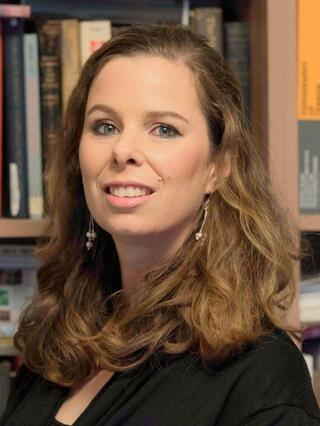 Dr. Daniela Ozacky-Stern
 How does an ordinary person become capable of extraordinary evil? Not through demonic transformation, but through careerism, opportunism, institutional loyalty, and the slow erosion of moral resistance. Heydrich did not need to hate Jews to help murder them. He needed ambition, a uniform, and a system that rewarded compliance.
Understanding that mechanism - tracing it through the archives, the testimonies, the streets of a city where it all began - is not an academic exercise. It is, as Aharonson understood, an act of living responsibility. Because the past, as Halle knows better than most, is never entirely past.
Dr. Daniela Ozacky-Stern, Holocaust Studies Program, Western Galilee College