


The year 2025 will be remembered as one of the most difficult for Jewish communities in the Diaspora since the end of World War II, not only in scale but in nature.
According to data compiled by the World Zionist Organization, more antisemitic incidents were recorded in the physical sphere last year compared with 2024. These included street assaults, attacks on synagogues, targeted harassment of Jewish communities and repeated damage to Jewish institutions.
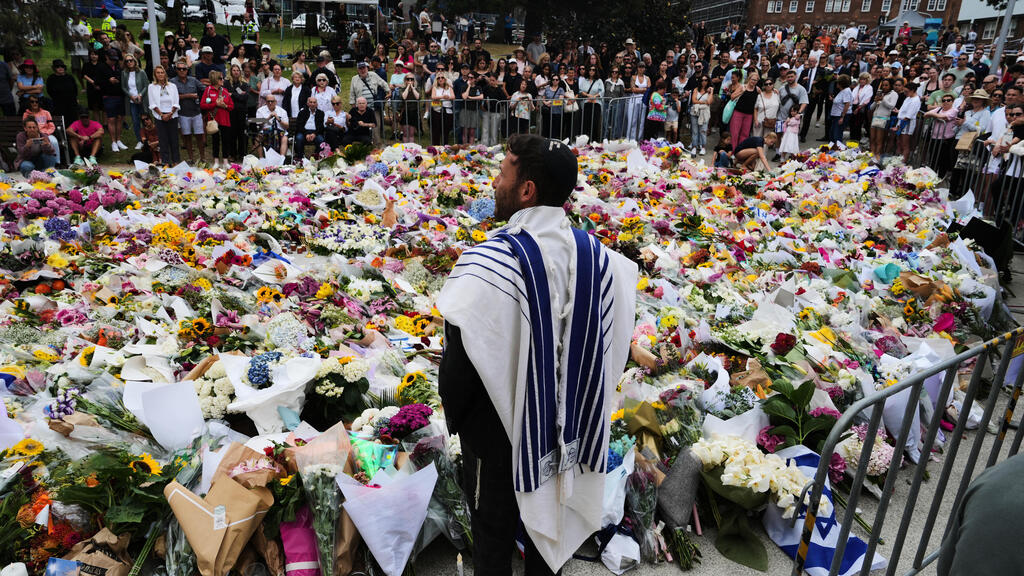
The figures show that 20 people were killed in antisemitic incidents worldwide, 15 of them in a massacre at a Hanukkah event in Sydney. The data underscore how hatred of Jews no longer remains confined to keyboards and screens.
Troubling paradox: less politics, more racism
A recent incident in which young people at a Miami nightclub stood and sang Kanye West’s song ‘Heil Hitler’ illustrates a broader trend that is also clearly reflected on social media.
A study currently being conducted at Ariel University by Dr. Raheli Baratz and Dr. Petr Oskolkov points to a particularly disturbing development. On the one hand, there was a 31.1% drop in politically linked antisemitic discourse, with fewer slogans such as ‘Free Palestine,’ ‘From the river to the sea’ or ‘genocide.’ On the other hand, there was a dramatic rise of between 100% and 275in% explicit, extreme and violent antisemitic expressions, including phrases such as ‘Jew Nazi,’ ‘F**K Jew,’ ‘F**K Israel’ and ‘Heil Hitler.’
In other words, the past year saw fewer political slogans and far more blunt hatred toward Jews. There was less ideological argument and more direct racist incitement against Jews and the State of Israel.
The study, based on an analysis of social media posts using the Buzzilla system, also found an unusual 21% increase in interaction rates. Fewer users were posting about the topic, but there were significantly more likes, shares and comments. Researchers attribute this to social media bots linked to extremist groups that sustain antisemitic discourse even in the absence of news events that would normally fuel it.
For example, use of the phrase ‘Heil Hitler’ rose by more than 200% in the number of conversations and posts in 2025, and by more than 240% in shares, likes and comments.
Hatred becomes routine
The most profound shift is visible over time. In 2024, antisemitic discourse largely followed external events, particularly waves of campus protests in April and May. In 2025, by contrast, the rise in online antisemitism occurred without any clear news trigger and continued uninterrupted for four consecutive months.
Hatred is no longer merely a reaction to reality. It is becoming a reality in its own right. Even in October 2025, amid talks over a potential hostage deal, online discourse barely addressed the issue.
The data also show a roughly 30% decline in references to ‘Israel’ and ‘Gaza’ on social media in 2025, a clear sign of public fatigue. Yet antisemitic discourse itself did not disappear. Instead, it became an integral part of the norms within certain communities, persisting even during relatively quiet periods and no longer requiring a political ‘excuse’ to erupt.
Researchers describe a decentralized network of extreme content that feeds on itself and reinforces a sense of legitimacy. Even as human interest wanes, automated mechanisms continue to generate activity. The result is hatred that does not fade with the news cycle but becomes a constant background presence online.
Dr. Baratz, one of the report’s authors and former Head of World Zionist Organization’s department for combating antisemitism & enhancing resilience, warned of a direct link between online radicalization and physical violence.
“We are identifying a direct connection between the escalation of online discourse and the transition to violence in the physical space,” she said. “When extreme expressions become a digital norm, they lower the threshold of shame and restraint. The discourse of 2025 no longer needs political framing to justify hatred. It operates on its own.”
“This is a dangerous normalization that creates a sense of consensus, even if part of it is artificial,” Baratz added. “In such an environment, the move from words to actions becomes much shorter, and a different approach is required to address the problem.”

Dr. Raheli Baratz
(Photo: Kobi Kuankas)
Ifat Ovadia-Luski, former chairwoman of KKL and head of the World Zionist Organization’s department for combating antisemitism, echoed the warning.
“The data from 2025 show the continuation of a deeply troubling trend,” she said. “More violence, more harm and greater confidence among antisemites to attack Jews. We are seeing an increase in physical incidents and direct attacks on Jews, driven by sustained hateful discourse across social media that prepares the ground for violence. When hatred becomes widespread and routine, violence becomes a legitimate option in the eyes of antisemites.”
Next week, on January 27, the world will mark International Holocaust Remembrance Day and the International Day for the Fight Against Antisemitism, commemorating the liberation of Auschwitz in 1945.
The authors of the report say the 2025 data hold up a stark mirror to the present. Antisemitism in the 21st century, they argue, is not a fleeting eruption around a crisis but an ongoing process, reinforced by technology and carrying a high human cost.
The 20 victims are not merely a statistic. They are a reminder that when hateful discourse becomes autonomous, the danger becomes part of everyday life.