


A French court on Tuesday rejected a $22 million compensation claim filed by a Jewish family of Iraqi origin against the French government, over its decades-long use of a property in Baghdad that once belonged to the family and now houses the French Embassy.
The Paris court ruled that it lacked jurisdiction in the case and directed the plaintiffs to pursue the matter with Iraqi authorities, a decision that drew outrage from the family, who fled Iraq amid anti-Jewish persecution in the mid-20th century.
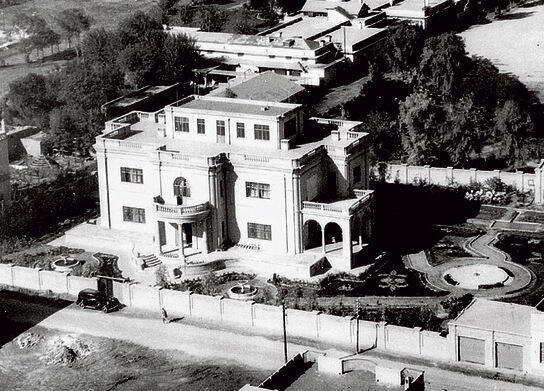
The lawsuit was brought by 66-year-old Philip Khazzam, a grandson of Ezra Lawee, one of two brothers who owned the property. The home was built in 1937 and leased to the French government, which used it as its embassy in Baghdad for over 60 years. The Lawee family fled Iraq in the 1940s following the revocation of the citizenship of the country's Jews, a wave of antisemitic violence and widespread expropriation of Jewish assets after the establishment of the State of Israel.
According to the family, France stopped paying rent to the legal heirs in the 1970s after the regime of Saddam Hussein ordered that rent payments be made to the Iraqi Finance Ministry, following the nationalization of Jewish-owned properties. While France continues to use the building to this day, the family alleges that rental payments now go to the Iraqi government, which does not forward the funds to the rightful heirs.
The suit demanded retroactive rent totaling approximately $22 million, along with an additional $11 million in damages. However, the court ruled that the family's losses stemmed from decisions made by Iraqi authorities, placing the dispute outside the scope of French legal jurisdiction.
Speaking to The New York Times, Khazzam called the recommendation to seek justice in Iraq “preposterous,” noting that “Iraq basically ran us out of our country, and then stole our home.”

The family’s lawyers, Jean-Pierre Mignard and Imrane Ghermi, argued that France violated its own laws and international human rights obligations by relying on discriminatory Iraqi policies to avoid compensating the family. They likened the case to claims brought in Europe to recover Jewish property looted by the Nazis during World War II.
France’s Foreign Ministry declined to comment on the ruling and did not send a representative to the court hearing. In its official response, the ministry maintained that any harm caused to the family resulted from sovereign decisions made by Iraq, and that France bears no legal responsibility.
Despite the ruling, Khazzam vowed to appeal. “We will continue our fight for justice in France,” he said. “We have just begun.”