

The program, run by Livnot U’Lehibanot, brought together Jewish young adults from the U.S., Australia, UK, and Canada for hands-on volunteering, Jewish learning, and shared community experiences rooted in the land and spirit of Israel. Some participants were already in Israel through Masa programs, while others had traveled specifically to participate.
Gallery
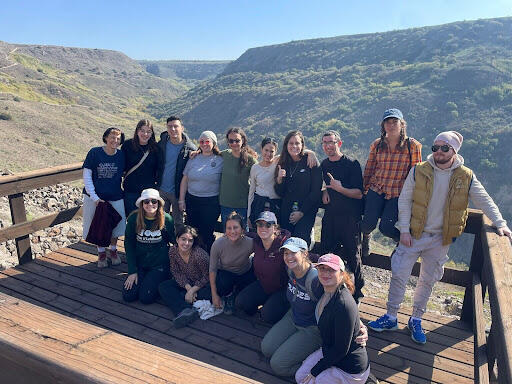
'Within minutes we felt like one peope': Jewish young adults volunteering in Israel
(Photo: Livnot U’Lehibanot)
Livnot U’Lehibanot has been active for 45 years, and over the past two years alone has led approximately 350 building and renovation projects in northern and southern Israel, supporting community rehabilitation and helping residents return to their homes following the war.
Based at Livnot’s campus in the Old City of Safed, the program unfolded in a setting that naturally invites reflection: the city’s spiritual atmosphere, layered history, and proximity to the Galilee and Golan Heights created space for participants to engage with questions of identity, belonging, and meaning.
Hannah Rose Weiss, 26, from New Orleans, described the experience: “When I arrived at Livnot, I was amazed by how quickly a real community formed. Jews from all over the world, with different backgrounds and ages - within minutes we felt like one people, one soul. It felt simple and natural, like we had always known each other. The candle lighting, the togetherness, that shared light—it was unifying and healing. It felt like the Jewish people really needed this right now. We all felt it.”
For some participants, this was their first visit to Israel, their first time celebrating Hanukkah, and their first experience of Shabbat. Over the years, more than 15,000 Livnot alumni have experienced their first spiritual Shabbat in Safed—often cited as a formative moment of belonging.
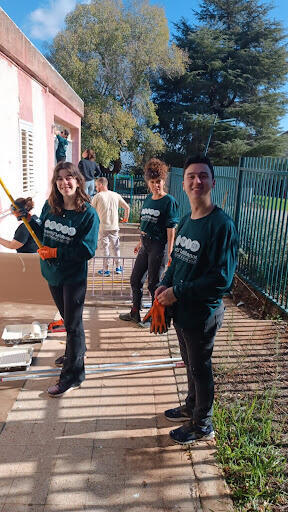
'Painting at the kibbuz, felt like rebuilding the Land of Israel'
(Photo: Livnot U’Lehibanot)
Alongside spiritual and communal programming, participants took part in meaningful volunteer work on the ground. In Kibbutz Malkia, they painted a local kindergarten and assisted an elderly resident—an emotional encounter that bridged generations and communities.
“While we were painting at the kibbutz, I was wearing a shirt that said ‘Livnot U’Lehibanot,’” Weiss shared. “As we worked, I realized how meaningful it was to be part of rebuilding the Land of Israel—and just as much, building my own soul. I felt genuinely connected and involved.”
The program also emphasized connection to nature as a pathway to Jewish and Israeli identity. Participants hiked in Gamla, Tel Saki, and Nahal Amud, experiencing the country through movement, landscape, and historical context—an approach that integrates nature, spirituality, and Jewish life.
Vlad Rosenberg, 28, who lives in Israel, explained what motivated him to join the program: “I came to Livnot because I wanted to reconnect in a real, tangible way—not just to learn about Israel or Jewish life, but to actually live it within a community. I was looking for something authentic: people, meaning, and an experience that would leave a lasting mark.”
He added that the timing of the program during Hanukkah was especially powerful: “Being at Livnot during Hanukkah was especially powerful. Lighting candles together, listening to everyone’s stories, and experiencing the holiday within a group made it feel alive and personal. Shabbat was definitely a highlight—the warmth, the singing, the shared meals, the conversations, the feeling that time slowed down in exactly the right way. The week I spent at Livnot renewed my connection to Israel, to my Jewish identity, and to a supportive, inspiring community.”
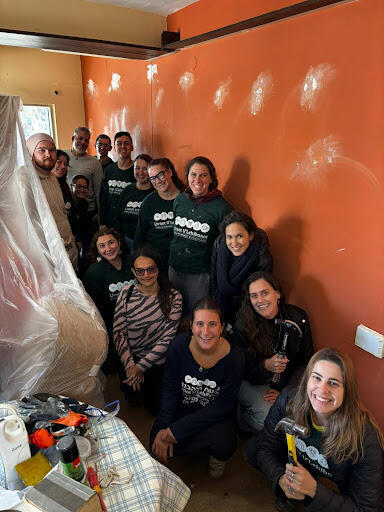
(Photo: Livnot U’Lehibanot)
Elisheva Mirvis, Vice President of Livnot U’Lehibanot, emphasized the broader significance of the program: “At a time when Jews in the Diaspora are facing increasing challenges in maintaining Jewish identity, we believe the response to antisemitism lies in action—through volunteering, community-building, and strengthening the connection to Israel. The relationship between Israel and the Diaspora is a mutual one, built on shared Jewish identity, belonging, and active engagement on both sides.”
Over its 45 years of activity, Livnot U’Lehibanot has worked with more than 15,000 Jewish young adults, many of whom experienced their first spiritual Shabbat in Safed. In the wake of the war, the organization has continued to focus on rebuilding efforts, leading hundreds of construction and renovation projects across the country.
“I didn’t come with big expectations,” Weiss reflected. “But the moment I arrived, I felt truly connected and involved. Through the work, I realized I wasn’t just helping rebuild a place—I was rebuilding myself as well.”