

Margherita Sarfatti — described over the years as “the mother of fascism,” “the Jewish lover of Il Duce,” and “the other woman of Il Duce” — was a central and complex figure in the rise of Italian dictator Benito Mussolini, helping shape his ideas and fascist ideology.
A Jewish aristocrat, art critic, collector and writer, Sarfatti was widely regarded as brilliant and strikingly beautiful. She is also portrayed as one of the most intriguing figures in Mussolini’s life — the ally of Adolf Hitler who was executed by partisans in April 1945 along with his mistress Clara Petacci.
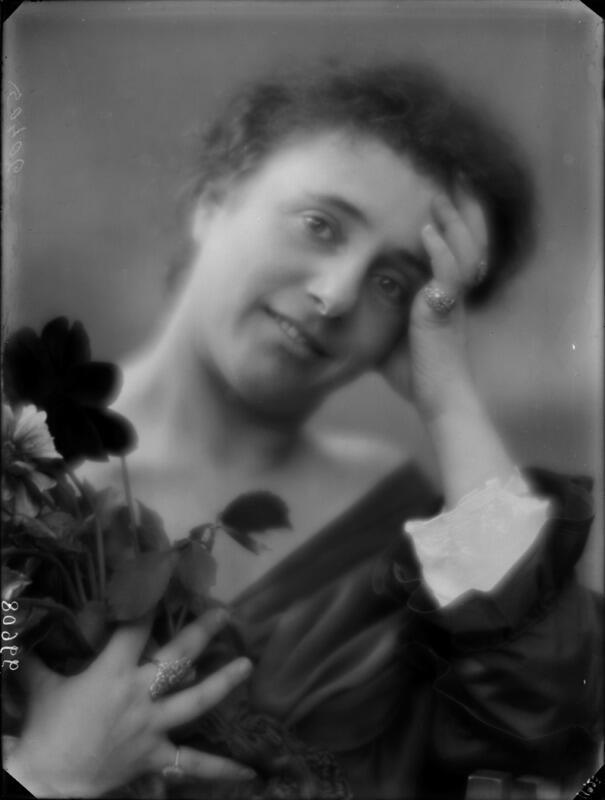
Sarfatti features prominently in the Italian television series “Mussolini,” now available on yesVOD, an eight-episode production depicting Mussolini’s rise to power between 1919 and 1925 in the aftermath of World War I. The series explores the mechanisms that enabled the rise of fascism.
The series was directed by British filmmaker Joe Wright, known for period dramas such as “Atonement” and “Pride and Prejudice,” as well as “Darkest Hour,” which portrayed Winston Churchill’s rise to power during World War II.
Wright said Mussolini ultimately rejected Sarfatti because she was Jewish. He also preferred younger women and viewed her as too controlling, distancing her from positions of influence.
Rather than follow a conventional biographical approach, Wright incorporated a modern aesthetic, including a soundtrack by Tom Rowlands and Ed Simons of The Chemical Brothers.
“We tried to reflect the aesthetics and energy of the period in a modern context,” Wright said in an interview in a villa garden on the Venice Lido. “If I had used the music and aesthetics of the time, it would have felt outdated. I wanted the series to feel relevant and give viewers a sense of what it was like to be there.”
Asked why recent films and series have revisited the rise of authoritarian regimes in 20th-century Europe, Wright pointed to the global rise of the far right.
“The answer is clear — the rise of the far right around the world,” he said. “The only way to understand where we are now is to look back. Mussolini was an opportunist. He saw legitimate public concerns and exploited them. He took people’s fears and led in response to what he saw.”
Wright said Mussolini’s legacy has long been misunderstood in Italy.
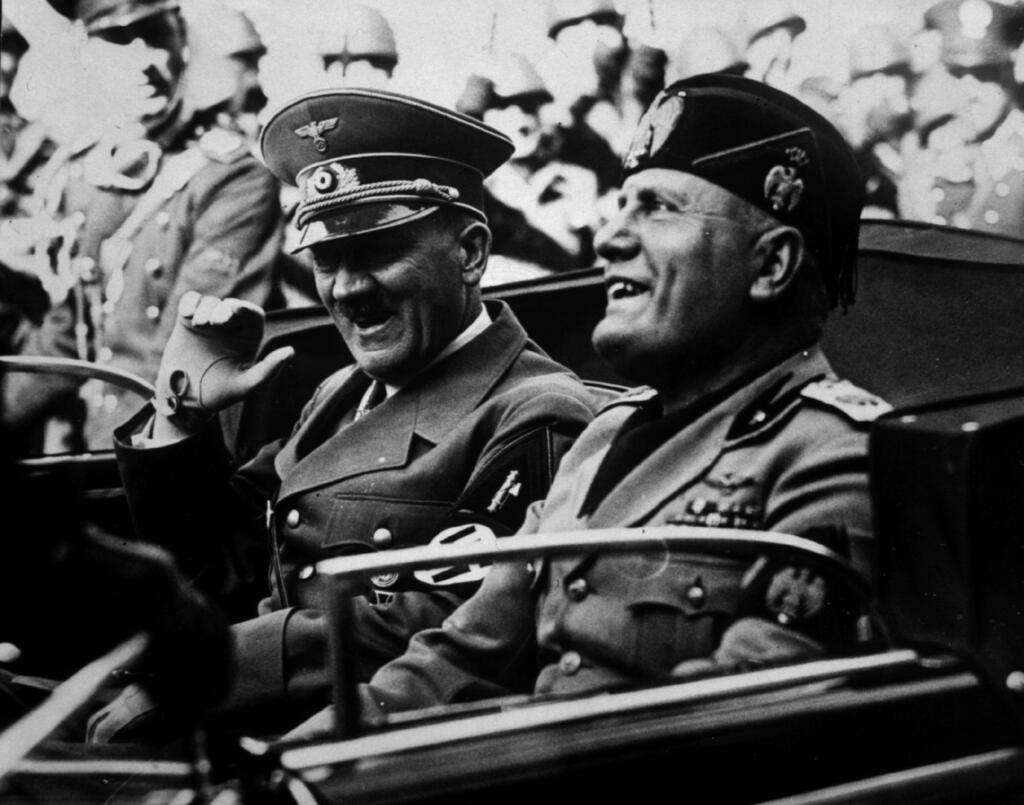
“For 70 years there has been a false narrative — that he did good things and only failed because of alliances with the wrong people, like Hitler,” he said. “He was not a great man. Politics is largely about controlling the narrative, and Mussolini understood that very clearly.”
(Photo: Keystone / Getty Images)
He added that the term “fascism” remains widely used today to describe political figures worldwide.
The series also portrays Mussolini’s treatment of women. He behaved cruelly toward his wife Rachele, the mother of his five children, and mistreated his first wife, Ida Dalser. He refused to recognize their son and, after coming to power in 1922, had both institutionalized.
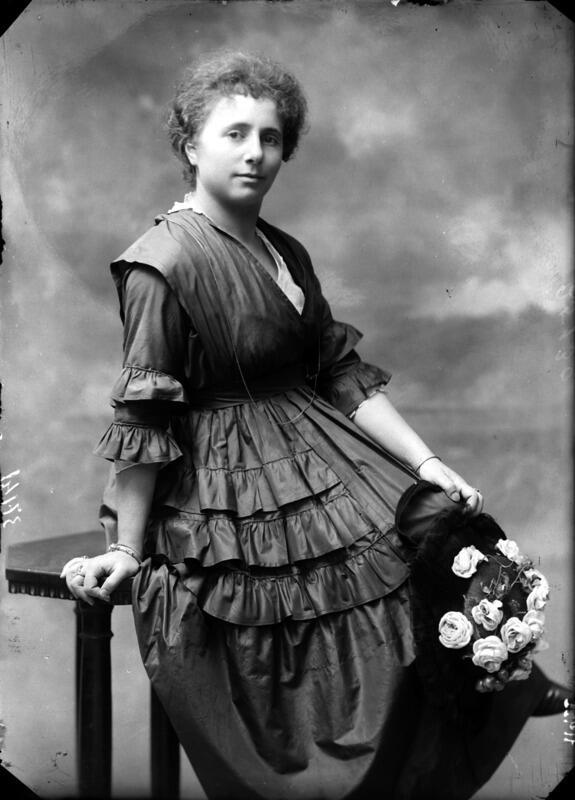
By contrast, Mussolini showed respect for Sarfatti, who was not one of the many women he took as lovers, some of whom he raped. She was born into a wealthy and prominent family in the Jewish Ghetto of Venice, with roots dating back to the 13th century. Her father was a lawyer and businessman who served the Venetian government. She was also related to writer Natalia Ginzburg.
As a teenager, Sarfatti was drawn to socialist ideas. At age 18, against her parents’ wishes, she married a successful lawyer, Cesare Sarfatti, who was 14 years older. They had three children and later moved to Milan, where she hosted a literary and artistic salon.
After her father’s death in 1908, she inherited a substantial fortune that allowed her to support artists and later Mussolini, whom she met in 1911 when he became editor of the socialist newspaper Avanti!, where she published art criticism.
During their relationship, Sarfatti helped Mussolini craft headlines, shape ideas and develop fascist ideology. Her eldest son, Roberto, died fighting in World War I, and Mussolini praised him as a Jewish soldier who received one of the highest honors in the Italian army.
After the war, Sarfatti was expelled from the Socialist Party due to her views and began writing for other newspapers. Her relationship with Mussolini deepened, and she played a key role in the “March on Rome” — a series of events between Oct. 22 and Oct. 29, 1922, that led to his rise to power. She helped organize the march, in which thousands advanced toward Rome, although Mussolini himself did not participate.
Following her husband’s death in 1924, she moved to Rome with her children.
“Without Margherita Sarfatti, Mussolini would not have reached where he did,” Wright said. “She was central to his development — helping shape his image and connect with people, trying to soften the brutality of the Blackshirts,” referring to the fascist paramilitary organization.
Sarfatti wrote a favorable biography of Mussolini in 1925, which was translated into 18 languages.
In the series, her Jewish identity is revealed only in the fifth episode, a narrative choice Wright described as “a brilliant structural move.”
Although Mussolini did not initially display antisemitism and some early fascist thinkers were Jewish, racial laws were eventually enacted in Italy.
“In 1930, she was forced to convert to Catholicism,” Wright said. “Ultimately, Mussolini rejected her because she was Jewish. He distanced her and removed her from positions of influence. She was later forced to leave the country after the racial laws.”
(Photo: Mario Nunes Vais/Wikipedia)
On Nov. 14, 1938, Sarfatti fled her home near Lake Como, traveling with two suitcases and 1,272 letters Mussolini had written to her over two decades — letters she intended to use as protection. Mussolini later sent her daughter and son-in-law to persuade her to return, but she refused.
Mussolini’s regime was also responsible for the deaths of her sister and brother-in-law, who were handed over to the Nazis and died en route to Auschwitz.
In a 1951 interview with the Rome-based daily Herut, Sarfatti insisted Mussolini did not willingly implement the racial laws.
“That is a lie,” she said. “He opposed them until the last moment and did not want to enact them. He was forced.”
She also addressed her conversion, describing the New Testament as “an interpretation of the Bible” that offered answers to “social and humanitarian problems.”
After living in exile in France and South America, Sarfatti returned to Italy, where she published articles and a book about her relationship with Mussolini. She argued that fascism had initially been a positive idea but that Mussolini changed over time.
“After a decade in power, he began to deny even internal freedoms and sought to subjugate citizens’ souls to the state,” she said. “Behind the facade of fascism was corruption.”
Sarfatti visited Israel several times. She expressed sympathy for elements of the Revisionist movement, a Zionist ideological stream founded by Ze’ev Jabotinsky, but did not support Zionism. She also met several times in Paris with Chaim Weizmann, who later became Israel’s first president.
Sarfatti died in 1961 at age 81.
More than three decades later, in 1993, Philip Cannistraro and Brian Sullivan published her biography, “The Other Woman of Il Duce.” In the introduction, Sullivan wrote that Sarfatti knew nearly everything about Mussolini, including his weaknesses, habits and personal life, and that Mussolini feared she might reveal intimate details that could damage his image.
Her life has inspired multiple portrayals in film and literature. Susan Sarandon played her in the 1999 film “Cradle Will Rock,” directed by Tim Robbins. In the series “Mussolini,” she is portrayed by Italian actress Barbara Chichiarelli.
“When I began working on the character, I asked Joe Wright whether I should imitate her, and he said no,” Chichiarelli said at the Venice Film Festival. “Their relationship was deeply intimate, complex and articulate. I read her book promoting Mussolini and understood how she used her influence — and how he used her.”
She added that despite her intelligence and strength, women at the time had limited power.
Luca Marinelli, who plays Mussolini, said the role was emotionally demanding.
“I remember the night filming ended and my hair began to grow back,” he said. “I started to cry and asked myself what I had done to my soul by taking on this role. But I was happy with how we brought the message to audiences.”
Marinelli said the goal was not to portray Mussolini as a monster.
“It’s easy to think he was a monster and we are not like him, but unfortunately we are,” he said. “Everyone has an inner demon that can be fueled by fear and anger. Italy after World War I was full of both, and that was the ground on which he built himself.”
Wright said the story carries a message for today.
“Every generation has a responsibility to ensure the vulnerable are protected,” he said. “We must act מתוך a place of love, not fear.”