


For centuries, Jews lived in what is now central Berlin. During the Nazi era, more than 200 homes and properties belonging to Jewish families were confiscated — and none of them ever received compensation. Now, archaeological excavations are uncovering fragments of those buildings.
Due to the heavy bombing during World War II and a postwar reconstruction that ignored the area's Jewish history, most architectural evidence of Jewish life in central Berlin has been lost. The area, once densely built, is now a 7.2‑hectare open space in the Mitte district, home to a public park.
Jewish quarter uncovered in central Berlin
(Video: Rabbi Mendel Brandwein)


In the past, this area was lined with grand buildings, including the famed King of Portugal hotel, which boasted its own synagogue and offered kosher food. It was a regular destination for Jewish travelers and, up until the 1930s, served as a cultural hub for the local Jewish community.
Today, the Berlin state government is redesigning the open space. New stairways and ramps are being built along the banks of the river to create an accessible public waterfront. In the process, the last remaining remnants of buildings along the former Burgstrasse 8–22 have been exposed, according to Hans-Wilhelm Saure, a journalist for Bild.
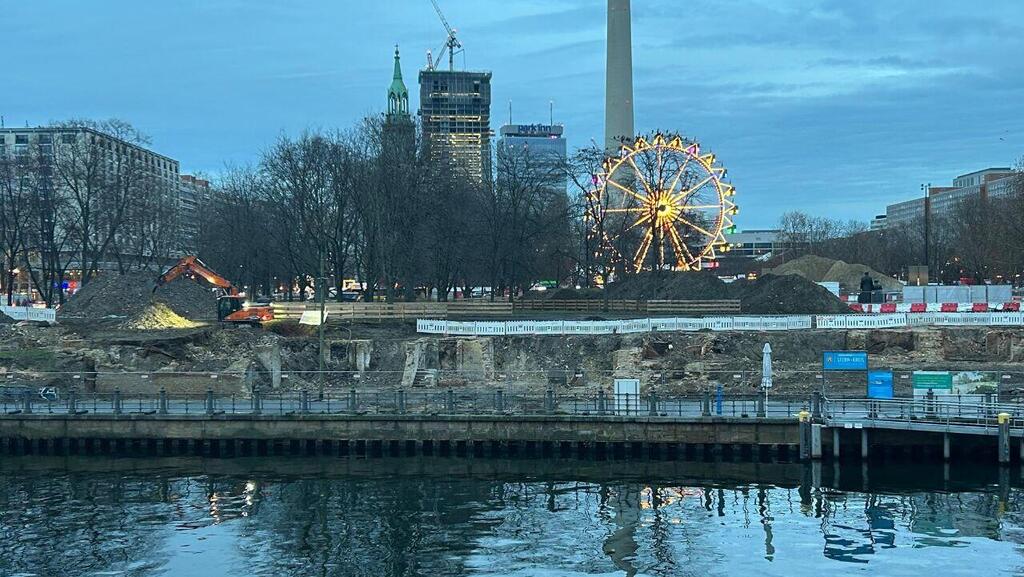
Excavation teams also uncovered the remains of a home at Burgstrasse 20, once owned by Nobel Prize–winning chemist Richard Willstätter. Since he was a Jew, Willstätter was persecuted by the Nazis and fled to Switzerland in 1939. He lost all his property under the Nazi regime and died in 1942. In 1951, East Germany declared the ruins of his home public property.
According to Bild, other basements uncovered during the dig also belonged to Jewish families. “The four properties at Burgstrasse 12, 13/14, 16 and 20 were stolen from their Jewish owners by the German Reich during the Nazi era. None of them were returned, neither during the time of the Berlin Wall, nor after German reunification,” said urban researcher and historian Dr. Benedikt Goebel in an interview with the newspaper.
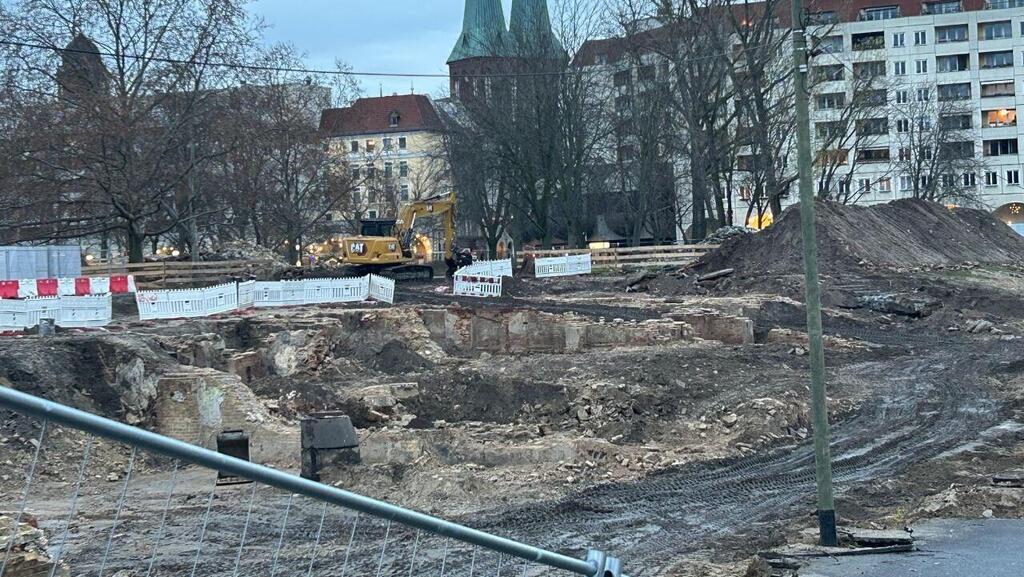
The excavated site in central Berlin(
(Photo: Rabbi Mendel Brandwein)
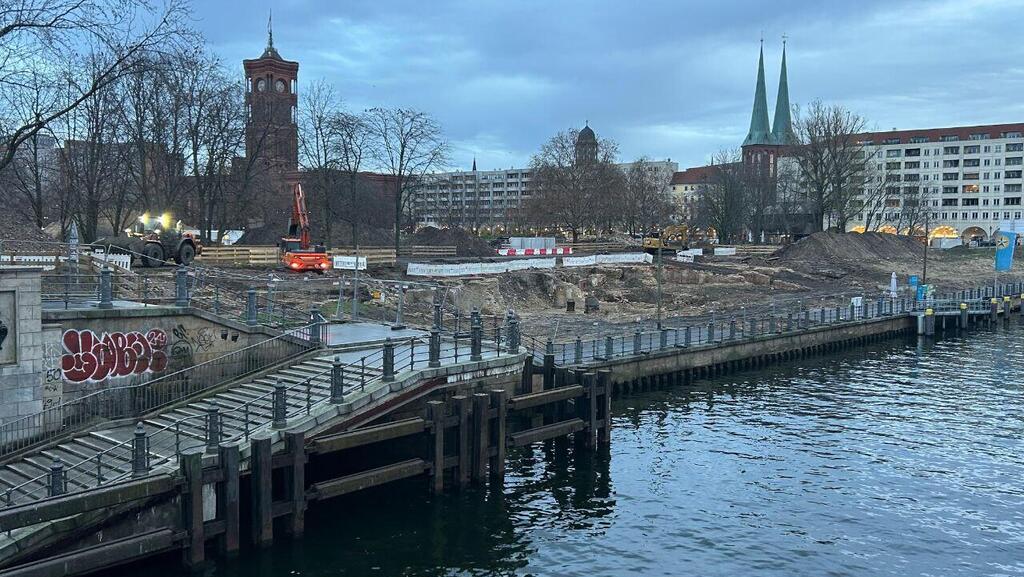
The place where Jewish houses were, near the Spree River
(Photo: Rabbi Mendel Brandwein)
Goebel added that financial compensation was either never paid or amounted to only a small fraction of the properties' current market value. “Politicians and the Berlin administration are turning a blind eye to this history and planning the city as if these large open spaces were acquired fairly, which is not the case for around 20% of the area,” he said.
One of the homes, at Burgstrasse 13/14, belonged to Jewish stamp dealer Philipp Kosack. Berlin owes him credit for acquiring the legendary “Blue Mauritius” postage stamp, now housed in the Museum for Communication Berlin. Kosack fled to Denmark in 1935 and died there in 1938. East Germany seized his property in 1968, declaring it public.