

Italy has taken a major step toward creating its first formal process for returning art and cultural property looted during the Holocaust and the Fascist era, with lawmakers advancing legislation aimed at addressing long-standing restitution claims.
Bill 2834, introduced in the Italian Parliament and reviewed by the Chamber of Deputies' Committee on Culture, Science and Education, would authorize the government to establish a legal framework for returning artworks and cultural property seized, looted or lost because of antisemitic persecution under Italy's Fascist racial laws beginning in 1938 and during the broader Holocaust era from 1933 to 1945.
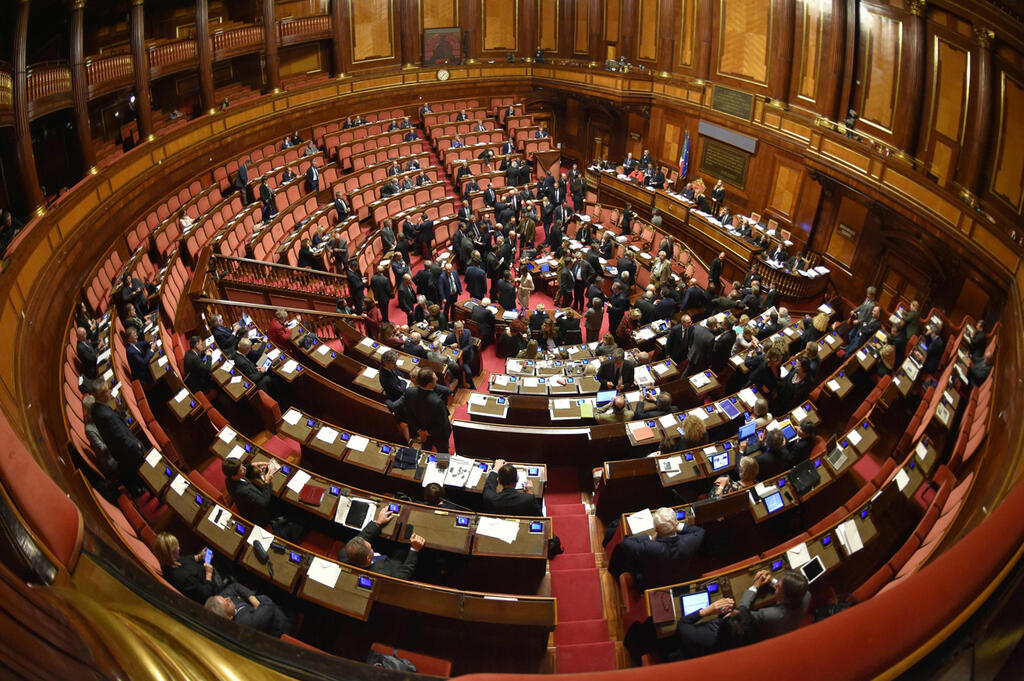
If enacted, the legislation would mark Italy's first dedicated restitution mechanism for Holocaust-era cultural property.
Gideon Taylor, president of the World Jewish Restitution Organization, welcomed the bill, calling it "a historic opportunity to finally deliver justice to victims of Nazi and Fascist persecution and their heirs."
Taylor said families seeking the return of looted cultural property in Italy have faced greater obstacles than in neighboring European countries over the past two decades.
"While operational and legal details remain to be resolved as the bill moves forward, this is a vital step toward creating a framework for restitution," he said.

World Jewish Restitution Organization President Gideon Taylor
(Photo: WJRO)
The World Jewish Restitution Organization said Italy has lagged behind other Western European countries despite endorsing the 1998 Washington Conference Principles on Nazi-Confiscated Art and the 2009 Terezin Declaration, both of which encourage governments to facilitate the return of Holocaust-era looted artworks.
In a report published in March 2024 with the Conference on Jewish Material Claims Against Germany, the organization concluded that Italy had made only "some progress" toward establishing an effective restitution system over the previous 25 years.
According to supporters, the proposed legislation would create an independent committee with authority to issue binding restitution decisions. It would also remove several legal barriers that have historically complicated claims involving works held in public collections, including statutes of limitation, protections for state-owned property and restrictions governing national cultural assets.
The bill is based in part on research by Prof. Lorenzo Casini, whose report examined Italy's restitution framework and compared it with systems in Germany, France, the Netherlands, Austria and the United Kingdom.
Taylor said the effectiveness of the legislation would depend on its final provisions, particularly whether it creates an independent panel capable of resolving disputes based on fairness and equity in line with international standards.
 Union of Italian Jewish Communities President Livia Ottolenghi
 Livia Ottolenghi, president of the Union of Italian Jewish Communities, told lawmakers that the legislation would help address a long-standing gap in Italy's legal system.
"Italy is finally taking steps, many years after both the looting itself and the 1998 Washington Conference, to establish a right to redress," Ottolenghi said. While no law could compensate for the lives lost or the suffering endured during the Holocaust, she said, it could provide justice for the loss of cultural heritage.
She expressed support for the bill's overall direction, saying it was consistent with implementing the Washington Principles on Nazi-confiscated art.