


A rare fragment of an 18th-century Torah scroll bearing ancient Hebrew script was discovered in the attic of a private home in the city of Novogrudok in Belarus.
Local artist Viktor Vasilyuk presented the item after it was found in the home of his relatives. While the circumstances of how the Torah scroll came into the family’s possession are not entirely clear, accounts published in the local press suggest it may have originally belonged to members of the family.
Gallery
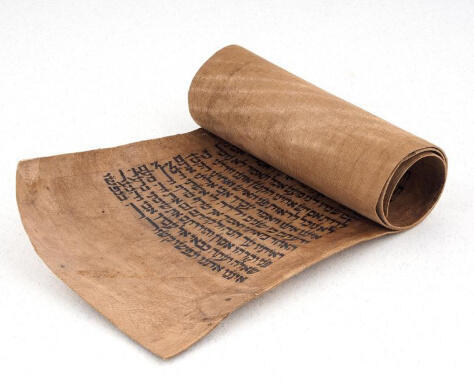
Discovered in teh attic of a private home, where it likely had been hidden
(Photo: Irina Goncharova)
According to family testimony, Vasilyuk’s relatives fled the Novogrudok Ghetto during the Nazi occupation and changed their surname. His mother’s maiden name was Katz. During their escape, they left behind a parchment scroll from an ancient Torah, which had been hidden in the attic of a rural house beneath straw. According to the descriptions, the parchment sheets were even used to cover the floor, apparently in an effort to conceal them.
The Novogrudok Ghetto was a Nazi ghetto established in December 1941 in Soviet Belarus (present-day Belarus) during the Holocaust. Nearly all of its approximately 10,000 residents were murdered, and only about 350 survived.
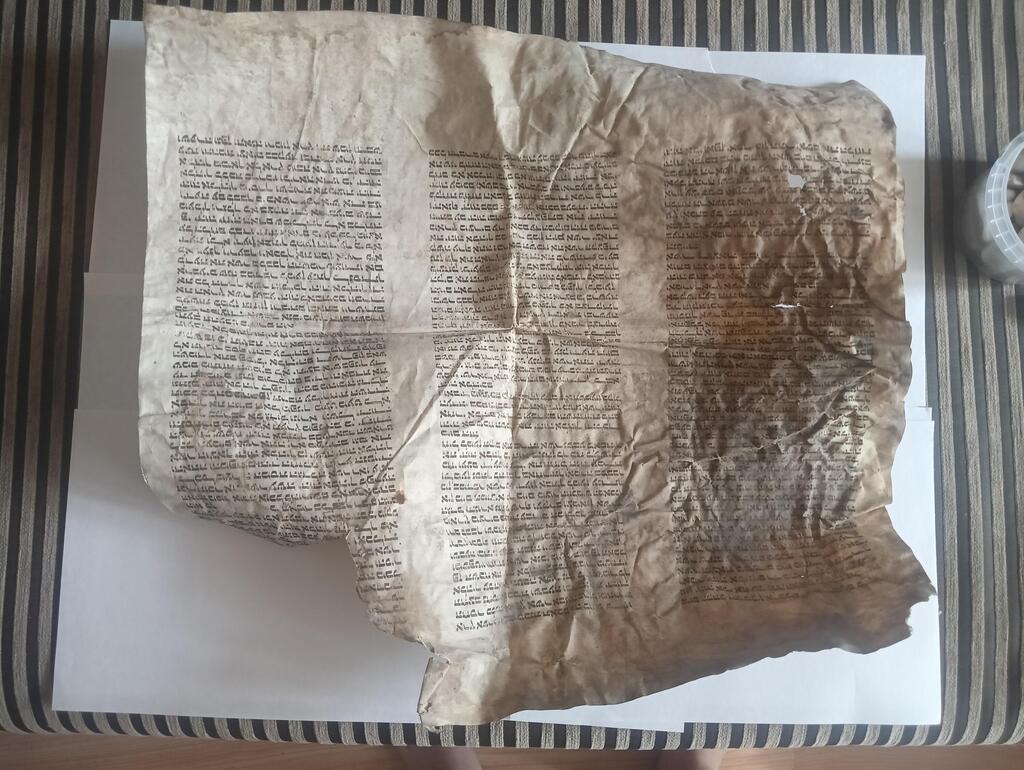
The Torah scroll was hidden by a Jewish family
(Photo: Irina Goncharova)
An examination conducted by experts from the National Library of Belarus determined that the fragment dates to the second half of the 18th century. The assessment is based, among other factors, on the characteristics of the ink, which has a reddish hue typical of that period.
According to estimates, the fragment is part of a Torah scroll written by a sofer stam — a Jewish scribe trained in the precise, halachically mandated method of writing sacred texts on parchment without corrections. The discovery has sparked interest among researchers and cultural figures, and may lead to further study into its origins and its possible connection to the Jewish history of the region.