

A young Muslim preacher in Melbourne urged followers not to take Jews and Christians as friends and spoke of a duty to “take up arms” against enemies of Islam, in a sermon delivered in July that has now drawn attention in Australian media.
The preacher, known as Abu Ahmad, is associated with Melbourne’s Al Bayyinah Islamic Centre and has links to controversial Sydney preacher Wissam Haddad.
Gallery
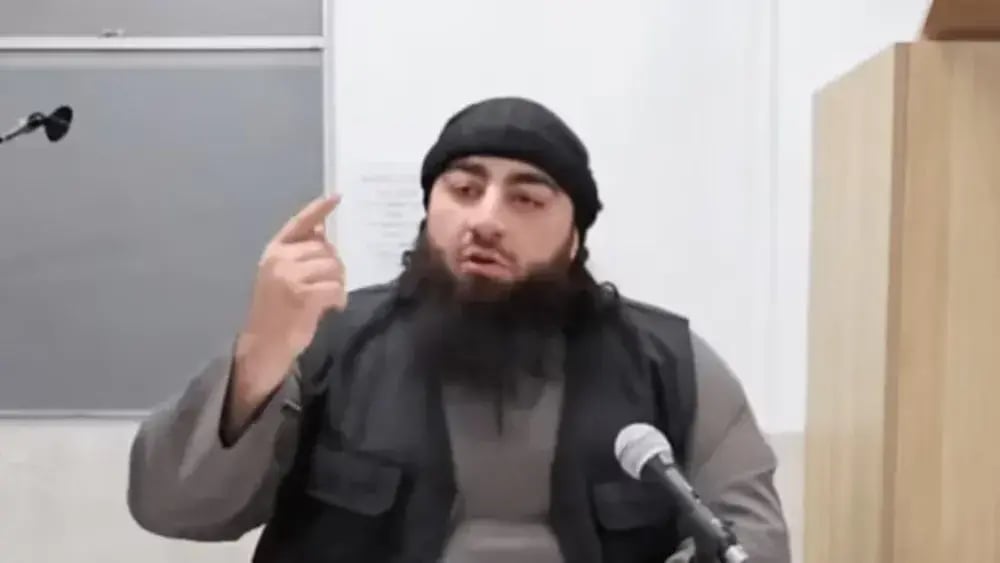
Abu Ahmad, a Melbourne cleric that calls Jews and Christians ‘enemies’ and tells followers to ‘take up arms’
(Photo: YOUTUBE/AL BAYYINAH ISLAMIC CENTRE)
In a clip from the sermon posted on the Islamic center’s social media accounts, Abu Ahmad said: “For the sake of Allah, it includes the obligation to declare enmity for his sake, opposition for the sake of Allah. It is to declare opposition: indeed, to take up arms against his enemies, to shun them and to stay far from them both in word and deed.”
“This proves that simple opposition of the spirit is not enough and that it must be complete by honoring of your commitment,” he added.
Later in the sermon, Abu Ahmad said opposition for the sake of Allah also meant feeling anger toward “the enemies of Allah” and struggling against them.
He listed atheists, Jews, Christians, modernists, Zionists and communists among what he described as the “enemies of Islam,” claiming they sought to harm Muslims and undermine their distinct identity.
Renewed scrutiny of extremist preaching
The emergence of the sermon has renewed scrutiny in Australia of extremist religious preaching and the powers available to authorities to respond to it.
The issue became the subject of intense political debate in January as Parliament considered legislation aimed at hate groups and incitement. Prime Minister Anthony Albanese’s government ultimately split its proposed legislation and abandoned some provisions that would have expanded the authorities’ powers to address hate speech based on race, religion and other characteristics.
Officials have since expressed frustration over the limits of existing mechanisms for dealing with extremist figures operating in local communities.
The Australian Security Intelligence Organisation, or ASIO, currently lists the country’s terrorism threat level as “probable,” meaning authorities assess there is a greater than 50% chance of an onshore attack or attack planning within a 12-month period.
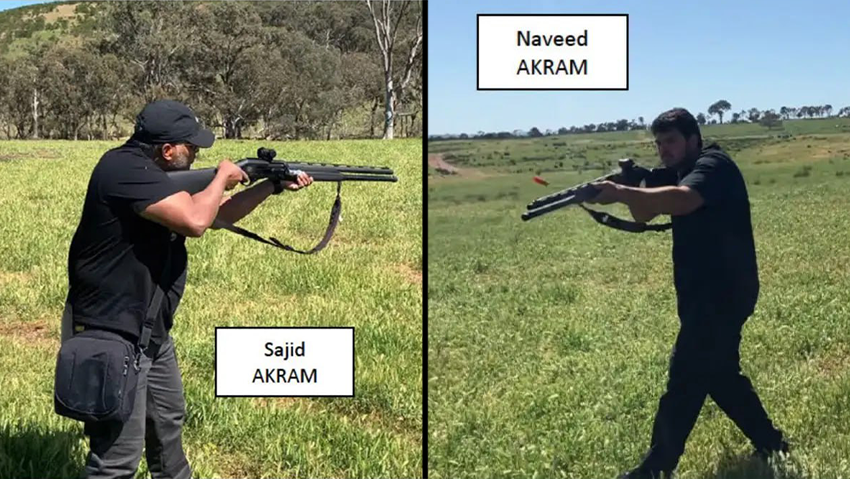
The terrorists behind the Sydney terror attack training with firearms in October 2025
ASIO Director-General Mike Burgess has also warned repeatedly about the growing challenge posed by radicalization, political violence and increasingly diverse forms of extremism.
Links to controversial Sydney preacher
The Al Bayyinah Islamic Centre was established in Melbourne’s southeast in 2024 and has received support from Haddad, a Sydney preacher associated with the Al Madina Dawah Centre in Bankstown.
Haddad previously encouraged what he called his “brothers in Melbourne” to support Al Bayyinah and attend its weekly prayers.
Naveed Akram, who together with his father Sajid carried out the deadly terrorist attack on a Hanukkah event at Sydney’s Bondi Beach, had previously attended the Al Madina center and was reported to have had ties to Islamic State sympathizers connected to the broader network.
Haddad has denied any knowledge of or involvement in the Bondi attack.
Abu Ahmad himself reportedly visited the Bankstown center associated with Haddad in early 2025, where he delivered a sermon attacking Western “infidel” powers that he said had colonized the Middle East.
The resurfaced July sermon has now again focused attention on the networks surrounding radical preachers in Australia, and on whether existing laws give authorities sufficient tools to intervene before inflammatory rhetoric develops into a broader security threat.