

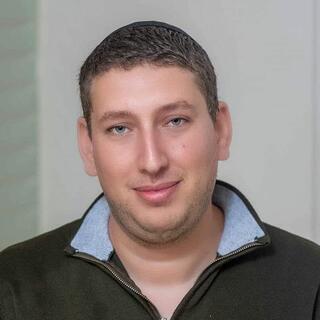
Rabbi Dov Lando, a leading spiritual authority of Israel’s non-Hasidic ultra-Orthodox community, sharply criticized efforts to persuade Haredi voters to stay home in next month’s parliamentary election, calling such campaigning a “great crime.”
The remarks come as the ultra-Orthodox political parties prepare for an unusually contentious election campaign, with voting scheduled for Oct. 27. Degel HaTorah, the non-Hasidic, or Lithuanian, faction of the United Torah Judaism alliance, is contending with efforts to depress turnout among Haredi voters amid frustration over its lawmakers’ record in the outgoing Knesset.
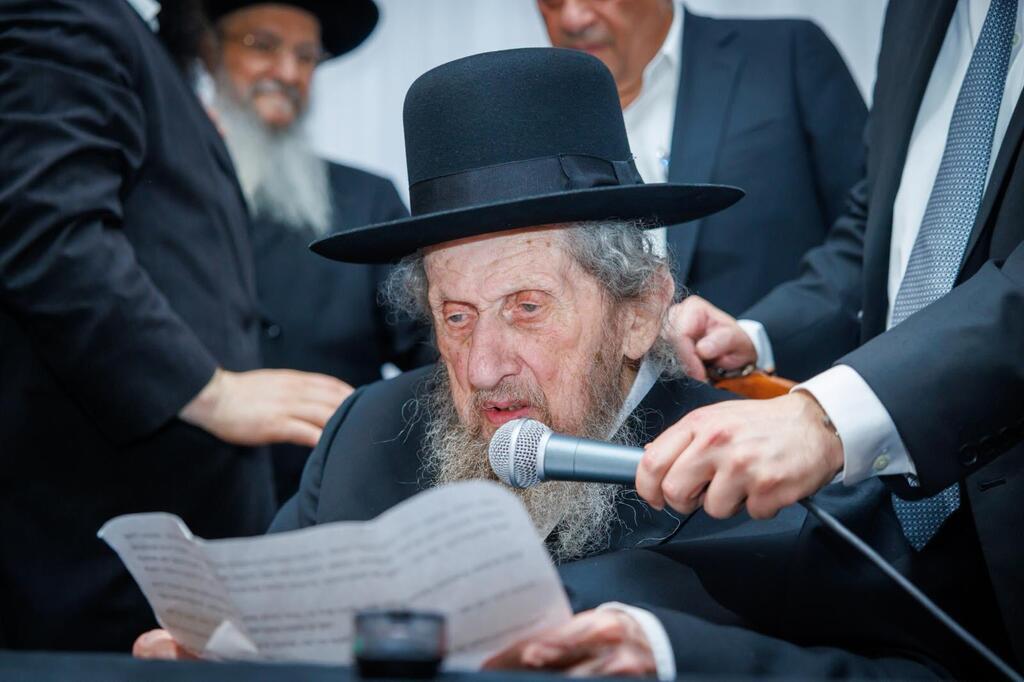
Rabbi Dov Lando
(Photo: Daniel Nafusi)
Some critics within the community argue that Haredi lawmakers failed to deliver on key priorities, most prominently legislation governing exemptions from mandatory military service for full-time yeshiva students. The conscription issue has become one of the most contentious questions in Israeli politics, particularly as the military has sought additional personnel after years of war.
The dispute over turnout has intensified following reports that an organization affiliated with Satmar, an anti-Zionist Hasidic movement that traditionally rejects participation in Israeli state institutions, was offering financial support to Haredim who pledged not to vote.
The chairman of the Central Elections Committee, Supreme Court Deputy Chief Justice Noam Sohlberg, issued a temporary injunction last week barring the Satmar-affiliated Shekel HaTahor organization from giving, offering or promising money to voters to influence them not to participate in the election. The injunction followed a petition alleging that NIS 200 payments were being offered to Haredim who pledged not to vote. Sohlberg said the evidence raised a serious concern of a violation striking at the core of election law.
Against that backdrop, Degel HaTorah has also shaken up its slate of candidates, replacing longtime lawmakers with relatively younger figures in an effort to refresh its representation. Veteran lawmakers Moshe Gafni and Uri Maklev were dropped from the party’s Knesset slate this month on the instructions of Lando, Degel HaTorah’s spiritual leader.
During the holiday of Sukkot, Bnei Brak Deputy Mayor Menachem Shapira, who also heads Degel HaTorah’s municipal department, met with Lando and raised concerns about efforts to discourage Haredim from voting.
In video footage, Lando responded in unusually harsh terms.
“Woe to anyone who incites people not to go vote,” Lando said. “And I don’t want to continue.”
He added: “No excuses or accusations will help. Woe to him. He is committing a great crime. Either it is great stupidity or great wickedness, or both together.”
Shapira told Lando that “the left is investing a lot of money within our community to cool people’s enthusiasm,” an allegation for which he provided no evidence in the remarks.
“I don’t have an answer to that,” Lando replied. “But if they were telling people not to sit in a sukkah and investing money in that, would they do the same thing?”
A sukkah is the temporary outdoor structure in which observant Jews traditionally eat and spend time during the weeklong Sukkot holiday.
Degel HaTorah is also seeking support this year from constituencies that have traditionally been less closely identified with the party, particularly Haredim who work outside the full-time yeshiva system. Party officials believe the addition of new candidates could give those voters a stronger sense of representation and encourage them to support the slate.
The turnout battle comes at a consequential moment for Haredi politics. Degel HaTorah is one of the two components of United Torah Judaism, alongside the Hasidic Agudat Yisrael faction, and ultra-Orthodox parties have frequently played a significant role in the formation of governing coalitions.