

'They asked at the Interior Ministry: ‘Are you sure you want to be here?’'
Three months ago, Vered Shomer-Harel returned to Israel after 16 years living in a beautiful home surrounded by a large garden in the suburbs of Melbourne.
“I always knew my home was here, and I wanted to show my daughters that you have to follow your inner truth even when it’s complicated,” she says. “I hope I’m teaching them what courage is.”
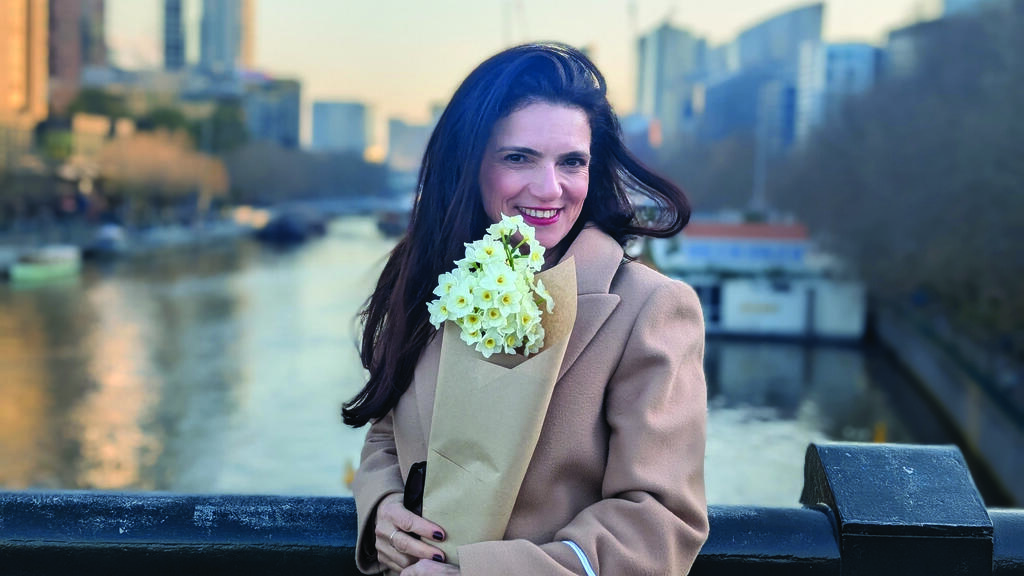
Vered, 50, is a psychotherapist specializing in transitions and life crises, working with both teenagers and adults. She is also a singer-songwriter. Divorced and the mother of two daughters, ages 20 and 15, she is currently in a relationship and lives in Moshav Mishmar HaShiv’a, where she grew up.
Her return to Israel — two months before the outbreak of the war with Iran — has drawn surprised reactions.
“Everyone says to me, ‘You picked quite a time to come back — what’s wrong with you?’ Even at the Interior Ministry and the Absorption Ministry they asked me, ‘Are you sure you want to be here?’ The war really threw me into the deep end.”
'They forbade me from singing in Hebrew'
She moved to Australia because of her former partner’s job. Holding a bachelor’s degree in musicology and a master’s degree in organizational communication, she studied parent coaching at the Adler Institute and worked in the field. Just as she was about to be appointed to a senior position, her partner received a relocation offer from the high-tech company where he worked.
“I wanted another child and I was thinking about the sense of family,” she recalls. “So I said, ‘OK, let’s go for a few years and come back.’”
In Melbourne she gave birth to their second daughter and worked as a parent coach. But the family life she had envisioned fell apart after three years, when the couple separated. Suddenly maintaining a private home on her own, she had to increase her income.
She earned a master’s degree in psychotherapy and began working in the field. At the same time, she performed as a singer and founded and managed the friends association of Rambam Hospital in Melbourne.
She also volunteered as the director of a Reform Jewish community, served as a cantor in a synagogue and established a Hebrew-language program for Israeli children who did not attend Jewish schools, which she ran for three years. In addition, she led a support group for Israeli women in Australia, “some of whom, like me, were on the fence.”
You were active in the Jewish and Israeli community. Did you experience antisemitism?
“When I was looking for work as a psychotherapist, most hiring processes suddenly fell through with no explanation. Nobody ever told me directly that they wouldn’t hire me because I was Jewish or Israeli, but it always happened right after the question, ‘Where are you from?’ or ‘What’s your accent?’
“Even after I found a job at a school, I felt they never truly accepted me.
“I also encountered antisemitism in culture. Once I was supposed to perform with an opera singer who, at the last minute, announced she refused to sing with me. I thought to myself, ‘Wow, to that extent?’ At one of my performances they forbade me from singing songs connected to Judaism or songs in Hebrew. I refused. I sang the song ‘Noladeti LaShalom’ (‘I Was Born for Peace’).”
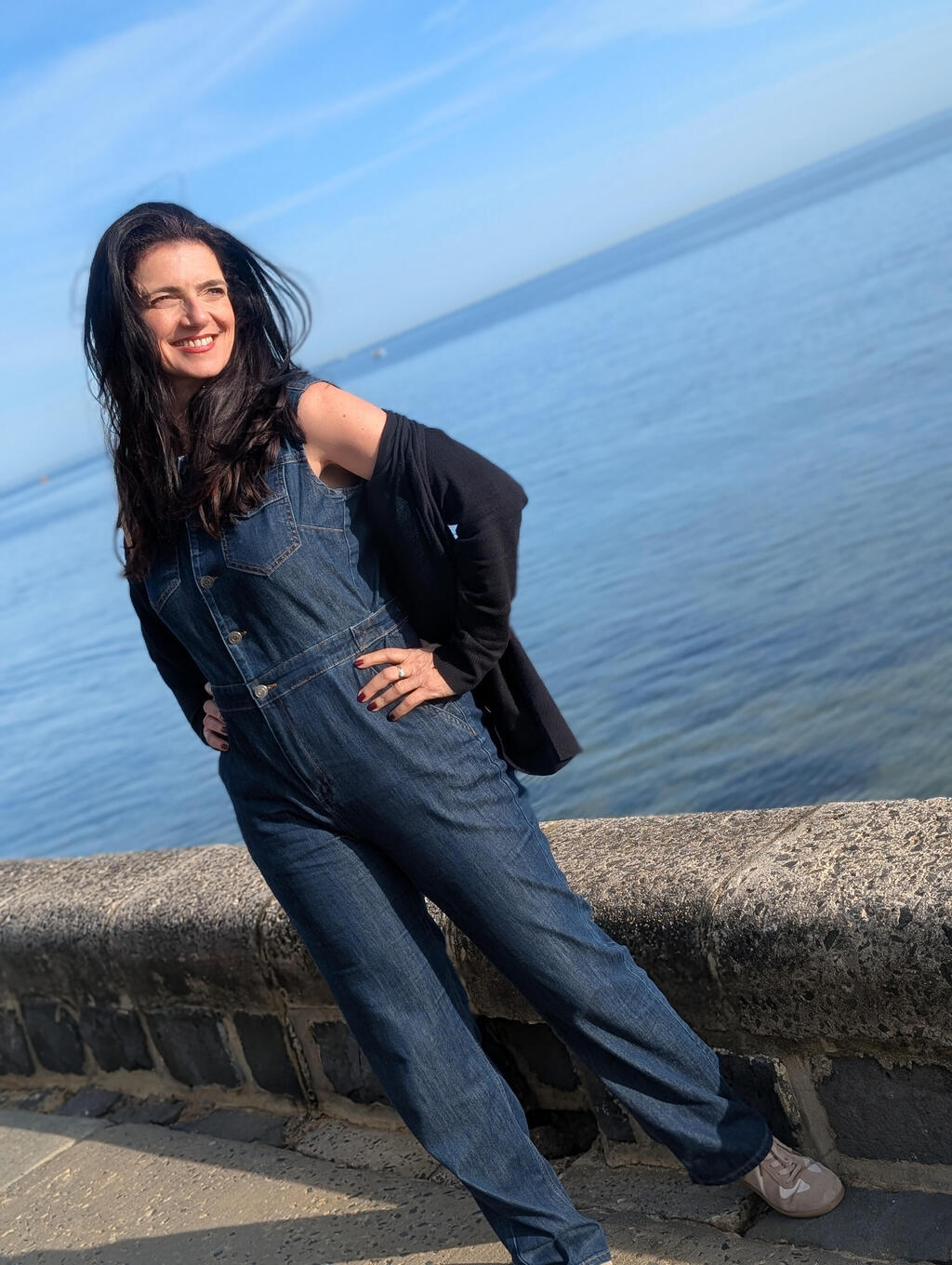
(Photo: Courtesy)
Did you think about returning to Israel over the years?
“Even though life in Australia is comfortable — maybe too organized — I always felt I didn’t belong and kept looking for the right timing to return. For years it never worked out, either because of the security situation in Israel or because of the girls’ frameworks.”
On Oct. 7, during Simchat Torah, Vered was supposed to perform as a cantor in synagogue. When she realized what was happening in Israel, after exchanging messages with friends from Kibbutz Kfar Aza, she informed the female rabbi she would not be coming.
“From that moment my desire to return to Israel only grew stronger,” she says. “It broke me to experience it from the sidelines, and I felt that precisely when reality is challenging, Israel is where I need to be. That’s my purpose, including as a psychotherapist.”
'Food here costs double'
A year and a half ago, Vered’s father died. Her mother, who was left alone in the family home, became ill. That was the moment Vered decided to stop waiting and return to Israel.
Her daughters encouraged her to move and went to live with their father.
She began preparing for the move, sending résumés to employers, saying goodbye to the friendships she had built over the years, to the quiet, the comfort and the pace of life there — “so slow it puts you to sleep” — and flew to Israel.
“My family was so happy I came back, and I spend time with my nieces and nephews. I’ve already met up with several friends from Israel, which is pretty amazing, because no matter how much time has passed, it feels like no time at all.”
At the moment she works as a psychotherapist for an organization assisting people dealing with mental health challenges, as well as in an online clinic. She has also found a new relationship.
What surprised you when you came back?
“The cost of living. All the food costs double compared to Australia. Financially I took a step down, but I’m managing.”
She also had to readjust to the Israeli mentality.
“I went to buy a car at a used-car lot and I was shocked by how aggressive the salesman was. I walked outside and cried. In Australia nobody tries to sell you something like that.
“After I collected myself, I decided to go back inside. I felt like I was wrapping myself in an Israeli coat and I told him, ‘This is the price I can offer you, and that’s it.’ We started talking, it turned out he was divorced too, and then he opened up and said, ‘You know what? Fine, I’ll give you a deal.’ Only in Israel do boundaries blur so quickly. That would never happen in Australia.”
What’s the most beautiful thing here that you didn’t notice before?
“Before I left I knew about the solidarity among Israelis, but now I see it much more strongly — how everyone unites in moments of uncertainty and feels responsible for supporting one another. We’re not alone, for better or worse.
“And secondly, the weather here is unbelievable. In Melbourne you get four seasons in one day.”
How are your daughters handling your move?
“My older daughter downloaded the Red Alert app so she’d know when there were sirens here. At a certain point her boyfriend got tired of being woken up by alerts in the middle of the night. I convinced her to delete it.
“In any case, it’s good for them because they’re getting much more time with their father after years of spending most of their time with me. I’m preparing the ground for them and I hope that at the right time they’ll come to Israel too.”
What message do you have for Israelis living abroad who are debating whether to return?
“No matter how much you try to distance yourself, you’ll always remain connected to Israel. Every Israeli abroad I speak with talks about this feeling of living between worlds.
“Israel is an inseparable part of who we are. Some people can carry that complexity and some can’t. I couldn’t anymore. Here, I feel right.”
'I regret not doing it sooner'
“Los Angeles is comfort — Israel is quality,” says Shiri vaserman, who returned to Israel a year and a half ago after 20 years in the United States.
Vaserman, 46, now works as the personal assistant to the CEO of Keshet. Divorced and the mother of two children, ages 11 and 10, she lives in Givatayim.
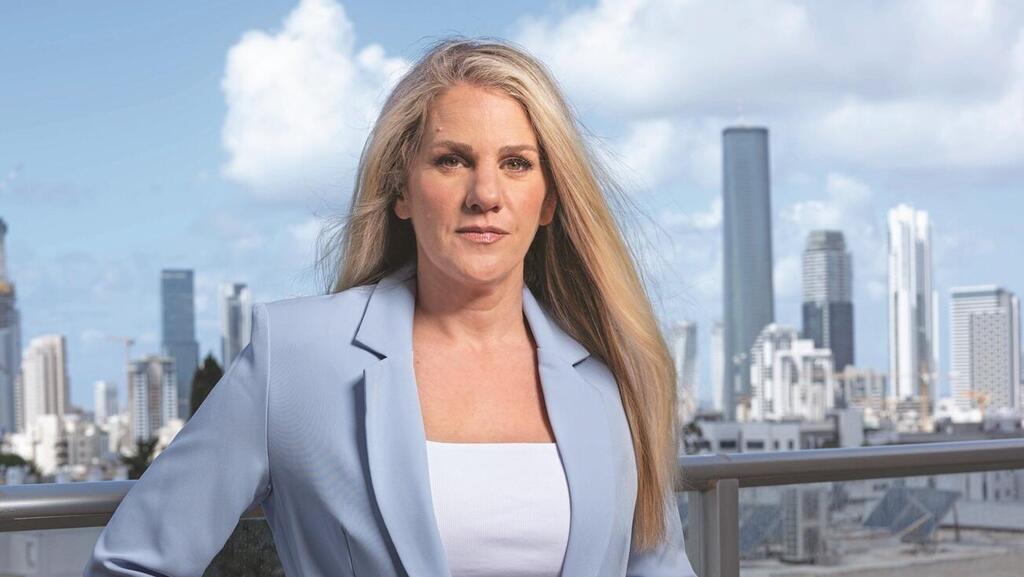
Shiri vaserman
(Photo: Yuval Chen)
She grew up in Yokneam Illit and, after earning a degree in communications and social sciences, moved to the United States “to experience America,” as she puts it.
After a month in New York, she flew to visit her cousin in Los Angeles, found a job and stayed.
“One year passes and then another, and you don’t even notice,” she says.
In 2013 she decided to return to Israel — “just me and the dog” — but on the flight home she met the man who would become her partner, an Israeli bachelor living in Los Angeles.
“We started talking because he had never seen a dog on a plane before,” she says with a laugh. “We were amazed we’d never met earlier. After seven months of a long-distance relationship, he simply brought me back there.”
The two married and had two children.
“From the moment I became a mother, I felt an intense need to return to Israel — to my language, my family. I wanted to raise my children in Israel.”
During the last eight years she lived there, Vaserman worked for the Israeli-American Council, or IAC, whose mission is to strengthen ties between the Israeli and Jewish communities in the United States and Israel.
“We had a large community center, and later I managed the entire region. I organized large Independence Day events, lectures and community activities. I felt a sense of mission, and the work was very fulfilling.
“Because of my work, I was always connected to what was happening in Israel. In the Valley there are also many Israelis, with several Israeli supermarkets and an Israeli TV channel showing the news and all the prime-time programs.”
Did you feel integrated there?
“I was very connected to the Israeli community, but I never truly felt I belonged, and I missed Israel. Every time I came back from a vacation in Israel, my heart would ache.
“At the same time, the children were growing up and becoming more American, bringing American friends home. I felt that if I didn’t do it now, later on I wouldn’t be able to take them out of there.”
'A Swastika on the locker'
In 2019 the couple divorced, and because of the children Wasserman could not return to Israel without her ex-husband’s consent. A year later the coronavirus pandemic broke out, delaying her plans.
“Then Oct. 7 happened. I was glued to the news 24 hours a day, and watching it from there was incredibly difficult.
“Antisemitism intensified. I heard about Israelis removing mezuzahs from their front doors, about children who found swastikas drawn on their school lockers or notes saying ‘dirty Jew.’
“I told myself: Nobody is going to make me hide my identity. I started wearing a Star of David necklace and got a Star of David tattoo on my arm. The desire to return grew stronger and stronger inside me. Once my ex understood how deeply I felt it, he agreed to let me bring the children to Israel.”
How did the children react to the idea of moving?
“I didn’t decide for them — I included them in the decision. I told them I wanted to try living in Israel for a year or two.
“They love Israel very much, and whenever we vacationed here they always had a great time, so there wasn’t any resistance.”
What was the biggest price you paid for the decision to return?
“I gave up a more comfortable life than I knew I’d be able to afford in Israel. There, even if you’re not making millions, you can live in a beautiful house, drive an impressive car and take five vacations a year.
“I left a job I loved, and my children left the only home they knew. They are American in every sense.”
'Sea, fruit and cottage cheese'
In August 2024, Vaserman and her children landed in Israel with 12 suitcases and a dog, settling in Givatayim near her brother.
She hoped to enter the public sector so she could contribute as much as possible to the country. She approached several government ministries, only to discover that as the sole breadwinner she would not be able to live on the salary she was offered.
As a result, she began working for a private company that promised a better salary.
What reactions did you get from people around you?
“In Los Angeles, 90% of Israelis want to return to Israel, so before I left everyone told me, ‘What a brave step. Good for you.’
“The moment I arrived in Israel, everyone started saying, ‘Why did you come back? There’s a war here. It’s hard here. Why did you do it? We want to escape from here.’
“That annoyed me a little. I answered: ‘Fine, go abroad with children and then we’ll talk.’ I constantly have to explain myself — that I returned by choice and nobody forced me out.”
How are the children adjusting?
“They’re doing OK. They were welcomed warmly at school, but it was a little hard adjusting to a different education system and somewhat different culture.
“They have a social life here they never had there, because in Los Angeles parents schedule playdates two weeks in advance, while here the kids make plans on their own.
“And in general, there’s no substitute for the sense of independence children have in Israel. In Los Angeles kids don’t walk or take buses to school — parents drive them everywhere. Here they quickly started walking to school by themselves. For me that was amazing.
“And regarding the war — I wanted my children to experience Israeli life, and they got the hardcore version.”
Did you feel a financial decline?
“It’s incredibly expensive here. I live in a city that isn’t cheap, and prices keep going up, but you learn how to manage properly.
“True, I’m not sitting in a different restaurant every night like I could afford to do there, but I live well and I don’t feel deprived. For me, taking a walk in Tel Aviv or along the beach is worth more than anything.”
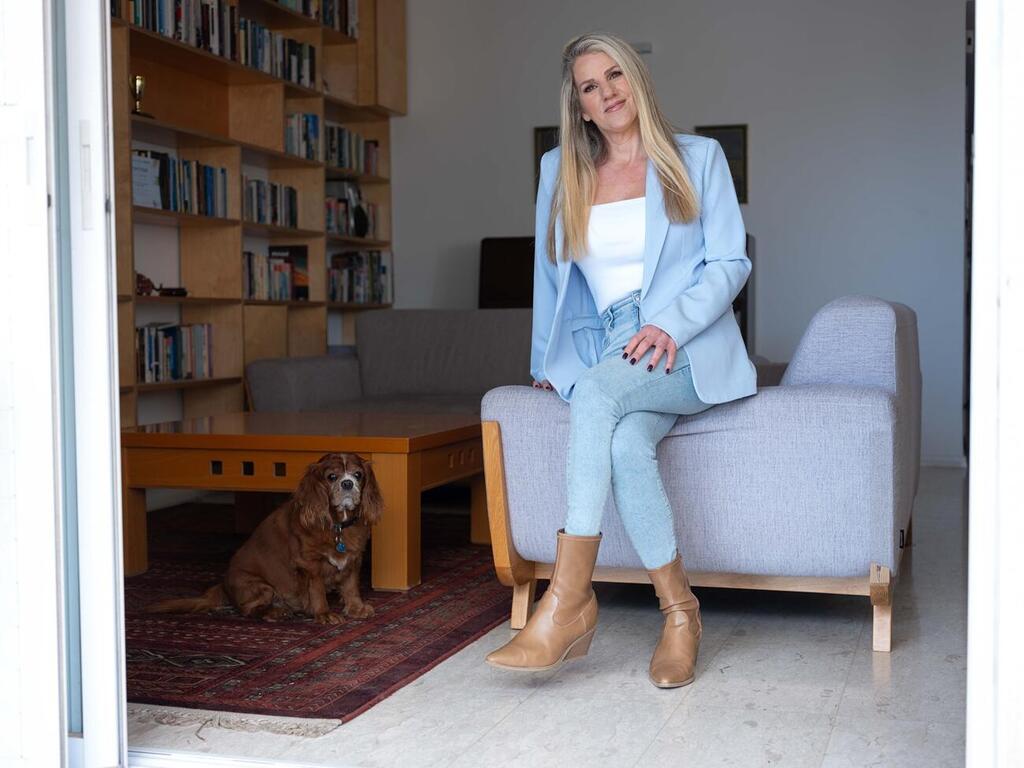
(Photo: Yuval Chen)
You sound happy you came back.
“I feel I made the right move, and I regret not doing it sooner. I should have done it when the children were born — or never gone there in the first place. There’s nothing missing here.
“I love living here and I feel I belong, even when things are difficult, because we’re all in the same boat. I still have many childhood friends here.
“I tell my Israeli friends in the United States: Look, you can return to Israel even during a war and still live well. Thanks to me, several people have already moved back.
“We travel around the country, I go to plays and concerts, and I enjoy Israeli food. The fruits and vegetables actually have flavor. And there’s real cottage cheese here!”
“I understand people’s need to see the world, and it always seems like the grass is greener on the other side. But to everyone talking to me about relocation, I say: ‘Go — but with a ticking clock.’”
What message do you have for Israelis abroad who are debating whether to return?
“If you’re happy abroad, stay there. But for those who are undecided, I recommend coming back to Israel, because when you live abroad and want to return, you spend all your time wavering and focusing on what’s wrong there.
“Anyone who’s unsure should get that bug out of their system — come here for a year or two, then decide whether to stay or go back.
“I’m staying here. I definitely don’t want to end up in a retirement home in Los Angeles.”
First published: 06:09, 05.09.26