


Rabbi Rick Jacobs, currently visiting Israel, is deeply concerned by the erosion of support for Israel among politicians and public opinion in the United States.
Jacobs, president of the Union for Reform Judaism in North America, has been working to rally support abroad for the world’s only Jewish state. At the same time, he says, he is being forced to confront legislative initiatives in the Knesset that could harm Reform Jews, including the Western Wall bill, which seeks to place all procedures at the site under the authority of the Chief Rabbinate.
Gallery

On the left: Rabbi Rick Jacobs, archive. ‘We need policies that honor the commitment that Israel will be a home for every Jew’
(Photo: Courtesy of the Israel Reform Movement)
Asked by ynet what Israel should do to repair its relations with Diaspora Jewry, Jacobs said the answer begins with stopping policies that alienate non-Orthodox Jews.
“Israel must stop advancing policies and legislation that distance Reform Jews in Israel and around the world simply because they live their Judaism as we do,” he said. “There are efforts by the Foreign Ministry and consulates to build bridges, but we also need policies that honor the commitment that Israel will be a home for every Jew. We continue to support security assistance for Israel’s self-defense, even when members of Congress disagree. It will take a long time to rebuild trust.”
Jacobs said the current government is endangering Israel’s bipartisan standing in Washington.
“The current government is putting bipartisan support for Israel among politicians in the United States at risk,” he said. “Most Democrats still strongly support Israel, but tensions are growing, and there are also signs of cracks among Republicans. Bipartisan support is essential to Israel’s long-term security, and restoring it will be an enormous task, perhaps even impossible.”
A survey by the Jewish Federations of North America showed that nearly 90% of American Jews strongly support Israel as a Jewish and democratic state. They may disagree with specific policies, Jacobs said, but remain committed to the country and its values.
“Still, there are tensions,” he said. “For example, when JD Vance recently gave a speech, he lectured Israelis and Jews who criticized Trump and said they should remember they have no other friends in the world, that the Trump administration is Israel’s only friend and that they should not complain. We have never heard such a tone. Support for Trump has also dropped quickly in Israel and the trend has become more negative. People are very worried.”
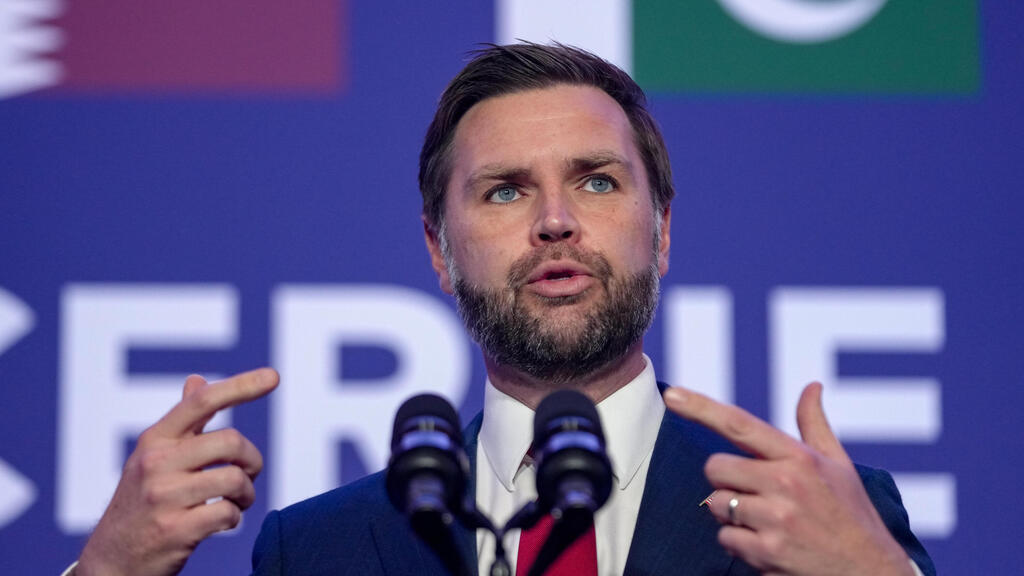
US Vice President JD Vance
(Photo: Nathan Howard/Pool Photo via AP)
Jacobs said many had believed there was a clear roadmap for American commitment to Israel, but that clarity has faded.
“There are many questions about Donald Trump, who did many positive things for Israel, and I am the first to give him credit for that, such as moving the embassy to Jerusalem and the strike on Iran’s nuclear facilities,” he said. “But today there are also significant concerns about Iran, Lebanon and the northern border threatened by Hezbollah. Even people on the right, who assumed Israel would always get whatever it wanted, are now asking whether total reliance on Trump is always in Israel’s best interest.
“American Jews are asking questions, and more broadly, many Americans now hold more negative views toward Israel. That should concern anyone who loves Israel. This is not a good long-term trend. We in the Reform movement work every day to stand with Israel in our communities and in Congress, and we will continue to do so.”
Asked whether he is worried about Israeli legislation that could harm Reform Jews, Jacobs pointed to the Western Wall bill and proposed changes to the Law of Return.
“At the same time that we support Israel, the Knesset is advancing legislation that severely harms non-Orthodox Jews, for example the Western Wall bill, which could criminalize non-Orthodox prayer at the Western Wall and even impose prison sentences on those who practice it,” he said. “That is unimaginable. There was also a proposal to amend the Law of Return so that converts through non-Orthodox rabbis around the world would no longer be eligible to immigrate to Israel. Precisely at a time when antisemitism is rising around the world, it is shocking that Israel would consider laws that would prevent such committed Jews from finding refuge in the only Jewish state.”
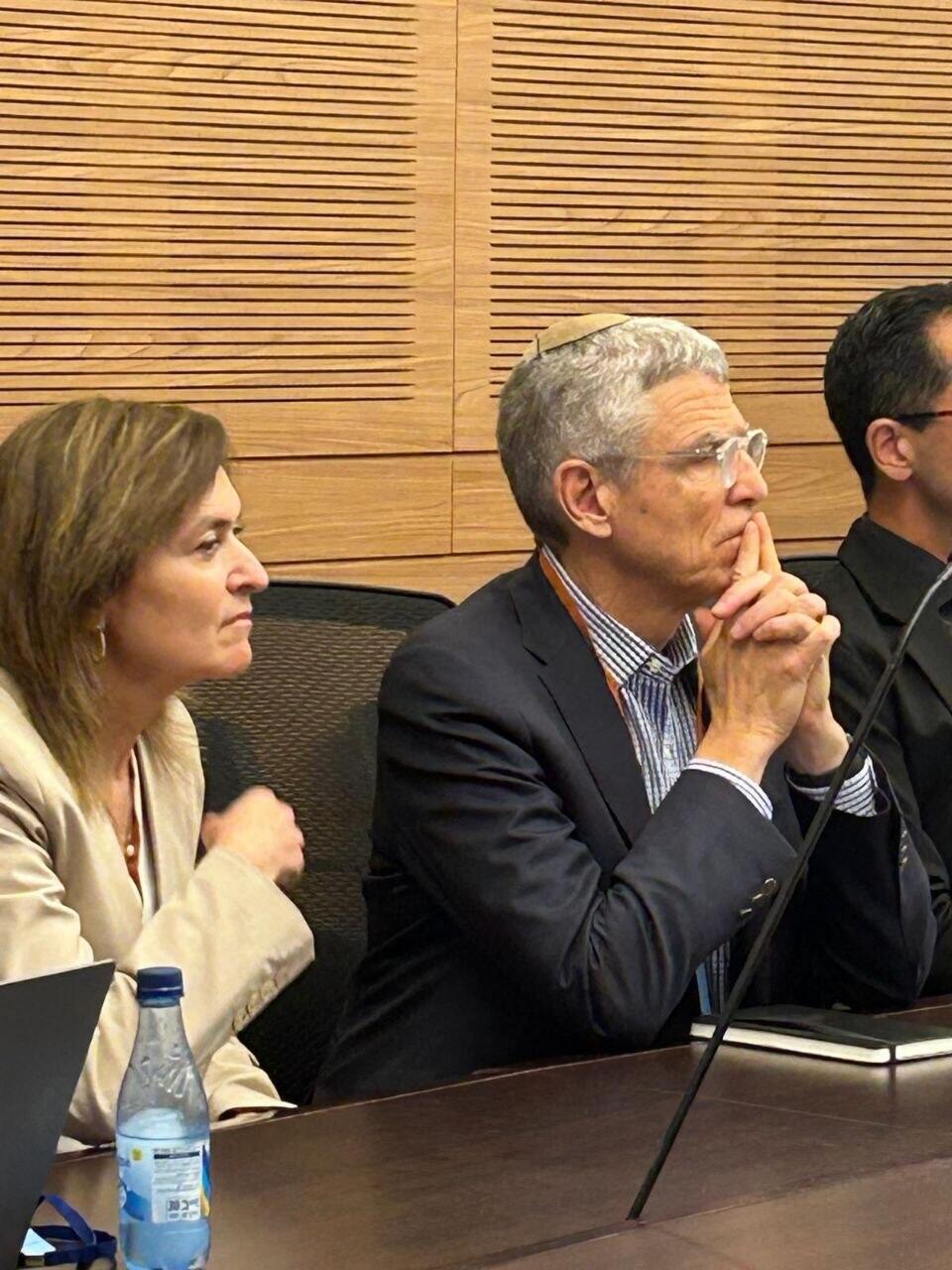
Jacobs at a Knesset discussion on the Basic Law on Torah Study, alongside Anna Kislanski, CEO of the Israel Reform Movement
Jacobs also addressed concern that young American Jews are distancing themselves from Israel in a way that may be irreversible.
“There is a lot of talk about young American Jews,” he said. “I spend much of my time speaking with them. There is a minority that holds sharply anti-Israel views, but many of them are simply critical of the government. We see young people and their parents who feel alienated from the current leadership, but still feel deep solidarity with the people in Israel. They understand that Israelis are still fighting in Gaza and southern Lebanon, and that the Israeli Air Force acted with great skill against Iran. This is not an easy time.
“Many are asking when the war will end, whether it will make Israel safer and whether it will make the region safer. I hear Israeli officials say that ‘everyone hates us,’ that ‘Israel is hated,’ and that no matter what Israel does, people will always oppose it. I tell them: that is not true. What Israel does matters, especially the way it deals with the ongoing violence by extremist settlers against Palestinians in the West Bank when there is insufficient enforcement. A person can love Israel and at the same time be deeply troubled by that ongoing violence.”
Israel remains very important to Jews, he said, but Israelis should be careful with the claim that the whole world is against them.
“When settler violence continues without a sufficient response from the authorities, it is hard for people to understand how that aligns with the Jewish and democratic values on which the State of Israel is supposed to be based,” Jacobs said. “We continue to support Israel even during difficult public debates, and many hope the next elections will address the central issues.”
Asked about the Diaspora Affairs Ministry’s attitude toward liberal Jewish communities, not only in the United States, Jacobs struck a different tone.
“The Diaspora Affairs Ministry has been a good partner for us,” he said. “I have met Minister Chikli many times. He understands our community, recognizes it and supports it. I have no complaints.”
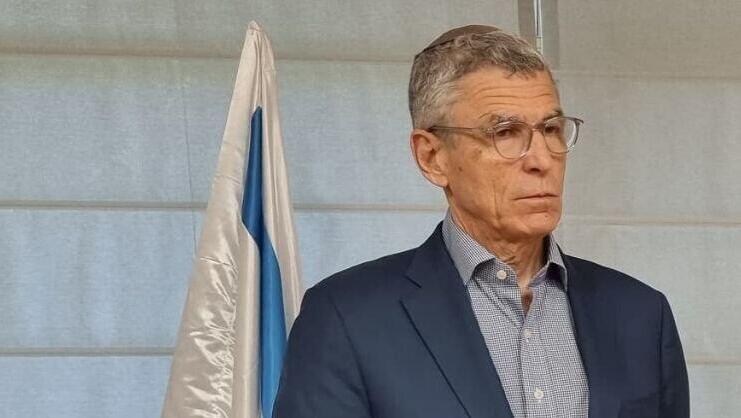
(Photo: Itamar Eichner)
‘Does Israel love us back?’
One of the central challenges occupying Jacobs is the rise of antisemitism in the United States.
“Of course people are thinking more about security,” he said. “Today people will not come to Jewish events if there is no security. They simply will not come. That was clear to Israelis, and it was also clear to Jewish communities in Europe. But despite the rise in antisemitism, we have not stopped holding events or attending them. We also continue to hold events for Israel. I do not think it has changed what we do, but it has certainly changed how cautious we are.
“There are people who say they no longer wear a Star of David openly. Others do exactly the opposite: they wear a kippah, wear a Star of David and refuse to take them off. You would be surprised how many people understand that there is danger and vulnerability, but refuse to hide their Judaism.”
Asked whether the U.S. administration is doing enough to protect Jewish communities amid rising antisemitism, Jacobs said Jewish institutions cannot be left to shoulder the burden alone.
“We are grateful to Congress for allocating nearly $1 billion for the security of the Jewish community, synagogues, federations, summer camps and security infrastructure,” he said. “I visited Reform synagogues that were attacked in recent months, including in Mississippi and Michigan. The Jewish community feels vulnerable. It cannot be that communities alone bear responsibility for security. That is the government’s responsibility.
“At the same time as fighting antisemitism, the administration must not undermine democratic protections and the human rights of all U.S. citizens. After the attacks on our synagogues, churches and other communities stood with us and offered to host Shabbat prayers and Jewish life-cycle events. We need that solidarity. Unfortunately, the number of attacks has not gone down. This is a very challenging time.”
Jacobs said antisemitism appearing in some pro-Palestinian protests must be distinguished from genuine concern for Palestinian rights.
“There are demonstrations that are effectively pro-Hamas, not a call for human rights for Palestinians or coexistence with Israel,” he said. “The attacker in Mississippi, for example, was motivated by old antisemitism rooted in white supremacy and extremist ideology. Other attackers act out of hatred for Israel in the sense of denying its very existence.

‘Some protests are effectively pro-Hamas.’ Demonstrators in New York
(Photo: Adam Gray / GETTY IMAGES NORTH AMERICA / AFP)
“On the other hand, there are also people who genuinely support the rights and dignity of Palestinians while fully supporting Israel’s right to defend itself. In public discourse, these two groups are often mixed together, and that is misleading. It is important to distinguish between the cases. There are also tensions in liberal spaces, where pro-Israel voices are sometimes excluded or attacked. We must continue to be proud Jews and not be afraid to express our identity.”
Since October 7, the gap between Israel and parts of American Jewry appears to have widened. Are relations in crisis?
“I would not say the relationship is in a deep crisis,” he said. “But there are points of tension. It is clear that our connection is to the State of Israel, not necessarily to the Israeli government. You can love a government or disagree with it, Americans understand that very well too. Our connection is to the people of Israel, in all their diversity and spirit.
“We have hundreds of young people from our movement in North America who are currently in Israel. Today, especially during this period, there are big questions in the United States, from both the right and the left, about support for Israel. Even conservative Jews who fully supported the Trump administration are now asking whether this administration is really protecting Israel as they had thought. It is a very complex moment.”
Jacobs said there are places where liberal Jews are attacked in universities and progressive spaces once considered natural allies, but warned against broad generalizations.
“There are definitely places where this happens, but it is not correct to say that all universities or all churches are against us,” he said. “I lecture in many such places, and solidarity still exists in many institutions. Jewish students on many campuses continue to pray, participate in community life and live openly as Jews, even if sometimes cautiously. Alongside that, there are also campuses where Jewish life is not welcomed.”
Are you worried the Reform movement could disappear or shrink significantly because of assimilation?
“Absolutely not. I am not afraid. That is simply not the trend,” he said. “The idea that Reform Jews are assimilating is something many Israelis say about the Reform movement because they do not know it. In practice, we see more and more people choosing to identify with us. Our movement is the largest in the United States. According to the two most recent Pew surveys, about 2 million people identify with our movement. We are proud to be Jews in America.”
Asked whether Israel’s government still views Reform Judaism as a legitimate partner, Jacobs said the question should be directed to the government.
“We are the largest Zionist movement in North America,” he said. “Our love for Israel is expressed in many ways. If the Israeli government does not see that, then it simply is not seeing correctly. We are not distancing ourselves and we are not waiting to be accepted.
“According to surveys, most Israelis actually see Reform Judaism as a legitimate expression of Judaism, but again and again we are demonized by Haredi elements and leaders in the government. When senior officials speak harshly against us or advance discriminatory legislation, difficult questions arise about whether our love for Israel is reciprocated by the leadership. We hope no more legislation against us will be advanced, and that we will see more solidarity, the same solidarity that we ourselves continue to show toward Israel.”