

The expression “a tallit that is entirely tekhelet” is a metaphor for something considered flawless or beyond reproach, particularly in a moral sense. The expression originates in a Midrash on the Torah portion of Korach, according to which Korach sought to taunt Moses by asking him: “Does a tallit that is entirely tekhelet require tzitzit?”
Korach tried to argue that if a single thread made with the blue-colored tekhelet dye fulfills the requirement for an ordinary tallit made of white fabric, then surely a tallit made entirely of wool dyed tekhelet would not need an additional blue thread. According to the Midrash, Moses replied that even such a tallit required tzitzit in general and a thread of tekhelet in particular. Korach and his followers mocked him, arguing that this was absurd: If one thread of tekhelet was sufficient for a white tallit, then all the more so a tallit dyed entirely tekhelet should not require an additional thread.
Gallery
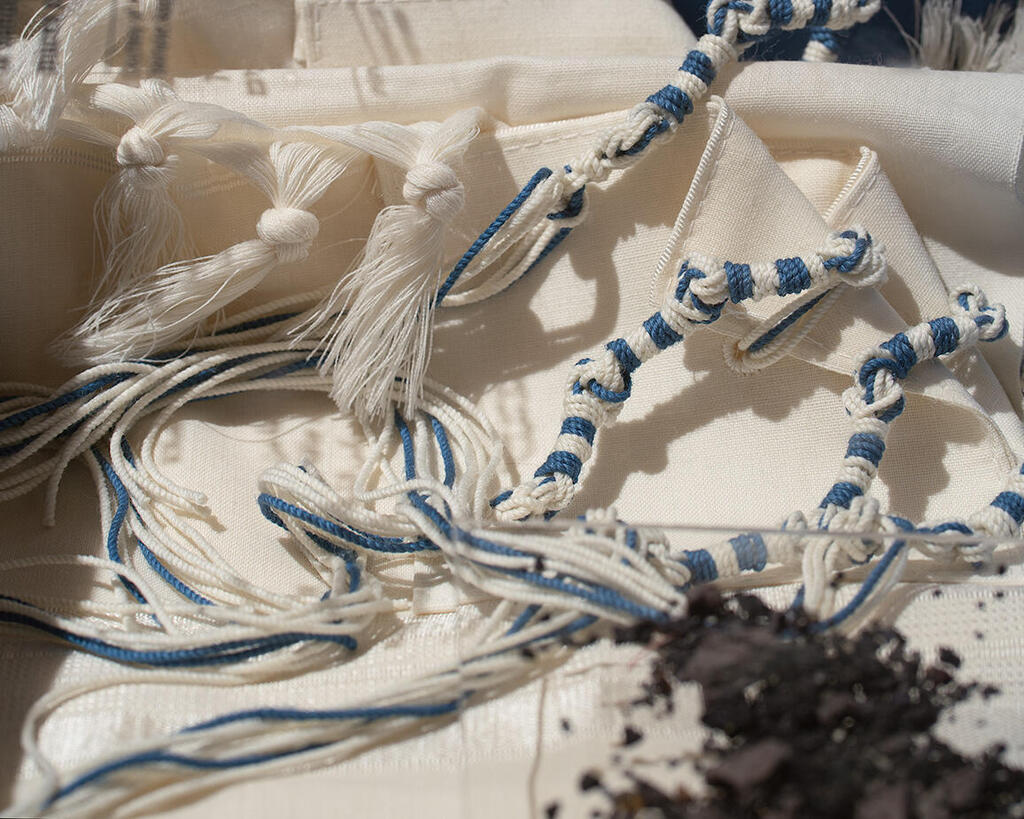
Dried pigment and a tallit with tassels in white and light blue
(Photo: Courtesy of Ptil Tekhelet, Jenny Katzner)

From the exhibition 'The Color: Purple' at the National Maritime Museum in Haifa
(Photo: Jenny Katzner)
The color tekhelet holds a unique place in Judaism. It is associated with a central commandment, carries symbolic meaning and was used in the garments of the priests and the fabrics of the Tabernacle and Temple.
In principle, the commandment of tzitzit requires the Israelites to add a thread of tekhelet to the fringes of a tallit. The words “a thread of tekhelet” are recited in synagogues every day as part of the Shema prayer. Numbers 15:38 states: “Speak to the children of Israel and tell them to make fringes on the corners of their garments throughout their generations, and to place upon the fringe of each corner a thread of tekhelet.”
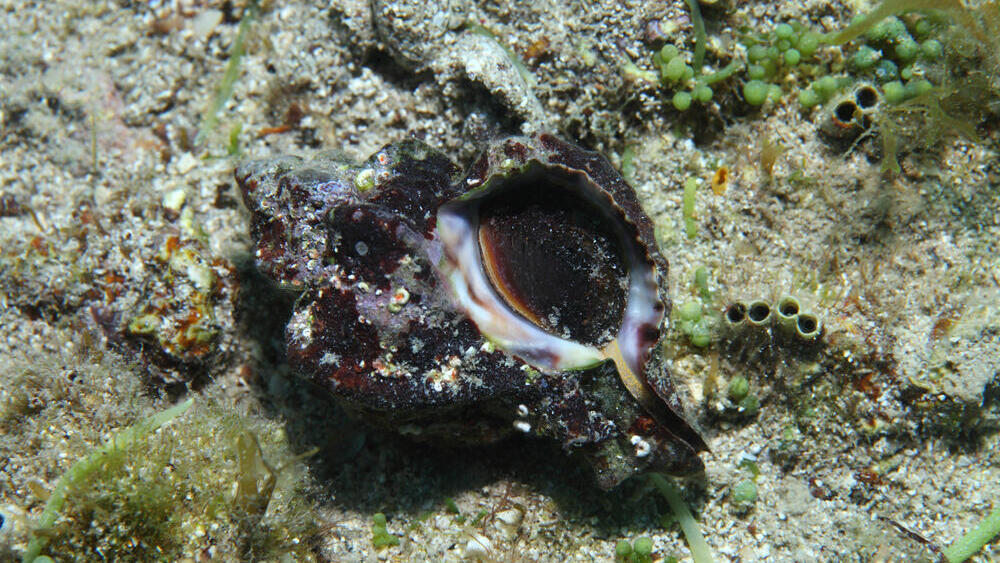
The banded dye-murex snail
(Photo: aquapix/Shuttertock)
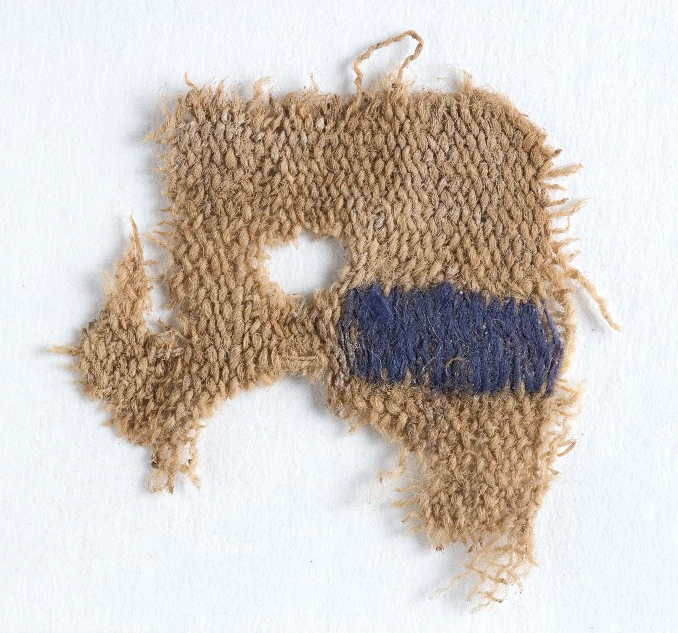
A piece of woolen fabric dyed with a light blue stripe (a blue-purple hue), produced from the snails
(Photo: Clara Amit, courtesy of the Israel Antiquities Authority)
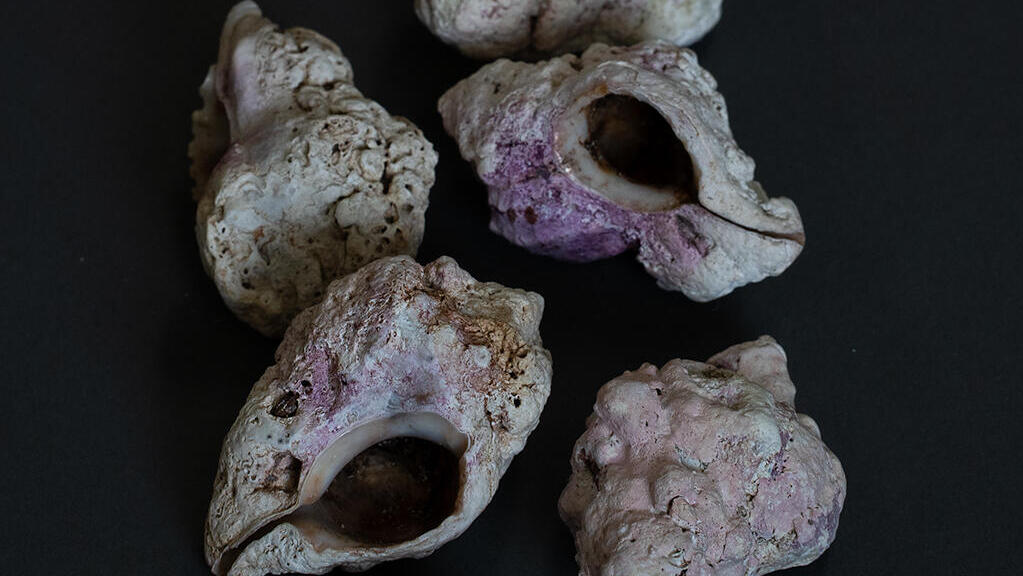
Banded dye-murex snails
(Photo: Prof. Zvi Koren, Jenny Katzner)
Both tekhelet and argaman, or purple, were used in the Tabernacle and Temple, and both were produced by extracting fluid from a gland in sea snails of the Muricidae family. The two colors, however, differed in their functions and spiritual status in Judaism. According to Jewish tradition, tekhelet carries spiritual significance and is intended to remind people of God’s sovereignty. In Kabbalah, tekhelet is associated with the sefirot of Chochmah, or Wisdom, and Malchut, or Kingship. Argaman, by contrast, is compared in Jewish sources to wine, congealed blood and amethyst. It is mentioned as a symbol of wealth, royalty and splendor. The sages sometimes even refrained from wearing purple themselves because they viewed the red color as a symbol of Roman rule.
According to Jewish law, tekhelet used to fulfill the commandment must be produced exclusively from a marine snail. Classical sources and rabbinic literature indicate that the dye-making industry existed along the northern coast of the Land of Israel. Jews also took part in harvesting the snails. The price of tekhelet soared because of the complexity of its production, and counterfeits and substitutes were common even in ancient times.
“Imitations of tekhelet were produced mainly using plant-based dyes from which the indigo pigment could be extracted, known in rabbinic terminology as kela ilan, together with other dyes, probably red ones, according to Sifrei, a Midrashic work, on the Torah portion of Shelach in the Book of Numbers,” said Professor Zvi Koren of the Department of Chemical Engineering at Shenkar.
Biblical tekhelet was different from today’s tekhelet
A group of exhibitions running in recent months at the National Maritime Museum in Haifa is titled “The Color: Purple.” Curator Adi Shelach explained: “The spectacular beauty of tekhelet and argaman made them extremely prestigious. These are not earth pigments in different shades, but colors that come from the sea and were rare in the ancient world, making them highly coveted. It is no coincidence that fabrics dyed with argaman and tekhelet were used in the Temple and worn by kings and emperors.”
“At a certain point, the dye works were nationalized by the emperor, and only he and members of his family were permitted to wear purple,” she said. “In addition to the raw materials, the process required sophisticated chemical knowledge that was kept as a professional secret and known to only a few. It has all the ingredients that scream beauty and luxury.
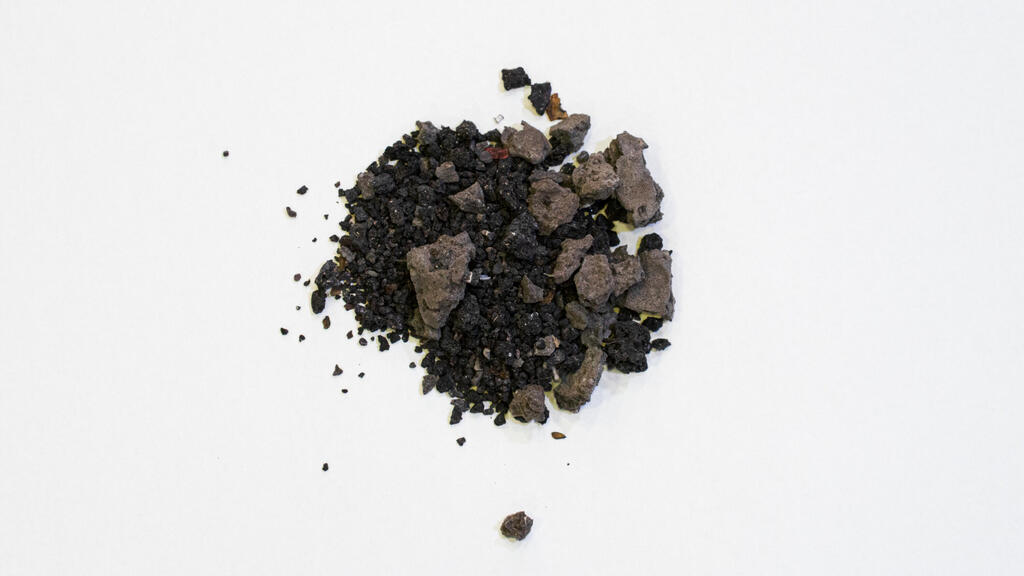
Pigment to make tekhelet
(Photo: Jenny Katzner)
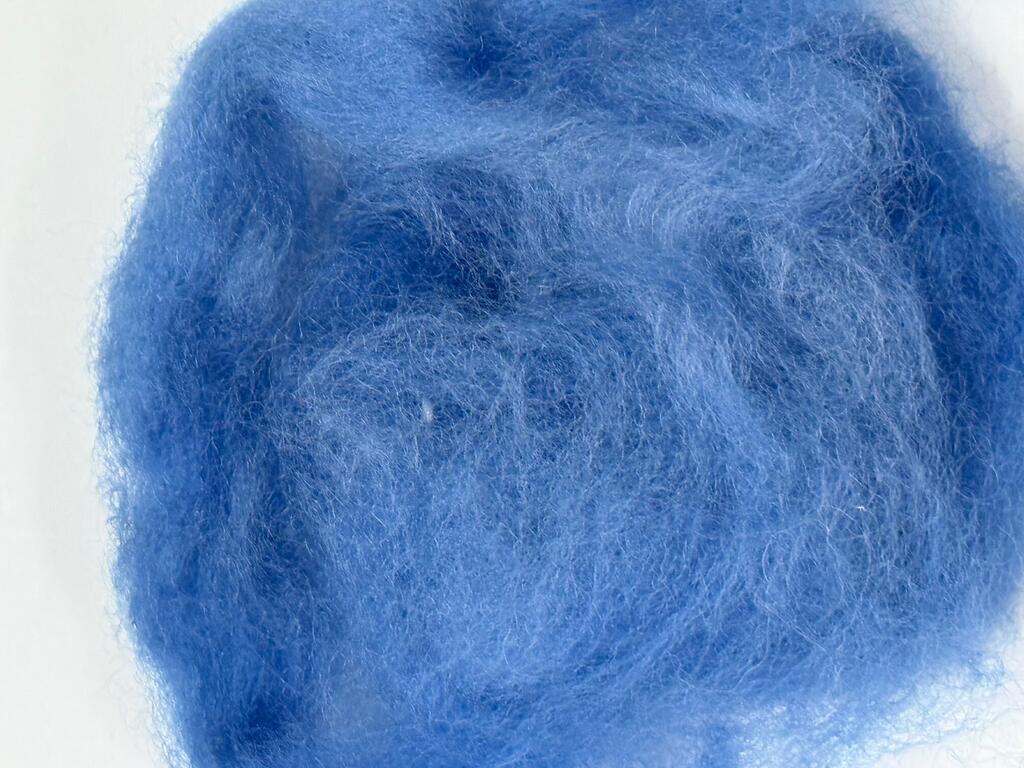
The dyed wool
(Photo: Courtesy of the Ptil Tekhelet Association, Jenny Katzner)
“Another characteristic shared by the two colors, which were produced from the same marine snail, is their extraordinary durability. I haven’t tried it myself, but as far as I know, even soaking them in bleach does not damage them.”
The sages of the Talmud faced a complicated challenge because combinations of plant-derived dyes could look remarkably similar to tekhelet produced from the banded dye-murex snail (Hexaplex trunculus). Because the colors appeared identical, it was difficult to ensure that tzitzit had been dyed with genuine tekhelet, creating a serious problem under Jewish law. Only special tests, such as baking the tzitzit in barley bread or mixing the dye with certain substances, could establish that it was genuine, nonfading tekhelet.
The situation changed toward the end of the Roman period and during the Byzantine era, when the dye works in Tyre came under a government monopoly and trade in the dye was restricted. As a result, the use of tekhelet gradually ceased during the seventh century, leaving tzitzit fringes white.
“During the same period, the Muslim conquest of the Land of Israel also brought tekhelet production to a halt,” added Koren, an expert in the application of instrumental chemistry using chromatographic and spectrometric methods to identify organic dyes from plant and animal sources on archaeological artifacts.
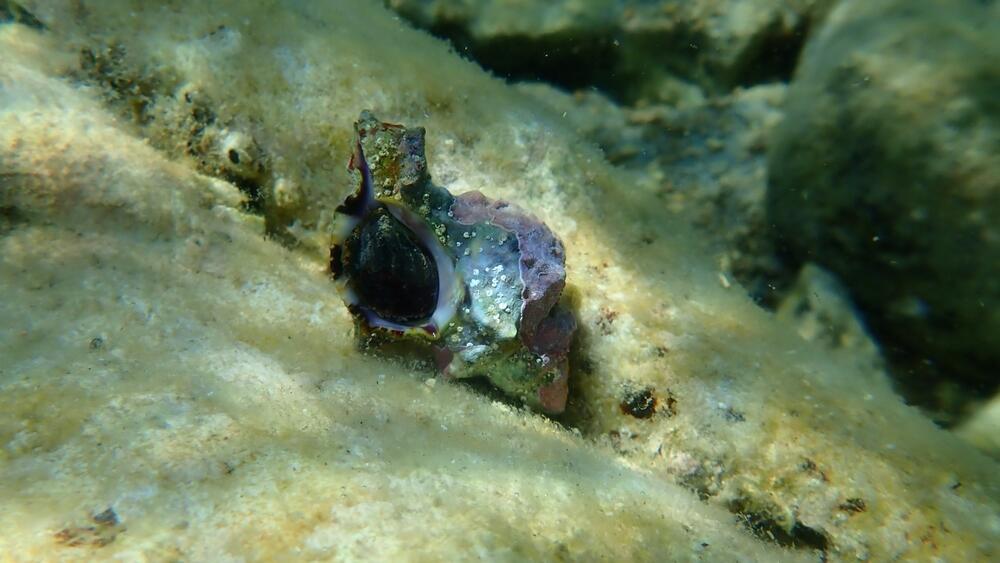
Banded dye-murex snail
(Photo: Alexey Masliy/Shuttertock)
Today, dyed tzitzit are produced using two marine creatures. Koren explained that one method follows the approach developed by the 19th-century Radzyner Rebbe and is based on the secretion of a cuttlefish, which emits a black-brown pigment. By adding various chemicals and applying high heat, the pigment is processed into a blue dye known as Prussian blue.
A second method is based on extracting pigment from the banded dye-murex. A powerful synthetic chemical is used to dissolve the pigment, and in a glass vessel exposed to light and air, the reddish and purple components of the pigment break down, producing the bluish color of indigo itself. The result is a relatively light blue resembling the color of the daytime sky.

From the exhibition 'The Color: Purple' at the National Maritime Museum in Haifa
(Photo: Jenny Katzner)

Tzitzit with a string of tehkelet
(Photo: Courtesy of the Ptil Tekhelet Association, Jenny Katzner)
Koren, director of the Edelstein Center for the Analysis of Ancient Artifacts, explained that “producing a light blue color for ‘modern’ tekhelet would not have been possible in ancient times. When the entire pigment was used to produce tekhelet — kelil tekhelet — in an earthenware vessel, or vat, that was opaque to light and covered to prevent air from entering the solution and potentially ruining the dye bath, there was no way to break down the red colorant. The result, therefore, was that combining blue with red produced a dark blue-purple color, and that was the color of biblical tekhelet.”
The mystery of the ‘tekhelet snail’
After the secrets of the snail were forgotten for centuries, efforts to identify the “tekhelet snail” began in the late 19th century. Solving the mystery required many more years of research. It was not until the 1990s, thanks to Koren’s chemical analysis of pigments in ancient dye remains, including those found at Tel Shikmona, that the pigment of biblical tekhelet was conclusively identified with dye produced from the gland of the marine snail. The same snail was also used to produce argaman.
“What was discovered is that the pigment extracted from this snail contains up to about 10 colorants, and all of them are molecules similar to indigo,” Koren explained. “The three most prominent colorants in the pigment are bluish, purple and reddish.”
The secret of the natural tekhelet dyeing process, based on fermentation using anaerobic bacteria in the flesh of the dying snail, was discovered only in the early 21st century by John Edmonds and Koren.
“Because the murex snails have been declared protected species in Israel, tekhelet dye is now produced from dried raw material or frozen liquid imported from other parts of the Mediterranean,” Koren said.
“The mucous liquid undergoes a chemical process known as ‘reduction’ to make it water-soluble. Only then can it be used to dye wool threads,” Shelach added. “The process is fundamentally similar to the one used in antiquity, but it incorporates modern methods. Ancient dyers knew how to produce the color and control its shades — argaman has a broad spectrum ranging from deep blue-purple to burgundy-purple.
“What turns the color from purple into tekhelet is exposure to sunlight, which ‘breaks down’ the red and purple indigoids present in the liquid, leaving only the indigoids that produce the blue color.”
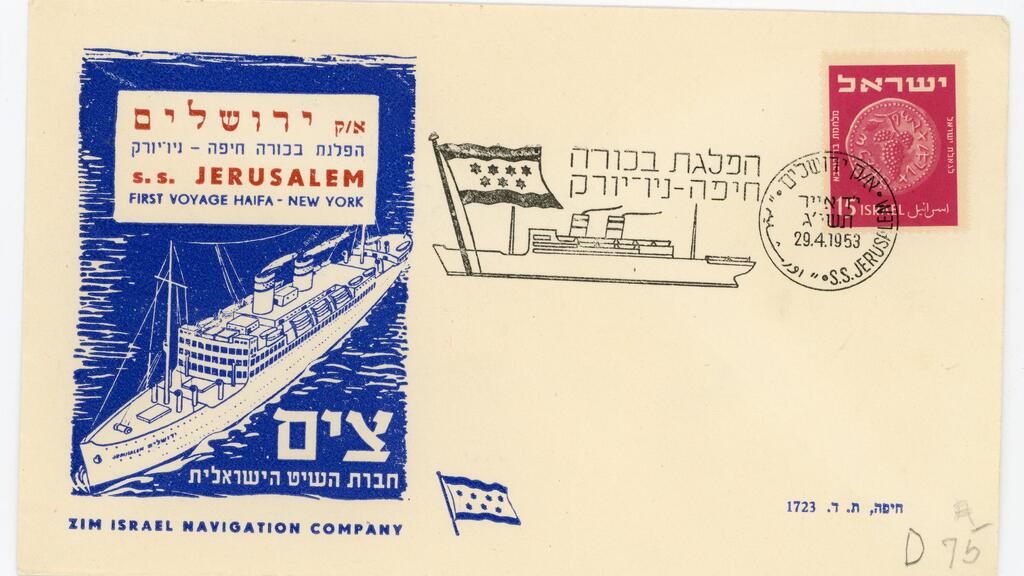
Envelope commemorating the maiden voyage of the Jerusalem steamer on the Haifa – New York route, April 29, 1953
(Photo: National Maritime Museum Collection)
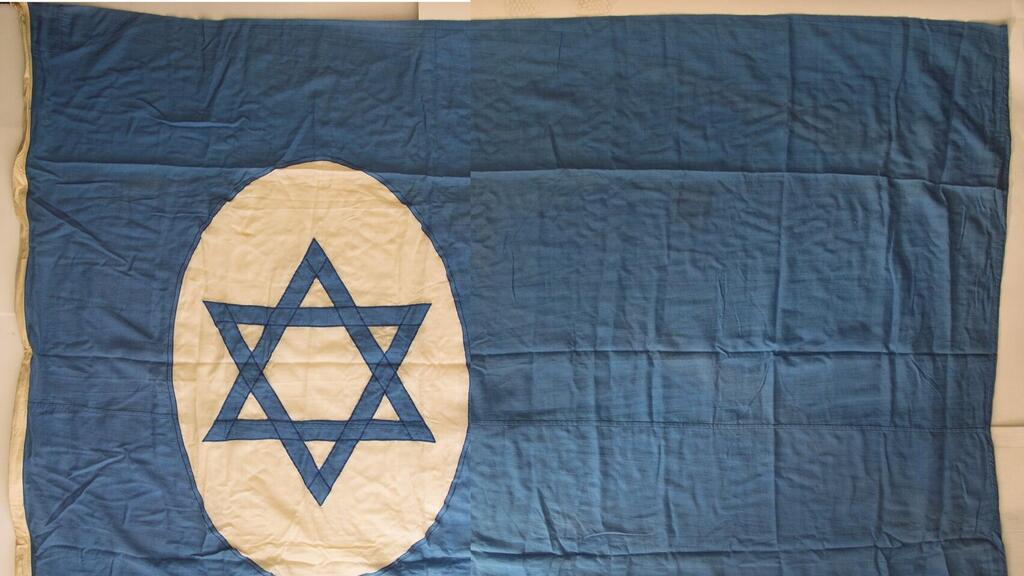
Flag of the Israeli merchant fleet
(Photo: National Maritime Museum Collection)
Symbolically, the ancient sacred colors found their way into modern Israel. At celebrations marking the third anniversary of the founding of the Rishon LeZion settlement in 1885, a flag made of white fabric with two blue stripes and a Star of David in the center was flown for the first time. That flag helped inspire the flag of the Zionist movement and later the flag of the State of Israel. The symbolic significance of light blue in Judaism was also reflected in Hebrew maritime culture, including the flag of the merchant marine and the corporate emblem of ZIM, the Israeli shipping company.
The exhibitions “Secrets of Purple” and “Tekhelet Resembles the Sea” are two new time capsules on display at the National Maritime Museum in Haifa. They offer visitors an introduction to the production of argaman and tekhelet in antiquity, at Tel Shikmona on Haifa’s Mediterranean coast and throughout the Mediterranean region. The displays also present new insights into the site’s importance as what was apparently an exclusive production center for argaman and tekhelet during the period of the Kingdom of Israel, in the Iron Age.
The exhibition cluster “The Color: Purple” includes contemporary art exhibitions alongside the historical and archaeological exhibition, responding to the tel’s unusual presence in the urban landscape and the traces of lost time embedded within it.
“The new exhibitions we recently opened tell the story of the production of argaman and tekhelet in antiquity,” Shelach said. “They include rare archaeological finds from Tel Shikmona that provide direct evidence of purple-dye production, and complement the ‘Tel of Fish’ exhibition, where visitors can see many additional finds discovered at the tell that attest to an exceptionally long sequence of settlement, from the Late Bronze Age through the end of the Byzantine period.
“A new project to install signage and improve accessibility at Tel Shikmona, led by the Israel Nature and Parks Authority, has just been completed. We saw a wonderful opportunity to connect the finds in the museum with the tell itself and give the public a chance to return to and delve more deeply into the site’s fascinating story.”