

A new Brandeis University study found that young American Jews who took part in Birthright Israel trips in summer 2025 reported stronger ties to Jewish identity, Israel and the broader Jewish community, while comparable applicants who did not participate showed declines on several measures.
The report, “A Summer of Uncertainty: Birthright Israel’s Impact on the Summer 2025 Cohort,” was released this week by the Maurice and Marilyn Cohen Center for Modern Jewish Studies at Brandeis University. It examined the experiences and outcomes of 2,285 U.S. applicants to Birthright Israel, including 1,384 respondents surveyed after the trip period.
Gallery
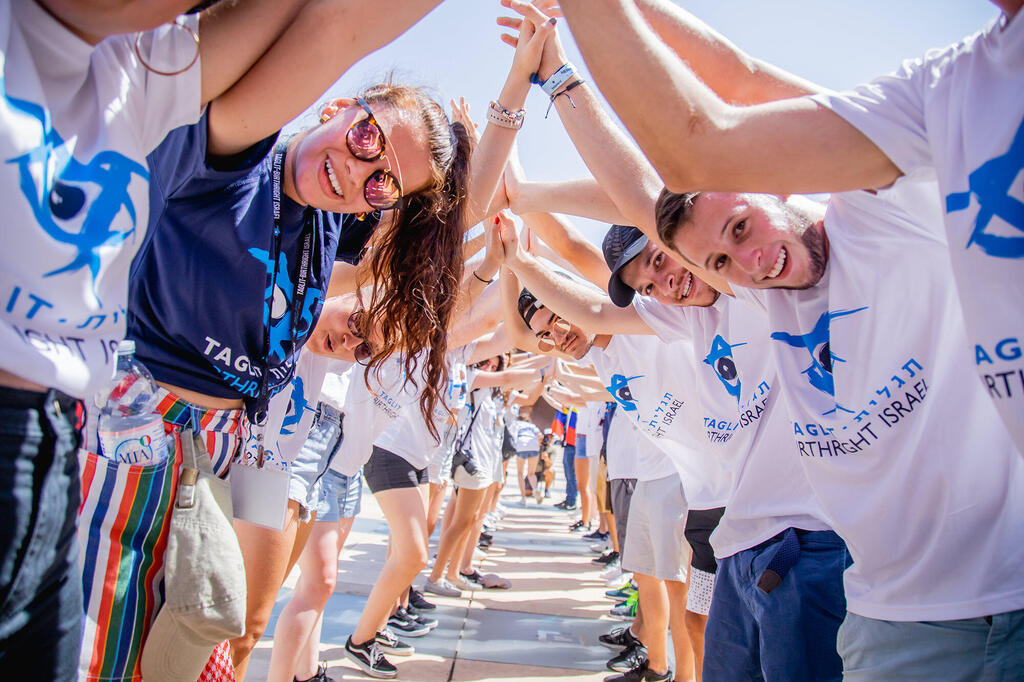
Participants on a Birthright Israel trip take part in a group activity in Israel
(Photo: Birthright Israel)
Researchers based the findings on two surveys of applicants to summer 2025 Birthright Israel trips, including both those who participated and those who applied but did not go. Applicants were surveyed shortly before the trips in April and May 2025 and again about three to four months later, in November and December 2025.
Among those surveyed, 46% had never been to Israel and 58% had never attended Jewish day school.
The study found some of the sharpest differences among politically liberal young Jews, a group researchers said showed more fragile attachment to Jewish identity. In that group, connection to Israel rose 60% among participants and fell 26% among nonparticipants.
The share who said being Jewish was “extremely important” rose 46% among participants and was unchanged among nonparticipants, according to the study.
Connection to the worldwide Jewish community remained relatively steady among participants, rising from 67% to 70%, but fell among nonparticipants from 67% to 57%.
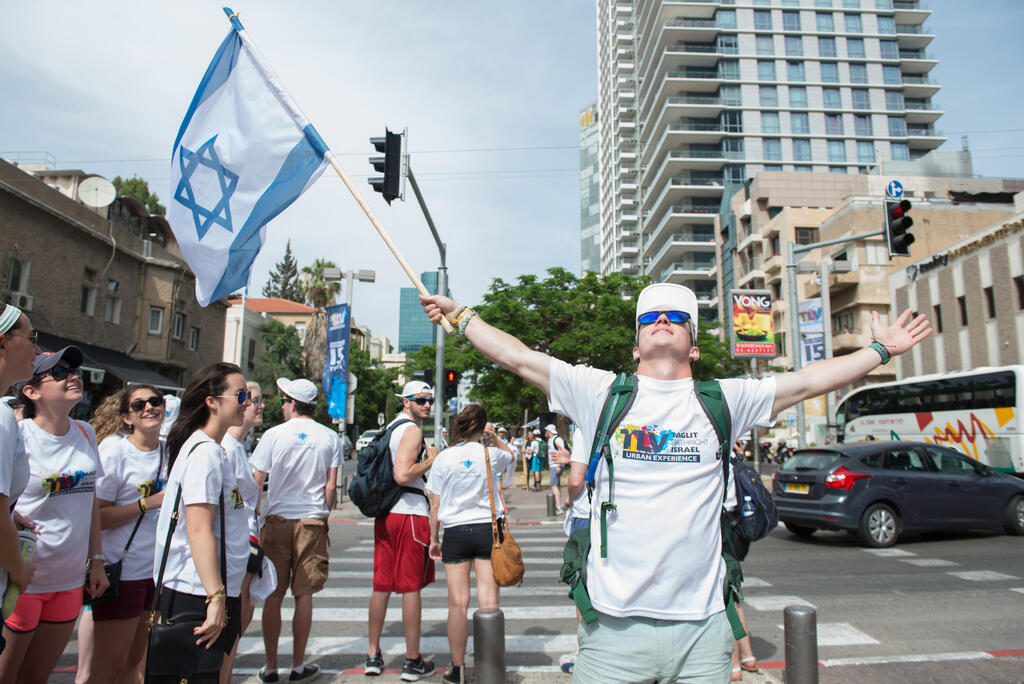
Participants on a Birthright Israel trip gather in Tel Aviv, Israel
(Photo: Birthright Israel)
Connection to Jewish history also increased among participants, from 63% to 67%, while declining among nonparticipants from 67% to 59%.
Connection to Jewish values remained strong among participants, edging up from 71% to 72%, but declined among nonparticipants from 72% to 65%.
The study also found that participation strengthened feelings of responsibility toward other Jews and toward Israel. Among participants, the share strongly agreeing that Jews ought to help other Jews rose from 44% to 56%. Strong agreement that Jews have a responsibility to contribute to the betterment of Israel rose from 36% to 41%. Researchers said no comparable increase was seen among nonparticipants.
Even among participants who had attended Jewish day school and entered the trip with relatively high levels of Jewish engagement, the study found measurable gains. Among day school graduates, the share saying they felt very connected to Israel rose 22%, while the share saying being Jewish was “extremely important” rose 33%.
Researchers said that despite security challenges and political tensions during summer 2025, the program served as a formative experience for a diverse group of young American Jewish adults.
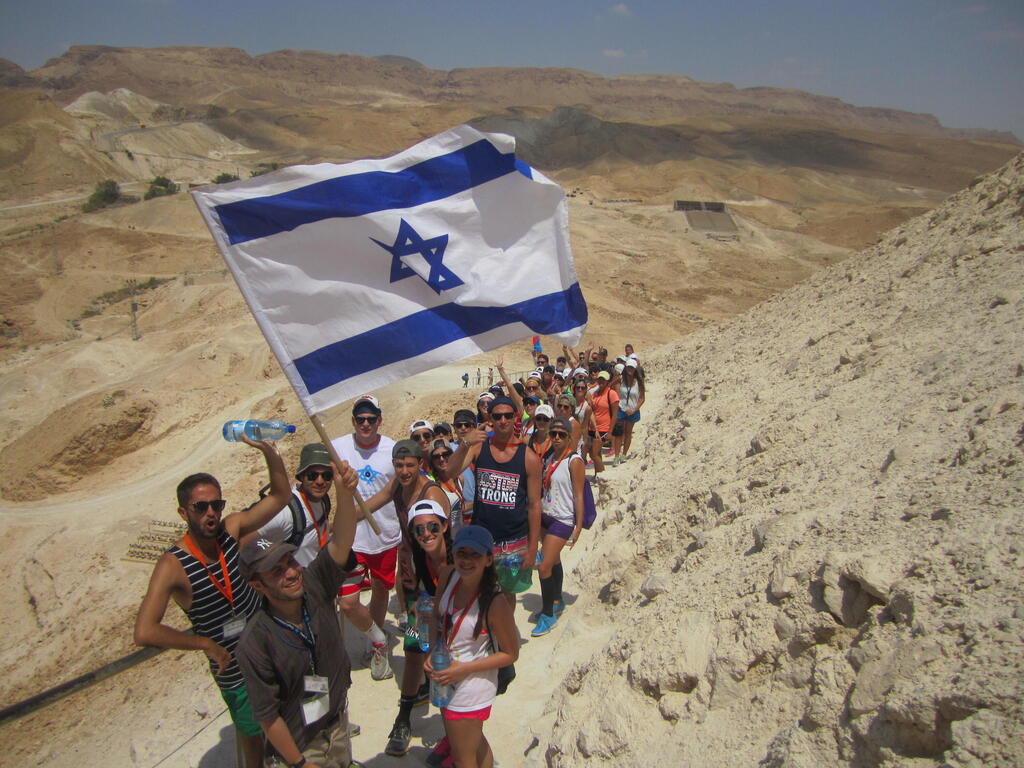
Participants on a Birthright Israel trip hike in the Judean Desert while carrying an Israeli flag
(Photo: Birthright Israel)
“Never before in our research on Birthright have we seen such notable declines among nonparticipants,” said Leonard Saxe, director of the Cohen Center for Modern Jewish Studies at Brandeis University. “Yet even in such an environment, Birthright produced substantial impact on those who participated in the program, even if their trip was cut short. Birthright not only strengthened connection to Jewish identity and Israel, but also reinforced Jewish identity at a time when many young Jews were experiencing declining connection.”
Gidi Mark, international CEO of Birthright Israel, said the findings showed participants moved in the opposite direction from their peers who did not go.
“The cultural headwinds facing young Jews are real, and they are pushing Jewish connection and pride downward,” Mark said. “But what this research makes unmistakably clear is that Birthright Israel moves participants in the opposite direction. The decline occurred only among those who did not go.”
He added that participants became more connected to Jewish identity, community, history, values and tradition over the same summer.
“Cultural pressures pose an existential threat to Jewish continuity, but we know what works: meaningful, firsthand experiences in Israel with peers,” Mark said. “Action strengthens Jewish identity; inaction allows it to fade.”
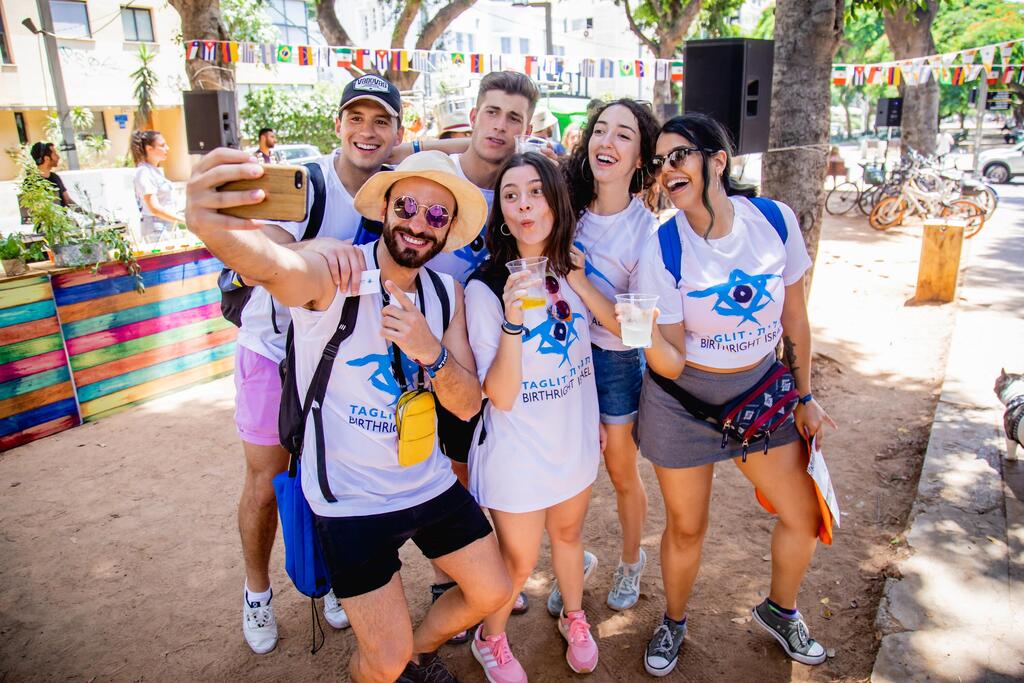
Young adults on a Birthright Israel trip pose for a selfie during an outdoor gathering in Tel Aviv, Israel
(Photo: Birthright Israel)
Elias Saratovsky, president and CEO of Birthright Israel Foundation, described the findings as a warning sign but said they also pointed to a path for reversing the trend.
“Brandeis University has released an alarming finding: Jewish connections among young Jews are declining at an unprecedented rate,” Saratovsky said. “But the good news is that with philanthropic investment, we can prevent decline and inspire growth.”
“We are at a crossroads,” he added. “If our community does nothing, we risk losing the younger generation. But if we invest in an effective intervention, Birthright Israel, we can win them back. Birthright Israel works, and the entire Jewish community must support it. Our future depends on it.”