

Jerusalem on a Saturday, about an hour before the end of Shabbat. Dozens of ultra-Orthodox Jews block buses arriving in the capital from northern Israel with metal barriers — a routine move, part of the long-standing status quo. Hours earlier, protests at Cafe Basimta, and far away, in another city — Safed — clashes over operating buses for soldiers and civilians.
The night before, metal barriers were placed at the entrance to a mixed neighborhood in Bnei Brak, where secular and ultra-Orthodox residents live side by side. Within 24 hours, ultra-Orthodox activists tried to change long-standing arrangements in the name of Shabbat, with complete disregard for the wishes of others. And some people have simply had enough.
'Go live in Ramat Aviv for 5,200 shekels'
Friday evening, as Shabbat begins. Bnei Brak police are called by secular residents of the Writers’ Compound neighborhood, also known as Ayelet HaShahar, after construction waste containers are used to block the neighborhood’s main access road.
Clearing a blocked entrance to the mixed ultra-Orthoox and secular Writers' Neighborhood in Bnei Brak


Police arrive and remove the containers from the middle of the road, reopening the bridge. The truck driver who placed the construction waste containers is summoned for questioning. According to a police source, he said he had been hired by someone at the Bnei Brak municipality and believed everything was legal and authorized.
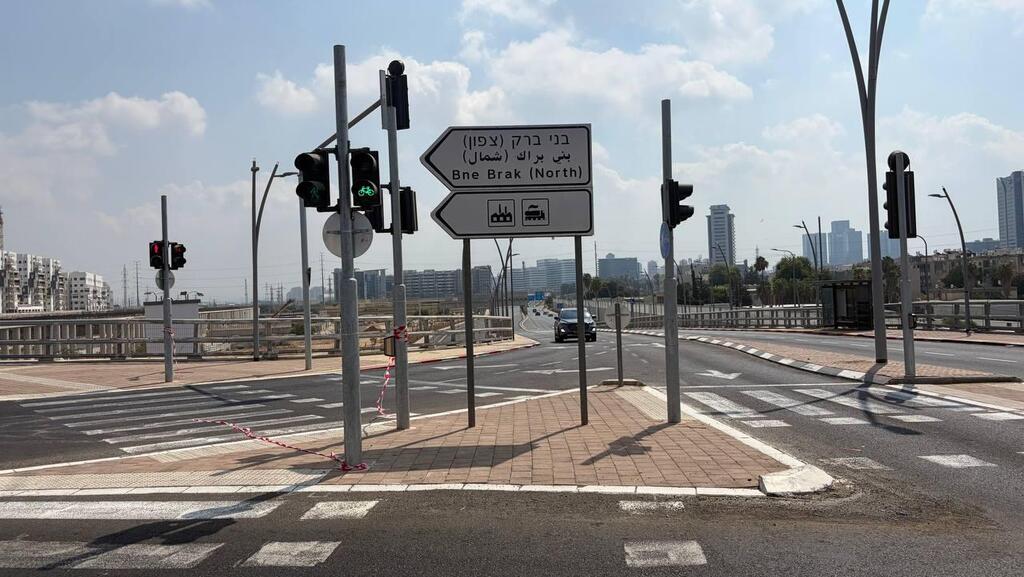
Saturday morning, 10:30 a.m. An ultra-Orthodox man wrapped in a prayer shawl returns from morning prayers, walking from Bnei Brak’s Pardes Katz neighborhood toward the Landa Bridge, which leads into the Writers’ Compound.
Then he mutters toward a car standing at the side of the road: “You’re not allowed to drive here on Shabbat.”
Gallery
Haredi road and street blockades on Shabbat: Writers' Neighborhood in Bnei Brak
(Photo: Meir Turgeman)
(Photo: Meir Turgeman)
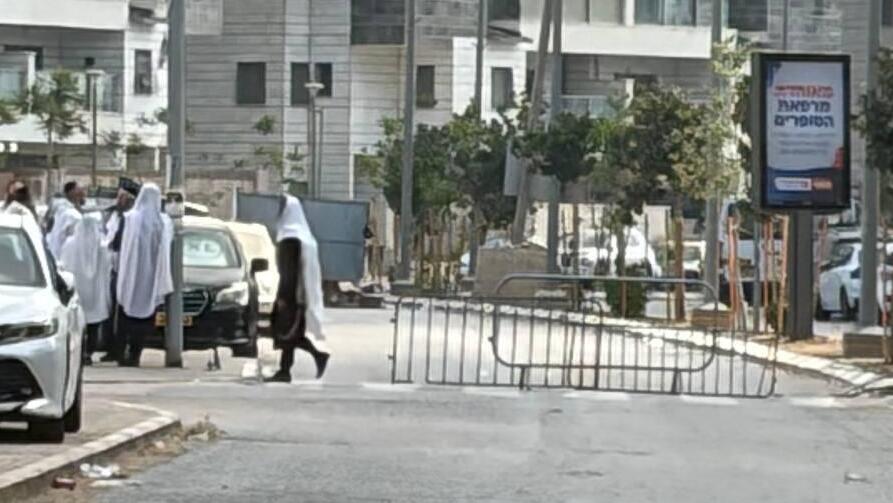
At the start of the bridge, he passes a sign mounted on a pole reading: “No entry on Shabbat and Jewish holidays.” On the bridge, three containers stand beside the curb, evidence of their placement at the start of Shabbat in an effort to physically block vehicles from entering the neighborhood.
The Writers’ Compound is bordered by Ayalon Mall to the west and Highway 4 to the east. It was built as part of Israel’s Buyer’s Price housing program where at bargain prices young secular and ultra-Orthodox couples won apartments and found themselves living side by side.
The ultra-Orthodox are the majority in the neighborhood, which does not look especially fresh or clean despite only beginning to be populated in 2024.
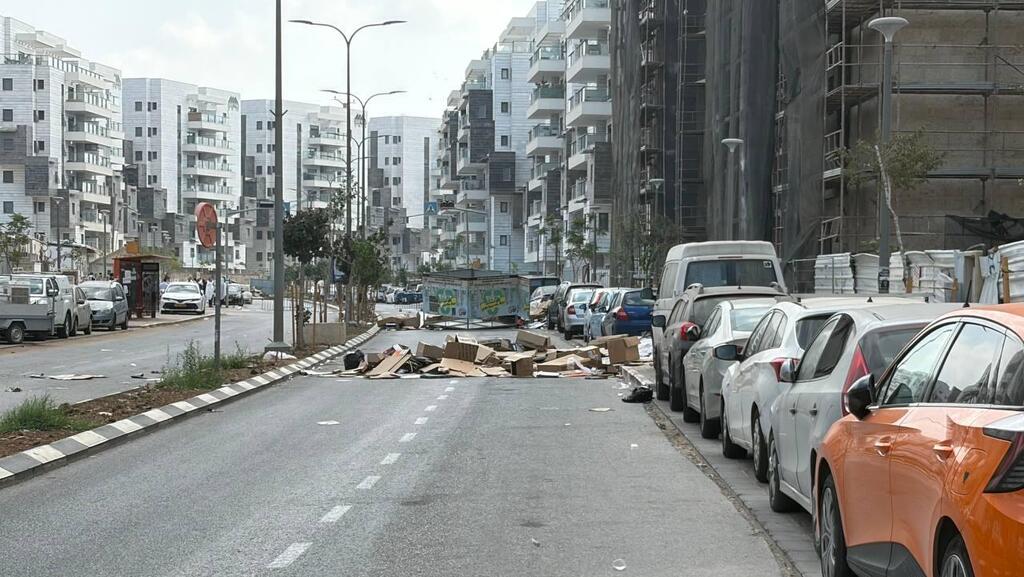
About 200 meters into Lehi Street, which runs through the neighborhood, piles of cardboard waste near a synagogue block the road. In the opposite lane, there are metal barriers.
Although police had already been called to remove the containers that had illegally blocked the neighborhood’s roads, secular residents woke Saturday morning to find makeshift barriers once again blocking traffic.
Men wrapped in prayer shawls stood on the sidewalk near the barriers.
“We are brothers, and even brothers sometimes argue. It will be OK in the end,” one said of the friction that has developed in recent weeks over driving on Shabbat in the neighborhood streets.
Haredi road and street blockades on Shabbat: Writers' Neighborhood in Bnei Brak
(Photo: Meir Turgeman)
(Photo: Meir Turgeman)
The containers, it seems, were the last straw. Two weeks earlier, ultra-Orthodox residents blocked the entrance with barriers, which were later removed by police.
“Living together as neighbors has created friction over Shabbat. Each side wants to preserve its way of life,” a police source told ynet. “This is not an issue for the police. They should go to court and let the court decide.”
City council member Yaakov Vider of the Likud Party believes the friction suits the municipality.
“It is leaving the arena to the street and to improvised roadblocks, without any discussion at all. It suits them for public attention to focus on Shabbat wars instead of the collapse of the municipality, with debts of millions. To this day, there has been no orderly city council discussion on the issue. The municipality has a duty to listen to the needs of both secular and ultra-Orthodox residents and make a decision. My concern is that extremists from both sides will enter the struggle over Shabbat in the Writers’ Compound and escalate the situation,” he told ynet.
One neighborhood resident, who defines himself as secular, rented an apartment there in June 2025.
“The owner is secular and told me this was a mixed neighborhood. About a month ago, the incidents over driving on Shabbat began. Now they have gone even further and blocked the bridge with containers. This is already beyond a desire to block driving on an internal road in the neighborhood that passes synagogues. This is already a desire to block the entire neighborhood,” he said.
So why not leave?
“I rent a new three-room apartment here in central Israel for 5,200 shekels. For that amount, I used to live in an apartment that was literally falling apart,” he explained, before adding sarcastically: “The ultra-Orthodox shout, ‘Go live in Ramat Aviv.’ I’m willing to, if they make up the difference needed to rent an apartment in Ramat Aviv.”
The resident refuses to accept the new ultra-Orthodox demand.
“I can’t park outside the neighborhood and walk in. That’s not reasonable. And besides, I have an electric car with a charging station in my building’s parking lot,” he said.
In his view, the struggle over public space in the Writers’ Compound is only beginning and “will intensify.”
Several days later, we returned to the neighborhood on a weekday afternoon. No secular residents were visible in the streets.
“Of course, there are only ultra-Orthodox people on the street, because secular residents are at work in the afternoon,” said one secular resident, 45, sarcastically.
He rented a 4.5-room apartment there three years ago for just 6,000 shekels.
“For the first two years, while the neighborhood was still under construction, everything was fine,” he said. “There were secular residents, ultra-Orthodox residents and religious Zionists, and we respected one another. Now suddenly the Bnei Brak municipality has placed containers on the bridge leading into the neighborhood, and I’m worried about the coming Saturdays.”
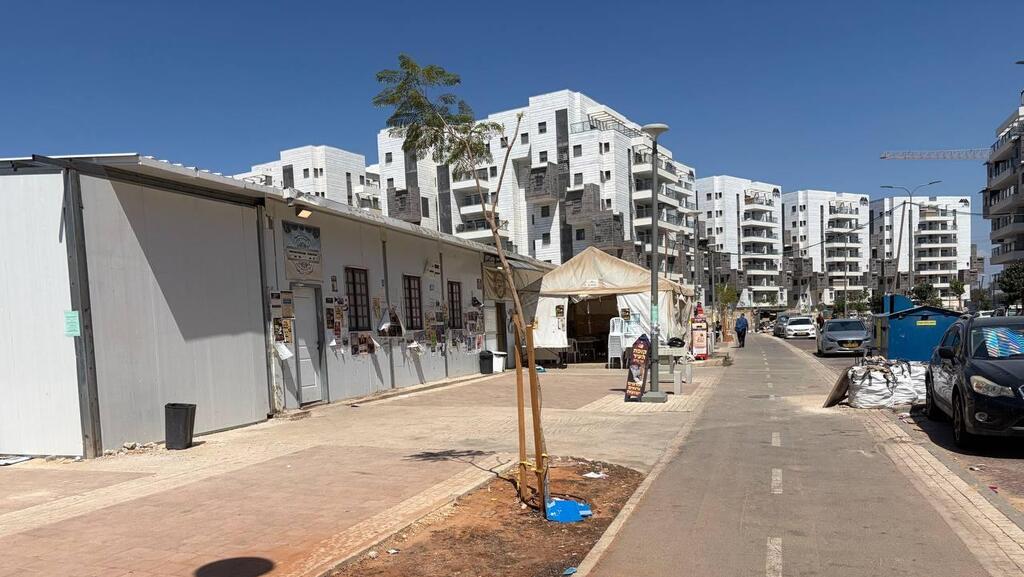
Residents allege neglect: They say the municipality does not provide services in the neighborhood, and every tent erected in public space eventually becomes a temporary structure for kollels and synagogues.
“There is no law and order,” the secular resident said. “There was a status quo allowing driving on Shabbat in the section between the synagogues and kollels, but now they want to close the entire neighborhood to us — and it should be remembered that it was marketed under Buyer’s Price to the general public.”
He asked to remain anonymous.
“They already punctured one of my tires once. I expect the police to enforce the law,” he told ynet.
Opposite a cluster of synagogues stands Shlomi, an ultra-Orthodox-looking man waiting for transportation to bring his son home from school.
“In our Breslov community, the rabbi says not to get involved. What the ultra-Orthodox extremists are doing by blocking roads is wrong. This will only push our secular neighbors away. It hurts me to see people driving on Shabbat, but I have no right to force anything on them. I have secular brothers, and I would not want them treated this way,” Shlomi asserted.
Inside a kollel housed in a makeshift structure in the middle of Lehi Street, Dvir sits immersed in a page of Gemara, jotting notes in a small notebook.
“It hurts to see cars driving on the road across from us while we are in the middle of prayer on Shabbat,” he said, stressing: “But I’m not in favor of wars. Extremists from both sides are coming in here.
“In my opinion, time will do its work, and the neighborhood will become fully ultra-Orthodox. The secular residents will leave even though they are trying to fight. After all, these are attractively priced apartments right in the heart of Gush Dan, but they won’t be able to keep fighting in order to live according to their beliefs,” according to Dvir.
Posters plastered around the neighborhood proclaim a religious ruling stating that “it is strictly forbidden to rent apartments in the neighborhood to people who are not ultra-Orthodox.”
One poster reads: “Everyone has an obligation to protest against anyone who breaches this barrier, because our very lives depend on it. There is no need to fear the prohibition against humiliating others and the like, and in this merit we will ensure that the place develops in Torah, holiness and the presence of the Divine.”
Another poster condemns the “phenomenon of secular tourists” who behave “in a manner inconsistent with our way of life, in immodest clothing.”
“Why are there areas in this country where I am not allowed to live?” another secular resident protested. “The ultra-Orthodox knew they were going to live in a mixed neighborhood, and now they want to take over the public space. It is time for us to fight for our right to live according to our values, and for the ultra-Orthodox to learn to respect their secular neighbors.”
The Bnei Brak municipality said in response: “The Writers’ Compound is a neighborhood whose overwhelming majority consists of Shabbat-observant residents who wish to preserve the neighborhood’s character on Shabbat and Jewish holidays.
“To that end, the municipal traffic committee approved the closure of Rabbi Moshe Yehuda Leib Bridge on Shabbat, while leaving an open entrance and exit through the Design Center complex to provide residents with access.
“It is very regrettable to see elements that do not respect the arrangements, violate the law, try to inflame tensions and create unnecessary provocations on the ground. This reckless conduct crosses red lines and exacts a heavy price.
“A medic who is a neighborhood resident was attacked by a lawbreaker, and a young girl was injured in an accident caused by the reckless driving of a resident. The municipality calls on all neighborhood residents to act responsibly. We will not allow any inciting element to turn the neighborhood into an arena that endangers the lives of residents and their children.”
'Shabbes' versus buses for soldiers
“Anyone who desecrates Shabbat does not belong to the Jewish people,” shouts one of the people detained by police in Egged Square in Safed, where for 11 consecutive Saturdays a religious conflict has been playing out between ultra-Orthodox and secular residents over buses leaving shortly before the end of Shabbat from the central bus station toward central Israel, without entering the city.
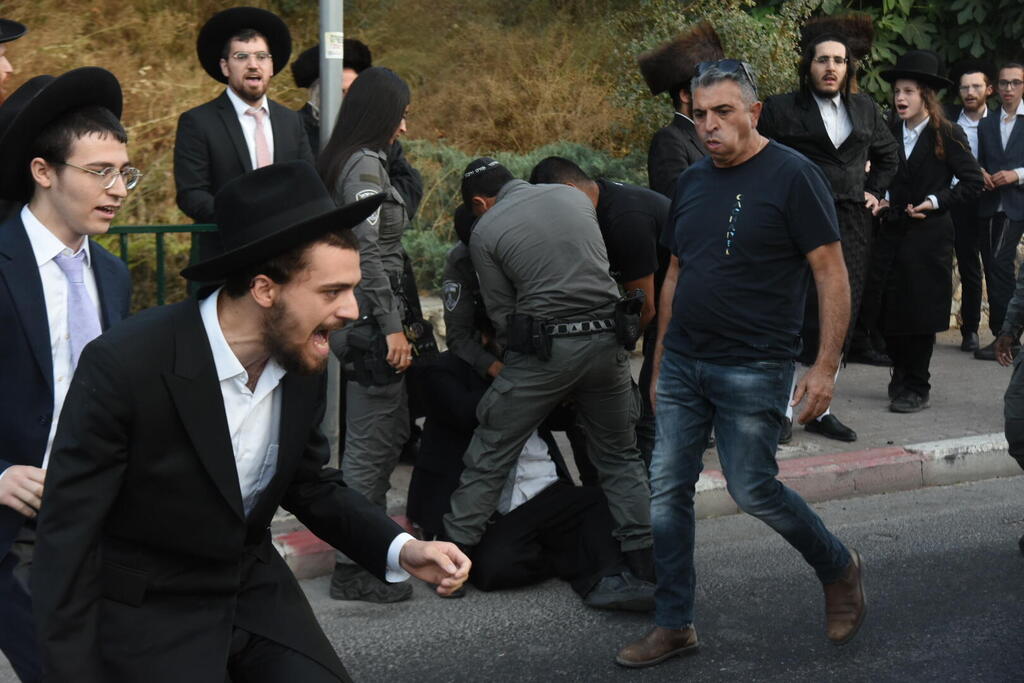
Haredi riots in Safed
(Photo: Avihu Shapira)
“Anyone who desecrates Shabbat is liable to death by stoning,” he continues. “When the Creator comes and gives punishment to all those who desecrate Shabbat, don’t be surprised afterward when what happened on Simchat Torah happens,” referring to the October 7 massacre.
“Those who desecrate Shabbat betray the Holy One, blessed be He. There is no permission in any form to desecrate Shabbat. Anyone who desecrates Shabbat risks a death sentence from the Creator,” said the Haredi demonstrator.
For three months, the city that had known quiet, unity and a great deal of understanding between secular and ultra-Orthodox residents has changed.
Every Saturday, the city’s main square, Egged Square, becomes a battleground.
Ultra-Orthodox protesters who arrive every week from outside the city — most of them not Safed residents — many from the Jerusalem Faction, demonstrate against buses operating on Shabbat to transport soldiers and civilians through Nativ Express, the company that operates the routes in Safed on weekdays.
Week after week, large forces of police, Border Police, riot police and detectives arrive at Egged Square, photograph protesters’ faces and arrest rioters.
But often the same faces appear again in the square and are arrested for violating a judge’s order.
Every vehicle passing through the area is met with cries of “Shabbes,” as are the buses.
The protests and roadblocks have also spread to Meron’s central square, where ultra-Orthodox protesters similarly demonstrate against buses traveling on Shabbat.
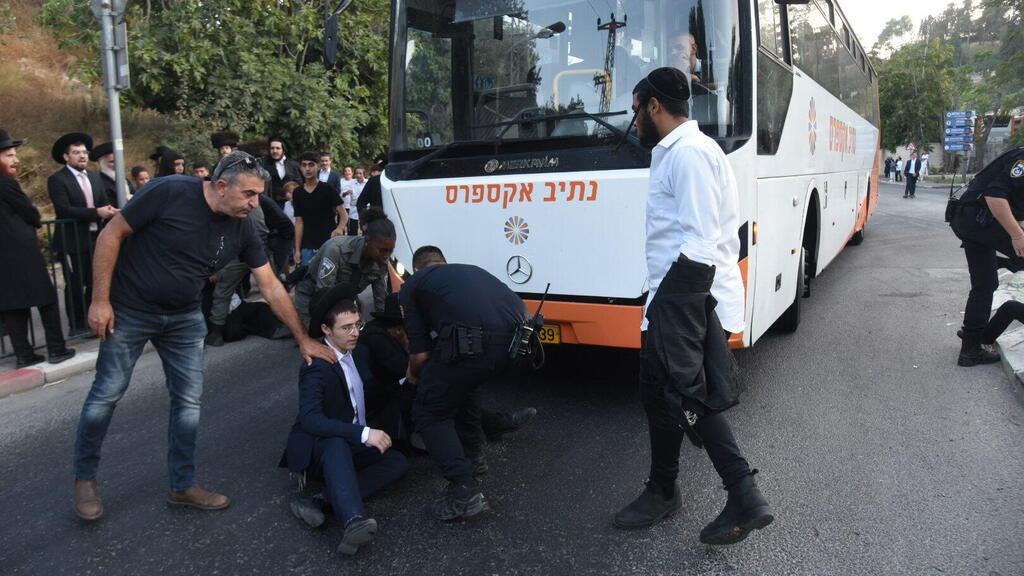
Ultra-Orthodox protesters demonstrate against buses operating on Shabbat to transport soldiers and civilians
(Photo: Avihu Shapira)
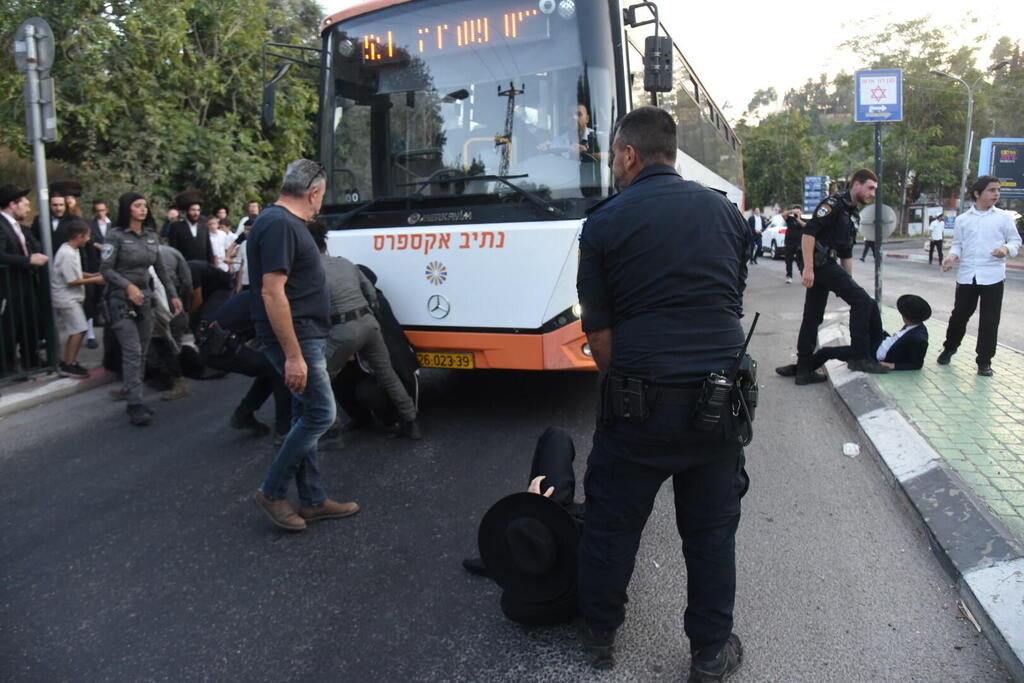
(Photo: Avihu Shapira)
Last Saturday, police had plenty of work: two arrests, seven people detained and roadblocks during a demonstration attended by about 100 ultra-Orthodox protesters and several dozen secular counterprotesters who decided to demonstrate against them.
Safed has one neighborhood in the south of the city, called “IDF — Maor Haim,” that is populated by ultra-Orthodox residents. Vehicles are not allowed to enter there on Shabbat, and public transportation does not pass through it either.
Evidence of the city’s growing ultra-Orthodox character can be seen in voting patterns for ultra-Orthodox parties: In 2019, Shas and United Torah Judaism received 28.82% of the vote in the city. By 2022, that had risen to 36.97%.
Secular residents who see the city becoming more ultra-Orthodox fear the situation will worsen.
Today, not a single store or business in the city is open on Shabbat apart from one gas station, which is boycotted by the ultra-Orthodox community.
Mayor Yossi Kakon, himself ultra-Orthodox, is actually trying to prevent the demonstrations — but both sides blame him.
A group of secular residents has decided to hold protest convoys against the ultra-Orthodox, with cars and music, in an attempt, as they put it, to disrupt those who disrupt them.
They also have strong criticism for Deputy Mayor Nachman Gelbach, who is also ultra-Orthodox.
Gelbach, who initially enjoyed support and sympathy from many secular residents, has lost much of that support in recent months.
Secular residents allege that he is indirectly involved in the demonstrations.
“They come from Beit Shemesh, Beitar Illit and Jerusalem and are given places to sleep on weekends in schools at the residents’ expense,” said resident Moti Hatiel.
“And Yossi Kakon is not showing leadership and is not coming out against them. The Jerusalem Faction is the source of the problem in Safed, where the status quo between ultra-Orthodox and secular residents has been broken.”
Hatiel points to resident Natali Pitusi, who goes to the center of the unrest every Saturday and calls on the ultra-Orthodox protesters to enlist in the army.
“We will join her and her people, and we will also go demonstrate inside Nachman Gelbach’s home, of course within the law. The situation is only getting worse and the demonstrations will intensify,” he said.
Another resident, Shay Ilouz, added: “The people holding the demonstrations are not Safed residents. I grew up here and I do not remember demonstrations like this ever happening. We never had things like this in our city. Everyone lived respectfully alongside everyone else.
“This week I met an ultra-Orthodox man who told me he had been called out in an ambulance to take care of someone who was injured, while he was in the middle of his Shabbat meal. ‘In the end, I’m desecrating Shabbat because of demonstrations for Shabbat,’ he told me. I’m sure many religious people oppose this.”
Aharon Volkan, an ultra-Orthodox man who moved to Safed about a decade ago, explained:
“This is a special city, one of the holy cities in the Land of Israel, but over the years secular, traditional and ultra-Orthodox residents knew how to live here with mutual respect.
“In the past 20 years, a much more ultra-Orthodox population has moved here. It is not that the mayor brought them — the opposite. They brought an ultra-Orthodox mayor here. That is the reality.”
He opposes blocking buses on Shabbat.
“There is no doubt that I want Shabbat to be observed properly everywhere in the State of Israel, and for everyone to observe Shabbat, but violence and noise do not solve anything. There needs to be dialogue and an effort to find a solution pleasantly. This is a nationwide dispute, not only in Safed,” he said painfully.
“The closer we get to elections, the more disputes there will be because people feed off them. The moment the elections are over, everyone will return to their place, and things will calm down here and elsewhere," he said.
“Public discourse in the country today is violent and extremely harsh, but note that the hard core of Safed is not involved in this. The city’s rabbis and neighborhood rabbis are not involved, and neither are the ultra-Orthodox public representatives,” Volkan added.
Get hit by a stone and fight back with class
In Jerusalem, people are already accustomed to road closures on Shabbat and to stormy protests.
But what happened before the end of a recent Shabbat — and what has been happening for months at Cafe Basimta — is unusual.
Haredim block roads in Jerusalem
(Photo: Shilo Shalom)
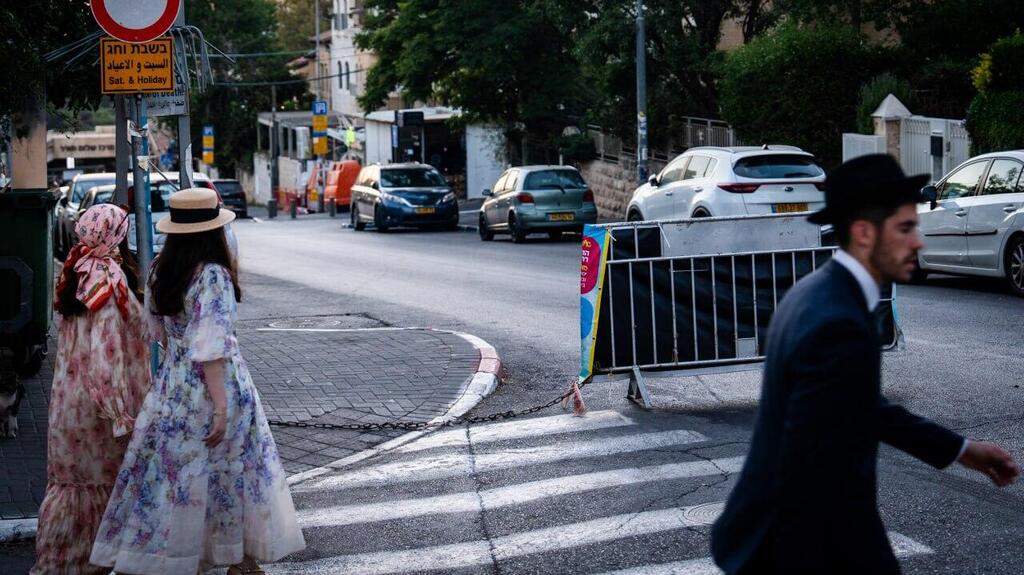
(Photo: Shilo Shalom)
For the second consecutive week, the entrance to the city was blocked before Shabbat ended. Dozens of ultra-Orthodox protesters were behind it, but police did not arrive to remove them.
N., a student in Jerusalem who has lived in the city for four years, was in a car that was blocked by those protesters, who had decided to break a years-old status quo under which buses arrive shortly before the end of Shabbat and drop passengers outside the central bus station.
“Private cars managed to get around. We were driving behind a taxi,” he said.
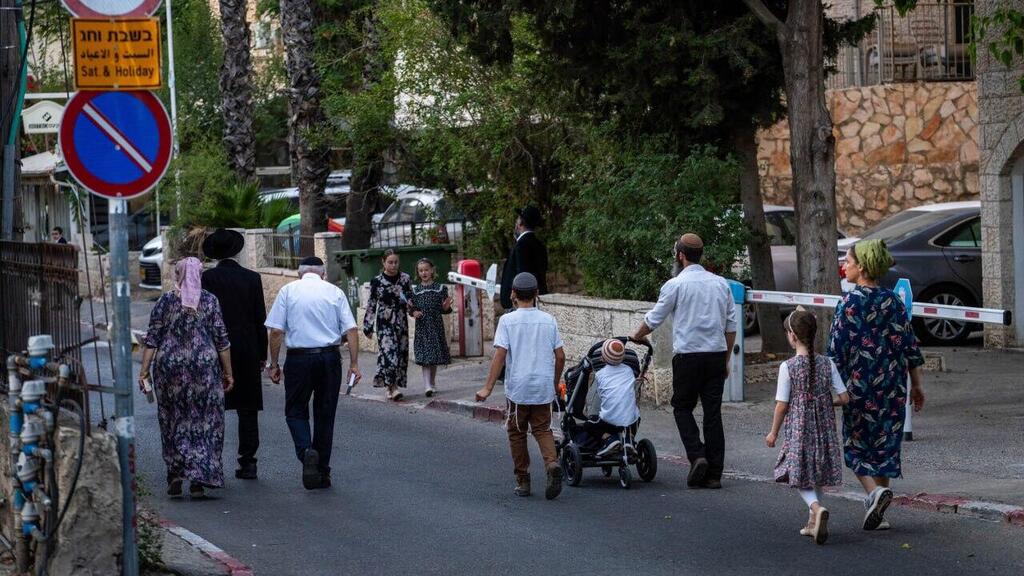
Haredim walk in the streets of Jerusalem on SHabbat
(Photo: Shilo Shalom)
Then, suddenly, he heard the sound of an object striking the vehicle. When he got home, he saw a mark on the car.
“It is unpleasant to get hit by a stone or some object not far from home, but it is not frightening,” he said. “It is sad to see that this is the situation in the capital. Most of my friends have left. I won’t stay either if this continues.”
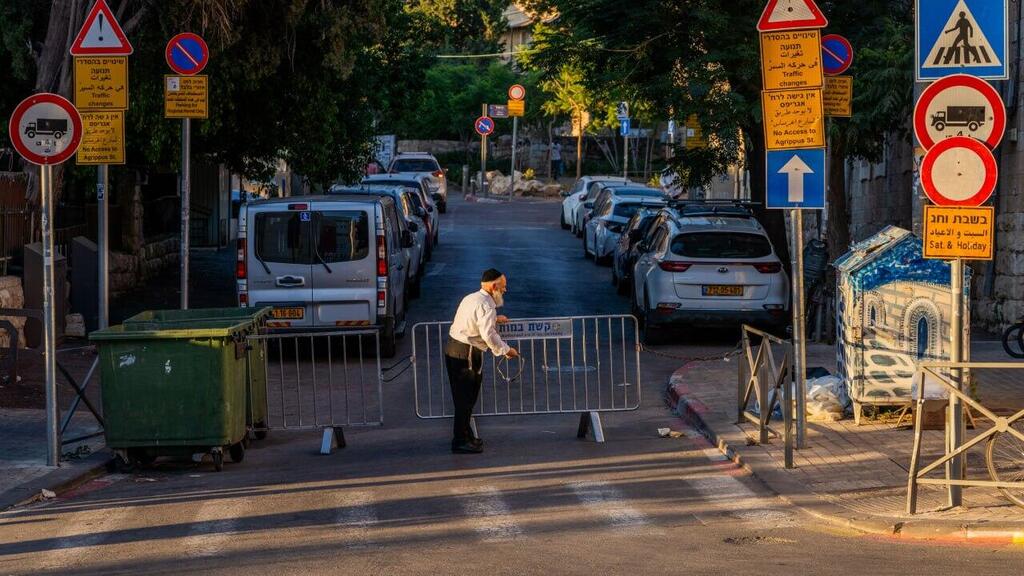
The day before, Friday at 6:15 p.m., restaurants on Bezalel Street welcomed diners who had chosen to eat there, while on nearby Hanatziv Street an elderly man accompanied by children dragged barriers into place and chained them together to block the entrance to the street.
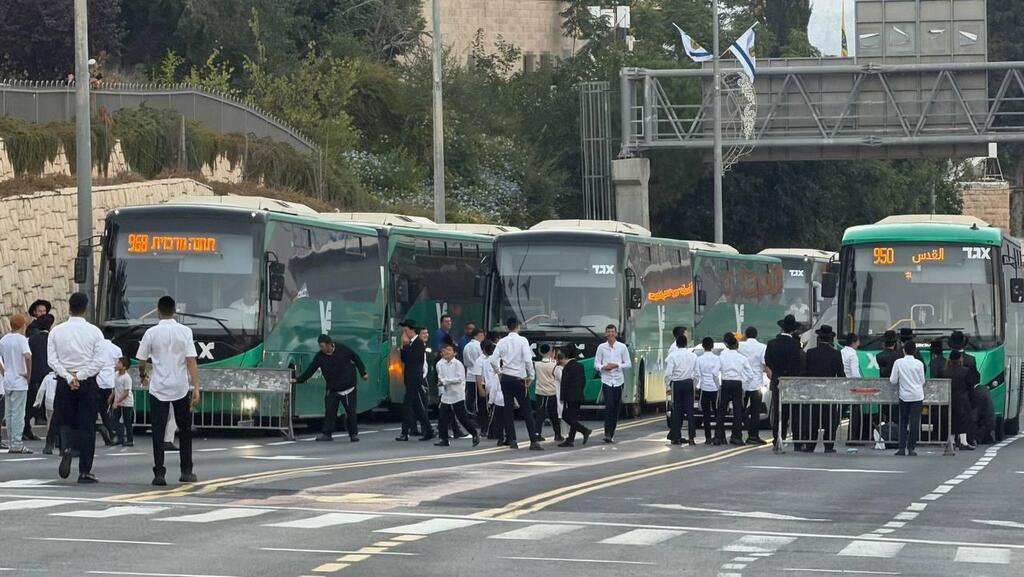
Egged bus lines that come from the north to Jerusalem are blocked by Haredi protesters
(Photo: Liran Tamari)
“Every Thursday night, a white vehicle arrives, probably from the municipality, and puts up the sign,” a neighborhood resident said. “I have lived here for nearly 40 years. Every weekend and holiday, the street is blocked, and there have never been problems. We have good relations with everyone. Two weeks ago, a car wanted to enter the street — and the driver was not even a neighborhood resident.”
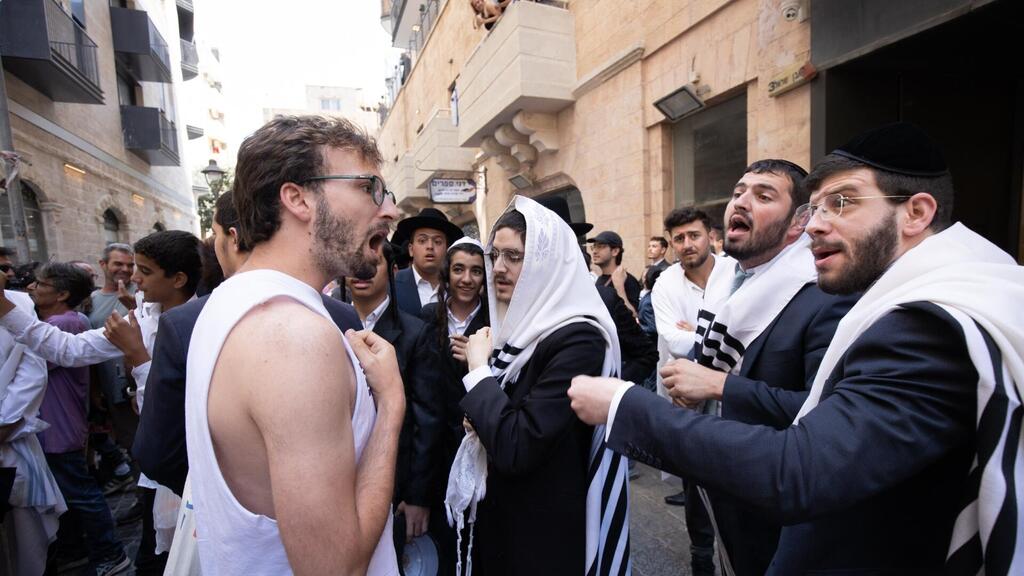
The regular Shabbat demonstrations outside Cafe Basimta — which continued for about two months until the owner gave up and announced that he would close on Saturdays — did not frighten other business owners who also open in the city center.
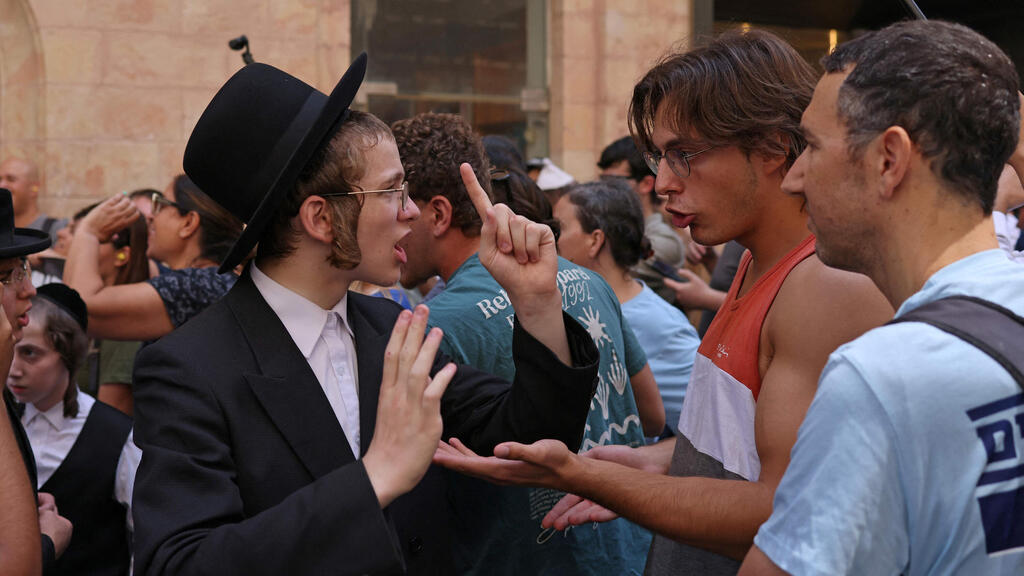
Haredi protesters debate secular patrons outside of Jerusalem's Cafe Basimta
(Photo: Ahmad Gharabli/ AFP)
(Photo: Alex Kolomoisky)
A., one of those business owners, said that since the demonstrations began "we have been experiencing a boom we haven’t seen here in a long time. Jerusalemites decided to fight for their place, and they are doing it with class, with a cup of espresso in hand and a lot of humor.”
He said it is important to distinguish between secular Jerusalem and ultra-Orthodox Jerusalem.
“Liberal Jerusalem is alive, kicking, vibrant and taking control of shaping its own reality. I am not against the ultra-Orthodox. There are ultra-Orthodox areas in the city, and I understand and respect that very much. But there are areas that are ours, where life is conducted the way we want it," he said.
“No protester or roadblock will change that. Anyone who wants to respect me the way I respect them — ahlan wa-sahlan.”
The Jerusalem municipality said in response:
“Over the past decade, there has been no change in the status quo regarding street closures on Shabbat and holidays. Existing traffic arrangements are maintained in accordance with arrangements established over the years.
“There are no unauthorized street closures in Jerusalem. Traffic arrangements have always been determined solely under the responsibility of the relevant professional authorities.”
Divided over the definition
The city that perhaps best symbolized the Shabbat wars of the previous decade is Ashdod.
It is a mixed city with many different communities and a large, growing ultra-Orthodox population.
Ashdod residents have not forgotten the 2018 Shabbat battle, when the municipality began issuing fines to businesses operating on Saturdays. Thousands later took to the streets in protest.
Since then, however, calm has largely prevailed, and there are no visible battles in the streets over the city’s character or that of its neighborhoods. But beneath the relative calm, the question has returned: Where is the city headed?
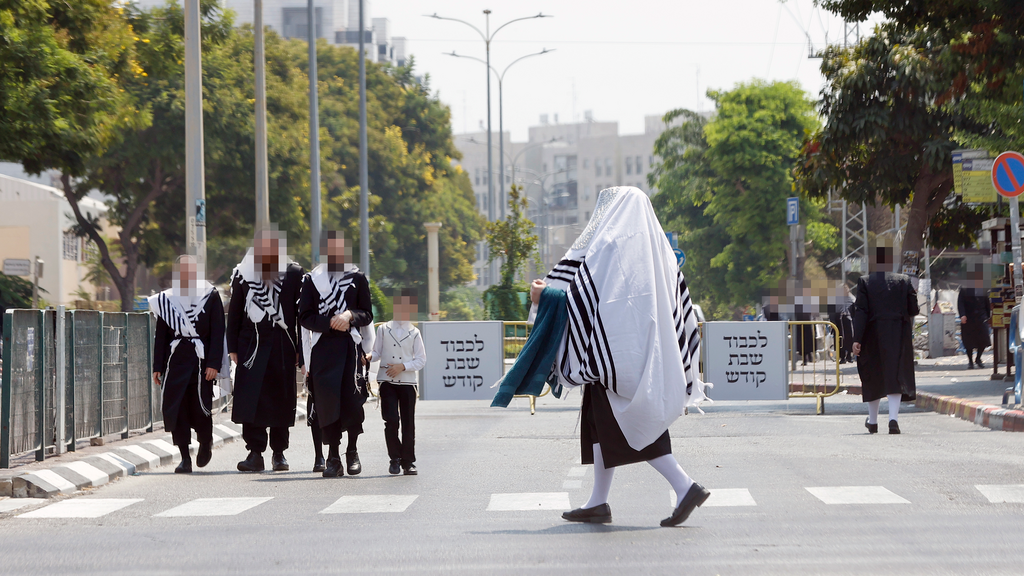
Ultra-Orthodox residents block the street to their neighborhood on Shabbat
(Photo: Gadi Kabelo)
“Sometimes there is a bit of chaos before election periods, but usually things are calm,” said Menachem Deutsch, an ultra-Orthodox journalist in Ashdod. “The ultra-Orthodox public in Ashdod is very calm and restrained. There is a status quo here that is maintained quietly. Overall, everyone finds their place.”
One indication is the permanent arrangement under which District 7 is closed to vehicle traffic every Saturday with barriers placed at its entrances.
According to Deutsch, District 7 was established in the 1990s with one purpose: to serve as a dedicated ultra-Orthodox neighborhood.
“The district is unmistakably ultra-Orthodox and was built that way,” he explained.
But District 7 is not alone. Districts 3, 6, 8 and 9 are also undergoing a process of becoming more ultra-Orthodox.
“District 3 is already mostly ultra-Orthodox. There are similar processes in District 6 as well, and many synagogues have opened there. There may be a closure on some internal street in District 3, but I’m not sure,” he said.
City council member Meir Abergel of the opposition Ashdodim faction has no problem with that.
Is closing the streets legal? He cannot say.
“There is an understanding that this is an ultra-Orthodox neighborhood and people do not enter it on Shabbat,” he explained. “In the past, there was a dispute between Elta, Israel Aerospace Industries, and district residents over the access road to the site.”
Today, he said, there are almost no battles.
Opposition council member Helen Glaber, who ran against Yehiel Lasri for mayor, paints a different picture.
“Anyone who says there is a status quo here is naive,” she said. “The secular public is fleeing.”
She estimates that about 30% of eligible voters in the city are ultra-Orthodox, and that among children the proportion is significantly higher — about 60% to 70%.
Glaber points primarily to the education system and allocation of public buildings as signs of the trend.
She says state schools are being closed one after another or repurposed, while ultra-Orthodox institutions, synagogues and kollels are being established.
As an example, she cites the Tzemach school in District 8, which she says the municipality sought to relocate so the building could be used for the ultra-Orthodox public.
The move went to court, where, she said, “we won.”
“This is not just a fight over the school. It is a fight over the city,” she said. “Every vacant plot becomes a kollel. Land is allocated for a kollel instead of kindergartens, community centers or other institutions.”
So why is it quiet?
“In 2018, there was a war here. We went out to demonstrate week after week. I think people are giving up and losing hope. Every year, thousands of working people and young people leave here, but Lasri does not care because he needs ultra-Orthodox voters to vote for him.”
When Deutsch is asked what he believes keeps the city calm, he replies: “The police do good work with the ultra-Orthodox leadership here. There is ongoing dialogue. There are no arrests over army enlistment. They were promised — I don’t know whether officially or unofficially — that they would not be arrested. There is good joint work here to build trust.”
The Ashdod municipality said in response: “Ashdod is a multicultural city where secular, traditional, religious and ultra-Orthodox residents, veteran Israelis and immigrants from every community live side by side. The municipality does not classify residents according to religious or sectoral affiliation and does not possess such data. The two largest districts currently under construction in the city are intended for the general population, and that is the best answer to the claim that the city is developing for one sector.
“Ashdod is developing for all segments of the population. The arrangement in District 7 is about three decades old and is common in many Israeli cities. In the same spirit, the public character of Shabbat in the city is also preserved: commercial centers on the outskirts of the city operate on Shabbat, while in areas with a religious character, the Shabbat atmosphere is maintained.
“Ashdod has no demographic target and no demographic policy. There is one policy — one city for all its residents.”