


Rising antisemitism in Europe since the Hamas-led attack of Oct. 7 has been met with a growing disconnect between decision-making in Jerusalem and Jewish community leaders across the continent, the head of the Conference of European Rabbis said Wednesday.
Speaking in Jerusalem at the organization’s annual gathering, Conference of European Rabbis Director General Gady Gronich said Jewish communities in Europe are facing an increasingly hostile environment while feeling excluded from key policy discussions affecting their safety and future.
“Unfortunately, there is a complete disconnect between what is being done in Jerusalem and the leadership of Jewish communities in Europe,” Gronich said.
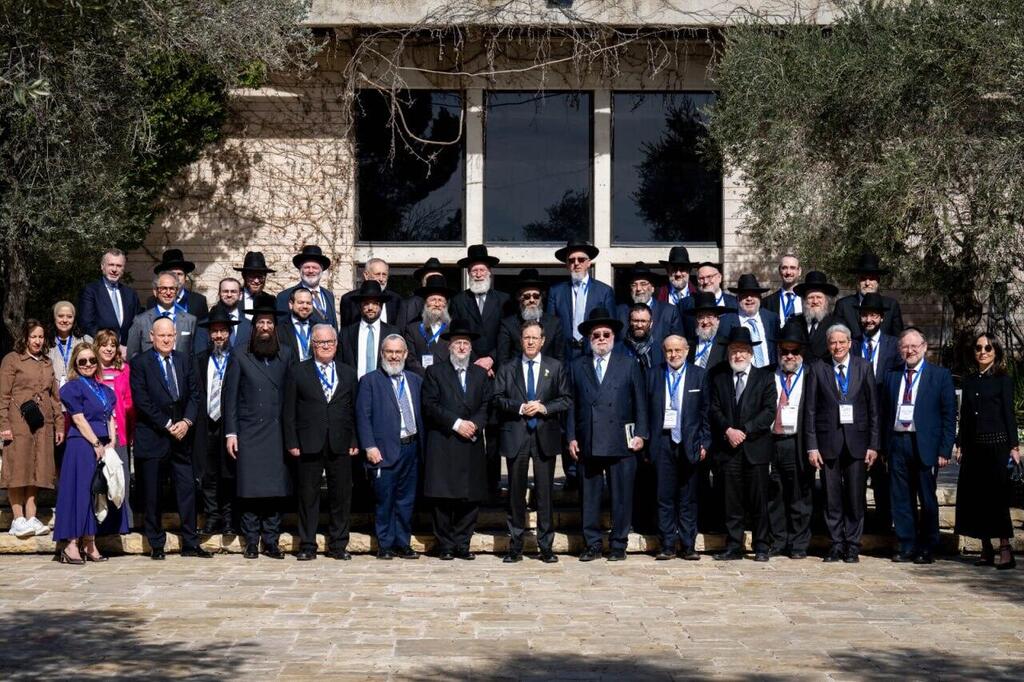
The remarks came as the Conference of European Rabbis concluded its 33rd general assembly, marking 70 years since the organization’s founding. The conference was held under the theme “Beyond Borders: Identity, Connection and Unity in a Changing World” and brought together about 400 rabbis, rebbetzins and spiritual leaders from across Europe and beyond.
The gathering opened with an official visit to the President’s Residence, where participants met President Isaac Herzog. It also included meetings with the chief rabbis and joint programming with the Western Wall Heritage Foundation and the Ministry of Heritage, led by Minister Amichai Eliyahu.
Despite the ceremonial setting, Gronich used the forum to raise concerns about the state of antisemitism in Europe and what he described as a missed opportunity to strengthen ties between Israel and Jewish communities abroad after Oct. 7.
“The situation has worsened by hundreds and thousands of percent,” he said during a panel discussion. “On the streets and online, people are afraid to identify as Jewish or to speak Hebrew.”
Gronich said Jewish communities initially felt a strong sense of solidarity and responsibility following the Hamas attack, but that no meaningful process of coordination or unity followed. “There was an opportunity to bring the Jewish world closer together after Oct. 7,” he said. “That opportunity was completely missed.”
He said he raised those concerns directly with Diaspora Affairs Minister Amichai Chikli, telling him that Europe is largely absent from how the Jewish world is viewed by government ministries. “I told the minister: Europe isn’t on your map. That’s how it feels to us,” Gronich said.
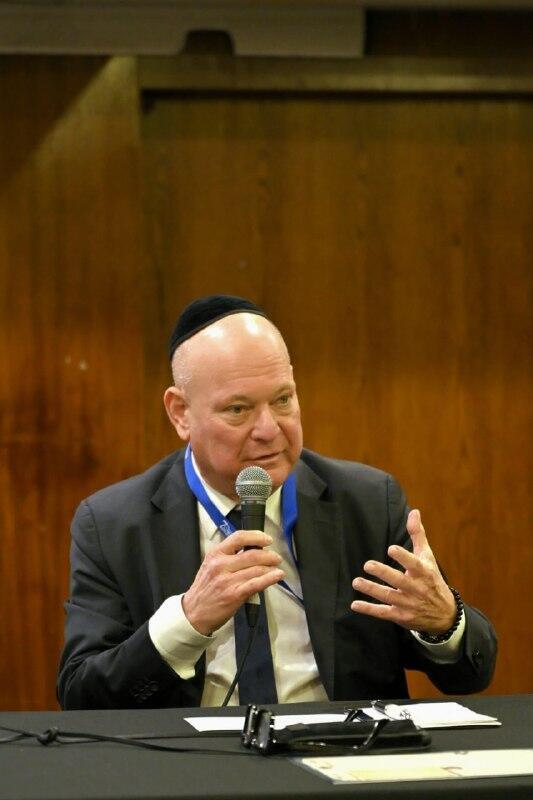
(Photo: Dima Yaroshezki (D.V.A. Productions))
Gronich also warned against uncoordinated engagement with political parties in Europe, particularly on the far right, without consultation with local Jewish leadership. He cited meetings with French politician Jordan Bardella, saying assurances sought by Jewish leaders — including opposition to restrictions on kosher slaughter — were not reflected in public statements.
“We cannot trust them,” Gronich said. “They use us.”
He voiced similar concerns about reported contacts with Germany’s far-right Alternative for Germany party, known as AfD. Any such engagement, he said, risks long-term damage to Jewish communities.
“If it appears in the German media that there is dialogue or cooperation with the far right, the Jewish community has an enormous problem,” Gronich said. “Trust would be erased immediately.”
Such moves, he added, could also weaken support from mainstream European governments that currently maintain close ties with Jewish communities.
Gronich called on decision-makers to work more closely with community leaders before shaping policy. “We are only asking that those who make decisions speak with us,” he said. “Listen to us, and then decide as they see fit — but don’t ignore us.”
The conference was originally scheduled to take place in Baku, Azerbaijan, but was relocated to Jerusalem due to security threats linked to Iran, organizers said. The move, Gronich noted, underscored the importance of unity and coordination at a time of heightened risk for Jewish communities across Europe.