

In a world in which almost everything can be measured: revenue, targets, value and performance, one of the great tests of leadership is remembering what was meant to serve the journey, and what the journey itself is.
One of the most dangerous traps of success does not necessarily come from failure, but from the accumulation of mechanisms created in the wake of success. As a person, company or organization advances, they build around themselves increasingly complex systems: processes, metrics, structures, assets and tools meant to enable continued growth.
The scaffolding that became the house: the silent disease that topples leaders


But sometimes, almost without noticing, a deep shift takes place: the tools that were meant to serve the goal begin to take its place.
Just before entering the Land of Israel, after 40 years of wandering in the desert, the tribes of Gad and Reuben turn to Moses with an unusual request. They have large herds, the land of Gilead suits their needs, and so they ask to receive their inheritance on the eastern side of the Jordan River.
From a practical point of view, their request seems very logical. They identify a fit between the resources in their possession and the reality on the ground. In the business world, we might call this the proper use of a comparative advantage.
But Moses identifies a much deeper problem. The question is not only where it makes more sense to manage the property, but whether, along the way, the relationship between the means and the purpose has changed. Whether the livestock, which was supposed to enable a better life in the land, has become the consideration that defines where they want to go in the first place.
Rabbi Isaac Arama, author of “Akedat Yitzhak,” explains that the problem is not the desire to succeed, make a living or manage resources properly. On the contrary, the practical and material world is an inseparable part of human responsibility. The breaking point lies in the sentence spoken by the tribes of Gad and Reuben: “Do not bring us across the Jordan.”
At that moment, Rabbi Isaac Arama identifies a deep human danger: replacing the goal with the means.
To illustrate this, he brings the parable of the scaffolding. When a person builds a large house, the scaffolding is a necessary part of the construction process. It makes it possible to reach high, create stability and erect the structure. But no one builds the house for the sake of the scaffolding. The value of the scaffolding comes from the structure it makes possible.
When attention shifts from the house to the scaffolding, confusion is created between what enables success and what gives it meaning.
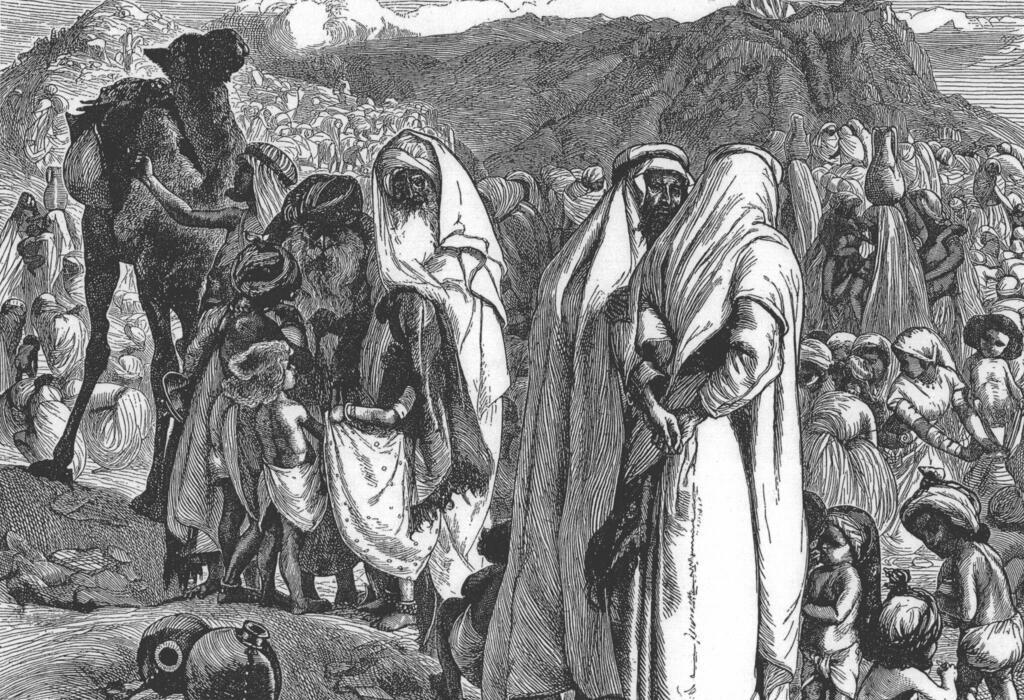
Reuben and Gad ask for land
(Engraving: Arthur Boyd Houghton)
This principle also stands at the heart of Aristotle’s thinking, which distinguished between things that are an end in themselves and things we seek because they lead to something else. Money, status, power and organizational systems can be of enormous importance, but they receive their meaning from the larger question: What vision do they serve?
This is one of the central challenges in the modern management world. Many companies are born out of a desire to solve a real problem, build an exceptional product or change reality. But as they grow, more and more mechanisms are created around them: reports, processes, regulation, structures and performance indicators.
All of them are important. All of them are necessary. But leadership is tested by the ability to ensure that the system meant to support the creation of value does not itself become the center of activity.
Over the years, especially in managing a global company, I have seen just how significant this challenge is. The more a company grows, the easier it is to add more layers of management, processes and control systems. The legal, financial and operational sides are critical, but constant balance is required to ensure that most of the energy is still directed toward the product, the customers and the creation of real value.
Sometimes an organization can reach a point where everything looks proper from the outside: the processes work, the reports are orderly and the systems function, but the essence for which it was created begins to move farther away. It recalls the familiar expression from the world of medicine: “The operation was successful, but the patient died.” It is possible to perform all the actions perfectly and still miss the reason we began.
An interesting example of the opposite approach can be seen in companies that succeed over time in maintaining exceptional focus. This week, alongside market volatility and discussions around interest rate decisions, shares of Israeli defense companies stood out, among them Elbit and Next Vision.
I have known Chen Golan, one of the founders of Next Vision, for quite a few years. One of the impressive things about the company’s path has been its consistent focus on building a core product, technology and real value for the customer. Before expanding the surrounding framework, the company invested in the foundations: a quality product, performance, customers and a clear market need.
In interviews over the years, Chen has also emphasized an approach of gradual building, business discipline and focusing on what the company knows how to do best. To me, this is an example of understanding that the scaffolding is important, but first there must be a strong house.
In one of the songs I wrote, “Yehallelu Lo,” which is also based on the connection between the different instruments that together create a melody, the following lines appear:
“There is no need for a stage of gold,
Nor for grand words.
Only a simple glance in real time
Opens doors.
There is a smile that gives me strength
When the road is not simple,
And there is a melody that will keep walking
Even when the wind has disappeared.”
Perhaps this is exactly the message Rabbi Isaac Arama reminds us of. The tools are important, but they are not the whole story. The violin, the drum and the shofar are not the purpose of the music; they are the way to create a melody. So too in the world of management, money, metrics, structures and systems are the tools through which we try to build something larger.
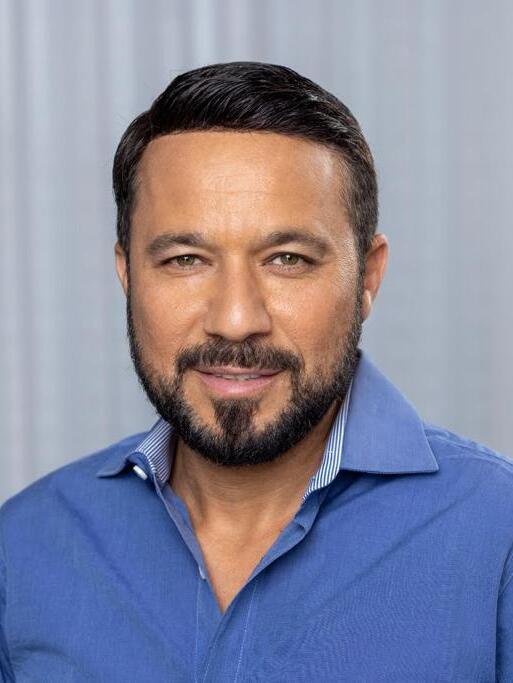 Ziv Elul
True leadership requires stopping from time to time and asking whether we are still playing the melody for which we set out, or whether we are occupied only with improving the instruments.
Parashat Matot-Masei reminds us that after all the journeys, the stations and the long road, the most important question is not only how far we have advanced, but whether we have reached the place we wanted to reach.
Because it is possible to build high, strong and impressive scaffolding. It is possible to measure every stage, improve every process and manage every detail perfectly.
But in the end, leadership is not measured by the amount of scaffolding it leaves behind.
It is measured by the house built because of it.