

From time to time, I am asked what seems like a simple historical question: Did Ethiopian Jews know that the Temple in Jerusalem had been destroyed?
To me, however, this is not primarily a question about history. It is a question about consciousness and worldview.
Two stories can illustrate this issue.
The first comes from the journal of Joseph Halevy, the nineteenth-century Jewish traveler who visited the Beta Israel community of Ethiopia. After telling his Ethiopian Jewish hosts about the condition of Jerusalem, he wrote:
“I informed them that the city which in ancient times had been the perfection of beauty had lost its glory and splendor and now stood ruined and desolate. When they heard these words, they were deeply grieved and wept bitterly. Our distant brothers believed that our Holy Temple still stood in all its magnificence.”
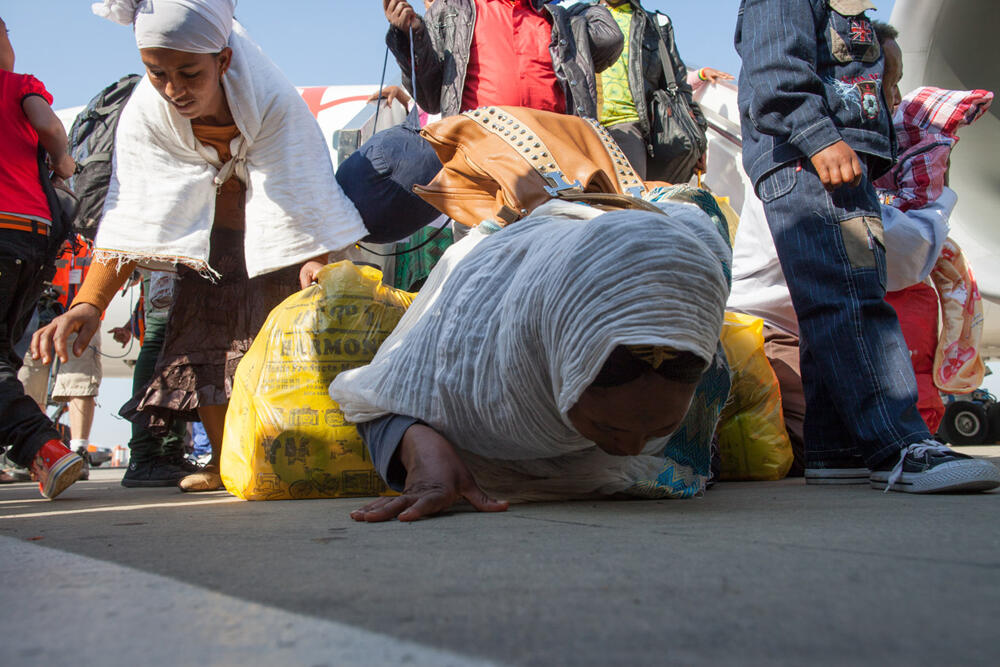
The second story took place shortly after Operation Moses, the dramatic 1984–1985 airlift that brought thousands of Ethiopian Jews to Israel. The kesim—the traditional spiritual leaders of the Beta Israel community visited Jerusalem for the first time. After spending an entire day touring the city, they arrived at the Western Wall. One of the kesim asked their guide, “Where is Jerusalem?”
The guide replied in surprise, “We have been in Jerusalem all day.”
The kes then asked, “And where is the Temple?”
The guide pointed toward the Temple Mount and answered, “The Temple once stood there.”
At that moment, the kesim fell to the ground and burst into tears.
At first glance, both stories seem to lead to the same conclusion: Ethiopian Jews did not know that the Temple had been destroyed. Yet the reality is more complex.
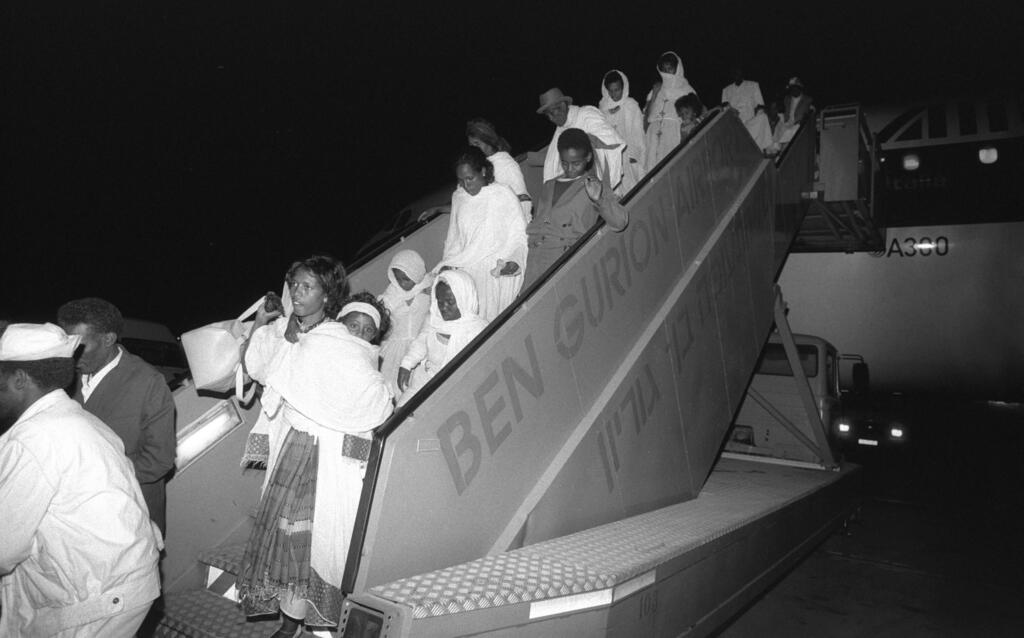
Ethiopian immigrants disembark from the plane at Ben Gurion Airport during Operation Solomon
(Photo: Albert Nathan, National Photo Collection)
Years ago, I asked Kes Eli Wenda Mentosnot, one of the leading Ethiopian Jewish religious authorities, about the observance of the Hebrew months of Tammuz and Av—the traditional period of mourning for the destruction of Jerusalem and the Temple. Were there mourning customs in Ethiopia? Did the community know about the destruction?
His answer was unequivocal.
Ethiopian Jews fasted from the first day of the Hebrew month of Tammuz to the tenth day, commemorating the Babylonian conquest of Jerusalem. This fast was identified as “the fourth fast” as described in the biblical book of Zechariah.
“And what status did the Seventeenth of Tammuz (the day that Rabbinic Jews have fasted on the last two thousand years, commemorating the beginning of the destruction of the Temple) have?” I asked.
“For us,” the kes replied, “it was an ordinary day. We knew that it was a special date on which some Jews observed a fast, but we did not mark it as a separate occasion. That remained the practice throughout the month of Tammuz until the beginning of Av.”
The following Hebrew month of Av was also observed differently from the way it is in contemporary Rabbinic Judaism. The 9th of Av (Tish’a B’av) is the saddest day in the Rabbinic Jewish calendar. Rabbinic Jews mark the first 9 days of Av with mourning practices like not eating meat, drinking wine, cutting hair, etc.
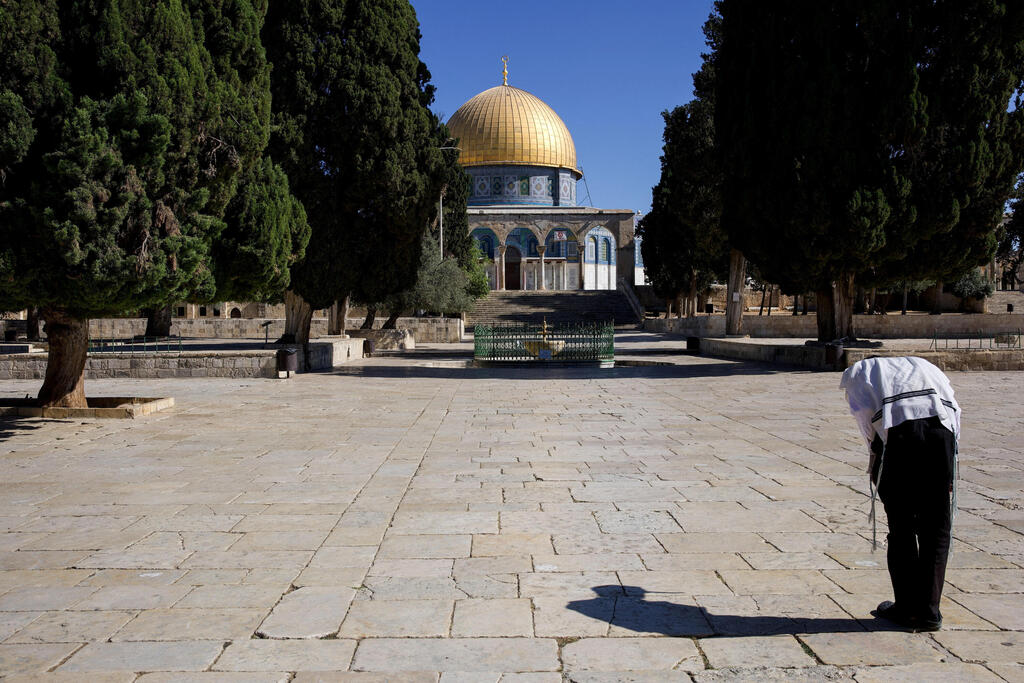
Temple Mount
(Photo: Naama Stern/Reuters )
Kes Mentosnot responded that “Rosh Chodesh Av, the first day of the month, was actually a festive occasion. Families gathered together, refrained from work, and shared celebratory meals.”
Only after this festive observance did the period known as Tzoma Av (“the Fast of Av”) begin. This consisted of nine days of fasting, through the Ninth of Av (Tisha B’Av), the traditional day commemorating the destruction of the Temple in Jerusalem.
According to one Ethiopian Jewish tradition, this fast was instituted by the prophet Isaiah as atonement for the sins of King Manasseh. According to another tradition, it commemorated the priests who were slaughtered following the destruction of the First Temple.
The fasts were observed from sunrise until sunset. After nightfall, people would eat only enough to restore their strength. Even then, they abstained from meat and dairy products. In some communities—particularly among elders and the kesim, the traditional spiritual leaders—the mourning period was extended throughout the entire month of Av. This custom was also associated with a tradition that the patriarchs Abraham, Isaac, and Jacob died during this month.
I asked how people who were physically unable to fast observed the practice.
The kes answered:
“Not everyone is equal when it comes to fasting. Those who worked in the fields or found fasting especially difficult were permitted to eat after midday. The elders and the kesim, who remained in the village and devoted the day to prayer, continued fasting until evening. Those who were able to fast did so not only for themselves, but also on behalf of those who could not.”
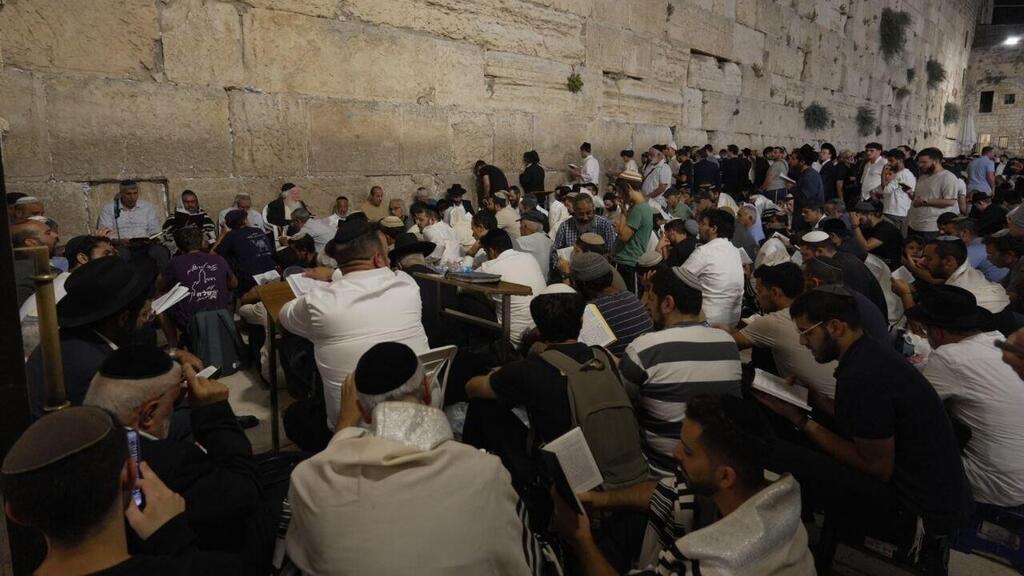
Reciting the Book of Lametations at the Western Wall on Tisha B'Av
(Photo: Alex Gamburg)
When I asked specifically about Tisha B’Av, he replied:
“On the Ninth of Av everyone stopped working in the fields and fasted until evening. Even those who struggled made every effort to complete the entire fast.”
Finally, I asked what the emotional atmosphere of these days was like.
He smiled.
“We were not depressed. What moved us was not the past, but the future. Our attention was not fixed on the destruction of the Temple. We were focused on Jerusalem of Gold and on the Temple to which we hoped one day to ascend.”
That response raises a profound question. How can a community maintain periods of fasting and mourning while at the same time living with a consciousness oriented primarily toward redemption rather than destruction? How can the memory of loss coexist with hope for restoration?
The answer, I believe, is not historical but psychological and spiritual.
It is difficult to imagine that a community which preserved memories of the destruction, observed fasts in its memory, prayed for the return to Zion, and longed for Jerusalem across generations somehow did not know that the Temple had been destroyed. The real question is not what Ethiopian Jews knew about the destruction, but what place the destruction occupied within their religious imagination.
Their consciousness did not deny the catastrophe. Rather, it refused to make the catastrophe the defining center of Jewish identity.
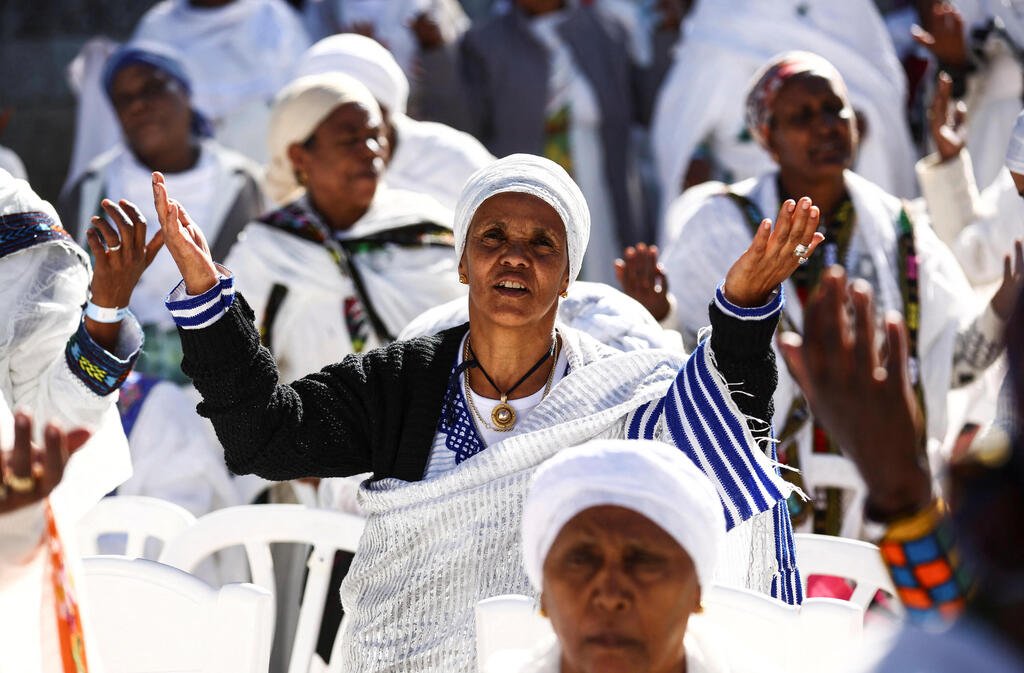
Members of the Ethiopian community at the Sigd holiday in Jerusalem
(Photo: Reuters)
One can remember a tragedy, mourn it deeply, and even fast in its memory, while still directing one's gaze toward the future. From this perspective, Ethiopian Judaism developed a distinctive relationship to the destruction of Jerusalem and the Temple. The destruction itself was not the organizing principle of religious life. At the center stood longing, hope and the dream of redemption.
Jerusalem was imagined not merely as a city that had been lost, but as the holy city—the dwelling place of the Divine Presence, a city of splendor and holiness. In popular imagination it was even described as a place where milk flowed from the taps, a symbolic image expressing abundance, sanctity, peace, and human flourishing.
From within this worldview, Ethiopian Jews preserved fasts and mourning rituals commemorating the destruction of Jerusalem and the Temple, prayed for the restoration of Zion, and nurtured a yearning for Jerusalem across centuries. Yet the purpose of fasting was not simply to preserve the memory of loss; it was to preserve hope. Mourning was not an immersion in the past but a preparation for the future.
The destruction remained part of collective memory, but redemption shaped collective consciousness.
This also helps explain the extraordinary reaction described by Joseph Halevy. When Ethiopian Jews heard his account of Jerusalem's actual condition, what shattered was not merely a geographical expectation. What broke was a spiritual vision of the world—a vision they had carried in their hearts for generations.
Here, I believe, lies the difference between a consciousness of destruction and a consciousness of redemption.
A consciousness of destruction is not merely the memory of a historical disaster; it is a way of viewing reality. When a society lives in fear, it seeks absolute certainty. It clings to rigid categories, sharp definitions, and clear divisions. The world becomes divided into “us” and “them,” the righteous and the sinners. Rules cease to illuminate life and instead begin to replace it. Rather than interpreting reality, people force reality into ideological frameworks.
A consciousness of redemption does not abolish rules; it restores them to their proper purpose as a guide for living. It seeks to see the person before the label, reality before ideology and responsibility before blame. Its first question is not, “Who is guilty?” but, “What is my responsibility?”
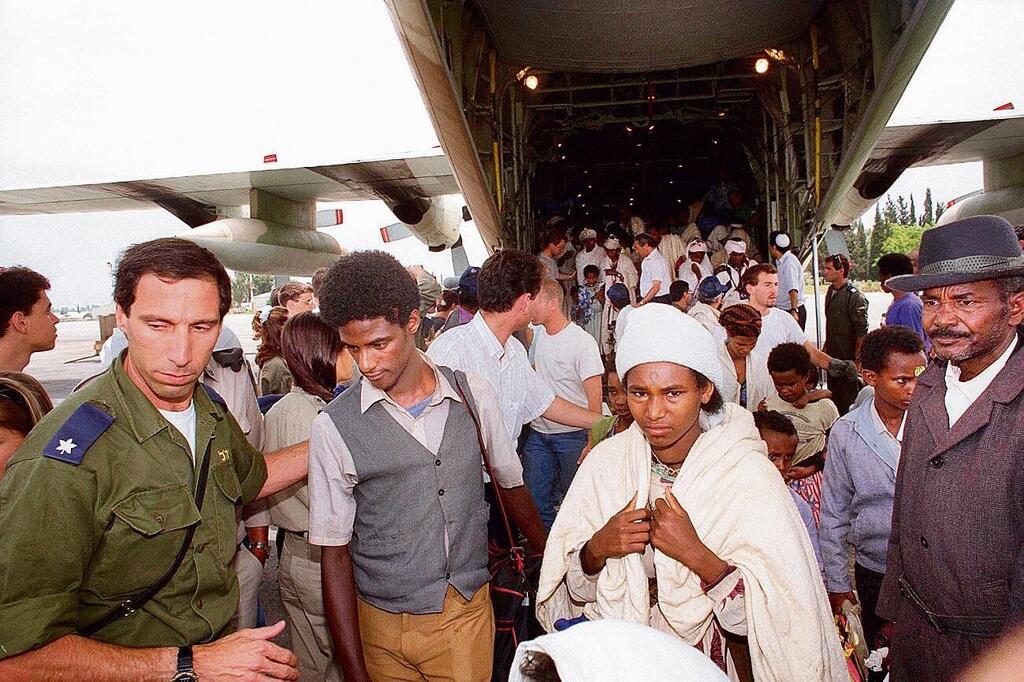
Ehtiopian Jews arrice in Israel on Operation Solomon
(Photo: Zvika Israeli, GPO)
In this context, I am reminded of the late Professor Avi Sagi, whose sudden passing deeply saddened me. Sagi warned against a form of religious life that becomes detached from the realities of human existence. His concern was not with Jewish law (halacha) itself, but with the danger that any intellectual or religious system can lose contact with living human beings.
Sagi understood Judaism first and foremost as a “Torah of life,” a tradition that encounters people where they are. He advocated a Judaism that was humane, egalitarian and open to dialogue. He opposed religious coercion, nationalism that diminished human dignity, and any use of religion that harmed people in the name of principle. He believed that a Torah disconnected from human beings ceases to be a Torah of life.
Because of this outlook, he was deeply troubled by the treatment Ethiopian Jews often received from segments of Israel’s religious establishment. Yet he did not stop at criticism; he sought to participate in repair and reconciliation. In that sense, he embodied a consciousness of redemption. He did not build identity by excluding others. Instead, he sought to broaden the boundaries of Jewish belonging and place human dignity, truth, and love at the center.
These reflections are written in gratitude for the person he was and for the path he helped illuminate for so many.
One of the dangers of a consciousness of destruction is the attempt to protect identity through ever more rigid boundaries until identity itself becomes detached from people and from reality. A consciousness of redemption offers another path. It does not abandon tradition; it reconnects tradition with life. It recognizes that the covenant between God and Israel is lived within the realities of human existence, not outside them.
This, too, is one of the gifts of Ethiopian Jewish tradition. It maintained deep fidelity to Jewish law and tradition while never severing them from community and everyday life. Covenant was understood not merely as a system of obligations, but as a relationship of trust, loyalty, and mutual responsibility.
Perhaps this message is especially relevant to Israeli society today. Jews and Arabs, religious and secular, conservatives and liberals, veteran citizens and immigrants all share the same public space. Yet public discourse increasingly revolves around blame. Every group is convinced that the other side is the source of the problem. Every disagreement becomes a struggle between the righteous and the wicked.
Such a discourse does not create responsibility; it frees people from it.
Democracy itself cannot survive on laws alone. Laws can regulate relationships, but they cannot create trust. A democratic society requires a civic covenant: shared responsibility, self-restraint, and the recognition that even those who disagree with us remain partners in a common destiny.
The central question of Tisha B’Av, therefore, is not only how the Temple was destroyed but how it can be rebuilt. In this light, the real issue, then, is not what Ethiopian Jews knew about destruction but how they understood it. The spiritual world of Ethiopian Jewry was shaped primarily by the biblical consciousness of exile and redemption rather than by the post-Temple culture of destruction that emerged in later rabbinic Judaism.
Some time ago, a young couple approached me before their wedding with an unusual request. They asked not to break a glass beneath the wedding canopy. In Jewish weddings, the breaking of a glass traditionally commemorates the destruction of Jerusalem even at a moment of great joy. The couple wanted their marriage to begin with a symbol of building rather than breaking.
Their request brought me back to the Ethiopian village where I grew up. There, people did not break a glass at weddings. Deliberately breaking a vessel was considered inauspicious. Besides, who had extra glasses to spare?
I honored their request. Wrapping the glass in aluminum foil, I told them:
“Today you have received a precious gift, love. It is wonderful, but it is also fragile. Protect it.”
Perhaps that is also the message of Tisha B’Av.
We are not called upon to ignore brokenness. We are called upon to refuse to make it our identity. We are not asked to forget destruction, but to ask how we can build a future from within it.
The State of Israel is one of the greatest gifts the Jewish people have received in modern times. It is precious, yet fragile. If our future depends on the defeat or humiliation of others, we risk damaging the very gift we seek to protect. A consciousness of redemption begins when people can dream of a better future without requiring the downfall of someone else.
Can my redemption include those who think differently than I do? If the answer is no, perhaps we have not yet left behind the consciousness of destruction. A consciousness of redemption does not promise a world without disagreements. It promises a world in which disagreement does not transform the other person into an enemy.
Rabbi Dr. Sharon Zeude Shalom is the founding director of Ono Academic College’s International Center for the Study of Ethiopian Jewry. He is also the author of "The Living Geniza" (Open University, 2022), "Dialogues of Love and Fear" (Koren, 2021), and "From Sinai to Ethiopia" (Gefen, 2016).