


Life under Nazi rule severely undermined the Jewish family unit, yet many sought to preserve and gather its fragments as a source of comfort and belonging. The Holocaust led to the murder of some 6 million Jews and left entire communities destroyed, with few Jewish families untouched. Many survivors returned home only to find themselves alone. This year’s “Shaping Memory” competition for Israel’s official Holocaust Remembrance Day poster seeks to powerfully convey the story of the Jewish family during the Holocaust.
From dozens of submissions to the competition, now in its 16th year, the design by Yoav Kahana was selected as the official poster for 2026, under the theme “The Jewish Family during the Holocaust.” The judging panel included leading lecturers in visual communication in Israel.
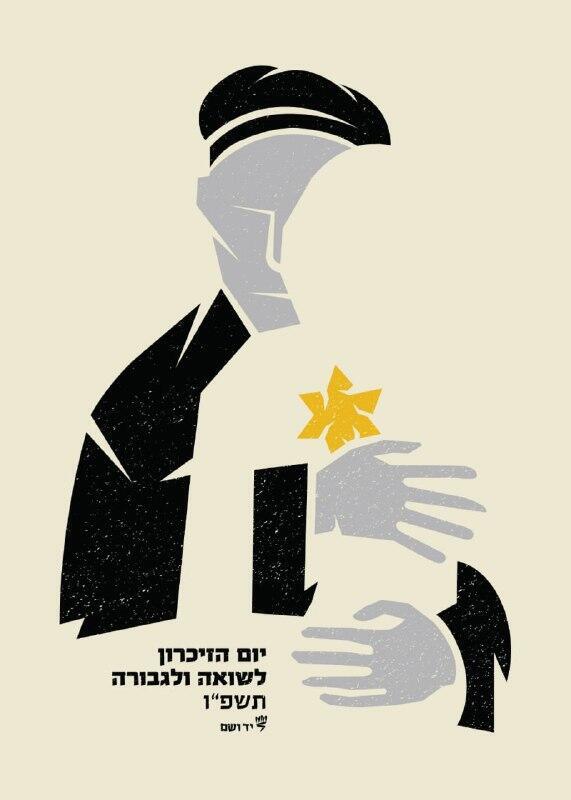
At an event held this week at Yad Vashem, Chairman Dani Dayan awarded the prize. “Each year, talented creators from across the country express, with creativity, different aspects of Holocaust memory and make them accessible to the next generation,” Dayan said. “The selected poster, centered on the Jewish family in the Holocaust, offers a powerful visual image that commemorates not only loss, but also humanity, longing and the effort to hold on to memory and continue living despite the hardship.”
The chosen poster depicts an adult figure embracing the outline of another figure — absent. The figure represents a Holocaust survivor who endured the horrors and, with outstretched arms, embraces the void — those who are no longer there. The image creates tension between imagined physical presence and complete absence, conveying a sense of longing, loss and yearning for contact that will never return.
At the center of the poster appears a yellow patch, resembling a flower with yellow petals. The symbol echoes the yellow badge Jews were forced to wear during the Holocaust, while also carrying layered meanings of memory, human vulnerability and historical testimony.
The competition winner, Yoav Kahana, 40, a graphic designer from Ramat Gan, holds a bachelor’s degree and a practical engineering diploma in visual communication from Ariel University and Tiltan College in Haifa. “From a young age, I was exposed to the story of my grandfather’s rescue — a German-born Jew saved by Righteous Among the Nations,” Kahana said. “That shaped my connection to the Holocaust and its link to Jewish identity. The image I chose expresses the ‘absence within presence,’ the personal and collective rupture experienced by Jews during the Holocaust and by survivors afterward. Despite the search for familial closeness, there was always a missing figure beneath it.”
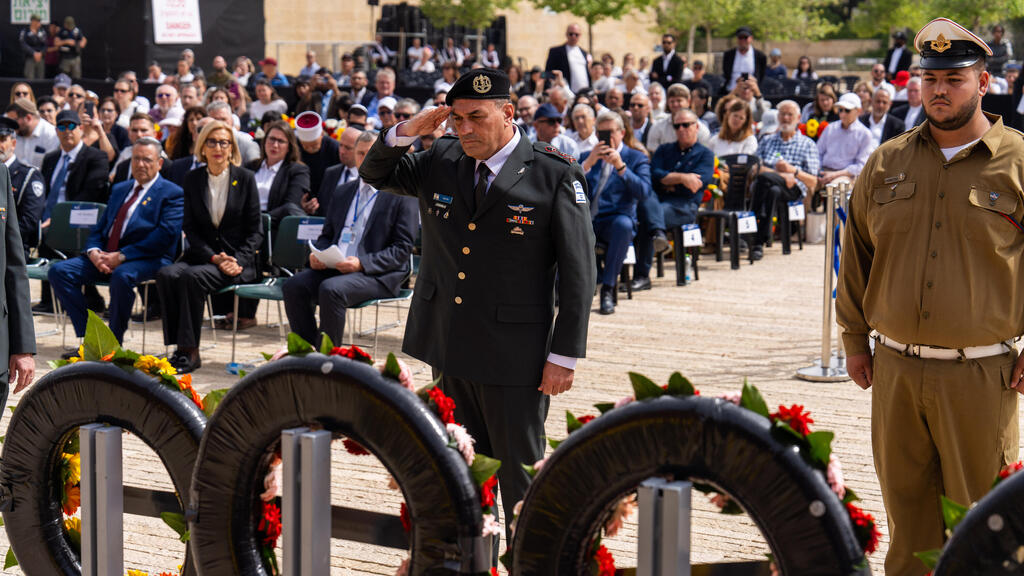
The ceremony at Yad Vashem last year
(Photo: Shalev Shalom)
The judges explained their decision, saying: “The poster powerfully and with restraint expresses the fracture of Jewish society alongside the collapse of the family unit, through a visual language rooted in absence, pain and loss. At the same time, it offers a space for memory, compassion and longing, pointing to a human gaze toward recovery, continuity and a return to life.”
The winning poster will be distributed in schools across Israel, youth movements and Israel Defense Forces bases, accompanied by educational materials prepared by Yad Vashem’s International School for Holocaust Studies, as well as at Israeli missions abroad and in public and private institutions.