

Exactly 90 years ago, during the dark days of Nazi rule over Europe’s Jews, a unique light was kindled. On Hanukkah of 1935, for the first time in Jewish history, a woman was ordained as a rabbi: Regina Jonas.
Ordained in Germany and later murdered in the Holocaust, she was also the first woman in Jewish history to make a systematic halachic argument for gender equality in Judaism, including the ordination of women as rabbis.
Gallery
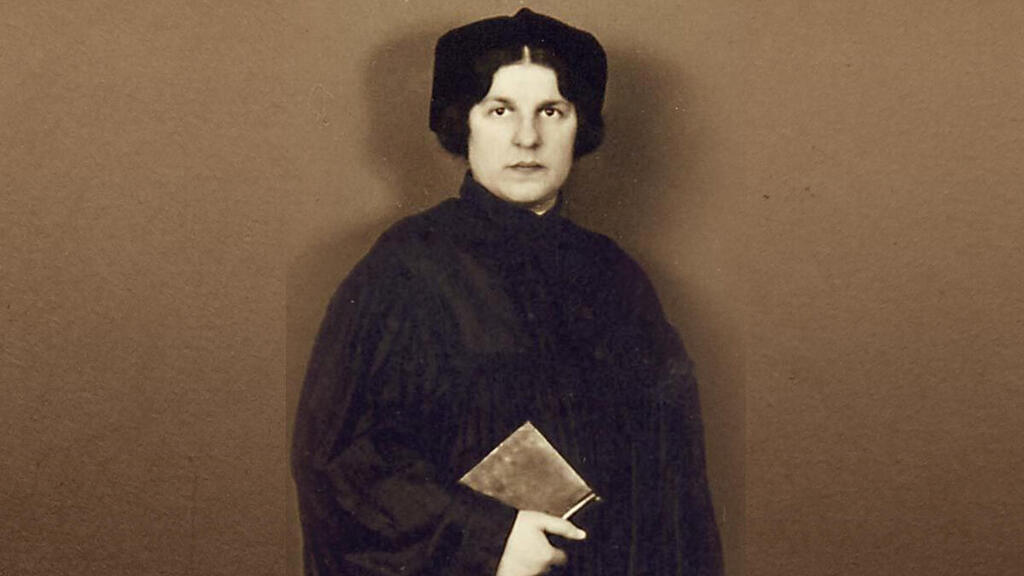
Regina Jonas the first female rabbi
(Photo: Centrum Judaicum Archives, first published source: Klapheck, Elisa. Fräulein Rabbiner Jonas: The Story of the First Woman Rabbi, Toby Axelrod (Translated) ISBN 0-7879-6987-7)
Born in 1902, Jonas lived with her mother in a poor Berlin neighborhood and never married. From a young age, she taught at a local Jewish school. She later studied at the Higher Institute for Jewish Studies in Berlin, completing her degree in 1930. But she wanted more, seeking rabbinic ordination at a time when such a notion was almost unthinkable. In a measured and traditional tone, Jonas drew on rabbinic sources to demonstrate that women could indeed be ordained.
Jonas did not see herself as a revolutionary. On the contrary, she was a fairly traditional woman whose goal was to show, through classic halachic tools, that nothing in Jewish law prevented women from becoming rabbis. I do not know if she would have called herself a feminist, but she was undoubtedly a trailblazer.
After a long struggle, Jonas received private ordination from Rabbi Max Dienemann, one of the leading liberal rabbis in Germany (who immigrated to Israel in 1938). Many other rabbis supported her ordination. As a rabbi, Jonas taught Judaism, served as a spiritual counselor in a hospital, a nursing home, and a school for the blind, lectured and preached throughout Germany, and published articles on theology and Jewish thought.
She never left her post, even as conditions for Jews in Germany worsened. In 1942, she and her mother were deported to the Theresienstadt Ghetto, where she continued to serve as a spiritual guide, working alongside Viktor Frankl. In October 1944, she was deported to Auschwitz, where she was murdered later that year, at the age of just 42.
Jonas’s story was largely forgotten. Only in the early 1990s, after the fall of the Berlin Wall and German reunification, did previously sealed archives become accessible. In one envelope, scholars found her groundbreaking thesis on women's ordination, a few photographs, and her 1935 ordination certificate.
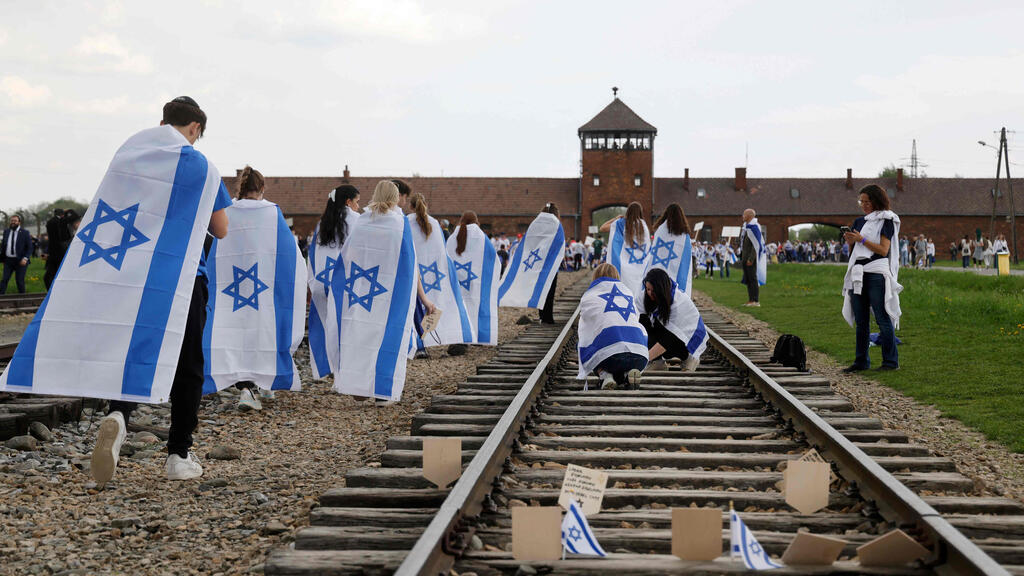
The March of the Living at Auschwitz, archive. That's where Jonas was murdered
(Photo: Wojtek Radwanski/ AFP)
Her disappearance from historical memory was not only due to her brutal end or the fact that many of those she served were also murdered. It was also due to a puzzling silence that surrounded her name and work. It is hard to understand why so many leading figures in German Jewry during the Holocaust, who knew Jonas and her contributions, did not commemorate her afterward, and why few Holocaust survivors ever mentioned her.
The reasons for this “public amnesia” remain unclear. We certainly cannot judge Holocaust survivors for what they remembered or chose to share after enduring such horrors. What remains for us is the responsibility and privilege to shine light on the woman who illuminated the path for her people in their darkest hours, and to ensure that the legacy of one murdered by our enemies is never forgotten.
This week, a special and first-of-its-kind event was held by the Knesset Committee for Immigration, Absorption and Diaspora Affairs to mark 90 years since Regina Jonas's ordination. Organized by MK Rabbi Gilad Kariv, the conference brought together dozens of participants from across Jewish denominations, who shared their challenges and aspirations. Despite big differences regarding halacha, tradition, and feminism, there was a powerful sense of unity in the room.
In recent years, Jonas has finally begun to receive the recognition in Europe that she deserved long ago. It is time for Israel to do the same and honor this tragic pioneer. Today, we are privileged to see hundreds of women ordained as rabbis in Israel and around the world, continuing the path she forged and carrying the banner of female leadership.
This began within the Reform movement, later extended to the Conservative movement, and is now even present in Modern Orthodoxy. Especially in a time when women’s rights are increasingly restricted in Israeli society by religious authorities, we must remember Regina Jonas’s legacy: we must not surrender our rightful place at the forefront of religious life.
Rabbi Prof. Dalia Marx teaches at Hebrew Union College and is the author of About Time: Journeys in the Jewish-Israeli Calendar.