

A wide-ranging Australian inquiry into antisemitism following a deadly Hanukkah massacre heard testimony Monday from Jewish Australians who said rising hatred has left them feeling fearful and vulnerable.
Fifteen people were killed in December when two gunmen opened fire during a Hanukkah celebration at Bondi Beach. A father and son, Sajid and Naveed Akram, are accused of carrying out the attack using legally owned firearms, despite Australia’s strict gun laws. Authorities said the assault, which came after a wave of antisemitic incidents across the country, was inspired by the Islamic State group.
Gallery
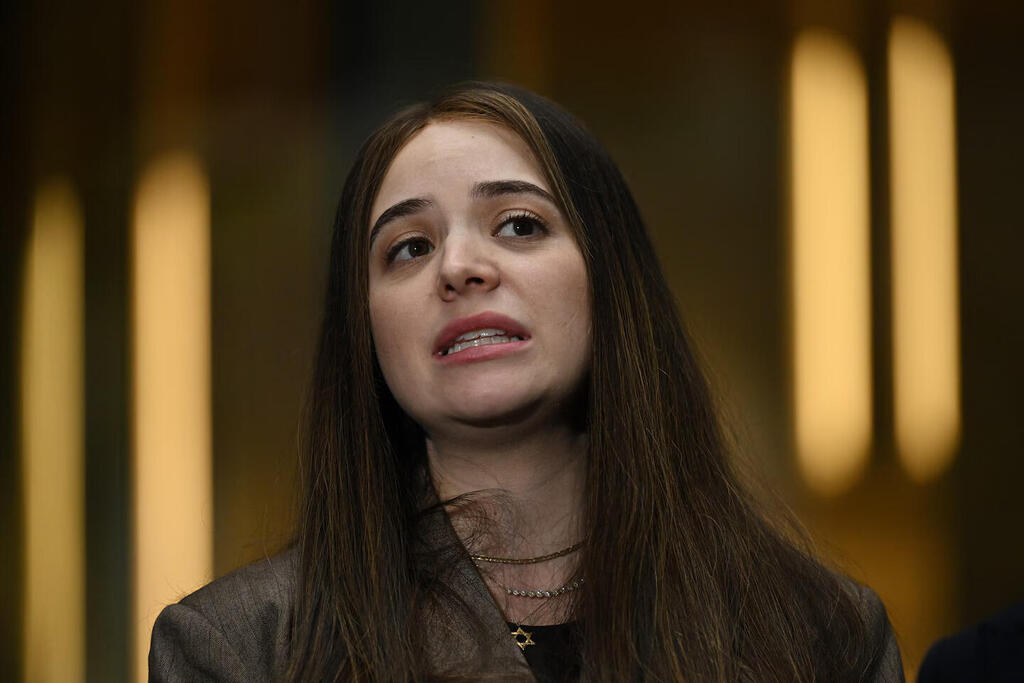
Sheina Gutnick arrives to give evidence at the Sydney hearings to the Royal Commission on Antisemitism and Social Cohesion, in Sydney
(Photo: Dean Lewins/AAP Image via AP)
The mass shooting prompted the establishment of a Royal Commission on Antisemitism and Social Cohesion, Australia’s highest level of public inquiry. Public hearings began Monday in Sydney and are expected to last two weeks, focusing on the scope and nature of antisemitism in Australian society and institutions.
Additional hearings later this year will address other issues before a final report is released in December.
“The sharp rise in antisemitism we have seen in Australia has also occurred in other Western countries and appears closely linked to events in the Middle East,” Commissioner Virginia Bell said. “It is important to understand how quickly those events can lead to hostility toward Jewish Australians simply because they are Jewish.”
Witnesses on Monday, all Jewish Australians, described personal experiences of antisemitism. Some testified under pseudonyms out of concern for their safety. Sheina Gutnick, whose father was killed in the Bondi attack, said she had been verbally abused a year earlier while holding her baby in a Sydney shopping mall after a man noticed her Star of David necklace.
“I felt shocked, exposed and unsafe,” she said, adding that no one nearby intervened.
Her father, Reuven Morrison, 62, threw a brick at one of the attackers before being shot and killed. Gutnick said she is now cautious about attending public events with her family and traveling to certain parts of Sydney.
Witnesses said the Bondi attack followed a sharp increase in antisemitic incidents after the war between Israel and Hamas began on Oct. 7, 2023. More than 2,000 incidents were reported over the following year to the Executive Council of Australian Jewry, compared with fewer than 500 the previous year.
Similar trends have been reported in Britain and elsewhere, but witnesses said Australia’s relatively small Jewish community had not previously experienced such a high level of threats.
“Now everyone is scared all the time,” said Toby Raphael, vice president of Sydney’s Newtown Synagogue, which was vandalized with swastikas during a wave of antisemitic incidents in 2025.
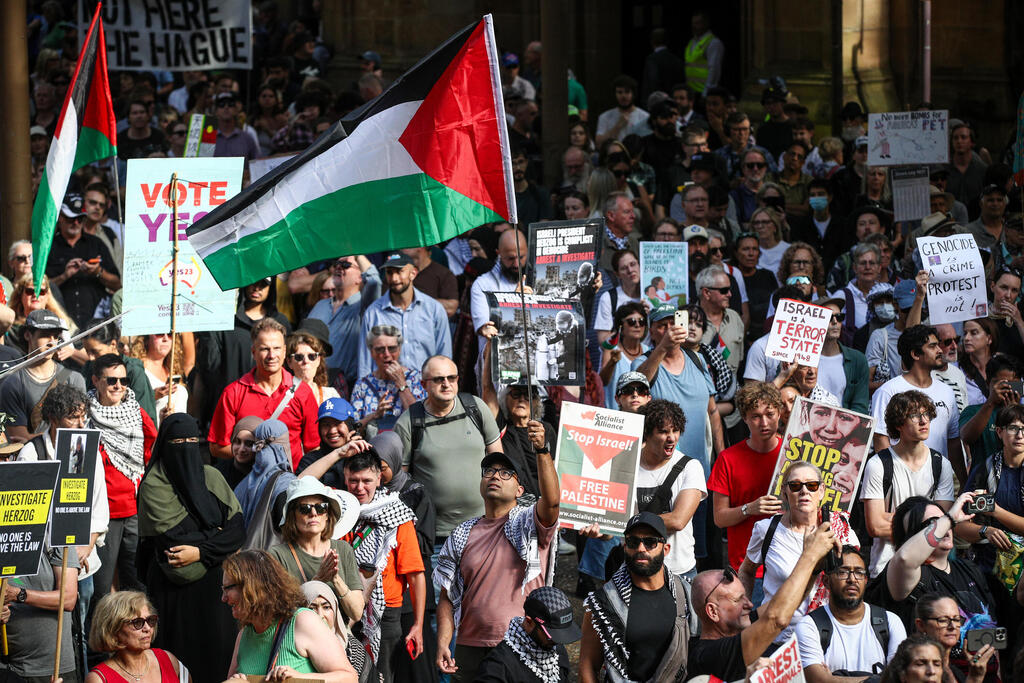
Protesters against President Herzog's visit to Sydney
(Photo: Lisa Maree Williams/Getty Images)
Raphael said he once believed security at the synagogue was unnecessary, but increased threats have changed that. He now participates in a parent security group at his son’s Jewish school, which is also guarded by armed professionals.
“Why do children have to go to school like that?” he said. “This is the reality for Jews in Australia today, and it must change.”
Antisemitism in Australia had already been drawing attention before the Bondi attack due to a series of incidents targeting Jewish schools, businesses and places of worship. In August, the Australian government said Iran had been behind at least two of the attacks and subsequently severed diplomatic ties with Tehran.
Some witnesses told the inquiry they were considering leaving Australia or had plans to move abroad. Others described being verbally or physically attacked, or having pro-Palestinian protesters gather outside their synagogues.
Alex Ryvchin, a Jewish community leader whose home was targeted in an arson attack in 2025, said he believed Australia was “on a path to catastrophe” and warned earlier this year that lives could be lost.
“This was January, and by December there was a horrific massacre that has permanently changed our lives,” he said.
The attack has also renewed debate over gun control in Australia, where strict laws were introduced after a mass shooting in Tasmania three decades ago. Federal and state leaders are now considering additional reforms.
An interim report from the Royal Commission released in April recommended that authorities adopt nationally consistent gun laws and implement a weapons buyback program.
Sajid Akram was shot dead by police at the scene. His son, Naveed Akram, survived with injuries and has been charged with committing a terrorist act, 15 counts of murder and 40 counts of attempted murder. He has not yet entered a plea.