


The remains of the ancient synagogue in Ukraine have recently become a hangout for groups of teenagers.
Trash, alcohol bottles and food packaging have accumulated at the site of the ancient synagogue in Husiatyn, in Ukraine’s western Ternopil region, a heritage site of national importance, and used condoms also have been found among the ruins. Interior doors at the synagogue were forced open and damaged.
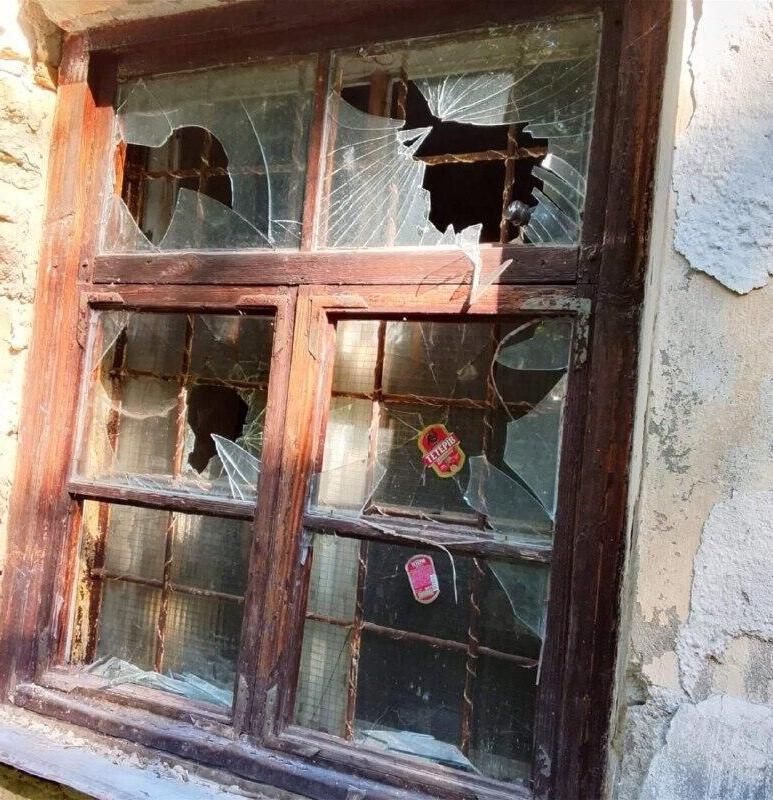
According to local reports, groups of children and teenagers ages 10 to 17 regularly visit the site. A breach created after part of the structure’s wall collapsed has allowed free access to the compound, and in the absence of security or supervision the historic site has become a gathering place for young people.
A local resident who tried to block the breach himself warned that this was only a temporary solution and did not provide real protection for the building. He said footage of gatherings inside the synagogue ruins had begun spreading on social media and he urged parents to check their children’s phones to understand the scale of the phenomenon.
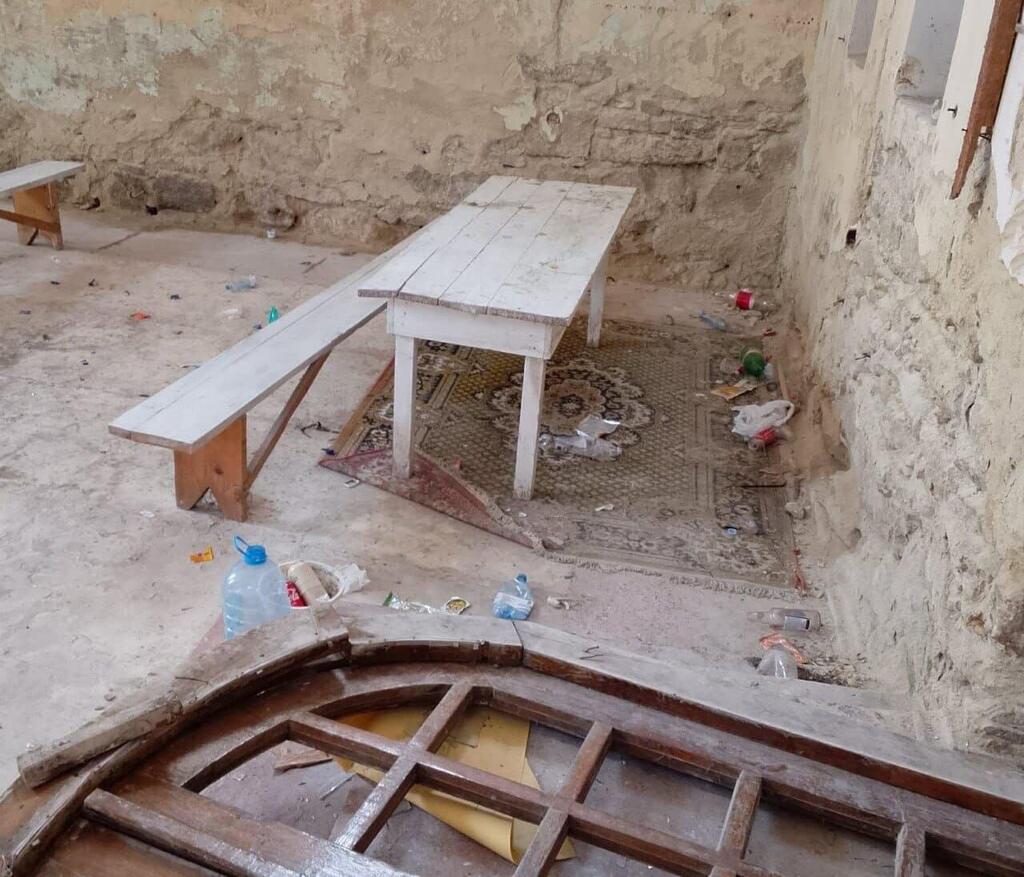
Garbage in a place where Jews once prayed
(Photo: United Jewish Community of Ukraine)
The local activist sharply criticized the police, prosecutors and local and regional authorities, which he said had long ignored the condition of the site. He noted that Ukrainian law provides for criminal liability for deliberately damaging cultural heritage property.
But instead of taking responsibility, local and regional authorities have been shifting it onto one another. The local council said the synagogue ruins are not registered under its administration and referred responsibility to the regional authorities in Ternopil.
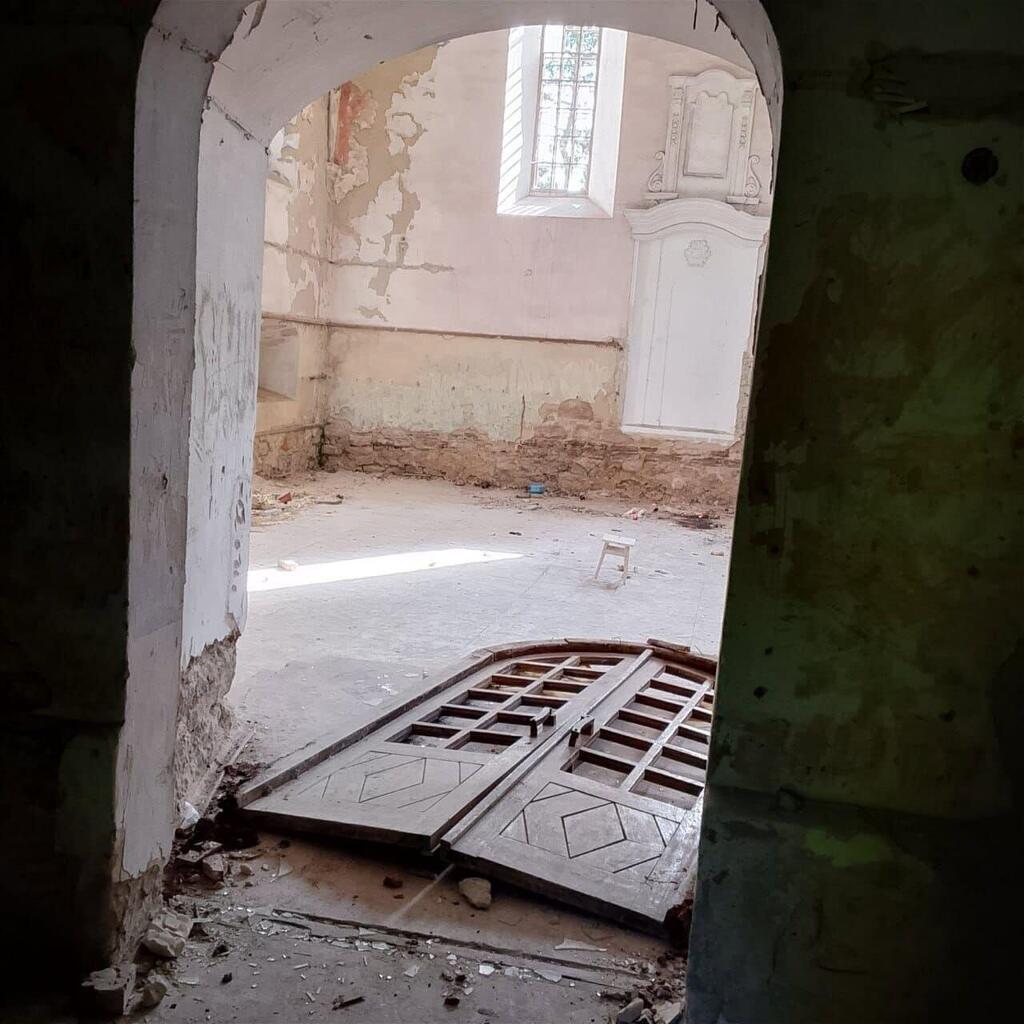
The ancient synagogue building
(Photo: United Jewish Community of Ukraine)
Alongside the damage to the building itself, residents raised another problem in the area: the lack of public toilets in the town center. They said that because of the shortage of facilities, the area near the synagogue ruins has effectively also become a place where people relieve themselves.
The Husiatyn synagogue is a remnant of the Jewish community that existed there for centuries. Today, mainly walls and parts of the original structure remain, but the site is still considered a heritage property of national importance.