

The centuries-old Jewish cemetery in the small Polish town of Kazimierz Dolny, which drew international outrage two years ago after a children’s party was held on the sports field built over its graves, is now set for restoration. Last week, officials announced that the cemetery will be returned to the Jewish people within a year, with Poland’s government covering most of the cost of relocating the town’s school sports ground.
The decision was revealed by Irenaeus Raś, Poland’s deputy minister of sport and culture, during a meeting in his Warsaw office with Kazimierz Dolny Mayor Artur Pomianowski, his deputy, Rabbi Yitzhak Shapira—who has led an eight-year campaign to reclaim the cemetery—and Israel’s ambassador to Poland, Jacob Finkelstein.
Gallery
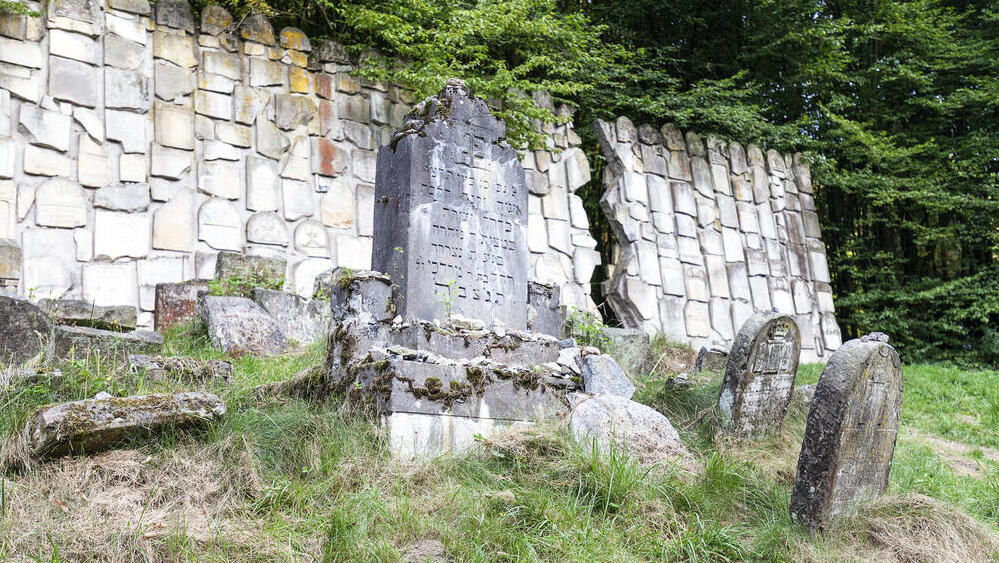
Ancient Jewish cemetery in the Polish town of Kazimierz Dolny
(Photo: Jolanta Wojcicka/Shutterstock)
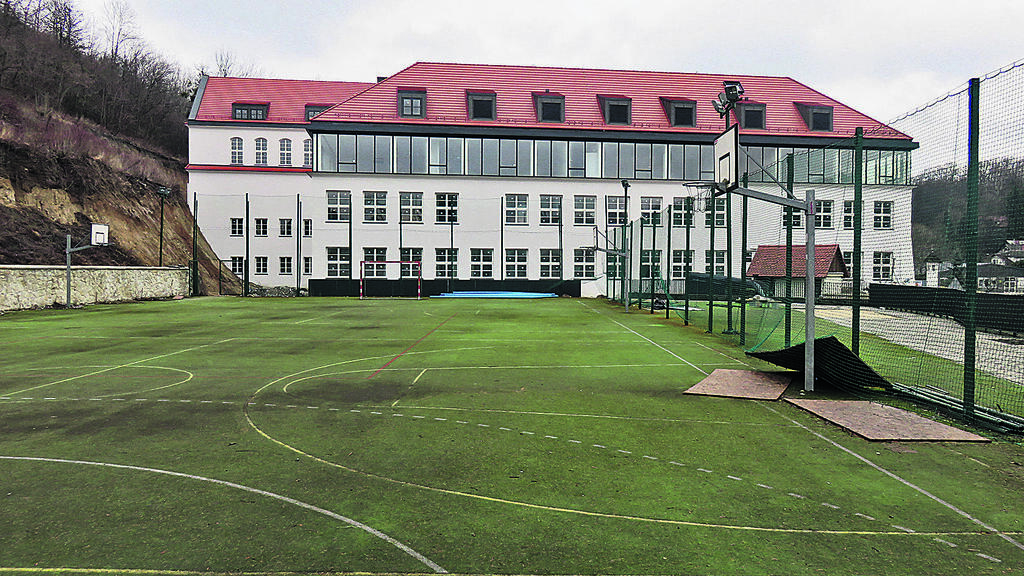
A school and sprots field were built over the Jewish cemetery
(Photo: Z. Krimlovsky)
“For the first time, the Polish government is directly involved in restoring a desecrated Jewish cemetery, turning it from a local issue into a national one,” Shapira said. “The deputy minister pledged that the cemetery will be returned to the Jewish people by the end of 2026 at the latest, and the mayor has given his approval. The Polish government will fund most of the budget—over 1 million shekels—for building a new sports field for the town’s children, with the municipality covering the rest.”
Shapira, son of the late Israeli lawmaker Rabbi Avraham Shapira and founder of the ESJF European Jewish Cemeteries Initiative foundation for preserving Jewish cemeteries in Europe—which has located more than 4,000 neglected cemeteries in 12 countries—called the move a historic step.
“I spoke about the terrible shame of a cemetery hundreds of years old being used as a sports field and even for parties, and about the contempt shown to the deceased and their descendants. Though the dead remain silent, it is our duty as human beings, and especially as Jews, to hear their voices and grant them the dignity they deserve,” he said.
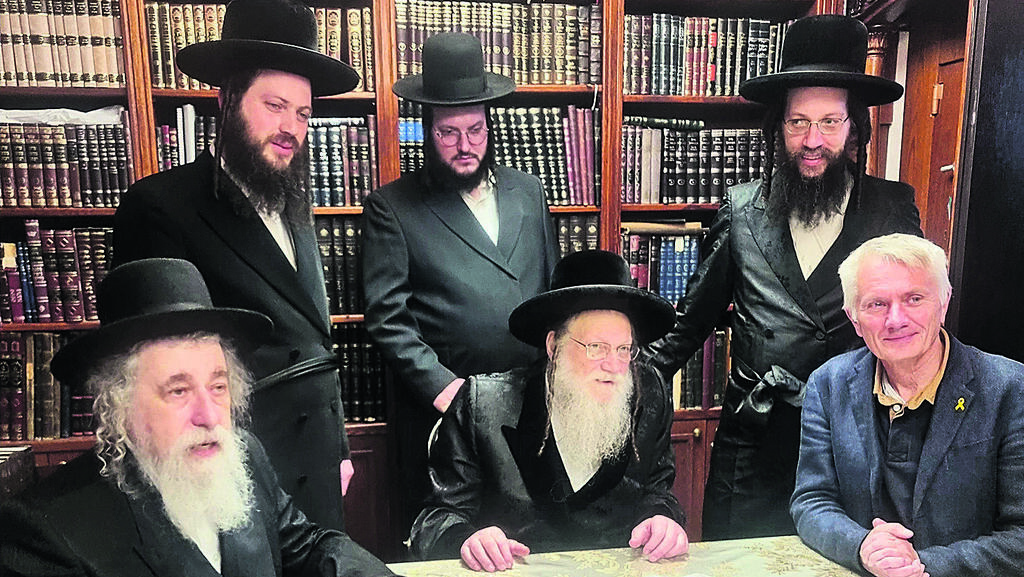
Polish Ambassador to Israel Maciej Hunia visits the home of the the Modzitz rebbe in Bnei Brak
(Photo: Z. Krimlovsky)
The campaign has been strongly backed by the Modzitz Hasidic dynasty, whose founder, Rabbi Yehezkel of Kuzmir (1771–1856), is buried at the site. “The deputy minister authorized me to inform the public that the site will be restored to its sacred state,” Shapira said, announcing a rare move in Poland, where such decisions typically rest with local authorities.
A turning point came when Poland’s ambassador to Israel, Maciej Hunia, intervened. Hunia, who has shown unusually deep involvement, declared: “It cannot be that Jews must pay to redeem their ancestors’ graves. The honor of the cemetery is our responsibility, and if anyone must pay, it is the Polish government.”
For nearly a year, Hunia has personally engaged with the issue, even visiting the Modzitz rebbe in Bnei Brak—a first for a Polish ambassador—to pledge his commitment.
“The sanctity of a Jewish cemetery must be preserved. I felt a duty to repay the Jewish people for their immense contribution to Poland,” he said. “I grew up near Krakow’s Jewish quarter and have always been aware of this. As a historian, I know there is no Polish history without Jewish history. The people buried there were Jews and Polish citizens, and their dignity must be upheld.”
The struggle over the cemetery has lasted more than a decade. Local residents have long been aware of the indignity: A 2015 Forward article cited testimony from a woman whose son returned home shocked after finding bones while playing soccer.
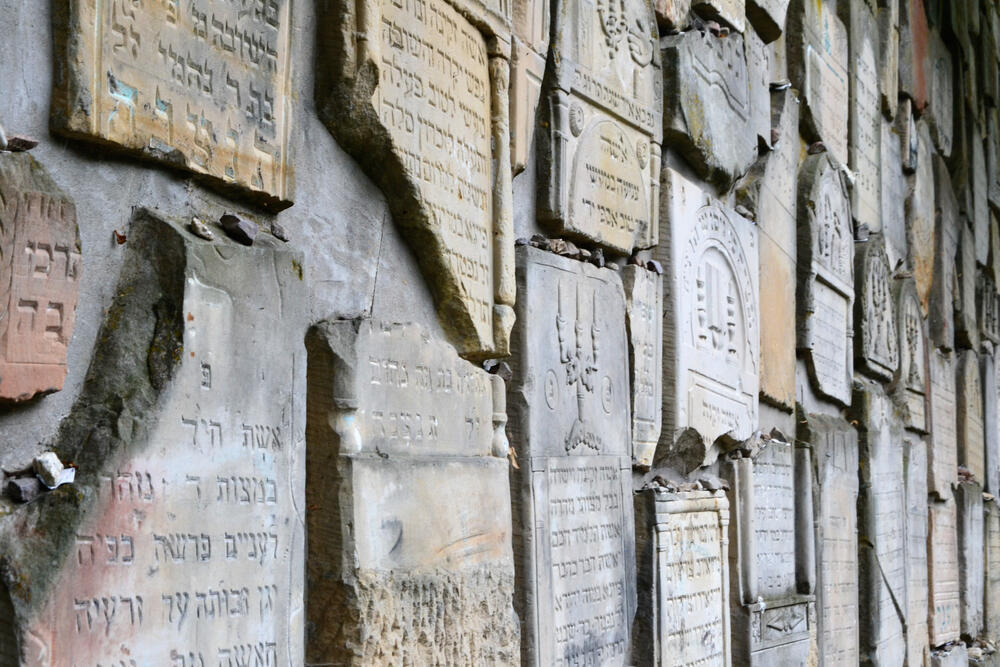
Ancient Jewish cemetery in the Polish town of Kazimierz Dolny
(Photo: PaulSat/Shutterstock)
The desecration dates back to World War II, when the Nazis forced the town’s Jews to destroy both of its cemeteries. Gravestones were used for construction and roadwork. After the war, a school was built next to the older cemetery, and over time its grounds were converted into a sports field covered in artificial turf, with a handful of gravestones set into its perimeter fence.
In 2006, when the school sought to expand, local authorities commissioned an archaeologist, as Polish law forbids construction on Jewish cemeteries. For years, the Modzitz family believed Rabbi Yehezkel of Kuzmir was buried in the newer cemetery on the town’s outskirts. Only later did they discover his true resting place.
“We assumed for decades that my ancestor was buried in the new cemetery," Rabbi Shlomo Taub, son of the current Modzitz rebbe, recounted. "But on a visit to Poland more than 10 years ago, I learned otherwise. Though he was supposed to be buried in the new grounds, before his death he asked to be laid to rest in the old cemetery, alongside the victims of the 17th-century pogroms, so visitors would also honor those murdered simply for being Jews.”
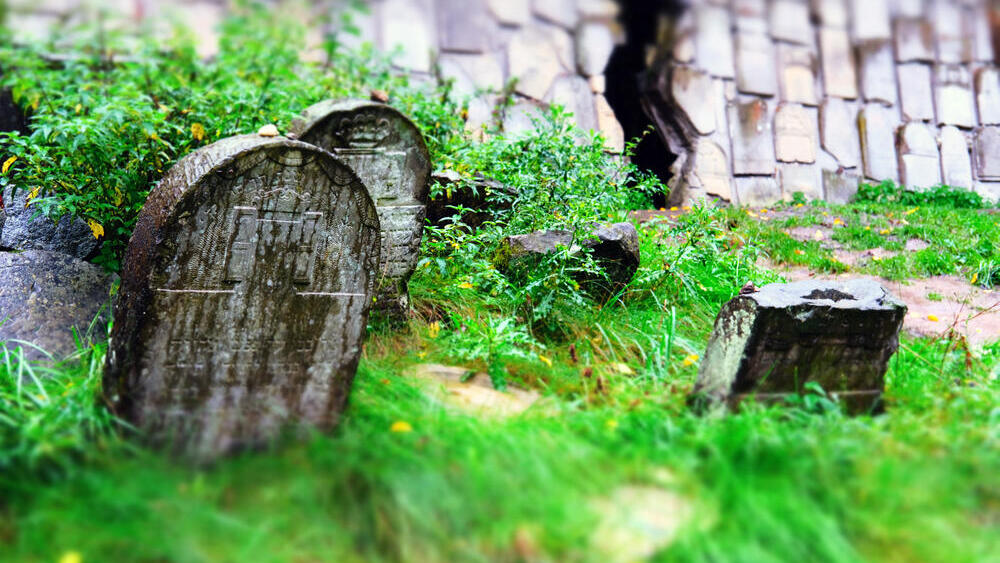
(Photo: Dorota Szymczyk/Shutterstock)
Armed with the archaeologist’s radar equipment, Taub confirmed the burial site beneath the school’s turf. “The radar showed three graves: Rabbi Yehezkel, known for his tall stature; his son Chaim; and a child, his grandson. Everything matched. Every time I stand on that field, I shudder. My grandfather lies here beneath the turf while children play soccer above him. It gives me no rest.”
Poland’s commitment means that, after years of obstacles, the cemetery is now set to be restored. Hunia acknowledged there would be delays, citing legal and budgetary hurdles in relocating the sports field: “I thought it would be resolved this year, but the issues slowed the process. Now the minister has found solutions, and it will happen. The cemetery’s dignity will be restored.”